Showing posts with label interventions. Show all posts

Friday, 23 February 2024

School's out for stigma: Understanding the mental health needs of LGBTQ+ youth

Posted by Liam Spencer, Fuse Associate and Research Assistant at Newcastle University


February is LGBTQ+ History Month, an annual month-long observance of lesbian, gay, bisexual and transgender history, and the history of the gay rights and related civil rights movements. The 2024 theme celebrates LGBT+ peoples’ contribution to science and medicine both historically and today. 


In this blog, Liam reflects on his research of LGBTQ+ young people’s mental health.


As LGBTQ+ History Month unfolds, it offers us an opportunity to reflect on the strides we’ve made, the challenges we still face, and the incredible diversity within our communities. This month holds particular significance for me – a chance to not only honour the struggles of those who came before us, but also to celebrate the progress we’ve achieved and recommit to the work that lies ahead.

With a background in youth and community work practice, my research interests are primarily focused on children and young people’s mental health, particularly early and preventative interventions, and school-based interventions. My journey as a member of the LGBTQ+ community and as a researcher has been intertwined with a deep sense of purpose – to shed light on the unique mental health challenges faced by LGBTQ+ individuals. This is a mission born out of personal experience, and a desire to contribute meaningfully to the wellbeing of this community. 

I have recently been involved in several Fuse projects funded by the NIHR School for Public Health Research (SPHR) Public Mental Health programme, and I’ve had the privilege of being able to delve into the complex dynamics of LGBTQ+ mental health, particularly in school environments. One of these projects, led by Professor Liz McDermott, aimed to investigate the impact of school-based interventions on LGBTQ+ young people’s mental health.

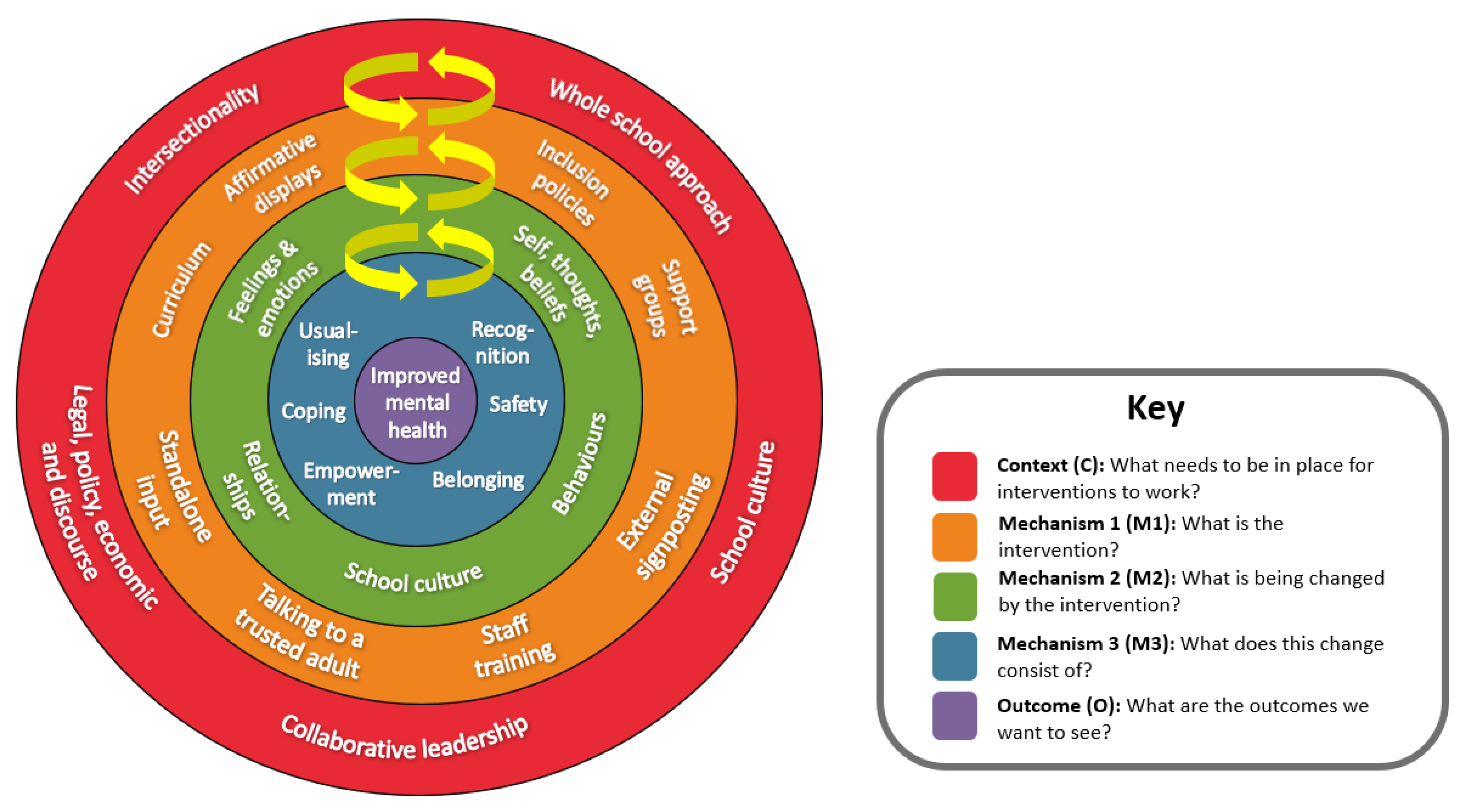
In the first phase of our study, we did a realist review (a type of evidence review that assesses the specific contexts in which a certain intervention may or may not work) of published evidence and identified positive interventions that supported LGBTQ+ mental health in school environments. However, the focus tended to be upon outcomes and studies rarely detailed underlying processes. The second phase of our study aimed to develop a theory that explained how, why, for who, and in what context school-based interventions prevent or reduce mental health problems in LGBTQ+ young people, through participation with key stakeholders.

We interviewed LGBTQ+ young people aged between 13 to 18 years attending secondary schools; intervention practitioners; and school staff in the UK. We then analysed this data to identify relationships across different interventions that improved mental health outcomes. The theory we produced explains how school-based interventions that directly tackle dominant cisgender and heterosexual norms can improve LGBTQ+ pupils’ mental health. Specifically, our theory proposes three interventions that may improve these outcomes:
  1. Interventions that promote LGBTQ+ visibility and facilitate usualising, school belonging, and recognition.
  2. Interventions for talking and support that develop safety and coping.
  3. Interventions that address institutional school culture (staff training and inclusion polices) that foster school belonging, empowerment, recognition, and safety.
Ultimately, our research underscores the importance of providing a school environment that affirms and normalises LGBTQ+ identities, promotes school safety and belonging, and addresses systemic issues within educational institutions. By implementing evidence-based interventions informed by our theory, we can pave the way for improved mental health outcomes for LGBTQ+ pupils.

This month serves as a powerful reminder of our collective resilience, our shared struggles, and our unwavering commitment to justice and equality. Let us continue to push boundaries, challenge norms, and advocate for a world where difference is celebrated and all are embraced for who they are – within academia, our personal lives, and beyond.


Images:

Friday, 17 March 2023

What can be done to improve the mental health of LGBTQ+ young people in schools?

By Liam Spencer, Research Assistant and ARC NENC Mental Health Research Fellow, Fuse & NIHR School for Public Health Research, Newcastle University

Young people who identify as lesbian, gay, bisexual, transgender, or queer/questioning (LGBTQ+) experience significant mental health inequalities in comparison with their peers. School environment is a major risk factor and is consistently associated with negative mental health for LGBTQ+ young people, as shown in research here, here and here. The UN Convention for the Rights of Child Committee has also specifically emphasised the need to take effective action to protect LGBTQ+ young people from all forms of violence, discrimination or bullying, and to improve mental health.

Our research

Our Creating LGBTQ+ Affirming School Environments (CLASS) research project aimed to investigate the impact of school-based interventions (schemes or initiatives) on the mental health of LGBTQ+ young people. In the first stage of our study, we reviewed published evidence, and identified positive interventions that supported LGBTQ+ mental health in school, however the focus tended to be on the outcomes rather than detailing how they were done.

We also interviewed 10 young people aged between 13 and 18 years, nine practitioners (e.g. people working in organisations who had delivered LGBTQ+ inclusivity interventions in UK schools), and three members of school staff, and analysed the data to identify interventions that improved mental health. We used this information to develop a theory model that aimed to explain how, why, for who, and in what context school-based interventions can prevent or reduce mental health problems in LGBTQ+ young people, in collaboration with these key stakeholders.

McDermott, E. et al. Understanding How School-Based Interventions Can Tackle LGBTQ+ Youth Mental Health Inequality:
A Realist Approach. Int. J. Environ. Res. Public Health 2023, 20, 4274. https://doi.org/10.3390/ijerph20054274

Our model (diagram above) has three levels at which interventions may work, on psychological, behavioural, emotional, cultural, and social levels. It explains how school-based interventions that directly tackle dominant cisgender and heterosexual norms can improve LGBTQ+ pupils’ mental health. 

Our findings

We found that contextual factors such as a ‘whole-school approach’ and ‘collaborative leadership’ were crucial to the delivery of successful interventions. Our theory suggests three ways (causal pathways) that might improve mental health:
  1. Interventions that promote LGBTQ+ visibility and ‘usualise’ the presence of LGBTQ+ identities, school belonging, and recognition.
  2. Interventions for talking and support that develop safety and coping.
  3. Interventions that address institutional school culture (staff training and inclusion polices) that foster school belonging, empowerment, recognition, and safety.
Our findings suggest that providing a school environment that affirms and ‘usualises’ LGBTQ+ identities, and that promotes school safety and belonging can improve mental health outcomes for LGBTQ+ pupils. The causal pathways we present are a starting point as theories, however more research to develop our understanding of how school interventions work to improve school climate and the mental health of LGBTQ+ young people is needed. We now need the UK, and other countries, to take seriously LGBTQ+ young people’s rights and ensure they are afforded equal respect and protection as their peers in schools. We may then find that the mental health of LGBTQ+ young people improves.

Read the full research paper here: Understanding How School-Based Interventions Can Tackle LGBTQ+ Youth Mental Health Inequality: A Realist Approach, 28/02/23

Funded as part of the NIHR School for Public Health Research (SPHR) Public Mental Health programme, the Creating LGBTQ+ Affirming School Environments (CLASS) research project, led by Professor Liz McDermott, aimed to investigate the mental health impact on LGBTQ+ young people of school-based interventions. Fuse is a founding member of the NIHR SPHR.


Friday, 19 March 2021

Simple, likeable, luck? How to get physical activity research into practice

Posted by Nicola McCullogh, Post-graduate Researcher, Northumbria University

Sometime last year – I can’t remember exactly when due to lockdown blur – I was asked by my mentor Caroline Dodd-Reynolds if I’d like to join the Fuse Physical Activity Network. I’d been to a number of workshops and I loved the focus on putting knowledge into practice, so I said yes and spent the rest of the year being in awe of the speakers we’ve had from across the world. And the discussion following the first workshop of 2021 (22nd January) was so rich that we wanted to do a bit of a follow-up to – as they say – ‘continue the conversation’.

                                     Watch a recording the 5th Fuse Physical Activity Workshop

This isn’t a report on the workshop itself, but it would be wrong to start on the discussion between the attendees without first acknowledging the speakers who inspired that discussion. First Professor Adrian Bauman (University of Sydney) spoke about how we can improve physical activity practices locally and nationally, and then Ben Rigby (Durham University) took us through 10 guiding principles for local physical activity practice which were developed by the Fuse Physical Activity Network. Some of the points that jumped out from the chat box during the presentations were around the topics of:
  • Inclusivity: How can we make sure that physical activity messages get to specific groups of people? (e.g. can we do this via carers?)
  • Scalability: Physical activity interventions tend to be less effective when scaled up; is this because they are often adapted in the scaling-up process?
  • ‘Business as usual’: Should we move away from thinking about physical activity programmes and towards encouraging physical activity by integrating it into people’s daily lives?
  • Making every contact count: How can we measure the effects of conversations between health professionals and patients about regular physical activity in a way that meets the definition of ‘evidence’ for all of the different groups interested in this sort of practice and research?
As you can see, there was so much going on that it’s no surprise there were a few things we didn’t get to explore on the day! So we pulled together the remaining key themes from the chat and these are considered below.


Are physical activity interventions long enough, as it can take years to become active/inactive? And when we’re researching interventions do we give enough thought to people staying active afterwards?

This seems to be one of those areas where there’s an unfortunate disconnect between research and practice. At the workshop we discussed the value of academic research in understanding the needs of communities but also acknowledged the potentially lengthy timeframes involved before research hits policy and practice. On the other hand, limitations on the practice side can include timescales over which practitioners need to deliver interventions due to funding requirements, meaning that interventions may be shorter than they would ideally be. When it comes to people staying active, although studies with follow-ups do exist, interventions tend to try to give their participants the skills to stay active on their own once the programme finishes, rather than being ‘maintenance interventions’. Maybe we need to try an approach a bit like weight loss groups for ongoing support?


Could we use financial incentives to increase people’s physical activity?


Anyone who knows me knows I love a bit of self-determination theory so I’m going to default to that for my answer, though of course other theories are available! Tying in with the above question, I think what we all want to see is interventions with long-term effects. Financial incentives might encourage physical activity while incentives are available, but we’re unfortunately not giving people the motivation to continue without these rewards and we know the rewards won’t last forever. On another level, those running the interventions have targets to reach to show the effects of their work, so they’re operating under short-term reward systems, too. Shifting our targets towards long-term effects may help.


How can we address the social factors that influence physical activity?


Social determinants of health (conditions in which people are born, grow, work, live, and age) are well recognised by physical activity researchers and practitioners. On a broad level, interventions try to reduce anything that would hinder participation for the groups they aim to help. But an interesting area of thought is how we can use people’s sense of belonging to a group, and their perception of what that group does, to encourage them to be active (e.g. encouraging new parents to be active together at parent and baby groups). We just need to explore the best ways to do this when people identify with groups to different degrees and their group identifications can change over time.


Our efforts can be supported by following the 10 guiding principles for local physical activity practice, which bring together some of the issues discussed above including social determinants of health, inclusivity, and harnessing things that are already happening to promote physical activity. Over the years there have been many different initiatives to encourage people to get active, and some of them have really stuck. The Daily Mile is a simple idea to get children moving in schools, and it seems to be something that works for pupils and staff because it’s been running for over five years now. And Park Run has been successful around the world for over a decade. So it might seem like it’s difficult to get something in place that has an effect, that is sustainable and that people actually like, but sometimes with a bit of luck we can put research into practice and it all comes together.

I think the overall conclusion – summarised very nicely by Professor Bauman – was "keep trying".

What do you think? Let us know in the comments below.


Thank you to everyone who attended the webinar and contributed to the discussion, and to everyone involved in the Fuse Physical Activity Network for their support.

Friday, 26 February 2021

Four practical steps to increase knowledge exchange between researchers and policymakers

Posted by Peter van der Graaf, NIHR Knowledge Mobilisation Research Fellow, Teesside University

Are you keen to have impact with your research but get lost in all the knowledge exchange frameworks and models that are out there? In this blog, Peter calls upon 10 years’ experience working in translational public health for Fuse to identify four practical steps to develop collaborative research and achieve meaningful change in policy and practice.


We know all about the challenges of using research to inform policy and practice, especially in public health where the evidence base for interventions or programmes is patchy or contested. In response to these challenges, countless models and frameworks have been developed that try to define the knowledge exchange process (how research evidence can be used, in combination with other types of knowledge, to change policy and practice). Practitioners and researchers venturing into the field of knowledge exchange can be bewildered by the options available which don’t go beyond concepts and fail to describe in practical terms what research translation looks like in reality.

Here I want to share practical guidance from our research on ‘how to do’ knowledge exchange by reflecting on a model that has been developed in Fuse over the last ten years. Our approach to achieving practice and policy change has been to engage with practitioners, policymakers and the public through communications and knowledge brokerage, to co-create relevant research, influence policy and practice debates and promote evidence uptake. Below I have broken this down into four practical steps:
  • Step 1. Awareness raising: Making evidence users, funders and support organisations aware of our existence, our research and engagement opportunities, including engaging our partners early in setting the agenda for future research.
  • Step 2. Sharing knowledge: Creating opportunities for research users and producers to come together to explore opportunities for mutual learning and knowledge exchange through collaborative events, our responsive research service (AskFuse), and patient and public involvement.
  • Step 3. Making evidence fit for purpose: Localising and tailoring evidence to context by offering a knowledge brokering service, embedded research, and increasing awareness of the different pressures faced by people in health policy, practice and academia.
  • Step 4. Supporting uptake and implementation of evidence: Developing long-term relationships with policy and practice partners to co-create evidence, build capacity for practice change, and change practice and policy.

It is important to link a range of knowledge exchange activities that engage policymakers and practitioners at different levels, intensities and points in their decision-making and development processes.

For example, before meeting with policy and practice partners, we develop tailored research briefs that summarise study findings in an accessible and visual way, and that emphasise recommendations and implications for policy and practice. Involving Fuse researchers in developing these briefs improves their knowledge exchange skills, while providing them with ‘calling cards’ to initiate relationships with policymakers for further collaborative work. These conversations are often followed by requests to AskFuse on how knowledge users can apply the research evidence in a specific context, invitations to engage in collaborative research, or to support capacity building and implementation.

Knowledge exchange between academia and public health practitioners and policymakers can be complicated and at times bewildering. Breaking the process down into practical steps illustrates that knowledge exchange is empirical and relational.

Friday, 19 February 2021

"Whatever their answer, double it and you should be close..."

Posted by Hannah Mehmood, Medical Student, Newcastle University

Hannah undertook a 6-week NIHR School for Public Health Research (SPHR) internship with Fuse based at Newcastle University in summer 2020. She was supervised by Fuse / NIHR SPHR Doctoral Student, Cassey Muir.

A question asked in every GP consultation is how much alcohol a patient drinks. It provides a useful insight into a person’s physical, social, and psychological health. According to my GP tutor, most people underestimate the amount they drink, as well as the impact this has on them.

Substance misuse is a complex issue, and as a medical student I have learned to focus on the impact of problematic drug and alcohol use on individual patient wellbeing. Last summer, as an NIHR SPHR intern, I studied substance misuse from a different perspective. The basis of my internship was a research project focusing on young people whose parents misuse drugs and alcohol. I aimed to explore how young people viewed school and education to understand if this environment could be used to deliver supportive interventions.

I analysed ten UK based qualitative studies which examined the experiences of young people affected by parental substance misuse. Qualitative studies examine non-statistical data to develop themes and deep understanding of the research question. The young people from the studies I explored were under the age of 25 and from various social, economic and demographic groups.

Young people viewed school as a space away
 from issues they may face at home
I was particularly interested in the ways in which young people viewed school as a separate space away from issues they may face at home, to the extent that many young people did not even discuss their home life with close friends. But despite the mental separation of home and school, the reality of their home life often prevented a complete detachment of the two. One young person described how caring for her parent resulted in frequently missing school, while another recognised that his aggressive behaviour in school was a way to offload stress at home.

Many young people also expressed a lack of trust towards their place of education, as well as a desire to blend-in with their peers. This contributes to barriers in identifying young people who may benefit from intervention, as many are fearful of being singled out while in the detached school environment.

In conducting my research, I came to appreciate the difficulty in generating themes from such varied experiences. I often felt that my insights did not do justice to the nuances of each individual story. I discussed this in a virtual meeting with a programme coordinator at ADFAM, a national charity that works with families affected by drugs and alcohol. Her experience, delivering interventions at an operational level, allowed me to see how my research fit into the real world. I came to understand that while research is conducted with the aim of applying findings to whole populations, these findings are only actionable when combined with existing knowledge and expertise. This discussion was a lesson in the value of cross-collaboration, an important tool in bridging the gap between research and intervention.

Over six weeks I have broadened my understanding of public health, conducted my own research project, developed my professional skills, and furthered my personal career goals. Although this internship took place remotely, my mentors enabled me to virtually meet various public health professionals. Hearing about their research roles, motivation and future plans has shown me the variety of career paths available within public health and helped to develop my own ambitions. The NIHR SPHR internship with Fuse has been a valuable personal and professional experience and I would recommend it to other students interested in pursuing a career in public health.


Part of our Fuse blog Student Series
The Fuse blog Student Series showcases posts by students who have been challenged to write a blog as part of their studies at one of the universities in the Fuse collaboration, the NIHR School for Public Health Research, or perhaps further afield. The authors may be new to blogging and we hope to provide a 'safe space' for the students to explore their subject and find their voice in the world of public health research.


Images:

1. 'Doctor with prescription stop drinking alcohol' by Marco Verch Professional Photographer via Flickr.com, copyright © 2019 (Attribution 2.0 Generic (CC BY 2.0)): https://m.flickr.com/photos/30478819@N08/48719845996

3. Logo courtesy of ADFAM https://twitter.com/AdfamUK/photo

Friday, 6 November 2020

Changing the habit(s) of a lifetime: an intense body and mind affair

Posted by Fiona Ling, Senior Lecturer in Sport & Exercise Psychology, and Gavin Tempest, Senior Lecturer in Exercise Neuropsychology, Northumbria University

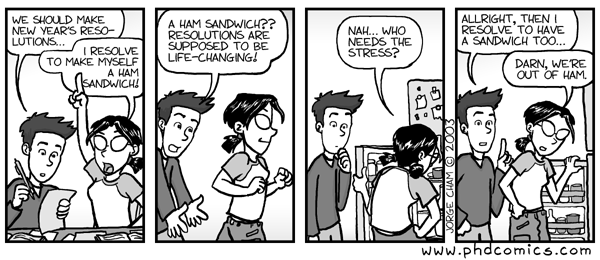
Many of us will be soon be thinking about making New Year’s resolutions, whether it’s to do with eating more healthily or doing more exercise. However, how many of us have actually managed to stick to our resolutions even though we know they are good for us? The question is – why is it so difficult to change our health habits?

While it’s well recognised that our environment does not help in encouraging a healthy lifestyle - from food and drink marketing to electronic devices promoting inactivity - could there be other reasons why we find it hard to change behaviour?

"Piled Higher and Deeper" by Jorge Cham www.phdcomics.com

What actually drives our behaviour?

Currently there exists many theories that try to explain why we do what we do, however, explanations are still lacking in regards to how our body and brain works together to directly drive our behaviour. When it comes to changing our habits, a key point to remember is that this involves stopping ourselves from doing things we consider pleasurable. For example, if you’re on a diet, every time you see an unhealthy snack, you have to tell yourself to STOP. Or, if you’re not a fan of exercising, why would you get off the sofa and slip on your running shoes? Making ourselves do things that don’t provide us with an instant reward can be stressful. These examples suggest that changing our habits can be stressful, that is, (the thought of) diet or exercise can become a source of stress (a stressor), and this makes our brain’s impulse control system work harder in order to adopt a new habit. Researchers have found that some of us can become stressed when seeing images of food, and are also not as good at controlling our impulses.1 Food craving, especially from seeing foods that we like, is a known stressor and the stress experienced from having to control our cravings is likely to tire out the impulse control system that can lead us to give in to temptations.

We might be able to change our habits for a short time as we become vigilant towards our goals, that is, the need to stick to our diet or exercise. However, we all have our limits and if stress from restricting our behaviour continues it will sap our ability to control our impulses, and our behaviour will return to what we are used to (or our ‘normal’). We saw another example of short-term success in behaviour change during our research. When monitoring children’s physical activity, some showed a burst of activity level at the start, but before long, it quickly dropped.2 These children were characterised by being hyper-vigilant towards stressors and they were generally more inactive than other children. We speculated that it was our monitoring of the activity that increased stress as the children felt that they had to show us they were more active which might spur on the initial activity spike, but as the children’s impulses for inactivity built up, it resulted in a considerable drop later on.

What’s next - how can we possibly take up, and keep up with, good health habits?

To influence health behaviour, it is crucial to understand the stress-impulse control mechanisms that DIRECTLY drive the behaviour. To use an analogy, if a person has a fractured arm, a direct treatment would be fixing the bone, rather than taking painkillers which would help to relieve the pain but not fix the problem. Similarly, if it is the stress from behaviour change and its influence on impulse control that directly causes us to succumb to temptations, we ought to target psychological interventions that reduce stress, or the brain’s impulse control system. Being able to manage our stress-impulse control system is particularly vital in the current environment where we are constantly exposed to temptations that lead to an unhealthy lifestyle. It is important to note that other factors, such as motivation and intentions, are also influential in changing our behaviour, however, this stress-impulse control process may more directly dictate the way we behave within split seconds and without our conscious awareness.

A possible psychological intervention is mindfulness training which can increase awareness of the stress cues, so that self-control can be executed before the brain’s impulse mechanism takes over. So next time we have a craving for an unhealthy snack or we are getting worked up about going for a run, we can potentially cope by containing and managing stress and impulses.

We believe that more research needs to be invested in the stress-impulse control mechanisms as it can potentially enhance the effectiveness of future individual health behaviour interventions and public health messages in getting us live a healthier lifestyle, and crucially, it can revolutionise the way we think about health behaviour change.


References
  1. Spitoni, G.F., Ottaviani, C., Petta, A.M., Zingaretti, P., Aragona, M., Sarnicola, A.,. & Antonucci, G. (2017). Obesity is associated with lack of inhibitory control and impaired heart rate variability reactivity and recovery in response to food stimuli. International Journal of Psychophysiology, 116, 77-84. https://www.sciencedirect.com/science/article/abs/pii/S0167876016307310?via%3Dihub
  2. Ling, F.C.M., Masters, R.S.W., & McManus, A.M. (2011). Rehearsal and pedometer reactivity in children. Journal of Clinical Psychology, 67, 261-266. https://onlinelibrary.wiley.com/doi/abs/10.1002/jclp.20745

The views expressed here are those of the authors and do not necessarily reflect those of Fuse (the Centre for Translational Research in Public Health) or the author's employer or organisation.

Friday, 11 September 2020

Catching golden opportunities to create public health evidence as they fly by...

Posted by Dr Helen Walters, NIHR Public Health Consultant Advisor

This week it was announced that a UK collaboration led by Fuse had been awarded prestigious funding to lead a Public Health Intervention Responsive Studies Team (PHIRST), as part of a new national scheme. 

Dr Helen Walters, NIHR Public Health Consultant Advisor
Here Helen Walters introduces the four newly launched public health research teams, contracted under the PHIRST scheme, to enable local authorities to rapidly evaluate interventions aiming to improve health and tackle health inequalities in their areas.

When I was a Director of Public Health in London I knew that my team were delivering innovative schemes that affected large numbers of people. Our hope was that the schemes would improve health and reduce the health inequalities experienced by some highly deprived populations. But we didn’t really know whether they were achieving this.

Did the Healthy Schools programme working across more than 1,500 schools in the capital improve the health of thousands of children? Did the Healthy Workplace award scheme improve sick leave levels for London’s employers? Would getting the Healthy Streets approach into the heart of the Mayor’s Transport Strategy make any difference to physical activity levels in the city?

We were basing these schemes on the little evidence that was available, but we could not find a way to get them evaluated to build that evidence-base any further. Public health practice in local government is mainly distant from academic public health research. Local government does not have a culture of undertaking research. It moves fast, and does not have routes into research funding. Golden opportunities to learn and evaluate were being lost.

The PHIRST Scheme


The NIHR’s Public Health Research programme (PHR) is experimenting with a new scheme to try and solve this conundrum – the PHIRST scheme. PHIRST stands for Public Health Intervention Responsive Studies Teams. The idea is that the PHR contracts with four academic teams who are ready and waiting, fully-funded, to evaluate schemes that are happening in local government across the UK.

The timing could probably not have been worse but somehow, despite pestilence and lockdown, we have managed to appoint four teams, and to match them up with four local authorities that are keen to have their schemes evaluated. Issues include:
  • free school breakfast clubs in Hammersmith and Fulham
  • citizen-informed design of employment support in Fife - Fuse project in collaboration with Fife Council
  • remote provision of drugs and alcohol services in Leeds 
  • reducing exposure to adverts for foods that are high in fat, salt and sugar (HFSS) on the transport system in Yorkshire 
The PHIRST teams are led by prominent public health researchers: Ashley Adamson (Newcastle University), Susie Sykes (London South Bank University), Rona Campbell (University of Bristol), and Katherine Brown and Wendy Willis (University of Hertfordshire). They will work closely with each local authority to co-create the evaluation with the heavy lifting being undertaken by the PHIRST teams and fully funded by the NIHR, starting in September.

Timely and accessible research for local authorities


And in a few months the PHR programme will go out to Directors of Public Health and ask for more schemes to evaluate, so we can keep the PHIRST teams busy. If it works the plan is to make this a rolling programme.

Local authorities have huge opportunities to influence health and health inequalities but without an evidence-base they cannot maximise these opportunities. The hope is that this scheme will provide timely and easily accessible evaluations for those who are still hard-pushed Directors of Public Health so that, in the future, there will be an evidence-base.

For further information please visit the NIHR website or email phr@nihr.ac.uk.

The views and opinions expressed in this blog are those of the authors and do not necessarily reflect those of the NIHR, NHS or the Department of Health and Social Care.

Helen Walters' blog was originally published on the NIHR website.

Friday, 3 April 2020

The mental health of the nation has never been so under threat

Posted by Fiona Duncan, Postdoctoral Research Associate, Durham University

Lockdowns and self-isolation, increasing care demands, concern for others, and ongoing uncertainty are exacerbated by a reinforcing 24-hour news and opinion cycle, playing havoc with our stress and anxiety levels and battering our overall sense of wellbeing. The coronavirus crisis.

However, for many people across the country, a feeling of their wellbeing being under attack is not new. Experiences of overwhelming debt, long-term unemployment, insecure housing, poverty, food insecurity, social isolation lasting months or years and/or discrimination are common and can collectively chronically diminish the mental health of the public as a whole.

These normal and extraordinary circumstances raise the question of how the mental health of an entire population can be supported, or in other words, how can we improve public mental health (PMH)? Over the past year, I have had the privilege of investigating this complex question in detail within Fuse.

My work has primarily involved mapping interventions currently being delivered to improve PMH, exploring models of good practice and searching for emerging innovative ideas. This focused on two areas – Blackburn with Darwen, and Redcar and Cleveland – which were selected on the basis of mental health statistics and varying characteristics (e.g. rurality, deprivation etc.).

I found this mapping exercise a great opportunity to get out and about and talk to people who organise and deliver projects to improve PMH on the ground in their local area. I spoke to a lot of very helpful people who were very passionate about the work they did and it was inspiring to hear about the variety of innovative projects that were being provided for people in these local authority areas to promote good mental health and prevent mental illness.

One of our main findings was that interventions to prevent social isolation and loneliness by providing various social activities were most common. This may reflect how recent campaigns surrounding reducing social isolation in older adults have influenced policy. Although a multitude of individual, family, community and structural factors influence PMH, not all of these were addressed. Does this suggest a wider variety of interventions are required in the future or would it be better to develop interventions which have the ability to target multiple factors at the same time? For instance, interventions which increase social networks within society, self-confidence or self-efficacy may enable people to deal with many different threats to their mental health without having to use a specific service.

An interesting finding of this mapping exercise was that a lot of these interventions either hadn’t been evaluated at all or only a very basic evaluation had been carried out so there was very little objective evidence regarding their effectiveness. This is something we hope to address in the next phase of the project by carrying out in-depth evaluations of promising interventions, including their potential to be delivered on a larger scale.

One final finding from this mapping that seems more relevant now than a month ago is that very few of the public mental health interventions could be delivered exclusively online. The implications of this are that the vast majority of the projects that we identified will most likely be suspended and many people who depended on this support will be left to cope alone. Moreover, people who are currently struggling with the isolation of lockdown have reduced options for help. Although Public Health England has published online guidance for the public on the mental health and wellbeing aspects of coronavirus there is an urgent need for supporting remote delivery or new online interventions within the next few weeks (of course, recognising that not everyone has access to these).

We also need to consider what we are all going to do when the COVID-19 situation is over. Will the country’s mental health bounce back to normal levels without any help, perhaps benefitting from the shared sense of community and new ways of living and working developed during the crisis? Or, will we need to work hard to develop and deliver services at the individual, family, community and structural levels to repair the damage that has been done to the mental health of the nation?


This work was part of WP4 of phase one of the NIHR SPHR Public Mental Health programme.  Information about the wider programme is on the SPHR website and was a collaboration of researchers based at Fuse, UCL, Imperial College London and Cambridge University.

Friday, 21 February 2020

Workplace Health and the Cauldron of Evidence

Scott Lloyd and Sarah Slater, Advanced Public Health Practitioners, Public Health South Tees 

Systematic reviews are brilliant. They take all the available evidence for a particular topic, do something special (stick the results into a big cauldron) and churn out a finding that informs us mere mortals in policy and practice where we should and shouldn’t be investing our money and capacity.

Double, double toil and trouble...
In these austere times, such evidence about what works and what doesn’t is so important – especially when combined with the how and why. This recent review by Jenna Panter and colleagues is an excellent example of what works and how.

However, there is one sphere of public health where we feel that systematic reviews may not paint a full and fair picture.

Let us explain.

Workplace Health


Most public health colleagues have a speciality or five. This might be a topic (e.g. nutrition or addiction) or part of the life-course (e.g. children and young people or older adults).

We are Workplace Health Specialists with 28 years of combined experience. We’ve supported employers of all descriptions, including businesses of different sizes and in different sectors. We’ve worked on national workplace health programmes, such as the Well@Work programme led by the British Heart Foundation between 2005 and 2007, and have been involved in the North East Better Health at Work Award since its launch in 2009 (arguably the biggest and most successful workplace health programme in England). We’ve a lot of experience of supporting NHS organisations who are trying to improve the health of staff – sometimes successfully, sometimes less so.

Working with such a variety of employers to improve staff health is a challenge of both knowledge and skill because they are looking to you, as the expert, to come up with evidence-based suggestions. Consider how you might support the below employers (real examples for us) to encourage physical activity in their workforce:
  • A tea factory which operates 24 hours a day with mixed shifts and a predominantly female, part-time workforce
  • A call centre for a bank employing 1,200 mostly young staff, in a mainly sedentary occupation
  • A call centre for a public sector organisation employing workers typically aged 40 plus, in a mainly sedentary occupation
  • A mining company at which the majority of the workforce arrive, take a lift down a shaft for 20 minutes, work a shift underground in 40 degree heat, resurface in the lift and get straight in the car to head home
  • A category B prison. 
How would you support an employer to encourage physical activity in a call centre?
What you might suggest to each of the above five employers (and what might work) could be completely different (and probably would be). At least in each of those scenarios, the workforce is likely to be pretty homogenous. Consider working with a huge employer such as a Local Authority or NHS Trust which arguably have massive internal differences in staffing groups in terms of age, gender, hours, and roles (e.g. office staff vs refuse collectors).

We believe that these differences make workplace health a different kettle of fish compared to other settings, such as schools, colleges, universities, and prisons, which could be comparatively homogeneous. They aren’t of course – there are massive differences between schools for example, but our suggestion is that they have the potential to be very similar if all variable things (e.g. culture, policies etc.) were the same. 

What’s our point?

Firstly, that lumping trials of workplace health interventions and programmes into a systematic review masks these potentially huge differences. We’re not sure how we get around this issue but we are raising it as an issue.

Secondly, to suggest that there is a lot more research to be done. There are some workplaces that should be considered a priority. For example, the majority of the working population in the private sector (60%) are employed by small-to-medium sized enterprises (less than 250 employees) and this is an area that no-one has cracked in terms of health and wellbeing via the workplace. Another example is call centres: given the sedentary, pressured nature of the work. One feasibility trial has recently been completed (Morris et al. 2019)[1] and another is underway (involving Scott). We can’t do individual studies for every type of workplace but some should be considered a priority.

Thirdly, to highlight the skills possessed by our peers who lead on workplace health. Employers and employees can throw all sorts of issues at you from bread and [low fat] butter stuff like physical activity and mental wellbeing to stuff like menopause awareness and sleep. Not only does a workplace health specialist need to maintain a base knowledge of all these topics, but they also need to understand how it might be tackled in the various types of workplace highlighted above.

It would be remiss of us not to plug the North East Better Health at Work Award. It needs a stronger evaluation building on previous work (Braun et al. 2014)[2], but we’re talking about a programme that was launched in 2009 and has actively engaged hundreds of employers every single year since (456 currently engaged at January 2020), supporting them to promote the health and wellbeing of their staff (potential combined reach of 202,962 working adults as of January 2020) and the wider community. We’re always recruiting more businesses so if you would like to know more visit www.betterhealthatworkne.org.


References
  1. Morris, A.S., Murphy, R.C., Shepherd, S.O., Healy, G.N., Edwardson, C.L. & Graves, L.E.F. (2019). A multi-component intervention to sit less and move more in a contact centre setting: a feasibility study. BMC Public Health, 19 (1), 292                                    https://bmcpublichealth.biomedcentral.com/articles/10.1186/s12889-019-6615-6
  2. Braun, T., Bambra, C., Booth, M., Adetayo, K. & Milne, E. (2014). Better health at work? An evaluation of the effects and cost–benefits of a structured workplace health improvement programme in reducing sickness absence. Journal of Public Health, 37 (1), 138 –142  https://academic.oup.com/jpubhealth/article/37/1/138/1559494


Image 2: Photo by Arlington Research on Unsplash

Friday, 17 January 2020

School food research and teenage diets mean sleepless nights and a mountain to climb

Posted by Kelly Rose, Graduate Tutor/PhD researcher at Teesside University

In the spirit of the commencement of the New Year, I thought it the perfect timing to write a second Fuse blog post reflecting on my first year of PhD study. Also, driven by my waking at 2am, Monday of the first week back in a cold sweat, realising I am more baffled than ever!

In my first blog post, I described myself as feeling at the bottom of a mountain…

Now a year and a half in, I can report some relief at successfully passing my annual review, confirmation that I have the capability. This is definite progress, and a sure sign of having climbed at least a little higher towards the summit. A few days ago I also celebrated my 44th birthday, and I suppose the coinciding of a new decade brought a significantly reflective mood (in the most positive sense). This past year has tested me in so many ways that I had never expected. If you want to know yourself at a deeper level, I think a PhD certainly would be the recommendation. I started this journey with the attitude (that I was always telling my students and children) that anyone can do anything they set their mind to. This mantra has definitely helped in times of significant self-doubt.

Progress update

So far, I have completed a systematic review, had a paper of the political timeline of food policy published in the Nutrition Bulletin, shared my research in a conference, and was boosted by an article I contributed to the conversation.com being shared in the Independent online.

What have I learned?

I left secondary school teaching in July 2018 with a strong sense that more was needed to improve adolescent nutrition. Today, with more of a grasp on the research, I am even more incredulous as to why more is not being done by policymakers.

The evidence is clear, teenagers have the poorest diets of any other age group in the UK. The Lancet commission stated we can reap huge benefits from improved health policies, focusing on the global adolescent population, after all they are our future parents and workforce. As I found in the political timeline research and systematic review, there are many examples of good practice with regards to implementing and evaluation of school food standards, whole school policy and health interventions. But still no priority being placed on consistent evaluation and of policing school food provision in England.

Waking up at 2am questions
  • Why is our school food provision failing to improve adolescent nutrition?
  • Why does the Childhood obesity strategy (part 2) make the assumption that all schools in England are following the national school food standards when there is no evidence that most schools are? #pizzaandcookies. 
  • Why the inertia and lack of prioritising teen diets, when the evidence points to the impacts of diet on mental health and school performance? 
Of course, it’s just not that easy, because, this is a multilevel issue, and the problem is much more complex than just implementing a policy or three. There are significant barriers to challenge, as we see the commercial determinants to health as a major part (defined as “strategies and approaches used by the private sector to promote products and choices that are detrimental to health” (Kickbusch et al 2016)).

One of the factors I want to focus in on over the next two years, is the social aspect of teen diets. It is becoming more and more an accepted ‘norm’ that teenagers have a poor diet, and food choice is a major factor in fitting in with peers, with healthy food choices often ridiculed. A low risk perception of unhealthful food choice seems to be a barrier in improving the health of the next generation. I wonder how we can flip this influence.

With all the reflecting done, I am ready to move forward into 2020. This year the plan is to see my systematic review published, to plan and conduct research in building a picture of experiences, views and what is happening in a range of schools in the North East. And with this public declaration I aim to keep momentum and to contribute to the body of research moving forward.

Keep believing and achieving.


Image:
"Junk fast Food illustrations infographics editorial" by Svajune Garnyte is licensed under CC BY-NC 4.0

Friday, 14 June 2019

Battle planning to reduce childhood obesity

Michael Chang, Co-founder, Health and Wellbeing in Planning Network

Latest statistics show that obesity prevalence is highest in London, the West Midlands and the North East and there is a significant gap in children living in the most and least deprived areas. So I am supportive of Local Planning Authorities (LPAs) using relevant planning powers at their disposal to promote a healthier food environment to help reduce childhood obesity levels and close the inequalities health gap.

Here I want to reflect on efforts by councils to introduce planning policies and guidance to manage unhealthy food environments around schools and other educational settings. It follows on from a previous blog on whether councils have what they need to help tackle obesity?

The context of this blog is the recent session from the draft New London Plan examination on draft Policy E9 C which seeks to control proposals containing hot food takeaway uses (A5 class use in planning terminology) within 400 metres walking distance of an existing or proposed primary or secondary school. Many other local authorities are proposing similar policies and undergoing similar stages of the local plan in the North East and other parts of the country.

The London Plan is the Mayor of London's strategic planning document and sits above individual borough Local Plans. It sets out 'issues of strategic importance' (note terminology used) for all of London while individual borough issues are dealt with at borough level. It is a powerful and influential planning document for borough level planning policies and planning decisions across the 32 London Boroughs and the City of London. It is as upstream as you can get in terms of policy influence. Other areas with Combined Authorities or joint planning units will also be developing these strategic planning documents.

London Plan examination held at London City Hall
What is an examination?

Draft policies need to be tested through an ‘examination’ before they can be adopted by councils. Don't let the terminology put you off - essentially an independently qualified person(s) from the Planning Inspectorate carries out an inquisitorial process on whether to accept, suggest revisions or reject the proposed policies. Often policies on takeaways fall at this hurdle and are subsequently watered-down or deleted altogether.

Policy approaches to managing fast food takeaways

Fast food takeaways, in planning terms in England (Wales, Scotland and Northern Ireland will have their own variations of the use class classification), is a specific use class - A5 - for selling food to be consumed off the premises. Planning permission is needed for change of use to A5 from other uses such as a hairdressers. There are many 'planning' approaches to managing fast food takeaways and only recently have the approaches been influenced by a need to tackle public health issues such as obesity. Latest research by Keeble at al. found 50.5% of LPAs had a policy specifically targeting takeaways with 34.1% focused on health. Planning Practice Guidance, Health and Wellbeing Paragraph 6 sets out examples of approaches for consideration including over-concentration and proximity to certain activities.

Opposing arguments

There are opponents to takeaway policies who believe them to be overly restrictive. Their arguments have some merit, particularly against economic reasons in areas desperate for economic activity. I would suggest policies can be justified as part of a package of policies to tackle unhealthy environments as well as prosperous diverse local economies. Common themes from those opposing include:
  • "The policy does not meet National Planning Policy Framework (NPPF) soundness tests"
  • "There is no objective evidence for any link between the incidence of obesity and the proximity of hot food takeaways to schools" 
  • “Obesity is complex and you can’t narrow it down to just takeaways”. 
  • "The local area has the lowest percentage of overweight or obese children" 
  • "There are unintended consequences for local jobs and employment" 
  • "The policy would limit consumer choice and access to retail" 
  • "The policy would also ban healthy takeaways and does not address unhealthy food sold in other non-A5 outlets".

Hold your ground: defending a 'sound' takeaways policy

This singular policy issue or public health intervention of managing takeaways is deceptively complex, and battles are taking place up and down the country as councils defend the soundness of policies against objectors as well as the probing questions from inspectors. When defending a takeaway policy, there should be a combination of the following:
  • Valid consideration: Be confident that efforts to tackle obesity through the environment can be a material planning consideration.
  • Planning basis for obesity: Recognise that the NPPF requires planning to consider all three social, economic and environmental factors equally. But make sure there are priorities on tackling obesity through the environment in local health strategies. 
  • Local evidence: Do your research and build up a local evidence base, including the use of up to date data and mapping to demonstrate the scale and location of the problem. This should also include knowing the background of those who operate local businesses – independent or chain. 
  • Whole systems approach: Take a corporate approach by referring to programmes such as promoting healthier catering, food growing and education to demonstrate the action is part of a cross-council initiative. Also demonstrate you are planning for a healthy weight environment, and that the takeaways policy is an important part of the jigsaw. 
Researchers, local government and national agencies are aware of these practical challenges hindering local action to make it less easy for kids to become overweight. Concerted efforts and peer support are needed so let’s keep the conversations going.


References:
Image:

Friday, 7 June 2019

Take it away: a masterclass in healthy takeaways

Post by Scott Lloyd, Advanced Public Health Practitioner at Public Health South Tees and Karen Pearson, Catering Monitoring & Advisory Officer at Redcar & Cleveland Council

Whether it is the Golden Cod or the Taste of India, independent hot food takeaways get a bad rap in Public Health circles. They serve food and drink that is predominantly higher in fat, salt and sugar and may contribute to noise pollution and other environmental ills. Furthermore, they may not be the best option for our beleaguered high streets as they tend to be shuttered up during the daytime.

Up to March 2018, for a variety of reasons (including health), 164 out of 325 Local Authorities (50.5%) have introduced powers through Local Plans or Supplementary Planning Documents (SPD) that aim to restrict the proliferation of hot food takeaways (Keeble et al. 2019)[1].


Watch this video to find out more about how we worked with takeaway owners
(click here if the video doesn't appear above)

But let’s be honest – that horse has already bolted. Analysis by Public Health England has shown that there is an average of 96.1 hot food takeaways per 100,000 population in England (Public Health England, 2018)[2].

Where we work in Redcar and Cleveland, the Local Authority introduced a SPD in 2008 that restricted the percentage of hot food takeaways (A5 class use in planning terminology) in any commercial centre to no more than 5% - but even then, each commercial centre already had more than 5% hot food takeaways.

So we have to accept that hot food takeaways are here to stay – at least for the foreseeable future. Many Local Authorities have implemented interventions such as award schemes that engage these businesses to support them to improve the healthiness of their food offerings, but with limited evaluation (Hillier-Brown et al. 2017)[3]. Indeed, we have a Food4Health award in Redcar and Cleveland, which is open to all out-of-home caterers. We were doing OK in engaging hot food takeaways but we wanted to try something different.

In 2015, the Foodscape team organised a Fuse Quarterly Research Meeting on developing interventions with out-of-home caterers. One of the presentations was by Louise Muhammad from Kirklees Council on the healthy takeaway masterclass that they had developed and delivered to over 20% of the eligible businesses on their patch. The masterclass was described as a three-hour session in which hot food takeaway owners and managers learn about the small, sustainable changes they can make so their food is a little healthier without costing a huge amount or that will actually save them money/generate new custom.

A few months later, we travelled down to Huddersfield to watch a masterclass being delivered. It was clear from the start that this was something that engaged businesses and had potential. The decision to repeat it in Redcar and Cleveland was easy.

Takeaway owners and managers learning about small changes to make their food healthier
We worked with the teams from Kirklees and Foodscape to deliver our first masterclass in May 2016. In line with what Kirklees do, we invited hot food takeaways with a food hygiene rating of three or above – the feeling was that any outlets with less than this really needed to concentrate on food hygiene first. In total, 181 invitations were sent out and 18 attended, representing 10% of those eligible – a figure that we practitioners were happy with (if not all the academics!).

The Foodscape team conducted a mixed methods evaluation to explore the acceptability and feasibility of the masterclass intervention (Hillier-Brown et al. 2019)[4]. The takeaways businesses that attended made a variety of pledges – the ones that required less effort and cost (e.g. reducing salt and sugar in pizza dough) were implemented more so than other more potentially costly or difficult changes (e.g. stocking reduced sugar tomato ketchup).

Pledging to use healthier alternatives
Has this work made the hot food takeaways in Redcar and Cleveland healthy? No it hasn’t. Like the rest of us, businesses owners have a living to make and will cater to what their customers want. But as an example, Carol - the owner of a sandwich shop in Guisborough who stars in the film above - pledged to take 10% of the sugar out of her baking. Did her customers notice? No. Did, this make her flapjacks ‘healthy’? Of course not but they are now a little healthier. Hence, has the masterclass via all the pledges made their food offerings a little healthier? Probably.

We have since delivered a further six masterclasses, with the offer extended to other out-of-home caterers such as restaurants. About 30% of all eligible takeaways in Redcar and Cleveland have now attended a masterclass, with follow up support provided by the Food4Health award.

Engaging with hot food takeaways can be difficult. We are now struggling to attract new businesses onto the masterclass and may hit a saturation point at 35% or 40% of those who are eligible. Some owners have other priorities and some may not accept the healthy eating messages. Also, some hot food takeaway owners are not even resident to the UK so engaging them is nigh on impossible. But we have to continue to try.

Another key learning point is that we need to work more closely with suppliers. The majority of masterclass attendees pledged to start using healthier alternatives, such as reduced sugar tomato ketchup or reduced salt soy sauce but they were unable to source these items from suppliers at a reasonable cost or not at all. Hence, wider work is needed with suppliers which, as one of the other Foodscape projects showed, is possible (Goffe et al. 2019)[5].

But the masterclass is an acceptable and feasible intervention to engage a good proportion of hot food takeaways. We will continue to deliver it once or twice a year as long as there is sufficient demand. We’re hoping to run the next class in September, so lookout for that.

What the masterclass doesn’t do is engage the big operators such as McDonald’s and Just Eat, accepting that the latter works mainly through local independent takeaways (but what requirements can the national corporation specify on their local deliverers?). It’s likely that national work is needed with those corporations, continuing the good work of Public Health England and others.

We also need to be mindful of the potential impact of “dark kitchens” – potentially the “satanic mills of our era”. But I’ll save that for another time…


Read our handy Fuse research brief to find out more about the Foodscape study.


References:
  1. Keeble, M., Burgoine, T., White, M., Summerbell., C., Cummins. S., Adams, J. (2019). How does local government use the planning system to regulate hot food takeaway outlets? A census of current practice in England using document review. Health & Place, 57, 171 – 178. https://doi.org/10.1016/j.healthplace.2019.03.010
  2. Public Health England (2018). Fast Food Outlets: Density by Local Authority in England. Available at: https://www.gov.uk/government/publications/fast-food-outlets-density-by-local-authority-in-england [accessed 27 May 2019] 
  3. Hillier-Brown, F.C., Summerbell C.D., Moore, H.J., Wrieden, W.L., Adams, J., Abraham, C., Adamson, A., Araújo-Soares, V., White, M., Lake, A.A. (2017). A description of interventions promoting healthier ready-to-eat meals (to eat in, to take away, or to be delivered) sold by specific food outlets in England: a systematic mapping and evidence synthesis. BMC Public Health, 17 (1), 93. https://doi.org/10.1186/s12889-016-3980-2
  4. Hillier-Brown, F. C., Lloyd, S., Muhammad, L., Goffe, L., Summerbell, C., Hildred, N. J., ... Araújo-Soares, V. (2019). Feasibility and acceptability of a Takeaway Masterclass aimed at encouraging healthier cooking practices and menu options in takeaway food outlets. Public Health Nutrition. https://doi.org/10.1017/S1368980019000648
  5. Goffe, L. Hillier-Brown, F., Hildred, N., Worsnop, M., Adams, J., Araújo-Soares, V., Penn, L., Wrieden, W., Summerbell, C.D., Lake, A.A., White, M., Adamson, A.J. (2019). Feasibility of working with a wholesale supplier to co-design and test acceptability of an intervention to promote smaller portions: an uncontrolled before-and-after study in British Fish & Chip shops. BMJ Open, 9 (2), e023441. https://doi.org/10.1136/bmjopen-2018-023441

Friday, 12 April 2019

Making the rural a bit more idyllic

Guest post by Christina Dobson, Research Associate, Institute of Health and Society, Newcastle University

Ah, the countryside. The home of all that is natural and healthy, the epitome of the ‘good life’. Where you can stroll down the lane to collect fresh eggs or veggies from your neighbour, simply dropping your money in the honesty box left at the end of their drive. I grew up in a rural area, and still live in one now. I love that I only have to walk (more like dawdle - I have a very curious and distractible three year old!) for 10 minutes (five minutes without said three year old) from my front door and I am in the North Yorkshire Moors National Park.

And it seems that living in a rural area could actually be good for you in a number of ways. You are likely to be more satisfied with your life, experience better health overall, and live an average of two years longer than people in urban areas. Maybe it’s the un-polluted air, the connection between land and food, the sense of belonging and community? Or maybe that is just a myth, sold to us all through Postman Pat?


Because, actually, living amidst the beautiful rolling hills may not be so good for you if you develop cancer. In fact, it may even put you at greater risk of developing certain cancers and make you less likely to survive your cancer. With roughly 20% of the population of England living in a rural area, this poses a serious public health problem.

However, we don’t really know why rural patients are facing poorer survival rates than urban patients. One of the strongest factors is that cancer is often diagnosed at a more advanced stage in rural patients, limiting the treatment options available to them. We know that delays in diagnosis are strongly linked to advanced stage cancers, and, as such, encouraging early diagnosis has been central to UK cancer policy for over a decade.

When we begin to think about where diagnostic delays may be occurring for rural patients, it seems that they are investigated and diagnosed just as quickly as urban patients, after referral to hospital for specialist assessment. It follows then that there may be problems prior to referral to hospital that are slowing down rural cancer patients’ diagnoses, either in the way patients respond to symptoms, or the way they are managed in primary care.

Thanks to funding from Yorkshire Cancer Research, and alongside colleagues from Aberdeen and Glasgow, we are starting to look for answers to some of these questions. This study will involve interviewing people in rural Yorkshire to understand their experiences of bowel cancer symptoms and decisions around if, how, and when to seek help about them. The findings from these interviews will be used to work with local communities to think about what interventions we may be able to design to encourage people in rural areas to present to their GP and, hopefully, increase the likelihood that their cancer is diagnosed at an earlier stage and that they will survive.

It is an exciting study, as there is so little known about symptom experiences in rural populations, with lots of issues to explore. For instance, availability and regularity of public transport, provision of health care services in rural areas, hidden poverty, cultural beliefs and experiences of ill health and employment, to name but a few. And then there’s the messy complexity of defining the ‘rural’, or maybe we should be looking to instead describe the multitudes of ‘rurals’? Plenty to keep me busy!

With the arrival of National Bowel Cancer Awareness Month it’s been valuable to reflect on the importance of this study and the opportunities and challenges that lie ahead. Understanding some of the barriers to timely presentation that exist for rural populations, and devising ways to overcome them is our challenge for the next two years, and beyond. Maybe, longer term, we can help to make the ‘rural’ a bit more idyllic.