Showing posts with label youngpeople. Show all posts

Friday, 5 June 2026

Why safer spaces matter for young people’s physical activity

Posted by Caroline Dodd-Reynolds, Professor of Physical Activity, Durham University

Fuse Associate Professor Caroline Dodd-Reynolds explores what can be done to create environments in which LGBTQ+ young people feel safe to enjoy physical activity. Fuse blog in Pride Month.

This work forms part of the Joyful and Safe Physical Activity (JASPA) project, funded by the National Institute for Health and Care Research (NIHR). This project, and the funding that supports it, are only possible through Fuse, the Centre for Translational Research in Public Health, and its membership of the NIHR School for Public Health Research (SPHR).


The 2026 Commonwealth Games come to Scotland this summer, showcasing elite athletes at the top of their game. But for most of us, physical activity looks much more ordinary: walking to school, joining a PE lesson, dancing in the kitchen or going to the gym.

Now think about how that kind of movement feels. Easy? Enjoyable? Safe?

For many LGBTQ+ young people living in disadvantaged areas, the answer to those questions is no.

In our creative joyful and safe physical activity project, young people aged 14-21 showed us how adults can make physical activity feel more fun, safe and inclusive. They did this by reimagining what it means to be active, and by bringing colour, creativity and vibrancy into traditional sport and exercise spaces.

Around 80% of adolescents globally do not do enough physical activity, and global physical inactivity has remained largely unchanged for the past two decades. This affects growth, development, mental health and physical health. We also know that some young people face greater barriers than others, including those living in poorer areas, disabled and neurodivergent young people, and those with questions around their gender or sexuality.

Every child and young person should be able to take part in movement and physical activity without feeling disengaged, excluded or unsafe. Physical activity can, and should, bring joy. But this is not only about competitive sport, PE or joining a gym. Movement can also mean walking, dancing, playing active games, skating in the park, or simply feeling able to move through a space without fear.

In our earlier research, young people often knew exactly where they could be active: outdoors, at school or college, or in a local leisure centre if one was available. But knowing where to go was not the same as feeling able to take part. They described feeling harassed, worried, unsafe or excluded from physical activity.

We call this “physical activity insecurity”: when a young person’s ability to be active is limited because a space feels uncomfortable, exposing or unsafe. This can be especially acute for young people whose experiences of poverty, disability, neurodiversity, gender or sexuality overlap. Some transgender and non-binary young people in our research described harassment, exclusion and gender discrimination that made ordinary movement feel difficult or risky.

We worked with young people to explore what safer, more joyful physical activity spaces could look like.

Creating inclusive spaces

So what can adults, schools, youth workers, leisure centres and other community organisations do?

First, the language we use matters. Terms such as sport, gym or exercise can be immediately off-putting for some young people, especially if they already associate these words with embarrassment, exclusion or previous bad experiences.

Thinking about physical activity more holistically and using the term “movement” instead can help. Physical activity can be something as simple as walking.

Second, adults need to have honest conversations with young people about how they relate to physical activity. This might include talking about stereotypes around sport, PE or exercise, and how these make young people feel. It might also mean recognising that some young people have many other pressures in their lives, making physical activity feel like one more difficult or exposing thing.

Young people are most likely to engage with someone they already know and trust, in a calm and welcoming space. From there, adults can help reimagine physical activity as movement that might be enjoyable, informal and part of everyday life. This could mean dancing in the kitchen, roller-skating in the park, going for a walk, or simply feeling able to enter a room without bracing for judgement. More traditional sporting examples may work too, but they should not be the only starting point.

Third, adults can ask what might help organised and formal physical activity spaces feel more like the spaces young people imagine for themselves. That means listening to young people’s ideas, being open to challenge and rethinking what counts as a good physical activity space. For example, a good space may not be the one with the best equipment. It may be the one where young people can choose whether to join in, wear clothes they feel comfortable in, see signs that they are welcome, and leave for a quieter area if they need to.

Welcoming and safe

On a practical level, most physical activity spaces, whether indoor or outdoor, can be made to feel more inclusive and safe. Small changes can make a big difference. These might include using more vibrant colours, displaying friendly messages and avoiding long lists of rules and instructions.

It can also help to make participation optional rather than compulsory, provide a quiet space where young people can step away when needed, and reconsider clothing rules, which can be a major barrier for some.

The point is not to make every young person love sport. It is to ask why some spaces make movement feel exposing, difficult or risky. If adults want young people to be more active, the first step is not another rule, target or campaign. It is creating places where they do not have to brace themselves before joining in.

Find out more


Adapted with thanks to The Conversation

Friday, 12 December 2025

Nourishing our tomorrow needs to start today

Posted by Professor Amelia Lake, Fuse Deputy Director, and Professor of Public Health Nutrition at Teesside University

How do we create a future where every child has access to healthy, affordable food?

That question took centre stage at the British Nutrition Foundation annual conference, which brought together academics, policymakers, and practitioners to tackle one of the most pressing public health challenges of our time: improving the diets of children and young people.

The event was given a special highlight with the attendance of Her Royal Highness The Princess Royal, Patron of the British Nutrition Foundation, who delivered a powerful address on the importance of food in society and education.

Professor Amelia Lake and collegues meeting Her Royal Highness The Princess Royal
Children’s health and children’s diets are hugely important. Yet, rising rates of obesity, food insecurity, and exposure to unhealthy food environments challenge the ability to have affordable and healthy food.

This conference explored both the challenges and solutions, offering evidence-based insights and practical strategies.

I spoke in the morning session alongside my Fuse colleague Professor Greta Defeyter (Northumbria University) and 
Professor Maria Bryant (University of York). A great representation of Northern University academics!

Profs Maria Bryant, Greta Defeyter, Amelia Lake (L-R) 
Our morning session had a very special guest in the audience, Patron of the British Nutrition Foundation, Her Royal Highness The Princess Royal. Earlier the speakers were invited to meet The Princess Royal and individually talk to her about our work. A good ear for accents, Her Royal Highness. quickly recognised I wasn’t a Teesside native. Those who know me will be aware that I am from Northern Ireland, and I very much sound like I am.

My talk was titled: “Unpacking the Food Environment: Implications for Children and Families” and I discussed Healthy Planning and was able to introduce the audience not just to our academic evidence but also our evidence informed free online training on the topic aimed both at public health and planning teams in local authorities.

I presented our recent ‘Dark Kitchens’ research. The rise of online meal delivery and “dark kitchens” is reshaping how families access food, increasing exposure to calorie-dense options at the click of a button and increasing the availability of accessibility of less-healthy food choices.

While planning allows us to shape our food environment there is much we can do around food retail to create healthier food environments. I discussed some findings from our Fuse Foodscape study funded by the NIHR School for Public Health Research.

We cannot describe the food environment without acknowledging that many households face significant barriers to accessing affordable, healthy food, with direct consequences for children’s health and wellbeing. Food insecurity is real and affects families across the UK. At Teesside, we have worked with communities and organisations using innovative methods to produce healthy food within local social supermarkets such as our healthy ready meal.

Amelia speaking at the event
I called for stronger planning policies and interventions to create healthier food environments, emphasising the importance of collaboration between communities, professionals within local authorities, government and industry.

Improving dietary health isn’t simply about individual choice - it’s about transforming the food environments in which those choices are made.

Her Royal Highness The Princess Royal has been patron of the British Nutrition Foundation since 1988 and delivered a powerful speech at the conference, emphasising the importance of food in society and within education. Her remarks reinforced the British Nutrition Foundation’s mission to ensure every family can access a healthy, sustainable diets.

The conference showcased many impactful speakers and left us with the key message that Nourishing our tomorrow, needs to start today.


The British Nutrition Foundation hosted its annual conference, Nourishing Tomorrow: Equipping Children and Young People for Better Dietary Health in the Future took place on Tuesday 25 November 2025.

Tuesday, 4 November 2025

Brand to ban: What young people really think about energy drinks

Posted by Professor Amelia Lake, Fuse Deputy Director; Dr Helen Moore, Fuse Associate; and Grace Stewart - Teesside University. 

Walk into any corner shop, and you’ll see them lined up in the fridge: brightly coloured cans promising energy, improved focus and even hydration. They’re everywhere online too, all over social media feeds... What are we talking about? Energy drinks. They have become a familiar part of the landscape in the UK, but particularly for young people who are consuming them in ever increasing numbers; the question is, why are they so popular, and what is being done about it?

What are energy drinks?


High-caffeine energy drinks are soft drinks that contain at least 150 milligrams (mg) of caffeine per litre of drink, which is higher than other soft drinks. Back in 2018, Jamie Oliver led a campaign that resulted in many retailers voluntarily banning sales to under-16s. Fast forward to July 2024, and the new Labour Government announced in the King’s Speech that it would restrict the sale of energy drinks to under-18s. There is currently a live Government consultation around banning the sale of high-caffeine energy drinks to children which will close on 26 November 2025. If you want to contribute, please do so.

Our research


Our mixed-method qualitative study was published in the Journal of Human Nutrition and Dietetics this week. The work was carried out in North-East England and sheds light on the reasons behind young people still consuming these drinks in large numbers, and what they, the consumers, really think could be done about it.

Our research involved:
  • Focus groups with 50 students aged 9–14 years old
  • A survey completed by 22 Year 9 students (aged 13–14 years old)
The aim was to understand how children and young people perceive energy drinks and hydration drinks, and to explore their consumption habits post the UK’s 2018 voluntary sales ban to under-16s. This follows on from our earlier work published in 2017.

What did we find?
  • 81.8% of surveyed students (13-14 year olds) consume energy drinks, with boys drinking more frequently than girls.
  • Most young people drink EDs 2-4 times a week, and many started before age 12 years.
  • Taste, branding, and peer influence were major motivators.
  • Corner/local shops were the most common purchase point, often with little enforcement of age restrictions.
  • Hydration drinks (e.g. PRIME) are seen as healthier alternatives, though their actual health impact is still unclear.

So, why are energy drinks so popular?

Through the focus groups, we learned that young people are really clued-up about energy drinks. They talked about branding, marketing, taste, peer influence, cost, and just how easy it is to get hold of them. From YouTube ads to celebrity endorsements (think F1 and YouTubers like Logan Paul and KSI), marketing was seen as a powerful force driving consumption. One young person said:

“If I made the exact same drink, in a bottle, no one would buy it.”

Bright colours, cool designs, and slogans were all cited as reasons that young people are drawn to these products. Many of the young people taking part in the research knew that they were being targeted by the manufacturers, but they didn’t mind. In fact, some saw energy drinks as part of their identity, linked to gaming, sports, or just being “cool.”


Policy gaps and opportunities


Despite the 2018 voluntary ban mainly in supermarkets, energy drinks remain easily accessible. Many children believed there was a legal age restriction but said that they could still buy energy drinks from shops or online without ID checks. This links back to the importance of the current live consultation around Energy Drinks and sales restrictions.

This raises an important point for policymakers to consider: if energy drinks are still seen as aspirational, accessible, and part of youth culture, young people will find ways to get them, or switch to similar products that exist outside of the ban. There needs to be a wider strategy to tackle this, which means tighter regulation of marketing (anywhere that young people spend their time - including online spaces), effective, up-to-date, accurate education about the health impacts of energy drinks and the tactics used by manufacturers, and importantly including young people in this conversation.

Our research shows that young people are not passive consumers of energy drinks. They’re thoughtful, aware, and influenced by a range of social and cultural factors that need to be understood if we want to reduce energy drink consumption.

Our study had several possible interventions suggested by young people:
  • Actual legislative enforcement of age restrictions.
  • Changing product placement in stores (e.g., away from essentials and in areas similar to cigarettes and alcohol).
  • Duller packaging and clearer health warnings.
  • Wider awareness around health risks.
Why this matters

Energy drinks are linked to a range of health issues; from insomnia and anxiety to obesity and poor academic performance. Yet, their appeal among young people remains strong, driven by clever, pervasive, marketing in addition to peer influence.

Our paper highlights the urgent need for strong policy action, increased awareness, and further research in this space.


Images:
2: Photo by thom masat on Unsplash (with modifications)

Friday, 31 January 2025

Our experience co-producing a zine with LGBTQIA+ young people

Posted by Scarlet Hall, Research Assistant, Durham University and Fuse

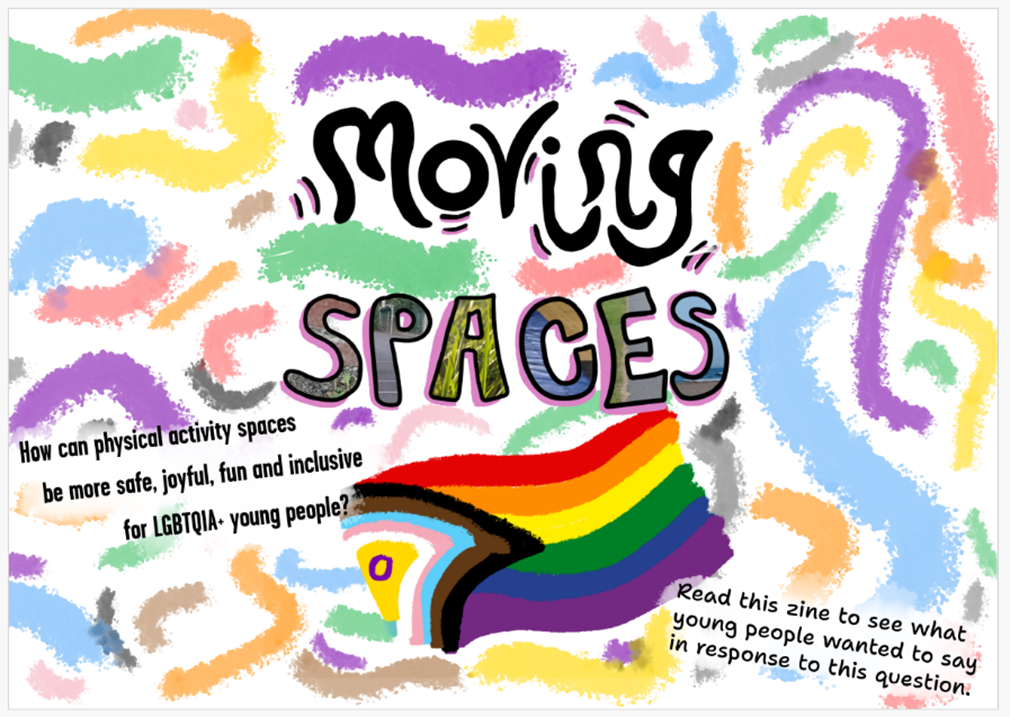
We have been collaborating with LGBTQIA+ young people in the North East and South Yorkshire, through Fuse led research funded by the NIHR School for Public Health Research (SPHR) exploring how physical activity spaces could be more joyful and safe. This blog describes how the ‘Moving Spaces’ zine was made and makes suggestions for those wishing to co-produce creative research outputs.

This blog draws from reflective conversations between Caroline Dodd-Reynolds (Fuse), Mary Crowder (University of Sheffield) and Shevek Fodor (Sounds Like Shevek) during the making of the zine. It is written with contributions from Caroline, Mary and Shev.

Seek continuity between research methods and research outputs

At the start of our research project we knew we wanted to host a series of research workshops and then co-produce a physical activity resource with the young people we were working with. After seeing the results of using visual creative approaches in our workshops, we knew we wanted a highly visual and creative resource that would connect and resonate with people.

Shevek Fodor
Working with the right designer and format

We sent an advert out to LGBTQIA+ networks for a graphic designer who would understand the lives of diverse LGBTQ+ people, in particular young neurodiverse people. When Shevek Fodor shared their zines with us our eyes and hearts lit up. We invited Shev to lead on making a collaborative zine. We chose the zine because of its DIY ethos, radical history of self- publishing and as a vehicle for self or group expression of thoughts and feelings.

What is a zine?

Zines originated through people writing letters and sharing information about things they were driven and passionate about. They’ve been used as a way for people who were overlooked within mainstream media to have their voices heard.

Practice reciprocity

We thought the young people would be inspired meeting Shev, a young neurodiverse queer artist. For Shev, this role offered a new opportunity to experiment with collaborative zine-making in a research setting. We offered hands-on guidance (budgeting, finance systems, mentoring) as part of co-production principles of reciprocity. We introduced Shev to the young people prior to the zine session and their curiosity was piqued…’is this person one of us or one of them.…?’

Involving artists at later stages of research is not straightforward. We aimed for a balance between giving Shev space to design and lead the sessions while also sharing our own knowledge, ideas and learning. The trust built in earlier research workshops meant we could also pass on an established  quality of ease in the group when it came to the zine making workshops.

Trust the creative process of each person and the group

Shev laid the zine making table out in a beautiful, organised chaos of found images, stickers, magazines and cards. Young people made creative contributions to the zine, inspired by earlier conversations about physical activity. They found ways to take part and to also hang out in their safe space – which we were encroaching on. Some people chewed and chewed over the right words to express themselves with contributions coming together at the end. One person got stuck and did their piece later with a youth workers’ support. Two zine contributions were made that involved multiple voices, through Scarlet documenting conversations around particular images. Scarlet also made contributions from a researcher’s perspective. Shev took these contributions – writings, drawings and collages – and wove them together into a first draft.

Allowing the time for collaborative editing – it brings difference into conversation

We shared this draft with the youth groups, the SPHR and Fuse communications teams and academic colleagues. We received a lot of feedback – the zine was provoking conversations. The young people gave detailed feedback on what they liked, what was missing, and sequencing of ideas. They spoke the words that became the introduction and expressed their small hopes for a few people to engage with the zine. There was a thoughtful conversation across the youth groups, about whether to personalise individual contributions or depersonalise to show that it could be any LGBTQIA+ young person saying this.

Academic colleagues also read and shared reflections with us, including feedback that policymakers might struggle to engage with the zine’s non-linearity and various people suggested we include a page of key take-home messages and recommendations ‘so things don’t get lost’. The young people responded to this feedback saying that people needed to listen and pay more attention to the messages that were implicitly in there. This dialogue led to the writing of a framing document for the zine. 

Value queer embodied theory and practice 

Another dialogue arose around authorship. Some reviewers found it confusing not knowing who had written what and had a strong wish to know who – a young person or adult – had written different bits – a desire perhaps for a clear identification of distinct voices. For Scarlet, a queer researcher, the ‘queer polyvocality’ (Brice et al., forthcoming) of the zine – many voices that weaved together in to more than sum of their parts – reflected queer practices of overflowing notions of stable identity, disrupting predetermined binaries and unsettling ideas of authenticity (Lescure, 2023).

This somewhat aligned with ideas from the young people. For some, there was a wish for attribution so ‘friends and family would know I made this’, and there was also a wish for zine contributions to be unnamed ‘because any queer young person could have made any piece’ and ‘we made it all together’.

One young person said they appreciated that researchers ‘weren’t butting in with your opinions but also giving your views when right to do so’ and another adding ‘it’s important that the adults’ voices are also in there as you were part of the conversation, and some adults have also had similar experiences’. The young people decided to make creative doodles in place of signatures which were mixed in with academic doodles/logos to show the talking and making and editing together – the polyvocality – of the zine making process.

Through this collaborative editing process (over three months), the young people began to converse indirectly with interested adults who wanted to help, including with the funders. These conversations happened with the young people keeping editorial control. We sense this may open up and shape more generative future encounters between these young people and further influential adults.

Indeed, some of the young people involved have made a plan to hand deliver zines to local venues around town (hairdressers, surgeries etc.). It seems empowerment and co-ownership inadvertently leads to physical activity!

Explore the zine

To find out more about this work, please contact Scarlet scarlet.hall@durham.ac.uk or Caroline caroline.dodd-reynolds@durham.ac.uk 


References

Lescure, R.M., 2023. (Extra) ordinary Relationalities: Methodological Suggestions for Studying Queer Relationalities Through the Prism of Memory, Sensation, and Affect. Journal of Homosexuality, 70(1), pp.35-52.

Brice, S. Marston, K. Wright, R. and Hall, S. (forthcoming). ‘Mycelial Love’ in Harrison, P. Joronen, M. and Secor, A. Love and Catastrophe in Cultural Geography. Edinburgh University Press

Friday, 23 February 2024

School's out for stigma: Understanding the mental health needs of LGBTQ+ youth

Posted by Liam Spencer, Fuse Associate and Research Assistant at Newcastle University


February is LGBTQ+ History Month, an annual month-long observance of lesbian, gay, bisexual and transgender history, and the history of the gay rights and related civil rights movements. The 2024 theme celebrates LGBT+ peoples’ contribution to science and medicine both historically and today. 


In this blog, Liam reflects on his research of LGBTQ+ young people’s mental health.


As LGBTQ+ History Month unfolds, it offers us an opportunity to reflect on the strides we’ve made, the challenges we still face, and the incredible diversity within our communities. This month holds particular significance for me – a chance to not only honour the struggles of those who came before us, but also to celebrate the progress we’ve achieved and recommit to the work that lies ahead.

With a background in youth and community work practice, my research interests are primarily focused on children and young people’s mental health, particularly early and preventative interventions, and school-based interventions. My journey as a member of the LGBTQ+ community and as a researcher has been intertwined with a deep sense of purpose – to shed light on the unique mental health challenges faced by LGBTQ+ individuals. This is a mission born out of personal experience, and a desire to contribute meaningfully to the wellbeing of this community. 

I have recently been involved in several Fuse projects funded by the NIHR School for Public Health Research (SPHR) Public Mental Health programme, and I’ve had the privilege of being able to delve into the complex dynamics of LGBTQ+ mental health, particularly in school environments. One of these projects, led by Professor Liz McDermott, aimed to investigate the impact of school-based interventions on LGBTQ+ young people’s mental health.

In the first phase of our study, we did a realist review (a type of evidence review that assesses the specific contexts in which a certain intervention may or may not work) of published evidence and identified positive interventions that supported LGBTQ+ mental health in school environments. However, the focus tended to be upon outcomes and studies rarely detailed underlying processes. The second phase of our study aimed to develop a theory that explained how, why, for who, and in what context school-based interventions prevent or reduce mental health problems in LGBTQ+ young people, through participation with key stakeholders.

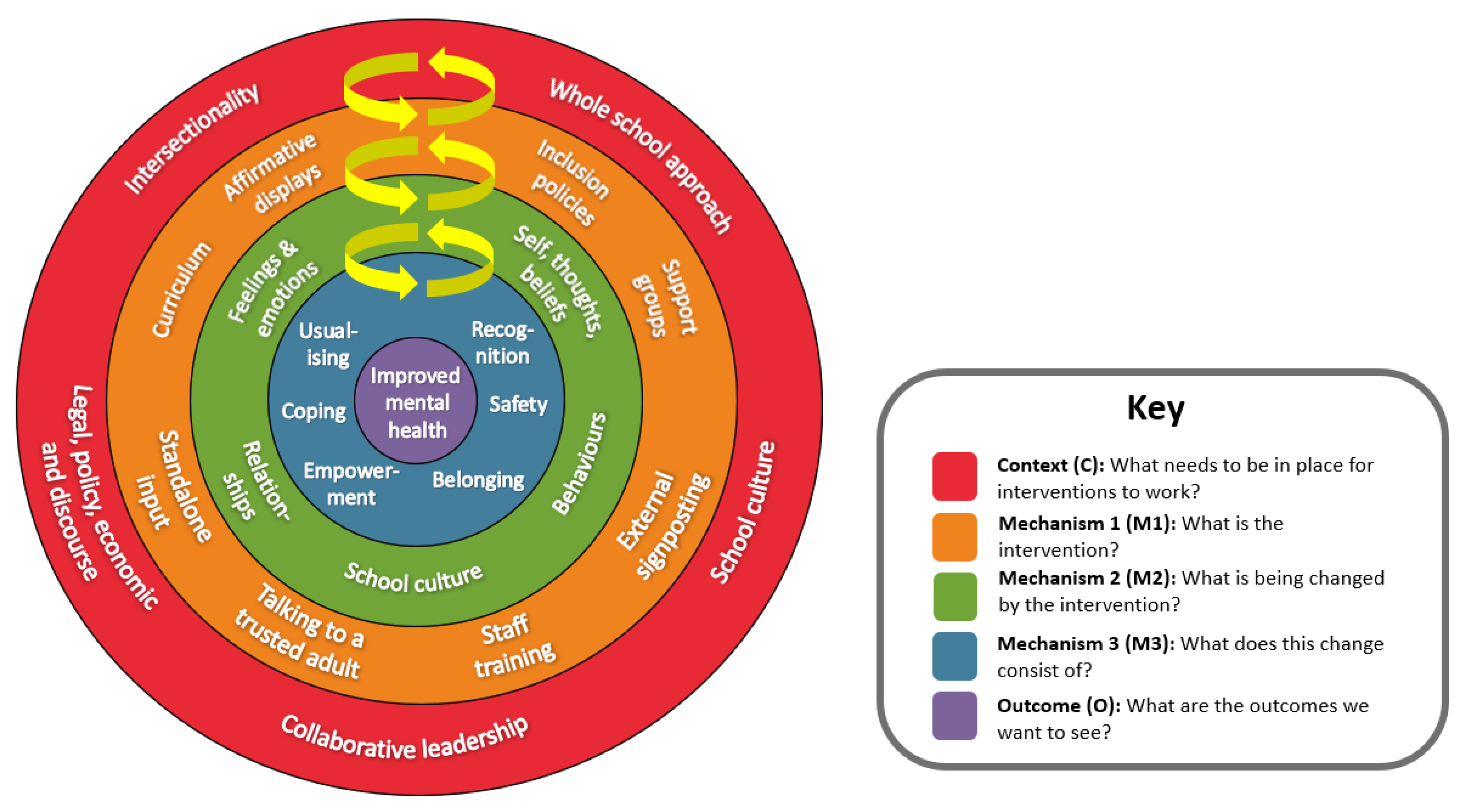
We interviewed LGBTQ+ young people aged between 13 to 18 years attending secondary schools; intervention practitioners; and school staff in the UK. We then analysed this data to identify relationships across different interventions that improved mental health outcomes. The theory we produced explains how school-based interventions that directly tackle dominant cisgender and heterosexual norms can improve LGBTQ+ pupils’ mental health. Specifically, our theory proposes three interventions that may improve these outcomes:
  1. Interventions that promote LGBTQ+ visibility and facilitate usualising, school belonging, and recognition.
  2. Interventions for talking and support that develop safety and coping.
  3. Interventions that address institutional school culture (staff training and inclusion polices) that foster school belonging, empowerment, recognition, and safety.
Ultimately, our research underscores the importance of providing a school environment that affirms and normalises LGBTQ+ identities, promotes school safety and belonging, and addresses systemic issues within educational institutions. By implementing evidence-based interventions informed by our theory, we can pave the way for improved mental health outcomes for LGBTQ+ pupils.

This month serves as a powerful reminder of our collective resilience, our shared struggles, and our unwavering commitment to justice and equality. Let us continue to push boundaries, challenge norms, and advocate for a world where difference is celebrated and all are embraced for who they are – within academia, our personal lives, and beyond.


Images:

Friday, 19 January 2024

Energy drinks may be commercially lucrative but what is more valuable than the health of our children?

Posted by Amelia A Lake, Professor of Public Health Nutrition at Teesside University, and Shelina Visram, Senior Lecturer in Public Health at Newcastle University

As we prepared our new review on the health effects of the consumption of energy drinks by children and young people, we have been dwelling more and more on the Commercial Determinants of Health.
The Commercial Determinants of Health are defined by the World Health Organisation (WHO) as: 

“...the private sector activities that affect people’s health, directly or indirectly, positively or negatively.”

The WHO definition goes on to expand on how these activities might include the private sector influencing:
“...the social, physical and cultural environments through business actions and societal engagements; for example, supply chains, labour conditions, product design and packaging, research funding, lobbying, preference shaping and others.”
Now cast your mind back to pre-Covid… a Government consultation on the banning of energy drinks had a 93% backing to restrict the sale of these drinks to under 16s. There was even a Green Paper proposing this. Yet, there has been inaction (helpfully summarised here by Sustain: the alliance for better food and farming).

What is causing this inaction? Is it a turnaround in evidence that suggests these drinks are not as harmful as previously thought, or is there something else going on...? Perhaps, instead there are some pretty significant commercial interests at stake; but what could be more valuable than the health and wellbeing of our children and young people?

Energy Drinks are VERY commercially viable. They have been the fastest growing sector of the soft drink market for some time. In 2020 the global market was worth $45.80 billion and this is projected to grow at an annual rate of 8.2%. In an article in December 2023, The Grocer described the hydration drink and energy drink market as “buoyant”.

Research has found that around one in three young people (under 18) say that they regularly consume energy drinks, typically containing high levels of caffeine and sugar in combination with other ingredients known to have stimulant properties. On average, young people in the UK consume more energy drinks than those in other European countries.

You may be familiar with the labelling on energy drinks:

Image courtesy of www.parliament.uk (by URL)
‘‘High caffeine content. Not recommended for children or pregnant or breast-feeding women’’

Under current labelling rules, any drink, other than tea or coffee, that contains over 150mg of caffeine per litre requires this label and should state the amount of caffeine in milligrams per 100ml of the drink.

Yet why do we see these drinks unrestricted and available to children and young people, not just in the UK but globally? Some countries have attempted to regulate energy drinks (see our research for more on this).

Our new review of the global evidence around energy drinks and the health impacts on children and young people shows a worrying increase in the types of health outcomes associated with their consumption. This includes mental as well as physical health behaviours. Not only health impacts but wider impacts around sleep and educational attainment.

This new review is the latest of many which have highlighted the impacts of these products to our younger population.

We accept the evidence is from mostly cross-sectional studies, exploring association rather than causation. Experimental studies to establish causation have both ethical and feasibility issues. We have argued before that the precautionary principle should be applied. This country bans the sale of a number of items to young people (fireworks, crossbows, knives) presumably these don’t have the large commercial interests or lobbying groups that the energy drink industry has?

Why are we applying a higher standard of evidence to energy drinks, if it isn’t around their commercial value?

The evidence is here, the labels clearly say these drinks are not suitable for children. How many more studies are needed before policy action is enacted?

------------------------------------------------------------------------------------------------------------------------------------------------------------------------------------------------------

Fuse Podcast about this Energy Drinks research
Listen to the latest episode of the Fuse podcast ‘Public Health Research and Me’, in which host and Fuse Public Partner Cheryl Blake chats with Amelia and Shelina about their research, to cut through the confusion and ask some the questions that you want to know about Energy Drinks.
> Listen now

Find out more


Images:
2. Courtesy of www.parliament.uk (by URL) > Parliamentary business > Publications & records > Energy drinks and children > 4 Labelling and advertising: 

The views and opinions expressed by the authors are those of the authors and do not necessarily reflect those of Teesside University, Newcastle University, or Fuse, the Centre for Translational Research in Public Health.

Friday, 17 March 2023

What can be done to improve the mental health of LGBTQ+ young people in schools?

By Liam Spencer, Research Assistant and ARC NENC Mental Health Research Fellow, Fuse & NIHR School for Public Health Research, Newcastle University

Young people who identify as lesbian, gay, bisexual, transgender, or queer/questioning (LGBTQ+) experience significant mental health inequalities in comparison with their peers. School environment is a major risk factor and is consistently associated with negative mental health for LGBTQ+ young people, as shown in research here, here and here. The UN Convention for the Rights of Child Committee has also specifically emphasised the need to take effective action to protect LGBTQ+ young people from all forms of violence, discrimination or bullying, and to improve mental health.

Our research

Our Creating LGBTQ+ Affirming School Environments (CLASS) research project aimed to investigate the impact of school-based interventions (schemes or initiatives) on the mental health of LGBTQ+ young people. In the first stage of our study, we reviewed published evidence, and identified positive interventions that supported LGBTQ+ mental health in school, however the focus tended to be on the outcomes rather than detailing how they were done.

We also interviewed 10 young people aged between 13 and 18 years, nine practitioners (e.g. people working in organisations who had delivered LGBTQ+ inclusivity interventions in UK schools), and three members of school staff, and analysed the data to identify interventions that improved mental health. We used this information to develop a theory model that aimed to explain how, why, for who, and in what context school-based interventions can prevent or reduce mental health problems in LGBTQ+ young people, in collaboration with these key stakeholders.

McDermott, E. et al. Understanding How School-Based Interventions Can Tackle LGBTQ+ Youth Mental Health Inequality:
A Realist Approach. Int. J. Environ. Res. Public Health 2023, 20, 4274. https://doi.org/10.3390/ijerph20054274

Our model (diagram above) has three levels at which interventions may work, on psychological, behavioural, emotional, cultural, and social levels. It explains how school-based interventions that directly tackle dominant cisgender and heterosexual norms can improve LGBTQ+ pupils’ mental health. 

Our findings

We found that contextual factors such as a ‘whole-school approach’ and ‘collaborative leadership’ were crucial to the delivery of successful interventions. Our theory suggests three ways (causal pathways) that might improve mental health:
  1. Interventions that promote LGBTQ+ visibility and ‘usualise’ the presence of LGBTQ+ identities, school belonging, and recognition.
  2. Interventions for talking and support that develop safety and coping.
  3. Interventions that address institutional school culture (staff training and inclusion polices) that foster school belonging, empowerment, recognition, and safety.
Our findings suggest that providing a school environment that affirms and ‘usualises’ LGBTQ+ identities, and that promotes school safety and belonging can improve mental health outcomes for LGBTQ+ pupils. The causal pathways we present are a starting point as theories, however more research to develop our understanding of how school interventions work to improve school climate and the mental health of LGBTQ+ young people is needed. We now need the UK, and other countries, to take seriously LGBTQ+ young people’s rights and ensure they are afforded equal respect and protection as their peers in schools. We may then find that the mental health of LGBTQ+ young people improves.

Read the full research paper here: Understanding How School-Based Interventions Can Tackle LGBTQ+ Youth Mental Health Inequality: A Realist Approach, 28/02/23

Funded as part of the NIHR School for Public Health Research (SPHR) Public Mental Health programme, the Creating LGBTQ+ Affirming School Environments (CLASS) research project, led by Professor Liz McDermott, aimed to investigate the mental health impact on LGBTQ+ young people of school-based interventions. Fuse is a founding member of the NIHR SPHR.


Friday, 9 December 2022

What support do children and young people actually want when their parents use drugs and alcohol?

Posted by Cassey Muir, Fuse & NIHR School for Public health Research (SPHR) funded PhD Researcher from Newcastle University and Kira Terry, Lived Experience Expert. 


“No-one has ever asked me about how I feel in any of this.”


I found the powerful quote above from a young person during my research exploring parent drug and alcohol (or substance) use from the young person’s perspective. Since then the question of ‘what support do children and young people ACTUALLY want?’ has remained central to my PhD research in this area.

Most schemes focus on the parents themselves, to reduce the risk to young people. While these interventions are needed it should be alongside and in addition to support for the child or young person as well. There are currently a very limited number of evidence-based interventions for young people whose parents use substances, with low quality effectiveness. The distribution of support services for children and young people whose parents use substances is also patchy across the country, with practitioners doing really great work with little funding and resources.

In a recently published review of the research in this area, I aimed to understand the experiences, perceived impacts, and coping strategies of young people whose parents used substances. The review was extensive - covering the perspective of over 700 children and young people from across twenty different countries - and I hope that it can help to inform practice and policy through illustrative cases of young people’s experiences, as well as giving insights into what support could be useful.

Feeling different and isolated

Working with PROPS Young Person’s Project, a group of young people with lived experience supported the early stages of this review to help us understand the findings. One area that the young people felt was missing and may not have been explored across the current studies was the experience of feeling different to their peers, and how they felt isolated and like they had to keep everything hidden from others. This idea, relating to the experience of stigma, helped me to explore the data from a different perspective.

Children and young people described living highly disrupted and chaotic lives, characterised by unpredictability and insecurity within their relationships. They also often experienced adversity occurring at the same time in childhood, such as parents with mental health problems, domestic violence and abuse, as well as poverty. Children and young people were impacted both emotionally and socially from their experiences of parental substance use, which often extended beyond their parents stopping use, further highlighting that child-focused support is crucial. The painful experience of shame, stigma, and discrimination due to their close association and relationship with a parent who uses substances, was often further compounded for those who had experienced poverty or lower socioeconomic status.

Resisting and coping

Most of the studies described the negative impacts of parental substance, without recognising children and young people’s agency and attempts to change, control, and resist their experiences or impacts. Children and young people tried to manage and mitigate vulnerabilities and be resilient to unpredictable, adverse, and stigmatising experiences. While it is not a child’s role to resist and cope with the negative impacts of parental substance use, they were trying to do this anyway, often without formal support in place. Formal support was often thought of as something children and young people only have at times of crisis and due to the stigma and fear of speaking out it was also difficult for young people to seek support for themselves before a crisis point.

What can we do to support?

The findings had little to say about how young people wanted to be supported following their experiences. So, as part of my PhD I have been chatting with young people, and the practitioners that support them, around what we can do to support and build on their strengths, agency, resistance, and resiliency. For instance, young people and practitioners thought it would be good to develop a digital app that teenagers and young adults can access themselves at any time of day. They can choose what topics or sessions they want to go through and hear about other young people’s stories. Such digital interventions could be used alongside in-person support with a practitioner or act as a gateway to more formal support, with the aim of helping reduce the stigma of speaking out and accessing help. Additionally, young people wanted free text support lines that they can access out of hours, usually in the evening when things may be worse at home. Text and chat-based support lines provide young people with the opportunity to safely get support without having to physically talk to somebody and gives them more flexibility. Both young people and practitioners wanted in-depth training for professionals (e.g. teachers or first responders) around the experiences and impacts of parental substance use on children and young people and how to signpost to support.

Finally, one of the main areas that the young people and practitioners wanted to focus was on the co-production of resources to be used in primary and secondary schools. Young people wanted parent drug and alcohol use to be talked about in schools, as many reflected that it had never been spoken about making them feel more alone and isolated. Having lessons around the emotional and social impacts of family substance use within secondary school, or having story books read out loud in primary school about a child whose parent drinks alcohol or uses drugs would begin to reduce the stigma and fear of speaking about such a hidden and taboo subject.

“I’ve really enjoyed that chat, thanks for reaching out to me and wanting to hear about my experiences and how to support young people.”
Young person after taking part in this study


“He has told us he has gotten so much out of chatting with you and is really happy to have been involved and listened to regarding what might help others.”
Practitioner on behalf of a young person 

The young person’s voice

In any decisions made throughout my PhD, I have tried to ensure that the young person’s voice is lasting and at the forefront. Young people have been involved in this project from the start, guiding the research questions, designing research materials, contributing to ethics procedures, analysing data, and presenting results to over 100 practice and policy professionals. To finish this blog post, Kira shares her thoughts on contributing to this project as a Lived Experience Research Advisor and what she thinks is needed to support young people whose parents use substances:

“It has been an absolute honour to be involved as part of this project. To use my ‘negative’ life experience and be able to turn it into a positive impact for other children like me in the future: to help speak for those who feel they don’t have a voice and aren’t seen by people around them in the position they are in. The main part of supporting young children is accessing them and communicating with them. Reaching out to young people in general about parental substance use issues, getting the knowledge out there about it is important. This in turn will help the young people experiencing parental substance use, as the subject isn’t so hidden anymore as it usually feels hidden in the home. And through that we must back up with access to different support links. Some children aren’t ready, some don’t want help, some we won’t reach, but to push and be as present for as many children as possible, as long as possible and to reduce the isolation of the stigma around it is vital.”


Find out more about this research in the first Public Health Research and Me Fuse Podcast: How can we promote resilience in children and young people affected by parental substance use?


  1. Photo by Polina Zimmerman from Pexels: https://www.pexels.com/photo/young-woman-talking-with-therapist-3958461/
  2. PROPS Family Recovery Service logo. Copyright © 2022 - All Right Reserved - PROPS North East: https://props.org.uk/

Friday, 25 November 2022

How can we give our communities the Best Start in Life?

Posted by Liam Spencer, ARC North East & North Cumbria Mental Health Fellow, Newcastle University

Having had a background in youth and community work within a local authority, the question contained in the title of this blog is one close to my heart.

It is also the name that South Tyneside Council gave to one of their projects - the Best Start in Life (BSIL) Alliance - which really struck a chord with me, especially as my research interests focus on children and young people’s mental health.

I first learned about the project back in May 2019, when I attended an AskFuse brokering event for the Public Health Practice Evaluation Scheme (PHPES) of the NIHR School for Public Health Research. At this event Anna Christie, the Public Health Knowledge and Intelligence Lead for South Tyneside Council, presented on the BSIL Alliance, focussing on three initiatives: Locality Hubs; Mental Health Champions; and Young Health Ambassadors.

This was the beginning of a partnership between Fuse researchers and South Tyneside Council, and after successfully being shortlisted and then submitting a full-length application, in October 2019 we were delighted to learn that our proposal had been accepted – out of 91 registrations of interest for the 2019 PHPES funding call, ours was one of only 10 proposals that were successfully funded!

Best-laid plans

By the time the project started in April 2020, we were living in very different times to when we planned the evaluation, due to the Covid-19 pandemic.

We had hoped as researchers to be embedded within South Tyneside Council; this was not possible.

We had planned to include the Locality Hubs within our evaluation; these were not able to be launched.

Routine data we had planned to include in a cost consequence analysis (a form of economic evaluation where separate costs and a range of outcomes are presented to allow readers to form their own opinion on the relevance and relative importance of interventions) were either not collected or were severely impacted.

Moving from Plan A, to Plan B, to Plan C is commonplace in research, however, throw a global pandemic into the mix and you can find yourself quickly wheeling through all the letters of the alphabet whilst trying to stick to the original plan for your research! Despite the hurdles we had to overcome – the dedication and commitment from our colleagues at South Tyneside Council, and the Fuse team endured, and we were all determined to deliver on the project.

Insightful discussions at the Fuse Research Event in South Tyneside
Fast-forward to the present day and we have completed our evaluation. Thankfully, only being able to meet virtually is a thing of the past and on Wednesday 12 October we were joined by practitioners from local authority and third sector organisations, researchers, and students from across the region, for a Fuse Research Event at The Customs House in South Shields, to finally share learning from our evaluation! The event included academic contributions from myself, Ruth McGovern (study lead), and Sam Redgate, along with Anna Christie, Tom Hall (Director of Public Health), and Chrissy Hardy (Public Health Practitioner, Children & Young People) from South Tyneside Council.

Supporting young people’s mental health

Our findings showed that the successful implementation of Alliances in public health and social care related services within Local Government is dependent upon achieving a system level approach, whereby thinking, methods, and practice are applied to better understand public health challenges and identify collective actions across services. Placing local people at the heart of the system, and creating a cultural shift is also key to a successful Alliancing approach. Mental Health Champions and Young Health Ambassadors were found to influence system change by generating mental health awareness and facilitating more inclusive and supportive environments for children and young people.

As well as sharing findings from the evaluation, we wanted this in-person event to be interactive and collaborative, and asked those who attended to think about the similarities and differences between the Mental Health Champion and Young Health Ambassador initiatives. I thought it was really interesting that people recognised that these initiatives share a similar ethos, with commonality of goals and outcomes – to support young people’s mental health, in both proactive and reactive ways. Attendees felt it was important that both approaches are organic, with ideas emerging ‘from the bottom-up’. Volunteers can utilise the Alliance in a productive way, by accessing training and events, and securing buy-in from senior stakeholders, with support from Chrissy, the facilitator of both initiatives. I was so grateful for all the meaningful and insightful contributions provided, which are proving to be very useful in guiding the write-up of our findings – ensuring that they are as relevant to practice as possible.

We are very thankful to our colleagues at South Tyneside Council for collaborating with us on this project (despite the barriers we faced along the way!) – and we really hope that the findings from this work will help shape their future policies and practices. Personally, this evaluation provided me with an opportunity to learn more about current local initiatives, engage with passionate practitioners and young people, and build some really fantastic relationships with colleagues at South Tyneside Council. I thought that the event was a wonderful way to bring people together from across the region, to share our findings, and to draw the project to the close. A big thanks to the Fuse team for making it happen!

Find out more:


Friday, 19 February 2021

"Whatever their answer, double it and you should be close..."

Posted by Hannah Mehmood, Medical Student, Newcastle University

Hannah undertook a 6-week NIHR School for Public Health Research (SPHR) internship with Fuse based at Newcastle University in summer 2020. She was supervised by Fuse / NIHR SPHR Doctoral Student, Cassey Muir.

A question asked in every GP consultation is how much alcohol a patient drinks. It provides a useful insight into a person’s physical, social, and psychological health. According to my GP tutor, most people underestimate the amount they drink, as well as the impact this has on them.

Substance misuse is a complex issue, and as a medical student I have learned to focus on the impact of problematic drug and alcohol use on individual patient wellbeing. Last summer, as an NIHR SPHR intern, I studied substance misuse from a different perspective. The basis of my internship was a research project focusing on young people whose parents misuse drugs and alcohol. I aimed to explore how young people viewed school and education to understand if this environment could be used to deliver supportive interventions.

I analysed ten UK based qualitative studies which examined the experiences of young people affected by parental substance misuse. Qualitative studies examine non-statistical data to develop themes and deep understanding of the research question. The young people from the studies I explored were under the age of 25 and from various social, economic and demographic groups.

Young people viewed school as a space away
 from issues they may face at home
I was particularly interested in the ways in which young people viewed school as a separate space away from issues they may face at home, to the extent that many young people did not even discuss their home life with close friends. But despite the mental separation of home and school, the reality of their home life often prevented a complete detachment of the two. One young person described how caring for her parent resulted in frequently missing school, while another recognised that his aggressive behaviour in school was a way to offload stress at home.

Many young people also expressed a lack of trust towards their place of education, as well as a desire to blend-in with their peers. This contributes to barriers in identifying young people who may benefit from intervention, as many are fearful of being singled out while in the detached school environment.

In conducting my research, I came to appreciate the difficulty in generating themes from such varied experiences. I often felt that my insights did not do justice to the nuances of each individual story. I discussed this in a virtual meeting with a programme coordinator at ADFAM, a national charity that works with families affected by drugs and alcohol. Her experience, delivering interventions at an operational level, allowed me to see how my research fit into the real world. I came to understand that while research is conducted with the aim of applying findings to whole populations, these findings are only actionable when combined with existing knowledge and expertise. This discussion was a lesson in the value of cross-collaboration, an important tool in bridging the gap between research and intervention.

Over six weeks I have broadened my understanding of public health, conducted my own research project, developed my professional skills, and furthered my personal career goals. Although this internship took place remotely, my mentors enabled me to virtually meet various public health professionals. Hearing about their research roles, motivation and future plans has shown me the variety of career paths available within public health and helped to develop my own ambitions. The NIHR SPHR internship with Fuse has been a valuable personal and professional experience and I would recommend it to other students interested in pursuing a career in public health.


Part of our Fuse blog Student Series
The Fuse blog Student Series showcases posts by students who have been challenged to write a blog as part of their studies at one of the universities in the Fuse collaboration, the NIHR School for Public Health Research, or perhaps further afield. The authors may be new to blogging and we hope to provide a 'safe space' for the students to explore their subject and find their voice in the world of public health research.


Images:

1. 'Doctor with prescription stop drinking alcohol' by Marco Verch Professional Photographer via Flickr.com, copyright © 2019 (Attribution 2.0 Generic (CC BY 2.0)): https://m.flickr.com/photos/30478819@N08/48719845996

3. Logo courtesy of ADFAM https://twitter.com/AdfamUK/photo

Friday, 9 October 2020

Are COVID-19 school guidelines adversely impacting teenagers’ diets?

Posted by Kelly Rose, Graduate Tutor/PhD researcher at Teesside University

As a mum, a registered nutritionist and former schoolteacher, you may imagine where my focus has been in the past few months, during school closures and schools returning. Although, I felt blessed that my girls were home and safe, and we could enjoy time together, with enough food. My daily thoughts did include a darkness, thinking of those teenagers I knew who would not be having a nourishing, happy family life during the lockdown.


In the past two years of my PhD studies, I have discovered that political change, how well policy is implemented and willingness and capacity of headteachers to prioritise healthy food, all have a bearing on how successful school food is provided. In short: school food is a really important factor in the quality of a young person’s diet.

The pandemic is highlighting inequities and raising awareness of school lunches

Over the summer a coalition of organisations formed to tackle food poverty as part of the national food strategy [1,2]. Premier league footballer Marcus Rashford shared his own childhood experiences at the forefront of a campaign calling for free school meals to food insecure children. During the UK lockdown five million families were reported to be experiencing food scarcity, hunger and or issues with accessing enough food, with 3.2 million – that’s 11% of households! – suffering food insecurity.

Parents and young people in the UK have expressed their agreement that healthier diet is more important than ever and would like to see positive change as a result of the pandemic [3,4]. And a significant number of parents want their children to not only learn about nutrition and develop cooking skills in school, but also to have a healthy school lunch [2,3].

Back to school


As my daughter prepared to return to year 11, her school was providing regular updates on the changes they had made in adhering to the COVID-19 guidelines, it was clear that they were working hard to help pupils feel better about returning. Then, a menu came through – oh dear. My heart dropped as I saw three images on the page. A white bacon roll, a white bread sandwich and a pizza slice featured in colour… 

Many children are choosing to take in a packed lunch, but given the evidence over the past decade, the nutritional value may be even more of a concern [5,6]. However, it is also often socially unacceptable to bring in food from home for older teens in years 10 and 11. My school contacts have raised concerns about providing the same food services that they did before COVID, including the logistical challenge of keeping year groups separate in addition to the high levels of hygiene required. This has led some schools to significantly reduce the time that pupils have to eat. These changes may be hampering the ability of schools to serve healthy foods. 

Schools are absolutely an ideal environment to support and shape healthy habits for young people. But, are the expectations for schools to nourish young people, provide comprehensive health education, on top of the academic priorities too much especially in a global pandemic? With the restrictions of the COVID-19 regulations, how can nutrition remain a priority? And what about the existing national school food standards [7].

Is this a national issue?

I want to find out if my experience locally is mirrored nationally. As part of my PhD research I have developed a short questionnaire for students (16-18 year olds), parents of 11-18 year olds, and staff involved in education to complete.

Your help with this important investigation would be very much appreciated. Please complete the survey if you meet the criteria as below, or share with others.
  • A young person (aged 16-18 years) attending secondary school or post 16 education in UK
  • Parent of a young person (aged 11-18 years) who is attending secondary school or post 16 education in UK 
  • Staff employed in a secondary school or post 16 education in UK. 

COMPLETE THE SURVEY HERE


References:
  1. National food strategy part 1 – Recommendations in full: https://www.nationalfoodstrategy.org/wp-content/uploads/2020/08/8_NFS_Report_RecommedationsInFull.pdf
  2. Sustain website: https://www.sustainweb.org/news/sep20-freeschoolmeals/
  3. Covid-19 and Children’s Food: Parents’ Priorities for Building Back Better: https://www.sustainweb.org/resources/files/reports/Childrens_Food_Covid19_Briefing.pdf
  4. Bite Back 2030:https://biteback2030.com/sites/default/files/2020-06/BB2030%20Covid-19%20Report%20V2%5B1%5D.pdf 
  5. Spence, S., Delve, J., Stamp, E., Matthews, J.N., White, M. and Adamson, A.J., 2013. The impact of food and nutrient-based standards on primary school children’s lunch and total dietary intake: a natural experimental evaluation of government policy in England. PloS one, 8(10), p.e78298.
  6. Evans, C.E.L., Greenwood, D.C., Thomas, J.D. and Cade, J.E., 2010. A cross-sectional survey of children's packed lunches in the UK: food-and nutrient-based results. Journal of Epidemiology & Community Health, 64(11), pp.977-983.
  7. The Independent School Food Plan website: http://www.schoolfoodplan.com/