Showing posts with label education. Show all posts

Friday, 24 July 2026

Sparking curiosity with Twinkle, Twinkle Arti

Posted by Nicola Aldridge, Research Associate, and Cassey Muir, Research Associate / Co-lead of the Fuse Early Life and Adolescence Research Cluster, both from Newcastle University

We were recently given the exciting opportunity to showcase the Twinkle, Twinkle Arti project at Discover Festival, a free, one-day festival organised by Newcastle University that brings together families, communities, and researchers through interactive activities and inspiring ideas.

Nicola and Cassey
Discover Festival is designed to spark curiosity, build connections, and encourage people of all ages to explore new ideas. Each year, the university creates a packed programme of family-friendly events, and this year, we were delighted to be part of it as members of the Twinkle, Twinkle Arti research team.


Bringing Arti's story to life

Throughout the day, we invited families to step into Arti’s world through the Twinkle, Twinkle Arti storybook. Developed by Fuse researchers at Newcastle University, with funding from the NIHR School for Public Health Research, the book was created and co-produced with families to support the wellbeing of children experiencing challenging family circumstances, such as drug and alcohol use. While these experiences inspired the story, its themes of feelings, belonging, resilience, and hope resonate with all children.

Visitors to our stall in the Great North Museum had the chance to watch a CBeebies Bedtime Stories style video of it being read aloud by the author. They could also explore puppets and original illustrations from the book, and view artwork created by primary school-aged children who had participated in a pilot study of classroom lessons based on the story.

Families were also able to take home a free copy of the storybook, along with a link to the online read-aloud video and a set of simple conversation prompts designed to encourage creativity, emotional expression, and meaningful family time at home. We handed out nearly 80 copies on the day!


Conversations that matter


Beyond engaging with families, it was equally exciting to see the conversations that the project sparked among professionals attending the festival. We spoke with people from a range of sectors, including teaching, school governance, clinical psychology, and general practice with social prescribing links. Their curiosity about the project and enthusiasm for its potential applications highlighted the broad relevance of Twinkle, Twinkle Arti and the importance of creating accessible resources that support children's emotional and social wellbeing.

One particularly rewarding conversation was with a family who shared their personal experience of the impact of alcohol on family life and how they might be able to use the book. Hearing their reflections was both moving and affirming. It served as a powerful reminder of why the project began in the first place and reinforced the continued need for resources that help children navigate difficult experiences. Moments like these bring the research to life, reminding us that behind every study, storybook, and activity are real families whose experiences matter and whose voices continue to shape our work.

Creating a community star mural

Another highlight of the day was our evolving community star mural. We invited children to create their own star by drawing, colouring, or writing ideas about what they or Arti could do when they felt sad or worried, with 114 stars being created on the day. It was wonderful to see children enthusiastically embracing the activity, and even more special to watch parents, carers and grandparents join in too, talking to their children about the messages in the book. The excitement on their faces as they added their stars to the mural was a lovely reminder of the power of creativity to bring people together.


A colourful celebration of hope and resilience

By the end of the day, the mural had grown into a colourful display of hope, kindness, and imagination. It was a privilege to share the Twinkle, Twinkle Arti project with so many families and to see first-hand how children connected with Arti’s story and messages of hope, resilience and belonging. Events like Discover Festival provide a fantastic opportunity to bring research into the community, and we were grateful to be part of such an inspiring day.


Find out more about Twinkle, Twinkle Arti

Friday, 12 December 2025

Nourishing our tomorrow needs to start today

Posted by Professor Amelia Lake, Fuse Deputy Director, and Professor of Public Health Nutrition at Teesside University

How do we create a future where every child has access to healthy, affordable food?

That question took centre stage at the British Nutrition Foundation annual conference, which brought together academics, policymakers, and practitioners to tackle one of the most pressing public health challenges of our time: improving the diets of children and young people.

The event was given a special highlight with the attendance of Her Royal Highness The Princess Royal, Patron of the British Nutrition Foundation, who delivered a powerful address on the importance of food in society and education.

Professor Amelia Lake and collegues meeting Her Royal Highness The Princess Royal
Children’s health and children’s diets are hugely important. Yet, rising rates of obesity, food insecurity, and exposure to unhealthy food environments challenge the ability to have affordable and healthy food.

This conference explored both the challenges and solutions, offering evidence-based insights and practical strategies.

I spoke in the morning session alongside my Fuse colleague Professor Greta Defeyter (Northumbria University) and 
Professor Maria Bryant (University of York). A great representation of Northern University academics!

Profs Maria Bryant, Greta Defeyter, Amelia Lake (L-R) 
Our morning session had a very special guest in the audience, Patron of the British Nutrition Foundation, Her Royal Highness The Princess Royal. Earlier the speakers were invited to meet The Princess Royal and individually talk to her about our work. A good ear for accents, Her Royal Highness. quickly recognised I wasn’t a Teesside native. Those who know me will be aware that I am from Northern Ireland, and I very much sound like I am.

My talk was titled: “Unpacking the Food Environment: Implications for Children and Families” and I discussed Healthy Planning and was able to introduce the audience not just to our academic evidence but also our evidence informed free online training on the topic aimed both at public health and planning teams in local authorities.

I presented our recent ‘Dark Kitchens’ research. The rise of online meal delivery and “dark kitchens” is reshaping how families access food, increasing exposure to calorie-dense options at the click of a button and increasing the availability of accessibility of less-healthy food choices.

While planning allows us to shape our food environment there is much we can do around food retail to create healthier food environments. I discussed some findings from our Fuse Foodscape study funded by the NIHR School for Public Health Research.

We cannot describe the food environment without acknowledging that many households face significant barriers to accessing affordable, healthy food, with direct consequences for children’s health and wellbeing. Food insecurity is real and affects families across the UK. At Teesside, we have worked with communities and organisations using innovative methods to produce healthy food within local social supermarkets such as our healthy ready meal.

Amelia speaking at the event
I called for stronger planning policies and interventions to create healthier food environments, emphasising the importance of collaboration between communities, professionals within local authorities, government and industry.

Improving dietary health isn’t simply about individual choice - it’s about transforming the food environments in which those choices are made.

Her Royal Highness The Princess Royal has been patron of the British Nutrition Foundation since 1988 and delivered a powerful speech at the conference, emphasising the importance of food in society and within education. Her remarks reinforced the British Nutrition Foundation’s mission to ensure every family can access a healthy, sustainable diets.

The conference showcased many impactful speakers and left us with the key message that Nourishing our tomorrow, needs to start today.


The British Nutrition Foundation hosted its annual conference, Nourishing Tomorrow: Equipping Children and Young People for Better Dietary Health in the Future took place on Tuesday 25 November 2025.

Tuesday, 4 November 2025

Brand to ban: What young people really think about energy drinks

Posted by Professor Amelia Lake, Fuse Deputy Director; Dr Helen Moore, Fuse Associate; and Grace Stewart - Teesside University. 

Walk into any corner shop, and you’ll see them lined up in the fridge: brightly coloured cans promising energy, improved focus and even hydration. They’re everywhere online too, all over social media feeds... What are we talking about? Energy drinks. They have become a familiar part of the landscape in the UK, but particularly for young people who are consuming them in ever increasing numbers; the question is, why are they so popular, and what is being done about it?

What are energy drinks?


High-caffeine energy drinks are soft drinks that contain at least 150 milligrams (mg) of caffeine per litre of drink, which is higher than other soft drinks. Back in 2018, Jamie Oliver led a campaign that resulted in many retailers voluntarily banning sales to under-16s. Fast forward to July 2024, and the new Labour Government announced in the King’s Speech that it would restrict the sale of energy drinks to under-18s. There is currently a live Government consultation around banning the sale of high-caffeine energy drinks to children which will close on 26 November 2025. If you want to contribute, please do so.

Our research


Our mixed-method qualitative study was published in the Journal of Human Nutrition and Dietetics this week. The work was carried out in North-East England and sheds light on the reasons behind young people still consuming these drinks in large numbers, and what they, the consumers, really think could be done about it.

Our research involved:
  • Focus groups with 50 students aged 9–14 years old
  • A survey completed by 22 Year 9 students (aged 13–14 years old)
The aim was to understand how children and young people perceive energy drinks and hydration drinks, and to explore their consumption habits post the UK’s 2018 voluntary sales ban to under-16s. This follows on from our earlier work published in 2017.

What did we find?
  • 81.8% of surveyed students (13-14 year olds) consume energy drinks, with boys drinking more frequently than girls.
  • Most young people drink EDs 2-4 times a week, and many started before age 12 years.
  • Taste, branding, and peer influence were major motivators.
  • Corner/local shops were the most common purchase point, often with little enforcement of age restrictions.
  • Hydration drinks (e.g. PRIME) are seen as healthier alternatives, though their actual health impact is still unclear.

So, why are energy drinks so popular?

Through the focus groups, we learned that young people are really clued-up about energy drinks. They talked about branding, marketing, taste, peer influence, cost, and just how easy it is to get hold of them. From YouTube ads to celebrity endorsements (think F1 and YouTubers like Logan Paul and KSI), marketing was seen as a powerful force driving consumption. One young person said:

“If I made the exact same drink, in a bottle, no one would buy it.”

Bright colours, cool designs, and slogans were all cited as reasons that young people are drawn to these products. Many of the young people taking part in the research knew that they were being targeted by the manufacturers, but they didn’t mind. In fact, some saw energy drinks as part of their identity, linked to gaming, sports, or just being “cool.”


Policy gaps and opportunities


Despite the 2018 voluntary ban mainly in supermarkets, energy drinks remain easily accessible. Many children believed there was a legal age restriction but said that they could still buy energy drinks from shops or online without ID checks. This links back to the importance of the current live consultation around Energy Drinks and sales restrictions.

This raises an important point for policymakers to consider: if energy drinks are still seen as aspirational, accessible, and part of youth culture, young people will find ways to get them, or switch to similar products that exist outside of the ban. There needs to be a wider strategy to tackle this, which means tighter regulation of marketing (anywhere that young people spend their time - including online spaces), effective, up-to-date, accurate education about the health impacts of energy drinks and the tactics used by manufacturers, and importantly including young people in this conversation.

Our research shows that young people are not passive consumers of energy drinks. They’re thoughtful, aware, and influenced by a range of social and cultural factors that need to be understood if we want to reduce energy drink consumption.

Our study had several possible interventions suggested by young people:
  • Actual legislative enforcement of age restrictions.
  • Changing product placement in stores (e.g., away from essentials and in areas similar to cigarettes and alcohol).
  • Duller packaging and clearer health warnings.
  • Wider awareness around health risks.
Why this matters

Energy drinks are linked to a range of health issues; from insomnia and anxiety to obesity and poor academic performance. Yet, their appeal among young people remains strong, driven by clever, pervasive, marketing in addition to peer influence.

Our paper highlights the urgent need for strong policy action, increased awareness, and further research in this space.


Images:
2: Photo by thom masat on Unsplash (with modifications)

Friday, 7 March 2025

Bringing dietetics into Public Health

Posted by Alex O'Connor-Sherlock, MSc Dietetic student, Teesside University.
Introduction by Steph Sloan, Senior Lecturer in Dietetics and Course Leader MSc Dietetics at Teesside University.

Practice-based learning (PBL) is a key part of dietetic training, with students required to complete 1,000 hours of hands-on experience in a practice setting. Traditionally, this has mostly taken place in NHS settings, with students working one-on-one with supervisors. However, as healthcare demands grow, diversifying placement opportunities is becoming increasingly important - not just to support student learning, but also to strengthen public health initiatives.

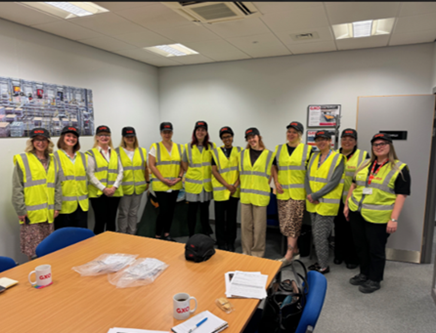
Suited and booted to present to a factory workforce
The Allied Health Professions (AHP) Strategy for England highlights the role of AHPs in disease prevention and health promotion, helping to reduce the burden on already stretched health and social care services. Diet-related diseases remain a major public health challenge, yet dietetic care is still largely focused on treatment rather than prevention. If the profession is to play a greater role in supporting population health, then equipping students with strong public health knowledge and skills is crucial.

To support this, Teesside University’s MSc Dietetics programme now includes public health placements alongside traditional NHS clinical placements. Here, Alex shares her experience of working in a Public Health practice-based learning setting. A must read in National Careers Week for anyone considering a future career as a dietitian!

------------------------------------------------------------------------------------------------------------------------------------------------------------------------------------------------------

What I worked on

During my placement, I was involved in three projects focused on health improvement and disease prevention. My work involved meeting with stakeholders, conducting research, presenting findings, and engaging with the public. The projects covered a wide range of population groups, including expectant mothers, school-age children, local workforces, and food bank users.

1. Supporting parents with child nutrition

A key part of my placement involved reviewing the nutrition education available to parents of children aged six months to four years.

What I did:
  • Conducted a literature and policy review
  • Spoke to parents, NHS staff, and school representatives
  • Attended a breastfeeding class to hear directly from parents
  • Presented my findings to several teams, including the Director of Public Health
Why it matters:
The insights from this work will help shape future research and improve nutrition support for families in the local area.

2. Linking oral health and nutrition


There is a strong connection between what we eat and oral health, but not everyone has access to clear, easy-to-understand information about this link.

What I created:
  • Infographics and presentations to educate local workforces
  • Materials designed in an easy-read format, avoiding jargon
Why it matters: 
My presentation was really well received, and I was even asked to record it for wider distribution, so it could be shared with professionals working with children and people with additional needs.

 
Infographics to educate local workforces

3. Reducing food waste in a local food pantry


Many food pantry users rely on short-dated products, and without clear guidance, a lot of good food can go to waste.

What I did:
  • Designed simple, visual signs with food storage and cooking tips (e.g. "Chop me then freeze me")
  • Introduced a ‘Freeze me’ sign for bread and monitored its impact
What happened?
Twice as much bread was sold the day after the sign was put up compared to the previous two weeks combined!


Signs made to reduce food waste

What I learned
  • Public health plays a key role in patient care - I saw first-hand how wider social factors impact people’s ability to manage their health and access services.
  • Being proactive is crucial - I reached out to stakeholders independently, which helped me build confidence and leadership skills.
  • Flexibility is a great learning experience - managing my own projects and working in a less structured environment improved my time management and adaptability.
  • Self-care matters - the flexibility of this placement meant I could work in different settings, including from the park on sunny days!
Final thoughts

Introducing dietetic placements into public health settings is a win-win. It helps students gain a broader skillset, supports NHS capacity, and brings dietetic expertise into community settings.

Of course, doing things differently comes with challenges. Expanding placements into public health settings has required commitment from everyone involved - academics, placement providers, and students. But we’re constantly learning and improving, and we’re proud to be making a real impact on the health of our local communities.

Friday, 17 May 2024

Animating practitioners to take action on stigma

Matty Starforth, Public Health Practitioner-Harm Reduction and Social Inclusion Portfolio, Newcastle City Council

“Stigma, stated simply, is a set of negative and often unfair beliefs. Stigma can be experienced on a societal, structural and personal level. It is employed largely unconsciously but at times also consciously”. 
Anti Stigma Network


Stigma is often a word that is associated with harm but it is important to recognise that stigma can have a huge impact on individuals and groups in society. From my own professional experiences, I am aware, like many of my colleagues and partner services are, that the harms of stigma can include and are associated with inequality, disadvantage, discrimination. Stigma increases stress, shame, depression, isolation, and can lead to the avoidance of healthcare and decreases treatment engagement and retention for individuals and groups.


It’s clear that there is a need to address stigma and embed an ‘anti stigma approach’ as part of the work we do to tackle inequalities, but doing so can be challenging. While people tend to be generally aware of the term stigma and how this can affect individuals, there is often less understanding of the depths that people go through to avoid and overcome the stigma they experience, such as not attending appointments or seeking the help or support they deserve. There is also less awareness of the steps that we can all take as individuals to not only avoid stigmatising people through our language and practices, but also actively speak out and promote an anti-stigma approach more widely.

What we are doing about it

To address this, we have had several areas of work in Newcastle upon Tyne looking to raise awareness and address some of the harms of stigma on others. This started with the publication of Drugs, Identity and Stigma and ongoing discussions about changing how we focus on people who use drugs or alcohol and the language we use for those facing multiple disadvantage and exploitation. Academics, policy makers, public health and key stakeholders, from working together on various research, came together to deliver a practitioner conference, improve practitioner training, development and networking and production of a practice briefing, stigma animation and a planned education package. All of this has been informed by lived experience.

In May 2023 we worked with partners to hold a conference to over 320 practitioners, service providers and community members from across the region. The Stigma, Trauma, Substance Use and Domestic Violence Conference involved a range of international, national and regional researchers and academics including a keynote talk from international anti-stigma lead, Professor Carla Treloar. The Conference was designed to promote knowledge exchange and good practice of Anti-Stigma work from across the region. A practice briefing that was developed from the event can be found here. A key theme in the discussions has been around vulnerability and exploitation, and partners have worked together, from research developed by the University, to produce animations around exploitation and home takeover. Research into practice improvement. Two artists were employed to capture the key themes and discussions of the conference as a visual (see below) which could then be shared with services.

Visual capturing the key themes and discussions of the conference

Developing the stigma animation

From this work, we explored how we can explain the ongoing theme of stigma and its impact. A recent project that I have coordinated, in collaboration with university colleagues, is the production of a stigma animation which you can see above. Aimed at practitioners and volunteers, this will help raise awareness and become a key resource to support the work and objectives we have within Newcastle Public health, and also the wider local authority. The animation has involved consultation and input from a range practitioners, service users and individuals with lived experience of stigma. At each stage of the animation production, I have attended the Newcastle Service User and Carer forum. Inclusion of those with lived experience of stigma was essential in these discussions and has been key in helping to shape the direction and design of the animation, particularly in relation to service needs and solutions.

A key challenge during this work has been ensuring we produce an animation which doesn’t unintentionally stereotype or stigmatise individuals through the imagery used. There has been a lot of thought-provoking conversations and discussions which have led to both personal and professional reflections. For example, figures in early storyboard drafts of the animation which were uniformly male and able bodied were subsequently changed to be more inclusive and represent a diverse range of bodies. Throughout the process there have also been a lot of discussion in relation to the language that we use to support the imagery. Some key insight was gained from the Newcastle Service User and Carer forum where participants identified examples of where they had felt stigmatised through language and how potential changes could have changed outcomes. These examples have been included within the animation to highlight the impact of language.

We plan to share the animation across a range of practitioners working within fields such as drug and alcohol, mental health and wider health and social care roles. This will support the drive to encourage sign up to the Anti-stigma network and prompt organisations to develop an anti-stigma strategy for their workplace. Alongside this we wish to support practice improvement by developing a stigma education package, which the academics are leading on, and which we hope to eventually deliver through an educators by experience model.

Addressing stigma will require individual and collective action from all of us, and so we urge you to please watch and share the animation, use the resources available, sign up to the Anti-Stigma Network and help us to spread an anti-stigma approach.

Background and context

Addressing stigma is a key priority in Newcastle upon Tyne. In 2022 the Director of Public Health report stipulated that policy and practice should ensure health improvement is free from stigma. This issue is also gaining National traction, with the Office for Health Improvement and Disparities (OHID) recently announcing the project ADDER stigma indicator programme and currently adapting Professor Carla Treloar’s (University of New South Wales) Australian stigma indicator and monitoring model for the UK. The NHS Alliance Stigma Kills campaign has recently been rolled out, with the North East and North Cumbria Integrated Care System (ICS) backing this campaign for our region. The Anti Stigma Network has also recently formed to raise the profile and awareness of stigma, especially the impact on people who use or have issues with drugs and/alcohol.

Thursday, 7 March 2024

Creating an out of this world children’s book to help families affected by substance use

Cassey Muir, Research Associate from Newcastle University


To celebrate #WorldBookDay, Cassey tells us about going beyond the research to co-produce a children's story book to help families affected by substance use which is now freely available.

“To take the findings from our lived experience and create something real for families and people beyond the world of research has been brilliant” 
Young person involved in the project


Creating something real: How we produced a children’s story book

When I had the opportunity to create a children’s story book based on some of my PhD research that could help families affected by substance use, I was really excited to get started with the project. Ever since I was little, I wanted to write a children’s storybook and I had even mentioned this at my PhD interview panel, so being part of this project was a dream come true in many ways. 

To be able to create a book that has such meaning for the children and families involved has been incredibly rewarding, if not emotionally challenging at times. To help shape the plot and character development based on the stories of the young people that I had talked to during my PhD, felt like an enormous privilege but also a weight to get right. I wanted to make sure the story reflected the different experiences of children, while other members of the team were making sure the story reflected parents and caregivers’ experiences. Working with the talented Danielle Slade (author) and Josie Brookes (illustrator) helped make this process go as smoothly as possible. They were empathetic to the stories of families and wanted to keep to the integrity of family’s experiences and impacts, while making a story that was engaging.

With the creative minds of Danielle and Josie, we worked with 15 family members who were affected by parental alcohol or drug use, three teachers, Coram Life Education, and Coram Beanstalk to co-produce this storybook. Using techniques like free writing to music, drawing different characters, and storyboarding ideas, we involved children and parents in the creative process from the start. Families were also able to see early mock-ups of the book and feedback their ideas on improvements to the story and share their preferences on illustrations. Josie and Danielle were really receptive to the ideas from children and parents and valued their input.


We met with teachers from local primary schools and practitioners from Coram to think about who the target age range of the book would be, how the book could be used within schools and practice, and how to help adults have conversations with children. Through these discussions we developed conversation prompts for adults that are at the back of the book. These prompts (for example, what do you think of the Yozzle?) can help with discussing the characters and themes within the book with children in one to ones, in groups, or within a whole class setting. Anyone can follow along with this story of Arti, a wishing star. We have received positive feedback from practitioners where this book has been used with younger children (5-8 years), older children as a discussion point for reflecting on childhood (14-16 years) as well as with children who have special educational needs and disabilities.

We have also recently collaborated with Newcastle Film Club to produce a ‘story time’ video of the book being read by the author. This video allows the book to be accessed more widely and can be used alongside the book. Being able to produce this video, with Amy Mains (Director and Editor) and Scott Anderson (Director of Photography), who are also both teachers, was a fun and unique experience. We set up the equipment and reshuffled the backdrop in Fenham Library and managed to shoot the film in under two hours, just in time for the library opening to the public. I think this video adds an extra bit of magic to the story, with soft music and twinkling sounds!


Beyond the world of research: Creatively disseminating research findings

For context on the book, Twinkle, Twinkle Arti is a free story book co-produced with and for children who experience parental alcohol and drug use. This book helps start conversations between trusted adults and affected children. The messages within the book are based on two linked studies around the needs of affected families, led by Fuse Researchers.

The Safe Space project, led by Ruth McGovern, found that many parents and caregivers find it difficult to talk to their child about substance use and the impact upon the child and family. Parents and caregivers spoke about wanting resources to help with these conversations. Alongside this, research led by me, explored the experiences and support needs of children and young people. Children and young people told me that they valued the importance of confiding in a trusted adult such as a teacher, social worker, or family support worker but often did not know who they could trust or talk to, and prioritised approaches within schools which promoted conversations about parental substance use.

The story book captures the emotional and social impacts of living in a difficult family situation, from the perspective of the child and the parent or caregiver, and highlights helpful strategies to support the child’s wellbeing, for example talking about your feelings.

Using out of this world storytelling and fictional characters, the findings from these two studies are told in a way that makes them accessible to families and practitioners and offers positive messages and validation not only to children but to parents/caregivers and practitioners who find it challenging to know how to broach this sensitive topic.


We are freely sharing this book with families, schools, and practitioners across the country. To help understand the usability and impact of the storybook, we are gathering feedback from practitioners with a short online survey. This feedback will contribute to informing further development of the book and additional resources that are needed. I hope the book can be used across many different settings (schools, social care, and voluntary organisations) and can be shared with families who want to have those conversations. Within schools, we hope it is used in whole class situations, to reduce the stigma and show children they are not alone. It’s a fun story with fictional characters, and I hope families feel the book is engaging and non-stigmatising.

Here is some of the feedback that we have received so far about the book.

A practitioner told us: “It is so meaningful for children to know about the Yozzle [fictional character depicting alcohol or drugs in the book] and how it makes them feel. What a very complex idea to get across to children and yet it has been achieved with such skill!”

A child who reviewed the book shared: “It [the story] shows you’re not on your own and that there are other stars [fictional character depicting trusted adults] to support you.”

A primary school teacher shared the following: “There were no problems at all using Twinkle, Twinkle Arti in a whole class situation. In fact, I think it worked well as an introduction because it wasn't only alcohol use that the children discussed it was mental health, feelings, and how to overcome problems.”

A parent who helped co-produce the book reflected: “I am proud of the book because other children won't have to go through what my children have."

I think it is really important for researchers to work collaboratively with public, practice, and policy partners and to engage in creative processes that open their research to wider audiences. Through this process, you might learn something new and have fun doing it. But don’t just take my word for it, here are the perspectives of the illustrator and young person involved in the project:

Josie, the story’s illustrator, says: “This has been a really inspirational project, and a joy to work with Danielle, the research team, and all the families involved. We collectively believed in the power of storytelling to get these important issues across, and the resulting book is something I am so proud to have been a part of making. I think children will connect with Arti, her colourful world, and her story. I am excited for it to be used as a positive resource with children and families, in opening up those very crucial conversations, whilst simultaneously being so enjoyable to read!”

A young person reflected: “This book is something I would have loved to have been able to give to ‘little’ me, having something that related to my home situation when I was a child. I feel rewarded to be able to do this for ‘me’ now, for little me going through all those hard times and for all the children who will read this book, who are going through something, have a hard home life, have parents who are struggling, anything.

I hope through the book, we are able to show them that they are not alone and that there are people around them who are there to give them love and support. Hopefully, the book can help reach them earlier than I was reached out to. To create a book that would educate and support whomever read it, no matter their age or background, to be more than a storybook and to be able to help them, even in a small subtle way. It is a chance to reach the children that need it through a storybook that they come across all the time in life. It is incredibly rewarding to have a book that exists, that will last and be passed on to different children who are in a variety of situations for years to come. I am very proud of it.

I sincerely hope the book not only entertains children at bedtime, but that it can in some ways soothe a child's worries. It was an honour to hear the brave accounts from families and even more so, that they have trusted us to put their feelings and stories into this book.”

Fuse researchers and lived experience expert at book launch event. From left to right: Ruth McGovern, Kira Terry, Cassey Muir and Debbie Smart 

If you would like to learn more about this research, then please go to the links at the bottom of this page. And if you would like to join Arti on her journey of bravery, self-discovery, and learning about the important of talking about your feelings then take a look at the story book or watch the video.

Find out more
  • Download the book free.
  • Listen to this Fuse podcast to hear Cassey discussing her research on social and emotional resilience in children and young people affected by parental substance use.
  • Read this Fuse news article about Twinkle, Twinkle Arti.
  • Read this Alcohol Action Ireland blog and listen to the podcast.


All illustrations by Josie Brookes

Friday, 23 February 2024

School's out for stigma: Understanding the mental health needs of LGBTQ+ youth

Posted by Liam Spencer, Fuse Associate and Research Assistant at Newcastle University


February is LGBTQ+ History Month, an annual month-long observance of lesbian, gay, bisexual and transgender history, and the history of the gay rights and related civil rights movements. The 2024 theme celebrates LGBT+ peoples’ contribution to science and medicine both historically and today. 


In this blog, Liam reflects on his research of LGBTQ+ young people’s mental health.


As LGBTQ+ History Month unfolds, it offers us an opportunity to reflect on the strides we’ve made, the challenges we still face, and the incredible diversity within our communities. This month holds particular significance for me – a chance to not only honour the struggles of those who came before us, but also to celebrate the progress we’ve achieved and recommit to the work that lies ahead.

With a background in youth and community work practice, my research interests are primarily focused on children and young people’s mental health, particularly early and preventative interventions, and school-based interventions. My journey as a member of the LGBTQ+ community and as a researcher has been intertwined with a deep sense of purpose – to shed light on the unique mental health challenges faced by LGBTQ+ individuals. This is a mission born out of personal experience, and a desire to contribute meaningfully to the wellbeing of this community. 

I have recently been involved in several Fuse projects funded by the NIHR School for Public Health Research (SPHR) Public Mental Health programme, and I’ve had the privilege of being able to delve into the complex dynamics of LGBTQ+ mental health, particularly in school environments. One of these projects, led by Professor Liz McDermott, aimed to investigate the impact of school-based interventions on LGBTQ+ young people’s mental health.

In the first phase of our study, we did a realist review (a type of evidence review that assesses the specific contexts in which a certain intervention may or may not work) of published evidence and identified positive interventions that supported LGBTQ+ mental health in school environments. However, the focus tended to be upon outcomes and studies rarely detailed underlying processes. The second phase of our study aimed to develop a theory that explained how, why, for who, and in what context school-based interventions prevent or reduce mental health problems in LGBTQ+ young people, through participation with key stakeholders.

We interviewed LGBTQ+ young people aged between 13 to 18 years attending secondary schools; intervention practitioners; and school staff in the UK. We then analysed this data to identify relationships across different interventions that improved mental health outcomes. The theory we produced explains how school-based interventions that directly tackle dominant cisgender and heterosexual norms can improve LGBTQ+ pupils’ mental health. Specifically, our theory proposes three interventions that may improve these outcomes:
  1. Interventions that promote LGBTQ+ visibility and facilitate usualising, school belonging, and recognition.
  2. Interventions for talking and support that develop safety and coping.
  3. Interventions that address institutional school culture (staff training and inclusion polices) that foster school belonging, empowerment, recognition, and safety.
Ultimately, our research underscores the importance of providing a school environment that affirms and normalises LGBTQ+ identities, promotes school safety and belonging, and addresses systemic issues within educational institutions. By implementing evidence-based interventions informed by our theory, we can pave the way for improved mental health outcomes for LGBTQ+ pupils.

This month serves as a powerful reminder of our collective resilience, our shared struggles, and our unwavering commitment to justice and equality. Let us continue to push boundaries, challenge norms, and advocate for a world where difference is celebrated and all are embraced for who they are – within academia, our personal lives, and beyond.


Images:

Friday, 16 December 2022

Walking football for people with chronic breathlessness – has it got legs?

Posted by Callum Bradford, Research Associate, Teesside University

Following on from the recent success of the England Women’s football team, and with the Men’s World Cup final just around the corner, now seems like a good opportunity to talk about our walking football project, designed exclusively for people with chronic breathlessness. What is walking football you ask? Well it's football, without running (you don’t say?!), and the physical contact is a bit more restricted. Thankfully, FIFA hasn't got its hands on walking football just yet, with the World Cup being an example of why we perhaps should avoid such a thing.


Chronic Breathlessness is predominantly caused by pulmonary conditions, such as chronic obstructive pulmonary disease (COPD), impacting 75 million people globally. With Covid-19 and an ageing population this number is expected to rise, increasing the burden on families, carers, and health and social care services. For individuals, breathlessness is associated with a lower quality of life, decreased capacity to do exercise, and higher levels of anxiety and depression

Pulmonary rehabilitation is recommended for everyone with breathlessness. Consisting of both exercise and education, its benefits on health are unequivocal, however, any benefits gained by patients are often reduced three months after completion. This is primarily because patients go back to doing less physical activity once the programme has finished and support from healthcare professionals is removed. With this in mind, we wanted to develop an intervention that could step-in when patients finish their rehabilitation, offering a form of exercise maintenance and continued social support. Given the nation's love of football (most of the time), we believed walking football might have potential.

To develop the intervention, we initially consulted pulmonary physiotherapists, and a local walking football team. The physios were initially very sceptical, raising concerns that the pace would be too fast, and highlighting the number of people with breathlessness who required oxygen or walking-aids. Walking-aids?! Oxygen?! I hadn't even considered that. I was starting to worry that this idea might be a complete non-starter.

So next stop was to see some walking football for myself at Middlesbrough’s Herlingshaw Centre. I left the session with mixed feelings. They played three-touch, meaning everyone got the opportunity to play, forcing that one player who thinks they're Allan Saint-Maximin to pass the ball. It was also proactively refereed to the benefit of everyone, with players encouraged to talk to the ref if they felt the pace of the game was too fast. However, after giving it a go myself, the pace was still surprisingly quick, despite what Father Ted might have you believe, bringing back concerns as to whether it would be too high an intensity. What I really needed to know was what patients themselves thought of walking football.

So we linked up with Breathe Easy Darlington, a local support group for people with lung conditions. Describing the input from Breathe Easy members as invaluable to our research over the last few years would be a massive understatement. So much so that, as a small thank you, we held a fundraiser for them last month on World COPD Day, raising £1120.76.

Their opinions would be vital to walking football’s success... however, they were also dubious of the idea. Again, concerns were raised about the speed, the walking-aids, and the balance required to play. So I asked, under what circumstances – if any – would they consider giving walking football a go? They stated that if the football was exclusive to people with breathlessness like themselves, they would give it a try, as they would be able to dictate the pace of the game and not feel too self-conscious of their footballing abilities. Our original plan involved asking patients to join onto sessions at the Herlingshaw. Luckily, by consulting with Breathe Easy members, I now understand how that plan – to mix people with and without breathlessness - would have likely ended in disaster, demonstrating the importance of including end-users when designing research studies.

Twelve Breathe Easy members agreed to play and the stage was set for our walking football taster sessions, and as you can see from our video, I don't think it could have gone much better.

The players embraced the competitive aspect of football, stating that “On the pitch you forget about breathlessness”; and the concern for walking-aids was turned on its head after we agreed that hitting the ball with a walking-stick is a perfectly fine way to score a goal. Our coach, Monty Towers, was key to its success, mixing up the session with fun games, while allowing everyone to play football at their own pace. In our follow-up conversations, members also suggested implementing a buddy system, where more experienced participants take responsibility for introducing new patients to the group so they feel more welcome – a brilliant idea that we intend to implement in the future.

Throughout 2023 we will be assessing the feasibility of walking football following pulmonary rehabilitation in collaboration with both North Tees & Hartlepool and South Tees NHS Foundation Trusts, plus the North Riding FA; and I’m confident if it’s anything like our sessions with Breathe Easy members, it will be a great success.

And if you’re still upset about the World Cup, don’t worry, I’m sure our walking football team will bring it home next year.


The views and opinions expressed by the author are those of the author and do not necessarily reflect those of Teesside University or Fuse, the Centre for Translational Research in Public Health.

Friday, 2 September 2022

Levelling Up: welcome news or overly ambitious and unrealistic?

Posted by Chloe Beck, Health and Social Care student, Northumbria University

Before his resignation, Boris Johnson unveiled his flagship ‘Levelling Up’ plan. Hailed as the ‘defining mission’ of his Government, this new plan strives to transform the United Kingdom by increasing opportunities and prospects for the whole population. It aims to shift Government focus onto the so-called ‘forgotten communities’ of Great Britain, through a decade long project consisting of twelve missions that have been given status within UK law. Although changes are now afoot in the Government, both candidates to replace Johnson - Liz Truss and Rishi Sunak - have stated their continued commitment to the policy. It seems therefore, that levelling up is here to stay (for a bit longer at least). But what might this mean for inequality in the UK and are its goals likely to be reached?

Levelling up fund boost for historical landmark and high street in Yarm (cropped)
Rishi Sunak visiting Yarm in North East England, December 2021
As might be expected with such a bold promise, the Levelling Up plan has been both welcomed, and branded as overly ambitious (Wood and Swift, 2022). Some see the policy as a serious attempt at understanding and reacting to the regional inequalities that exist within the United Kingdom (HM Government, 2022; Wood and Swift, 2022). Supporters view the policy as a sensible plan, with missions that are collective and recognise the links between health, skills, education and the economy (Wood and Swift, 2022). It’s certainly clear that Levelling Up promises some huge and much needed changes to healthcare services and for the population within the UK (including upgrades to hospitals, increased GP appointments, new fruit and vegetable prescriptions to help tackle food insecurity, changes to the school curriculum to support healthy eating, and community hubs to tackle diagnostic backlogs). Whether these changes are do-able in the context of continued staff shortages and already under-funded health services remains to be seen.

The Labour party has described Levelling Up as a rehash of recycled policies (Harari et al., 2022), with others stating that it is too aspirational and impractical (Pope, 2022). It is argued that the policies breadth and scope may make it hard for the Government to maintain focus and could create a scattered approach (Newman et al., 2022; Pope, 2022; Wood and Swift, 2022).

One of the major problems appears to be a lack of long-term funding into the whole Levelling Up plan, with funds only extending to 2030 (Swinney, 2022). Levelling up may not be fully achieved if funds dwindle once 2030 comes around. Calls for Government to extend Levelling Up plans beyond 2030 (Swinney, 2022), to ensure its longevity and successfulness are unlikely to be met, especially in a political environment where short-termism is the norm and where the maximum term of a Parliament is five years (Marsh, 2013). Likewise, critics suggest that an agreement needs to be made between political parties to ensure Levelling Up is not scrapped once a new Government comes into power (Davenport and Zaranko, 2020; Swinney, 2022).

Even despite levelling up actions, differences in productivity between areas within the United Kingdom will likely remain (Atherton and Webb, 2022). This is because different places have different roles within the economy, with London being top of the chart for professional services, and Wales for the manufacturing sector for example (Sykes and Lisle, 2021). Setting area specific goals and targets (Atherton and Webb 2022), and implementing types of spending (Mason 2022) which take into account the specific demographics and economy of an area may help to combat this issue. Though, of course, this local variation may pose alternative challenges due to mixed ideologies and inconsistency with ideas laid out in the original white paper.

Setting aside concerns about feasibility, it has also been found that many disadvantaged areas are not prioritised within the plan (Atherton and Webb, 2022). This demonstrates a lack of attention and care towards the very thing that the plan is aiming to fix: inequalities! Data journalists at The Guardian found that some of the most deprived localities are receiving far less financial support than some of the most affluent areas, with Bromsgrove in Worcestershire receiving £148 per person and Knowsley in Merseyside receiving no money per person for example. This chimes with Rishi Sunak’s comments about redirecting funding away from disadvantaged areas and towards wealthier towns.

Overall, the new Levelling Up plan has both its positives and negatives. It is a clear start at aiming to try and reduce longstanding inequalities within the United Kingdom. However, the extent to which these policies will be followed as they have been set out is unclear, and only time will tell whether it manages to achieve its missions and ‘level up’ the country.

The cynic in me thinks that this push for equity may also have something to do with attracting votes...


Part of our Fuse blog Student Series
The Fuse blog Student Series showcases posts by students who have been challenged to write a blog as part of their studies at one of the universities in the Fuse collaboration, the NIHR School for Public Health Research, or perhaps further afield. The authors may be new to blogging and we hope to provide a 'safe space' for the students to explore their subject and find their voice in the world of public health research.


The views and opinions expressed by the author are those of the author and do not necessarily reflect those of Northumbria University or Fuse, the Centre for Translational Research in Public Health.

Image: HM Treasury, OGL 3, via Wikimedia Commons

Friday, 8 October 2021

Can Forest School inspire the next generation to be happy & healthy?

Posted by Katie Beresford, undergraduate student, Durham University

Katie completed a 6-week NIHR School for Public Health Research (SPHR) internship with Fuse based at Durham University in summer 2021. She was supervised by Fuse / NIHR SPHR PhD student, Sophie Phillips.

Richard Louv, in his book Last Child in the Woods, theorises that lack of connection to nature is causing a plethora of health problems in children. Can reconnecting children to the natural world provide a holistic solution to health and developmental issues?

Growing up in the Lake District, I spent my childhood climbing trees, swimming in rivers, and making mud pies. Embracing nature and enjoying letting my imagination reshape the world around me was part of my everyday life. In contrast, I found school restrictive and struggled academically in my early years – often being described as a ‘late developer’.

While completing my NIHR SPHR summer internship within Fuse, I reviewed literature discussing the effectiveness of Forest School as a public health intervention. One article titled: The hare and the tortoise go to Forest School: Taking the scenic route to academic attainment via emotional wellbeing outdoors struck me as similar to my own story, describing how children considered ‘behind’ their peers could catch up, like the tortoise in Aesop's fable. Now nearly two decades later and about to go into my final undergraduate year at University, I truly believe in the power of the outdoors to inspire children to be curious and healthy individuals.

Forest School is a child-led educational practice, whereby children spend time in a Forest or woodland under the guidance of a trained Forest School practitioner. The ethos and philosophy of Forest School is based on a rich heritage of outdoor learning. This ranges from whole movements such as the romantic movement, which exalted the sublimeness of nature as a push-back against the industrial revolution, to the work of individuals such as the great educationalists like Steiner and Montessori. However, the concept of ‘Forest School’ emerged originally from Scandinavia, where in many cases children spend their entire early years education playing outdoors.

The practice developed in the UK in the early 1990s and is ubiquitous across the country today. Although much of the practice in the UK places emphasis on freedom and play, often activities are incorporated into the sessions designed to connect the children to the natural world. Forest School aims to be beneficial for the holistic development of children, offering a wide range of social, emotional, cognitive, and physical benefits.

My summer internship consisted of writing up a literature review which drew on both the current research on Forest School and the thoughts of practitioners and stakeholders in the field. I considered both the effectiveness of Forest School on the health and development of children and the accessibility of the programme.

Due to its rapid growth, there is still much work to be done on improving the evidence base for Forest School, but in general there is huge enthusiasm from researchers and practitioners alike on the effectiveness of the practice. Forest school appears to equip children with social skills such as teamwork and collaboration; emotional skills such as resilience and self-esteem and cognitive skills like problem solving. There is evidence that it also increases children’s levels of physical activity and improves their appreciation of nature.

But, perhaps the most striking finding was that Forest School not only had an impact during the session itself, but long after the children stopped attending the Forest School. Through the pure enjoyment of being outside and not bound up by the norms of classroom behaviour, the children were inspired to be curious about the world around them. They started asking questions and thinking creatively and collaboratively.

Taking the scenic route to academic attainment
Some studies found that through attending Forest School, children who were academically behind their classmates caught up to a similar level of academic attainment since their interest in learning had increased. Forest School impacted children’s overall wellbeing, as it encouraged them that physical activity and spending time in the outdoors could be fun and rewarding. The children were therefore more likely to want to exercise and complete similar activities to Forest School in their own time – asking parents to take them to local natural spaces after school and at the weekend. Conversations with practitioners showed that this was pivotal to challenging the cultural lifestyle of families, especially in more deprived areas, improving perceptions of what it means to be healthy.

In a changing world, where children spend far less time outside as a result of factors like the increase of technology and availability of entertainment, Forest School offers an innovative and holistic approach to reconnecting children with nature. Through this, we can hope to inspire the next generation to be the curious, positive, and healthy individuals of tomorrow.


This project was funded and supported by the National Institute for Health Research (NIHR) School for Public Health Research (SPHR), Grant Reference Number PD-SPH-2015. The views expressed are those of the author(s) and not necessarily those of the NIHR or the Department of Health and Social Care.

Part of our Fuse blog Student Series
The Fuse blog Student Series showcases posts by students who have been challenged to write a blog as part of their studies at one of the universities in the Fuse collaboration, the NIHR School for Public Health Research, or perhaps further afield. The authors may be new to blogging and we hope to provide a 'safe space' for the students to explore their subject and find their voice in the world of public health research.


Images:
  1. Photo by Markus Spiske on Unsplash
  2. The Tortoise and the Hare. From Childhood's Favorites and Fairy Stories, by Various. Project Gutenberg etext 19993 http://www.gutenberg.org/etext/19993. From Wikimedia Commons: https://commons.wikimedia.org/wiki/File:The_Tortoise_and_the_Hare_-_Project_Gutenberg_etext_19993.jpg