Showing posts with label economics. Show all posts

Friday, 2 September 2022

Levelling Up: welcome news or overly ambitious and unrealistic?

Posted by Chloe Beck, Health and Social Care student, Northumbria University

Before his resignation, Boris Johnson unveiled his flagship ‘Levelling Up’ plan. Hailed as the ‘defining mission’ of his Government, this new plan strives to transform the United Kingdom by increasing opportunities and prospects for the whole population. It aims to shift Government focus onto the so-called ‘forgotten communities’ of Great Britain, through a decade long project consisting of twelve missions that have been given status within UK law. Although changes are now afoot in the Government, both candidates to replace Johnson - Liz Truss and Rishi Sunak - have stated their continued commitment to the policy. It seems therefore, that levelling up is here to stay (for a bit longer at least). But what might this mean for inequality in the UK and are its goals likely to be reached?

Levelling up fund boost for historical landmark and high street in Yarm (cropped)
Rishi Sunak visiting Yarm in North East England, December 2021
As might be expected with such a bold promise, the Levelling Up plan has been both welcomed, and branded as overly ambitious (Wood and Swift, 2022). Some see the policy as a serious attempt at understanding and reacting to the regional inequalities that exist within the United Kingdom (HM Government, 2022; Wood and Swift, 2022). Supporters view the policy as a sensible plan, with missions that are collective and recognise the links between health, skills, education and the economy (Wood and Swift, 2022). It’s certainly clear that Levelling Up promises some huge and much needed changes to healthcare services and for the population within the UK (including upgrades to hospitals, increased GP appointments, new fruit and vegetable prescriptions to help tackle food insecurity, changes to the school curriculum to support healthy eating, and community hubs to tackle diagnostic backlogs). Whether these changes are do-able in the context of continued staff shortages and already under-funded health services remains to be seen.

The Labour party has described Levelling Up as a rehash of recycled policies (Harari et al., 2022), with others stating that it is too aspirational and impractical (Pope, 2022). It is argued that the policies breadth and scope may make it hard for the Government to maintain focus and could create a scattered approach (Newman et al., 2022; Pope, 2022; Wood and Swift, 2022).

One of the major problems appears to be a lack of long-term funding into the whole Levelling Up plan, with funds only extending to 2030 (Swinney, 2022). Levelling up may not be fully achieved if funds dwindle once 2030 comes around. Calls for Government to extend Levelling Up plans beyond 2030 (Swinney, 2022), to ensure its longevity and successfulness are unlikely to be met, especially in a political environment where short-termism is the norm and where the maximum term of a Parliament is five years (Marsh, 2013). Likewise, critics suggest that an agreement needs to be made between political parties to ensure Levelling Up is not scrapped once a new Government comes into power (Davenport and Zaranko, 2020; Swinney, 2022).

Even despite levelling up actions, differences in productivity between areas within the United Kingdom will likely remain (Atherton and Webb, 2022). This is because different places have different roles within the economy, with London being top of the chart for professional services, and Wales for the manufacturing sector for example (Sykes and Lisle, 2021). Setting area specific goals and targets (Atherton and Webb 2022), and implementing types of spending (Mason 2022) which take into account the specific demographics and economy of an area may help to combat this issue. Though, of course, this local variation may pose alternative challenges due to mixed ideologies and inconsistency with ideas laid out in the original white paper.

Setting aside concerns about feasibility, it has also been found that many disadvantaged areas are not prioritised within the plan (Atherton and Webb, 2022). This demonstrates a lack of attention and care towards the very thing that the plan is aiming to fix: inequalities! Data journalists at The Guardian found that some of the most deprived localities are receiving far less financial support than some of the most affluent areas, with Bromsgrove in Worcestershire receiving £148 per person and Knowsley in Merseyside receiving no money per person for example. This chimes with Rishi Sunak’s comments about redirecting funding away from disadvantaged areas and towards wealthier towns.

Overall, the new Levelling Up plan has both its positives and negatives. It is a clear start at aiming to try and reduce longstanding inequalities within the United Kingdom. However, the extent to which these policies will be followed as they have been set out is unclear, and only time will tell whether it manages to achieve its missions and ‘level up’ the country.

The cynic in me thinks that this push for equity may also have something to do with attracting votes...


Part of our Fuse blog Student Series
The Fuse blog Student Series showcases posts by students who have been challenged to write a blog as part of their studies at one of the universities in the Fuse collaboration, the NIHR School for Public Health Research, or perhaps further afield. The authors may be new to blogging and we hope to provide a 'safe space' for the students to explore their subject and find their voice in the world of public health research.


The views and opinions expressed by the author are those of the author and do not necessarily reflect those of Northumbria University or Fuse, the Centre for Translational Research in Public Health.

Image: HM Treasury, OGL 3, via Wikimedia Commons

Tuesday, 9 August 2022

How Covid-19 changed the takeaway landscape

Posted by Callum Bradford, Research Associate, Teesside University

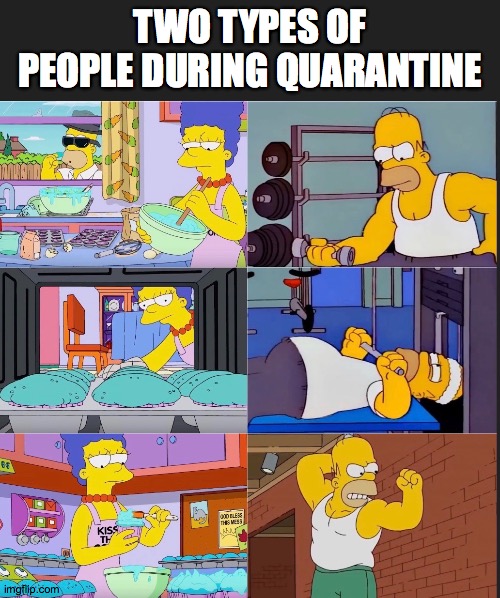
During the Covid pandemic, you may have seen the memes for how there are two types of people during lockdown. First there were those who used lockdown as an excuse to exercise more, eat well, and generally take care of themselves in a manner of which they had never had the time for previously. Then there were those who out of sheer boredom, decided to drink and order takeaway on more days than not as it was ‘something to do’.

As you can probably guess, I very much fell into the second category.

To my detriment, takeaways typically sell food which is relatively cheap, high in calories, low in nutritional value, and (annoyingly) very appetising; all delivered to your front door in a matter of minutes. Now I don’t want to come across as anti-takeaway, or anti-business, there is a place in our society for unhealthy food, nor do I blame anyone else for my questionable dietary choices. However, I’m sure most of us agree that we can have too much of a good thing at the impairment of not only our own health, but also the health of the high-street.

Apparently I’m not the only one who is too easily tempted by takeaways, with local governments implementing planning regulations to further prevent this takeover-of-takeaways, in the knowledge that our willpower is often lacking. You’re likely familiar with some of the rules already in place, such as no takeaways within 200m of a school, or that most restaurants and pubs can only provide takeaway food on an ‘ancillary’ basis.

However, with the Covid-19 lockdowns pubs and restaurants lost their ability to trade. In an attempt to combat the potential loss of business, the government introduced new temporary measures allowing these businesses to trade as takeaways, without needing to apply for planning permission. In other words, my options for takeaway just increased threefold, and by ordering-in I was ‘doing my bit’ to keep businesses open.

As we were now stuck indoors, every occasion was now an excuse for a takeaway; Birthday? Takeaway. Passed Uni? Takeaway. Anniversary? Slightly fancier takeaway with cocktails (highly recommend).

With these temporary regulations in mind, we consulted with various planners, public health leads, and environmental health officers from across the North East, to better understand how these regulations were impacting their roles, alongside any public health trepidations they may have (if my diet alone wasn’t enough cause for concern).

The main theme throughout our conversations was an overwhelming sense of uncertainty. Covid had an unprecedented impact on the priorities of local authorities. Because of this, they could not organise the infrastructure needed to identify how many businesses were choosing to trade as takeaways. Even today as we slowly return to a sense of normality, the role of collecting this data appears to be unassigned as authorities play catch-up on work lost to Covid. Therefore, as you can imagine, gauging the impact of these regulations became very challenging and speculative. There was also uncertainty around how and when these regulations would end, or what elected members planned to do (if anything) about the potential long-term consequences to health.

Surprisingly, the main finding from our research had little to do with the regulations themselves, but rather how Covid has accelerated change in the takeaway landscape. During Covid, we all developed new habits (for better or worse); one of which was the use of online delivery services such as Deliveroo and Uber Eats.

Despite the temp Covid regulations now ending, with these delivery services, many businesses that could not originally offer takeaway now can, and local authorities have limited ability to prevent them from doing so since they aren’t technically providing the deliveries themselves. A quick search on Deliveroo in Middlesbrough for example offers me delivery for Burger King, Starbucks, and Creams Cafe. None of these options are well-known as takeaways, but all now provide the delivery of unhealthy food. And although these services were technically available pre-Covid, the pandemic has led to a huge increase in their popularity, allowing for more unhealthy-food options and the changing of shopping habits. There are also traffic implications. Have you ever tried to walk through Liverpool city centre during lunch hour? Attempting to dodge Deliveroo riders on their bikes as you stroll through town is quite the experience.

To summarise, the Covid pandemic had an unparalleled impact on public health professionals, to the extent that the government implementing new regulations regarding takeaways was considered low priority. Ambiguity surrounding the impact of these regulations remains, with the ending of the regulations becoming somewhat nullified given the rise of online delivery.

In conclusion I offer some advice. if you’re trying to eat healthier, writing a blog post on takeaways whilst doing ‘research’ on Deliveroo, might not be the wisest of ideas – speaking from experience.

Friday, 10 July 2020

Not an equal opportunity disease: Covid-19 and health inequalities

Posted by Clare Bambra, Professor of Public Health, Newcastle University and Ryan Riordan, 5th Year Medical Student, University of Cambridge

Spanish Flu of 1918 was experienced unequally, with higher rates
  of infection and mortality among the most disadvantaged
As Covid-19 began to spread rapidly across the UK in early March, politicians and the media were keen to tell us that we were ‘all in it together’ and that the virus ‘does not discriminate’. As time passed, it became apparent that this wasn’t the case.

We now know that Covid-19 is far from a socially neutral disease, with clear clusters of more severe impact amongst our most deprived and marginalised communities.

We now know that people living in more socio-economically disadvantaged neighbourhoods and minority ethnic groups have suffered more with higher infections and death rates.

Historically, this has also been the case - evidence has shown that previous pandemics including the Spanish Flu of 1918 and the H1N1 pandemic of 2009 have also been experienced unequally, with higher rates of infection and mortality among the most disadvantaged parts of the country – both in the UK and internationally. 

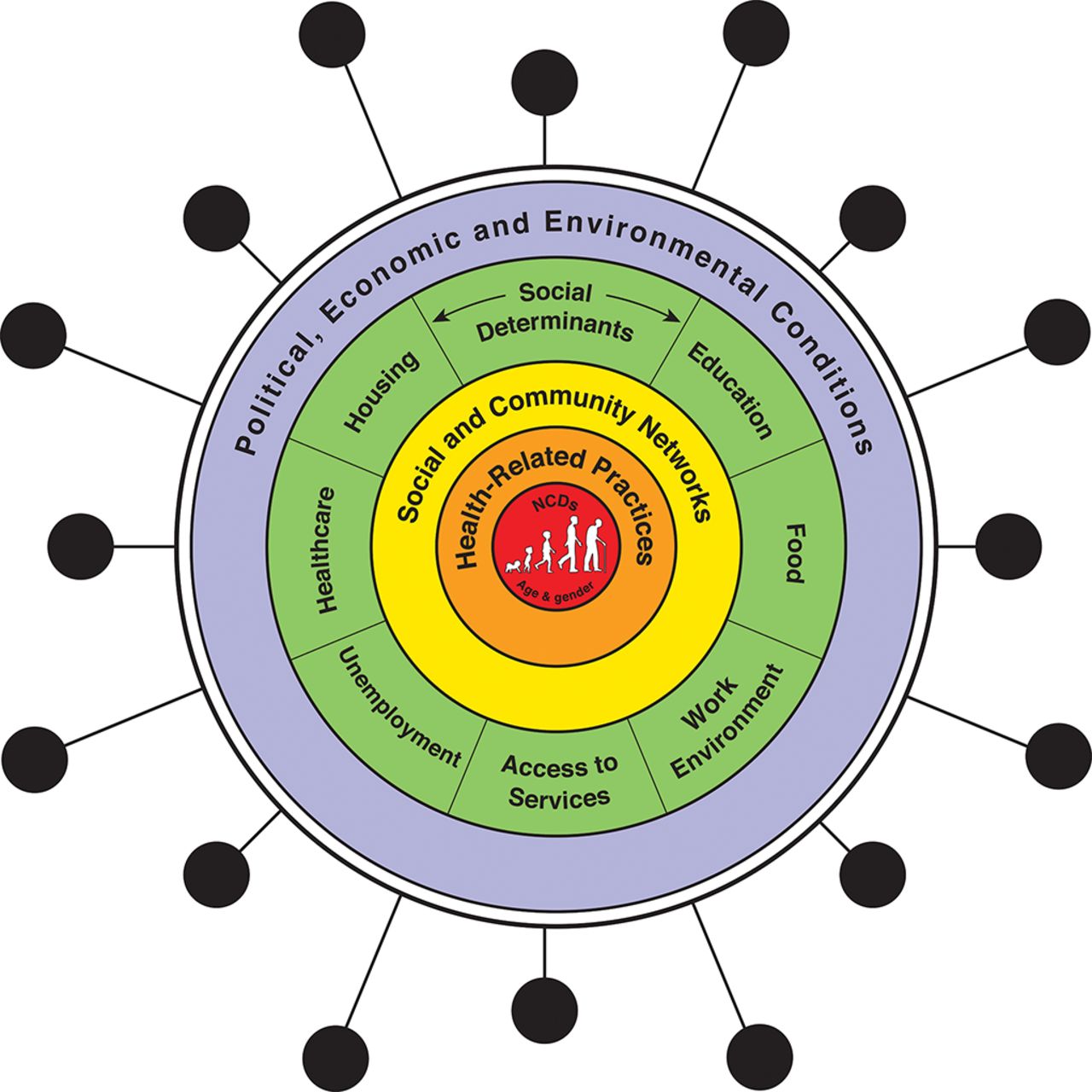
Emerging evidence from a variety of countries suggests that these inequalities are being mirrored today in the Covid-19 pandemic. Both then and now, these inequalities have emerged through the syndemic nature of Covid-19, as it interacts with and exacerbates existing social inequalities in chronic disease and the social determinants of health.

The syndemic of COVID-19, non-communicable diseases (NCDs)
 and the social determinants of health
This is down to a number of factors – not least unequal exposures to the social determinants of health (the conditions in which we are born, grow, live, work and age) leading to higher rates of almost all of the known underlying clinical risk factors that increase the severity and mortality of Covid-19 (e.g. high blood pressure, diabetes, cardiovascular disease).

We may have been living under the same regulations, but across the country, our experiences of ‘lockdown’ were widely different. We knew this. We weren’t ‘all in the same boat’ - we were in the same ocean in the middle of the same storm - but some were on luxury liners and others on rapidly-deflating dinghies.

We saw lower-paid care workers, shop workers, transport workers, factory workers continuing to work face-to-face with the public, while others worked from home on full pay or were furloughed with some semblance of job security.

There were families trying to stay sane in small flats without outdoor space and with empty cupboards, whilst others in more fortunate circumstances trebled their flower delivery order to ensure their homes looked good during Zoom meetings.

The divide in our society is stark on many levels, and as we go forward, who will pay the price of the multi-billion pound interventions that the government has put in place to see us through this period, and bear the brunt of the post-Covid-19 global economic slump? 

Covid-19 has laid bare our longstanding social, economic and political inequalities. Even before the pandemic, life expectancy amongst the poorest groups was already declining in the UK and the USA and health inequalities in some European countries have been increasing over the last decade.

I know that this all makes for grim reading for researchers, practitioners and policymakers concerned with health inequalities. So what can we do?

It is vital that this time, the right public policy responses, such as expanding social protection and public services and pursuing green inclusive growth strategies, are undertaken so that the Covid-19 pandemic does not increase health inequalities for future generations. Public health must ‘win the peace’ as well as the ‘war’. It is our job to make that case.

As we start to shape our ‘new normal’ and as the government unveils its post-Covid-19 recovery plans for the UK, public health policy must be a priority.

We need to act now if we want to avoid deepening the health inequality divide even further for generations to come.

Read the full essay: The Covid-19 pandemic and health inequalities


With thanks to the NIHR Applied Research Collaboration North East & North Cumbria 


Image attribution:
  1. Otis Historical Archives, National Museum of Health and Medicine / Public domain. https://commons.wikimedia.org/wiki/File:Emergency_hospital_during_Influenza_epidemic,_Camp_Funston,_Kansas_-_NCP_1603.jpg
  2. The syndemic of COVID-19, non-communicable diseases (NCDs) and the social determinants of health (adapted from Singer and Dahlgren and Whitehead). With acknowledgement to Chris Orton from the Cartographic Unit, Department of Geography, Durham University, for his assistance with the graphics. https://jech.bmj.com/content/early/2020/06/13/jech-2020-214401.full?ijkey=haFkUOyJurtabHz&keytype=ref#F1
  3. Screenshot taken from the Financial Times website: https://www.ft.com/content/8ea1c992-89f8-11ea-a109-483c62d17528 09/07/2020

Friday, 3 April 2020

The mental health of the nation has never been so under threat

Posted by Fiona Duncan, Postdoctoral Research Associate, Durham University

Lockdowns and self-isolation, increasing care demands, concern for others, and ongoing uncertainty are exacerbated by a reinforcing 24-hour news and opinion cycle, playing havoc with our stress and anxiety levels and battering our overall sense of wellbeing. The coronavirus crisis.

However, for many people across the country, a feeling of their wellbeing being under attack is not new. Experiences of overwhelming debt, long-term unemployment, insecure housing, poverty, food insecurity, social isolation lasting months or years and/or discrimination are common and can collectively chronically diminish the mental health of the public as a whole.

These normal and extraordinary circumstances raise the question of how the mental health of an entire population can be supported, or in other words, how can we improve public mental health (PMH)? Over the past year, I have had the privilege of investigating this complex question in detail within Fuse.

My work has primarily involved mapping interventions currently being delivered to improve PMH, exploring models of good practice and searching for emerging innovative ideas. This focused on two areas – Blackburn with Darwen, and Redcar and Cleveland – which were selected on the basis of mental health statistics and varying characteristics (e.g. rurality, deprivation etc.).

I found this mapping exercise a great opportunity to get out and about and talk to people who organise and deliver projects to improve PMH on the ground in their local area. I spoke to a lot of very helpful people who were very passionate about the work they did and it was inspiring to hear about the variety of innovative projects that were being provided for people in these local authority areas to promote good mental health and prevent mental illness.

One of our main findings was that interventions to prevent social isolation and loneliness by providing various social activities were most common. This may reflect how recent campaigns surrounding reducing social isolation in older adults have influenced policy. Although a multitude of individual, family, community and structural factors influence PMH, not all of these were addressed. Does this suggest a wider variety of interventions are required in the future or would it be better to develop interventions which have the ability to target multiple factors at the same time? For instance, interventions which increase social networks within society, self-confidence or self-efficacy may enable people to deal with many different threats to their mental health without having to use a specific service.

An interesting finding of this mapping exercise was that a lot of these interventions either hadn’t been evaluated at all or only a very basic evaluation had been carried out so there was very little objective evidence regarding their effectiveness. This is something we hope to address in the next phase of the project by carrying out in-depth evaluations of promising interventions, including their potential to be delivered on a larger scale.

One final finding from this mapping that seems more relevant now than a month ago is that very few of the public mental health interventions could be delivered exclusively online. The implications of this are that the vast majority of the projects that we identified will most likely be suspended and many people who depended on this support will be left to cope alone. Moreover, people who are currently struggling with the isolation of lockdown have reduced options for help. Although Public Health England has published online guidance for the public on the mental health and wellbeing aspects of coronavirus there is an urgent need for supporting remote delivery or new online interventions within the next few weeks (of course, recognising that not everyone has access to these).

We also need to consider what we are all going to do when the COVID-19 situation is over. Will the country’s mental health bounce back to normal levels without any help, perhaps benefitting from the shared sense of community and new ways of living and working developed during the crisis? Or, will we need to work hard to develop and deliver services at the individual, family, community and structural levels to repair the damage that has been done to the mental health of the nation?


This work was part of WP4 of phase one of the NIHR SPHR Public Mental Health programme.  Information about the wider programme is on the SPHR website and was a collaboration of researchers based at Fuse, UCL, Imperial College London and Cambridge University.

Monday, 11 November 2019

Can Scottish inventiveness curb the nation’s alcohol habit?

Posted by John Mooney, Senior Lecturer in Public Health, University of Sunderland
 Churchill is defeated by a Temperance movement MP - Dundee election result in 1922

“Of all the nations of this earth, perhaps only the ancient Greeks surpass the Scots in their contribution to mankind…” 
Sir Winston Churchill


This often cited sentence from the great orator’s canon of memorable expressions, frequently (in social media posts at least), is accompanied by a story of the number of times in a normal day ‘the typical Englishman’ is obliged to thank his Northern cousins for gifts bestowed:

From the spreading of ‘Dundee marmalade’ in the morning to his whisky night-cap it is easy to lose count of those almost innumerable causes for daily gratitude. In these days of Prophet Greta, perhaps the less said about ‘TarMacAdam’ and the internal combustion engine the better… but in our defence there is always Kirkpatrick MacMillan’s bicycle to offset that carbon footprint!

It’s no accident of course that pride of place be afforded in the above account to Scotland’s national drink of distilled and malted barley – renowned the World over for its unparalleled quality and distinctive dalliance on the palate. Scotland’s broader relationship with alcohol however, has not traditionally been a reputation to which one might raise a glass and is perhaps better summed up by the lovable and tragic Rab C Nesbit (right). The real tragedy of course being the excessive and abiding toll of alcohol related illness and premature death for which Scotland is infamous and also near the top of the World league table, for all the wrong reasons...

And yet, the nation’s pioneering spirit (of the non-liquid variety!) and very inventiveness in the face of a challenge may yet serve up another exemplar for others to follow. In May 2018 Scotland became the first country in the World to introduce legislation that set a minimum floor price for a unit of alcohol (MUP). While other fiscal mechanisms have been tried and tested for tackling cheap alcohol, MUP has consistently shown the greatest promise in modelling studies, since it cannot be “absorbed” by the retailer [1].

Sure enough, the first evaluation of the population level impact of MUP has found the policy to be associated with reduced alcohol purchasing. In line with model predictions, the reductions were largest for those households purchasing the most alcohol and for those drinks with the cheapest alcohol content [2, 3]. The very modest impacts on household budgets and the effect of reducing alcohol purchasing / consumption the most for those at greatest risk of harm also in line with predictions [4], helps counter any serious criticisms that the policy represents a regressive measure by unfairly targeting the economically disadvantaged. In the words of the Glaswegian novelist Val McDermid, on BBC Television’s Question Time in 2017: “There is nothing regressive about preventing people in Scotland’s poorest communities drinking themselves to death with cheap alcohol”.

Returning to the bigger picture, Scotland’s appetite for policy innovation to tackle alcohol harms is by no means restricted to minimum pricing. Rather, MUP is seen as only one component of a ‘whole system’ approach to tackling this most intractable and culturally embedded of public health problems. Bringing drink driving levels into line with the lower threshold in place across the rest of the EU [5] and incorporating health outcomes as a long overdue legitimate alcohol licensing objective [6], being two potential ingredients in the mix…

The Scottish ‘double edged’ relationship with alcohol can be best summed up by another snippet of Churchillian wisdom, a man who by all accounts was not unaccustomed to enjoying a ‘brandy before breakfast’:

"Whisky has killed more men then bullets, but most men would rather be full of whisky then bullets." 
Sir Winston Churchill

Perhaps the pragmatic recognition of a population’s natural affinity for a risky behaviour responsible for such a significant health burden is the first step towards realising that only meaningful restrictions in access mediated through price and availability, as well as legislative sanctions, might yet constitute the best defence against our worst excesses. Most Scots, myself included, know only too well of the devastating impact alcohol can exert on friends, families and communities. Maybe that is why we are most responsive to the remedies!


References:
  1. Meier PS, Holmes J, Angus C, Ally AK, Meng Y, Brennan A: Estimated Effects of Different Alcohol Taxation and Price Policies on Health Inequalities: A Mathematical Modelling Study. PLoS Med 2016, 13(2):e1001963-e1001963.
  2. Mooney JD, Carlin E: Minimum unit pricing for alcohol in Scotland. BMJ 2019, 366:l5603.
  3. O’Donnell A, Anderson P, Jané-Llopis E, Manthey J, Kaner E, Rehm J: Immediate impact of minimum unit pricing on alcohol purchases in Scotland: controlled interrupted time series analysis for 2015-18. BMJ 2019, 366:l5274.
  4. Holmes J, Meng Y, Meier PS, Brennan A, Angus C, Campbell-Burton A, Guo Y, Hill-McManus D, Purshouse RC: Effects of minimum unit pricing for alcohol on different income and socioeconomic groups: A modelling study. The Lancet 2014, 383(9929):1655-1664.
  5. Haghpanahan H, Lewsey J, Mackay DF, McIntosh E, Pell J, Jones A, Fitzgerald N, Robinson M: An evaluation of the effects of lowering blood alcohol concentration limits for drivers on the rates of road traffic accidents and alcohol consumption: a natural experiment. Lancet 2019, 393(10169):321-329.
  6. Mooney JD, Sattar Z, de Vocht F, M Smolar M, Nicholls J, Ling J: Assessing the feasibility of using health information in alcohol licensing decisions: a case study of seven English local authorities. In: Lancet Public Health Science: 2016; Cardiff: The Lancet; 2016: 78.
Image:
  1. Election result in Dundee in the 1920s when Churchill was defeated by a Temperance movement MP. With thanks to Eric Carlin, Director of the Scottish Health Action on Alcohol Problems (SHAAP).

Thursday, 17 October 2019

Eradicating poverty through empowerment: what’s the responsible thing to do?

Posted by Stephen Crossley, Senior Lecturer in Social Policy, Northumbria University

On this day, 17th October, in 1987, at the instigation Father Joseph Wresinski, the founder of ATD Fourth World, an anti-poverty movement, around 100,000 people congregated in Paris to honour victims of poverty, hunger, violence and fear. Five years later, and following the death of Father Wresinski, the United Nations announced the day as the International Day for the Eradication of Poverty, and published a resolution by the General Assembly that, amongst other things, ‘invited all states to devote the day to presenting and promoting, as appropriate in the national context, concrete activities with regard to the eradication of poverty and destitution’.

This year is the 27th anniversary of that resolution and the theme of this year’s observance is ‘Acting Together to Empower Children, their Families and Communities to End Poverty’. Themes such as this matter. How people in poverty are spoken about has consequences for how they are viewed, and the solutions that are put forward to address poverty. Discourses of empowerment are often used by governments and service providers to encourage people to view themselves as active agents with the ability, if not the responsibility, to change their circumstances for the better. This reflects attention away from what governments themselves can do.

In an examination of ‘dimensions of family empowerment’ within the ‘troubled families’ discourse in England, Sue Bond-Taylor (2014) highlights the merging of empowerment talk with encouraging families to take responsibility for both their situation and the improvement of it. This occurs not only in the ‘troubled families’ discourse, but also in the practices of family workers, suggesting that families are empowered ‘only in so much as they are compliant and accept the normalising discourses of the services through engagement with their agendas for change’ (2014: 12). She argues that families’ participation in the programme ‘merely legitimates existing power relations under a veneer of empowerment discourses’ (2014: 8). 

In another similar research project examining how education services engaged with disadvantaged families, Fretwell et al (2018: 1056) highlight how a project exhorted parents to take greater responsibility for the educational performance of their children and to take measures to address it. Notions of empowerment were deployed, particularly when discussing employment:
This aspect of the programme was couched in a discourse of empowerment. The parameters of choice are firmly circumscribed, though. Parents can choose which activities to pursue, but they are not free to choose just anything; they must make the right choices. Empowerment is thus restricted to making choices within conditional limits and is itself a strategy of government; a sanctioned means for producing the kind of active citizen demanded by neoliberalism (2018: 1056).
One of the most powerful organisations in the world
is encouraging us to 'act together' to end poverty 
It is therefore interesting, perhaps even worrying, to note that one of the most powerful organisations in the world, made up of over 190 national governments, is encouraging us to ‘act together’ to ‘empower children, their families and communities to end poverty’, as if the responsibility for ending poverty lies primarily with ‘us’ as individuals or with the people experiencing poverty. Not only are impoverished groups expected to deal with and be ‘resilient’ about their own hardship, and the problems that come with it, but they’re now also expected to be the solution. Nelson Mandela argued powerfully that overcoming poverty was an act of justice, not a gesture of charity, and John Veit-Wilson (2000, 144) has noted that the responsibility for ending poverty ultimately rests with governments:
“Ensuring that all the members of society, residents in or citizens of a nation state, have enough money is a clear role which governments can adopt or reject, but they cannot deny they have the ultimate power over net income distribution.”
It is shameful that this is where we are at in 2019. Poverty continues to exist because of political and economic decisions, by powerful groups, regarding the allocation of resources, both nationally and globally. Impoverished communities lack political power because they lack economic power. Nobody feels the need to empower millionaires or politicians to take greater control of their lives. Perhaps if we increased the economic power of those living in poverty, we might find that they were more fully able to participate in society and there might be less need for ‘empowering’ projects and services. That would be the responsible thing to do.


Stephen is currently working with Kayleigh Garthwaite (University of Birmingham) and Ruth Patrick (University of York) on an online project exploring representations of people living in poverty in the UK. This blog also appears on their website www.whatstheproblem.org.uk


References:

Bond-Taylor, S. (2015) Dimensions of Family Empowerment in Work with So-Called ‘Troubled’ Families, Social Policy and Society, 14 (3): 371-384. DOI: https://doi.org/10.1017/S1474746414000359

Fretwell, N., Osgood, J., O’Toole, G. and Tsouroufli, M. Governing through trust: Community‐based link workers and parental engagement in education, British Educational Research Journal, 44 (6): 1047-1063. DOI:  https://doi.org/10.1002/berj.3478

Veit-Wilson J (2000) Horses for Discourses: poverty, purpose and closure in minimum incomes standards policy. In: Gordon D and Townsend P (eds) Breadline Europe: The Measurement of Poverty. The Policy Press, Bristol, pp 141-164. https://policy.bristoluniversitypress.co.uk/breadline-europe

The website for the International Day for the Eradication of Poverty can be found here:
https://www.un.org/en/events/povertyday/

Images:
  1. Courtesy of the United Nations Department of Economic and Social Affairs: https://www.un.org/development/desa/socialperspectiveondevelopment/international-day-for-the-eradication-of-poverty-homepage/2019-2.html
  2. 'I like the campaign so far, Bob- I've already made my poverty history' by David Austin via University of Kent, British Cartoon Archive (Reference number: 86494, Published by: The Guardian, 02 July 2005, with thanks to Copyright holder: Janet Slee): https://archive.cartoons.ac.uk/Record.aspx?src=CalmView.Catalog&id=86494

Thursday, 10 October 2019

Policy, procedure, practice and plate-spinning - how to achieve a work-life balance

Posted by Susanne Nichol, Better Health at Work Award Programme Coordinator, Northern TUC

I regularly wish for an extra hour in the day, or a day in the week and I even more regularly feel like my frenetic movement from place to place whilst grabbing various coats, bags, children, laptops, papers and other extraneous articles is accompanied by the Benny Hill theme tune. And I know that I am absolutely not alone in this daily plate-spinning, multi-tasking blur that is reality for the vast majority of parents, carers – and well, everyone else!

However, I am fortunate to work for an employer that has a raft of measures in place to help me restore some balance. For example, having flexi-time means I can get a much needed hit of endorphins by going to the gym or out for a power-walk on my lunch hour, or before I have to sprint through the school gates lest my youngest child becomes an accidental boarder.

The Better Health At Work Award (BHAWA) is a regional flagship public health programme that is the result of a long-standing (currently celebrating a decade of making workplaces healthier), progressive partnership between 11 of the regional local authorities. This was evaluated in 2012 by Durham University, received a RAND Europe award in 2018 for its impact on health and wellbeing, and due to cross-organisational working between Local Authority specialist public health practitioners, academics and Fuse, was a featured element in the Prevention stream of the recently awarded regional NIHR Applied Research Collaboration (ARC) funding.

As BHAWA Coordinator I have contact with literally hundreds (currently over 400) workplaces across North East England and Cumbria, who cumulatively employ nearly a quarter of a million workers. One of the mandates of the BHAWA is that participants survey their staff biennially (at a minimum) and ask them what topics/ issues they’d like to see addressed or get more information/ support on and more often than not, work-life balance is ubiquitous in the top 5.

To me, this presents more of a challenge for both employer and employee than some of the other regular top 5 entries such as healthy eating, physical activity and mental health. Work-life balance encompasses all of those things and more, and whilst the application of all health topics is subjective, this even more so, as we all have our fulcrum in a different place – with a large measure of economics thrown in. Most of us would like to work less time for the same pay, but currently business demands and finances often make this unviable; conversely, whilst going to 3 days instead of 5 might give you perfect work-life balance, most of us wouldn’t be able to sustain a 40% reduction in salary.

Unfortunately, there is no quick fix or magic wand. However, there are multiple ways and means to mitigate work-life imbalance and to actively facilitate a redress in the right direction. The BHAWA takes a holistic approach to workplace health that emphasises making positive changes to all aspects of the workplace, from the infrastructure and logistics, to the pervading culture of staff and management engagement and interaction – and everything in between.

So, how do they do it and what does ‘good’ look like? Well, based on my six years of experience I can safely say that the best employers take a wholesale approach and embed health and wellbeing into the holy workplace triumvirate of policy, procedure and practice.

It all starts with having fit for purpose policies in place, specifically such as Flexible Working; one of our workplaces operates a best practice ‘Adult Working’ policy, which is uber-flexible, employee-led and based around a mutually trusting relationship, so if Costa is a conducive place for them to deliver their work in between school-runs or meetings, then so be it. More and more participants are also introducing ‘stuck not sick’ policies that allocate a bank of ‘reserve’ hours that people can use to deal with unexpected issues, such as an ill child or a flooded kitchen.

Then there are underpinning procedures like regular and supportive line management, meetings/1-2-1s that start with the question ‘How are you?’ which allows for an open dialogue and an easier conversation around any issues and hopefully a subsequent resolution. But, what is of paramount importance is the active implementation of policy and procedure. If an employer has the best policy in the world, yet nobody actually knows about it, then it’s not worth the paper it’s written on. Awareness, buy-in, good communication/training and a practical approach is imperative here.

Having managers who are properly supported to understand and apply the policy in practice is fundamental. They can do this in various ways; by advertising jobs as flexible from day one, supporting a range of flexible working options such as home-working, flexi-time, or compressed hours; reminding colleagues that they can (and should) take their lunch break/leave and can attend medical appointments or workplace campaigns or activities like on-site flu jabs, or a lunch-time yoga class, without it being detrimental to pay.

One thing is for certain - work-life balance is for life and not just for a week


Image:

  1.  'plate spinning' by Clancy Mason via Flickr. Attribution-NonCommercial 2.0 Generic (CC BY-NC 2.0): https://www.flickr.com/photos/clancy123/1805082629
  2. 'I'm working through my lunch hour. Work - life balance survey' by David Austin via University of Kent, British Cartoon Archive (Reference number: 84983, Published by: The Guardian, with thanks to Copyright holder: Janet Slee): https://archive.cartoons.ac.uk/Record.aspx?src=CalmView.Catalog&id=84983

Friday, 14 June 2019

Battle planning to reduce childhood obesity

Michael Chang, Co-founder, Health and Wellbeing in Planning Network

Latest statistics show that obesity prevalence is highest in London, the West Midlands and the North East and there is a significant gap in children living in the most and least deprived areas. So I am supportive of Local Planning Authorities (LPAs) using relevant planning powers at their disposal to promote a healthier food environment to help reduce childhood obesity levels and close the inequalities health gap.

Here I want to reflect on efforts by councils to introduce planning policies and guidance to manage unhealthy food environments around schools and other educational settings. It follows on from a previous blog on whether councils have what they need to help tackle obesity?

The context of this blog is the recent session from the draft New London Plan examination on draft Policy E9 C which seeks to control proposals containing hot food takeaway uses (A5 class use in planning terminology) within 400 metres walking distance of an existing or proposed primary or secondary school. Many other local authorities are proposing similar policies and undergoing similar stages of the local plan in the North East and other parts of the country.

The London Plan is the Mayor of London's strategic planning document and sits above individual borough Local Plans. It sets out 'issues of strategic importance' (note terminology used) for all of London while individual borough issues are dealt with at borough level. It is a powerful and influential planning document for borough level planning policies and planning decisions across the 32 London Boroughs and the City of London. It is as upstream as you can get in terms of policy influence. Other areas with Combined Authorities or joint planning units will also be developing these strategic planning documents.

London Plan examination held at London City Hall
What is an examination?

Draft policies need to be tested through an ‘examination’ before they can be adopted by councils. Don't let the terminology put you off - essentially an independently qualified person(s) from the Planning Inspectorate carries out an inquisitorial process on whether to accept, suggest revisions or reject the proposed policies. Often policies on takeaways fall at this hurdle and are subsequently watered-down or deleted altogether.

Policy approaches to managing fast food takeaways

Fast food takeaways, in planning terms in England (Wales, Scotland and Northern Ireland will have their own variations of the use class classification), is a specific use class - A5 - for selling food to be consumed off the premises. Planning permission is needed for change of use to A5 from other uses such as a hairdressers. There are many 'planning' approaches to managing fast food takeaways and only recently have the approaches been influenced by a need to tackle public health issues such as obesity. Latest research by Keeble at al. found 50.5% of LPAs had a policy specifically targeting takeaways with 34.1% focused on health. Planning Practice Guidance, Health and Wellbeing Paragraph 6 sets out examples of approaches for consideration including over-concentration and proximity to certain activities.

Opposing arguments

There are opponents to takeaway policies who believe them to be overly restrictive. Their arguments have some merit, particularly against economic reasons in areas desperate for economic activity. I would suggest policies can be justified as part of a package of policies to tackle unhealthy environments as well as prosperous diverse local economies. Common themes from those opposing include:
  • "The policy does not meet National Planning Policy Framework (NPPF) soundness tests"
  • "There is no objective evidence for any link between the incidence of obesity and the proximity of hot food takeaways to schools" 
  • “Obesity is complex and you can’t narrow it down to just takeaways”. 
  • "The local area has the lowest percentage of overweight or obese children" 
  • "There are unintended consequences for local jobs and employment" 
  • "The policy would limit consumer choice and access to retail" 
  • "The policy would also ban healthy takeaways and does not address unhealthy food sold in other non-A5 outlets".

Hold your ground: defending a 'sound' takeaways policy

This singular policy issue or public health intervention of managing takeaways is deceptively complex, and battles are taking place up and down the country as councils defend the soundness of policies against objectors as well as the probing questions from inspectors. When defending a takeaway policy, there should be a combination of the following:
  • Valid consideration: Be confident that efforts to tackle obesity through the environment can be a material planning consideration.
  • Planning basis for obesity: Recognise that the NPPF requires planning to consider all three social, economic and environmental factors equally. But make sure there are priorities on tackling obesity through the environment in local health strategies. 
  • Local evidence: Do your research and build up a local evidence base, including the use of up to date data and mapping to demonstrate the scale and location of the problem. This should also include knowing the background of those who operate local businesses – independent or chain. 
  • Whole systems approach: Take a corporate approach by referring to programmes such as promoting healthier catering, food growing and education to demonstrate the action is part of a cross-council initiative. Also demonstrate you are planning for a healthy weight environment, and that the takeaways policy is an important part of the jigsaw. 
Researchers, local government and national agencies are aware of these practical challenges hindering local action to make it less easy for kids to become overweight. Concerted efforts and peer support are needed so let’s keep the conversations going.


References:
Image:

Friday, 30 November 2018

Please mind the health gap: turning complex equations into a call for action

Guest post by Heather Brown, Senior Lecturer in Health Economics, and Michelle Addison, Research Associate, Newcastle University

As a quantitative researcher, I sometimes find it difficult to see how the output from complex equations can make a difference to people’s lives. The launch event for the Northern Health Science Alliance (NHSA) Health for Wealth report was a fantastic opportunity to see first-hand how statistical analysis can actually be used to influence policy and practice.


The productivity and health gap

There is a well-known productivity gap between the Northern Powerhouse and the rest of England of £4 per person per hour[1]. There is also a high health gap between the Northern Powerhouse and the rest of England, with life expectancy 2 years lower in the North. Given that both health and productivity are lower, the NHSA commissioned the Health for Wealth report to understand the impact of poor health on productivity and to explore the opportunities for improving UK productivity by unlocking regional growth through health improvement.

The perfect setting

The launch of the report took place in Newcastle at the Boiler Shop in the morning and at Lancaster House in London in the evening. The Boiler Shop is an impressive, urban industrial building set back from the Central Station. It was built in 1820 and was where Robert Stephenson and Company developed the world’s first locomotives. This has to be the perfect setting for the launch of the report. What better way to discuss how to build a healthier Northern Powerhouse for UK productivity than in this historically important space regarded as the ‘crucible of the Industrial Revolution’? The space is filled by a 100 plus audience of local policy makers, employers, health care practitioners, representatives from third sector organisations, academics, and the general public.

The morning event in Newcastle was kick started with a welcome address by Dame Jackie Daniel, Chief Executive of Newcastle Hospital and NHS Foundation Trust. She outlined how the Trust was very good at meeting targets and is one of the best performing Trusts in the country. But, the North East is still faced with reduced life expectancy and worse health outcomes than the rest of England. To solve this problem she said, we need a joint approach working with employers, local government, the voluntary sector, and the NHS. The report makes the case why it is in everyone’s interest to work together and that improving health, will improve economic prospects.

Fuse Deputy Director Professor Clare Bambra presents the report findings 
This was followed by a summary of the report findings by Fuse Deputy Director Professor Clare Bambra highlighting how 30% or £1.20 of the productivity gap between the Northern Powerhouse region and the rest of England can be explained by health. Reducing this health gap would generate an additional £3.2 billion in Gross Value Added (a measure of economic productivity). 

Next up was the leader of Newcastle City’s Council Nick Forbes. He discussed how in his role he can take the results from the report to try and make a positive change to the economic and health prospects for Newcastle. He also outlined the challenges faced from the current political climate in terms of squeezed budgets for local authorities and public health in particular.

Then there was a Q&A session where interesting questions were raised by a member of the voluntary sector on implementation and the need to involve the local community.

Finally, there was a closing address by Dr Hakim Yadi OBE, CEO of the NHSA, stressing how there was a need to make an economic case for improving health to get the central government to listen and take actual steps to make a difference.

I left the event thinking about how I present my research questions and findings and that when presented in a way that can be understood by key stakeholders, quantitative analysis can be meaningful and useful. The focus does not need to be on the complex equations but how the output from these equations can be used to change opinions or make a case for action.

I hope that the findings from this report lead to real change in improving health and economic prospects for all of us living in the Northern Powerhouse. I also hope that it changes the way I think about how I present my findings and research questions to generate evidence that can easily be used to make a real difference to public health and reducing health inequalities.


Report: Health for Wealth: Building a Healthier Northern Powerhouse for UK Productivity 
News: Major new report connects North’s poor health with poor productivity

The universities involved in the Northern Health Science Alliance (NHSA) commissioned ‘Health for Wealth’ report are: Newcastle University, University of Manchester, University of Lancaster, University of York, University of Liverpool and Sheffield University.

Reference:
  1. Office for National Statistics (2015), Regional and sub-regional productivity in the UK, https://www.ons.gov.uk/employmentandlabourmarket/peopleinwork/labourproductivity/articles/regionalandsubregionalproductivityintheuk/jan2017

Friday, 22 June 2018

Public health isn’t good politics (part 2)

Knowledge exchange lessons from the spotlight event at the University of Sunderland

Posted by Peter van der Graaf, AskFuse Research Manager, Teesside University and John Mooney, Senior Lecturer, University of Sunderland

In our last blog, we reported on the 4th Fuse international conference on knowledge exchange in Vancouver, B.C. Provocative speakers explained that public health is, at best a hard sell to policy makers and at worst impossible to influence decision making. Luckily, they also presented short cuts for making it more likely that public health evidence would be heard by policy makers.

Sharon Hodgson, Shadow Minister for Public Health, speaking
at the Spotlight on Public Health event in Sunderland
These challenges and the potential short cuts were clearly present at the University of Sunderland spotlight event that we attended, which aimed to increase the visibility of public health research at the university.

Sharon Hodgson, the Shadow Minister for Public Health, opened the afternoon session with a passionate plea for introducing a minimum unit price for alcohol in England, following the example of Scotland. However, she made it clear that the Scottish choice for a 50p unit price would be a hard sell to both her voters and the Labour party. Labour colleagues simply dismissed the policy as a ‘tax on the poor’ and voters would feel the pinch on their already austerity squeezed household budget.

This ignited a lively debate with researchers in the room, who highlighted the research evidence that is available in favour of a 50p unit price. While statistical models consistently demonstrate that this would have the biggest impact on reducing alcohol related harm, such as liver disease, the Shadow Minister was concerned with how the price selected might impact on her voters. Specifically, she felt it was more important that increased costs to people living in more deprived communities were not dismissed, but instead presented as a health improvement incentive.

Having visited various supermarkets in her constituency to check the prices of different types of alcohol in order to work out the impact of different MUP limits, her conclusions sided with the views of the voters and Labour peers: 50p would hit all the different types of alcohol and not just the cheap ciders and therefore penalised not just the heavy drinkers but also the moderate drinkers in deprived communities. Instead, she argued for a 40p unit price, which would mostly affect the price of cheap ciders, and therefore target only the problem drinkers and not the other drinkers in her constituency. What counted as the most important evidence for the Shadow Minister was quite different from what the researchers in the room perceived as the best evidence to inform policy.

When an audience participant also tried to make the economic case by suggesting that the 50p tax would generate a better return for the Government that could be used to finance alcohol addiction services, the Shadow Minister remained unconvinced.

What did start to sway her was another suggestion to change the narrative from a ‘tax on the poor’ (which might be used as a stick by Conservative party members to beat their Labour colleagues), to a ‘tax for the wellbeing of all’. This narrative framed the 50p MUP as a policy that would affect all walks of life and could encourage a change in drinking cultures among all ages and classes, with the money raised being reinvested across a range of policy areas.

Shanon Hodgson agreed that this might make for an ‘easier sell’ and perhaps more importantly serve as the basis of a future health legacy that she could leave for her voters. By reframing the narrative from a small group problem (problem drinkers in deprived communities) to an emotive public issue of damaging drinking cultures, better policy and voter engagement might be secured.

Paul Cairney presenting at the 4th Fuse International
Conference on Knowledge Exchange in Public Health  
The evidence that she really needed were stories to demonstrate meaningful (personal) health gains and cultural change across different sectors of society. This requires a new type of evidence. It does not mean dismissing academic research and all the rigorous evidence it generates, but it does require a careful consideration of the policy system and process in which it is used and a willingness to adapt the messages and narrative to that context and the other types of evidence that are prevalent in that context. This is neatly summarised in the top tips from political science offered by Paul Cairney in his presentation at the 4th international Fuse conference:
  1. Find out where the action is (‘actors’) 
  2. Learn the rules (‘institutions’) 
  3. Learn the language/ currency (‘ideas’) 
  4. Build trust and form alliances (‘networks’) 
  5. Be entrepreneurs, exploit ‘windows of opportunity’
Public health researchers operating as political entrepreneurs might be a hard sell to academic institutions but they have a world to win when trying to get evidence into decision making where it matters and creates impact.

Friday, 15 June 2018

The Government’s new Clean Air Strategy – hope or hype?

Dr Susan Hodgson, lecturer in Environmental Epidemiology and Exposure Assessment at the MRC-PHE Centre for Environment and Health, Imperial College London

© 2018 Imperial College London
Air pollution was been high on the agenda at Imperial College London recently, with Environment Secretary Michael Gove choosing to launch the Government’s new Clear Air Strategy at Imperial’s Data Science Institute[1]. To coincide with this launch, Health Secretary Jeremy Hunt announced a new tool, developed by Imperial and the UK Health Forum, to help local authorities estimate the health-care costs due to air pollution - an estimated £157 million from exposure to fine particulates and nitrogen dioxide across England in 2017[2].

Academics and researchers worldwide have worked over many decades to produce an evidence base of high quality research which now clearly links air pollution and health. Globally, 4.2 million deaths are attributed to outdoor air pollution, with 91% of the world’s population living in areas where air quality exceeds health-based guidance limits[3]. Figures for the UK also make grim reading, with an estimated 40,000 deaths per year attributable to outdoor air pollution[4]. While research on this topic makes an unequivocal case for action, Government policy to improve air quality for public health has been found lacking, with the UK (along with France, Germany, Hungary, Italy and Romania) being taken to the European court of Justice for failing to meet EU limits for nitrogen dioxide.

© 2018 Imperial College London
The new Clear Air Strategy[5] outlines how the Government plans to protect the nation’s health. The stated intention of halving the number of people living where concentrations of fine particulate matter are above 10μg/m3 - the concentration of an air pollutant is given in micrograms (one-millionth of a gram) per cubic meter air or 'µg/m3' - by 2025, if achieved, would reap a significant health dividend. However, the focus on a ‘personal air quality messaging system to inform the public…about the air quality forecast [and] air pollution episodes’ places onus on individuals to avoid exposure, rather than creating clean and safe environments within which to live. While there is a place for such messaging, when more than 2000 education/childcare providers across England and Wales are within 150m of a road breaching the legal limit for Nitrogen dioxide pollution (25 of which are in the North East and more than 1500 in London)[6], is it clear that a population based approach is required to tackle this pressing public health issue.

The Strategy also restates the previously announced plan to phase out conventional petrol and diesel cars and vans by 2040, to be replaced by zero exhaust emissions vehicles. This is a positive step, but not sufficient to tackle traffic-related pollution. What comes out of the exhaust represents less than half of vehicle emissions; ‘clean’ vehicles will still generate pollution from tyre and brake wear, and re-suspension of road dust, as explained by Imperial PhD student Liza Selley in her 2016 Max Perutz Science Writing Award-winning essay[7].

The Strategy proposes steps to address not just road traffic pollution, but also shipping, aviation, agriculture and industry, and links health, the environment and economy, marking a welcome move away from silo thinking. There is also mention of ‘appraisal tools and accompanying guidance…to enable the health impacts of air pollution to be considered in every relevant policy decision that is made’ – it is not clear if this extends beyond policy decisions on air pollution, i.e. represents a move towards a coherent ‘health in all’ approach[8], but, if so, would represent a welcome prioritisation of health across Government departments.

© 2018 Imperial College London
Focussing on cleaner vehicles and technological solutions can only offer a partial solution to reducing the impact of air pollution on health, so it is good to see modal shift towards public transport and active transport is mentioned (briefly) in the Strategy. There are funds to support bus and rail infrastructure to improve public transport, and an ambition to double the levels of cycling by 2025 - though this would only raise levels from 2% to 4%, compared to 39% in the Netherlands[9].

If the Government is serious about adopting a more holistic approach to the environment, health and economy, then I feel far more could have been made of the great potential to tackle air quality, sustainability and health collectively. We need ambition and vision to create sustainable cities, and approaches to transport and living that reduce air pollution and additionally tackle inactivity and obesity, which are key drivers of population health. Barcelona’s Institute for Global Health recently launched its #CitiesWeWant initiative[10], which highlights some of the features we need to be prioritising in our cities to benefit future health and wellbeing. We have the research evidence to support these priorities, but Governments will require buy-in from experts and demand from the public to enact bold change. Those passionate about improving our environment for health have the opportunity to voice their views via the Government consultation on this newly launched Clear Air Strategy, which will inform a National Air Pollution Control Programme due March 2019.


The views represented here are those of the author, Dr Susan Hodgson.

Susan is a lecturer in environmental epidemiology and exposure assessment at the MRC- PHE Centre for Environment and Health at Imperial College London. Her research focusses on understanding how interactions with our environment (including air pollution), influences health.

More details at: www.imperial.ac.uk/people/susan.hodgson


References:
  1. https://www.imperial.ac.uk/news/186390/michael-gove-launches-governments-clean-air/
  2. https://www.imperial.ac.uk/news/186406/air-pollution-england-could-cost-much/
  3. http://www.who.int/airpollution/en/
  4. https://www.rcplondon.ac.uk/projects/outputs/every-breath-we-take-lifelong-impact-air-pollution
  5. https://consult.defra.gov.uk/environmental-quality/clean-air-strategy-consultation/user_uploads/clean-air-strategy-2018-consultation.pdf   
  6. https://unearthed.greenpeace.org/2017/04/04/air-pollution-nurseries/
  7. http://www.insight.mrc.ac.uk/2016/10/14/braking-perceptions-of-traffic-pollution/
  8. http://www.who.int/healthpromotion/frameworkforcountryaction/en/
  9. https://ec.europa.eu/transport/road_safety/specialist/knowledge/pedestrians/pedestrians_and_cyclists_unprotected_road_users/walking_and_cycling_as_transport_modes_en
  10. https://www.isglobal.org/en/ciudadesquequeremos

Saturday, 8 April 2017

Passionate Advocacy versus Dry Evidence

Posted by Peter van der Graaf, AskFuse Research Manager, Teesside University

Should public health researchers be passionate advocates of their work when engaging with policy makers or should they present their findings in the most neutral way possible, sticking to the facts only (and preferably economic figures) to encourage take up of their research? This question was the focus of a heated debate at the recent national School for Public Health Research Annual Scientific Meeting, bringing together researchers from eight different centres of excellence across the UK and a selection of senior health practitioners at the Royal Society in London.

Chris Whitty: academics should present their findings neutrally
to politicians without making any advocacy statements
The tone for the debate was set by Professor Chris Whitty, Chief Scientific Adviser for the Department of Health, who challenged the audience to be more ambitious in their public health goals. At the same time, he warned academics to play to their strengths: if they wanted to ensure impact of their work, academics should present their findings neutrally to politicians without making any advocacy statements, as this would deter politicians. Advocacy should be reserved for politicians, who in turn are supported by economic advisors. Therefore, academics would do well to present their data in terms of opportunity costs and trade-offs; without solid economic back-up, any evidence claim would be quickly dismissed by politicians, according to Whitty.

This provoked strong reactions from audience members and particularly on Twitter, where a lively discussion ensued throughout the rest of the day. People questioned whether it is possible or even desirable to leave advocacy at the door when dealing with politicians. Some argued that, from a social science perspective, there is no such thing as neutral evidence and that it is our duty as public health scientists to take a stand and advocate against increasing health inequalities. Others disputed the need from politicians for dry evidence, stating that purely evidence based approaches can leave politicians cold without a persuasive narrative. Instead, emotionally informed and narrative research was important to persuade local government. Researchers needed to align themselves with local government concerns and cultures and acknowledge the importance of context to have any impact.

Duncan Selbie: academics should be more ruthless, coordinated and angry
in the interactions with policy makers to get them to act on the evidence
Duncan Selbie, Chief Executive at Public Health England, poured oil on the fire in the afternoon by appealing for the exact opposite to Chris Whitty’s call for more neutrality: academics should be more ruthless, coordinated and angry in the interactions with policy makers to get them to act on the evidence that academics have generated. He encouraged public health researchers to make more use of behavioural science to help policy makers take notice and implement their findings. This provoked several reactions, with some participants highlighting the role that advocacy played in the public health fight against the tobacco industry, while others made passionate pleas on soapboxes for the re-politicising of public health science, arguing that it was unhelpful to divide science and politics into two separate worlds.

The storm seemed to settle towards the end of the day, when Twitter users and audience members started suggesting solutions for the debate, which was dubbed “Passionate Advocacy vs. Dry Evidence”. One suggestion was that public health researchers should develop a ‘horses for courses’ approach: at certain times some people needed to be passionate advocates, while others at different times needed be neutral scientists to get the listening ear of politicians. The different approaches were related to different levels at which politicians operate: local politicians were more persuaded by narratives emerging from research and advocacy, while national politicians valued neutrally presented evidence and data.

Others suggested the use of intermediates to make the advocacy case for public health, such as voluntary community organisations that represent the will of the people, and by focusing research on the key questions that front line workers are struggling with. Or even better, persuade policy makers to become advocates of research evidence!

Overall, participants agreed that science needed to be pushed more up the policy agenda, as research is currently losing out to politics and economics. Therefore, in some circumstance researchers need to consider accept that submitting good enough evidence quickly is better than waiting too long for perfect peer reviewed publications. Furthermore, we need to be aware that different kinds of evidence are used in decision making processes.

My favourite solution was proposed by Professor John Frank, Director of the Scottish Collaboration for Public Health Research & Policy: if you want good policy influencers, you need to change the academic model to produce them. The biggest barriers to knowledge mobilisation are structural and often in academia. As long as we don’t train public health students in engaging with policy and practice partners, fail to teach and reward them in how to use different types of evidence and do not involve them in collaborative research, we will keep returning to this debate for many Annual Scientific Meetings to come.