Showing posts with label drink. Show all posts

Friday, 6 November 2020

Changing the habit(s) of a lifetime: an intense body and mind affair

Posted by Fiona Ling, Senior Lecturer in Sport & Exercise Psychology, and Gavin Tempest, Senior Lecturer in Exercise Neuropsychology, Northumbria University

Many of us will be soon be thinking about making New Year’s resolutions, whether it’s to do with eating more healthily or doing more exercise. However, how many of us have actually managed to stick to our resolutions even though we know they are good for us? The question is – why is it so difficult to change our health habits?

While it’s well recognised that our environment does not help in encouraging a healthy lifestyle - from food and drink marketing to electronic devices promoting inactivity - could there be other reasons why we find it hard to change behaviour?
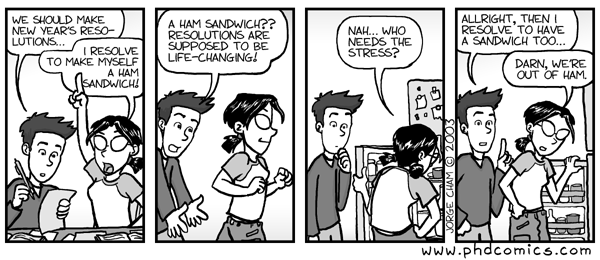
"Piled Higher and Deeper" by Jorge Cham www.phdcomics.com

What actually drives our behaviour?

Currently there exists many theories that try to explain why we do what we do, however, explanations are still lacking in regards to how our body and brain works together to directly drive our behaviour. When it comes to changing our habits, a key point to remember is that this involves stopping ourselves from doing things we consider pleasurable. For example, if you’re on a diet, every time you see an unhealthy snack, you have to tell yourself to STOP. Or, if you’re not a fan of exercising, why would you get off the sofa and slip on your running shoes? Making ourselves do things that don’t provide us with an instant reward can be stressful. These examples suggest that changing our habits can be stressful, that is, (the thought of) diet or exercise can become a source of stress (a stressor), and this makes our brain’s impulse control system work harder in order to adopt a new habit. Researchers have found that some of us can become stressed when seeing images of food, and are also not as good at controlling our impulses.1 Food craving, especially from seeing foods that we like, is a known stressor and the stress experienced from having to control our cravings is likely to tire out the impulse control system that can lead us to give in to temptations.

We might be able to change our habits for a short time as we become vigilant towards our goals, that is, the need to stick to our diet or exercise. However, we all have our limits and if stress from restricting our behaviour continues it will sap our ability to control our impulses, and our behaviour will return to what we are used to (or our ‘normal’). We saw another example of short-term success in behaviour change during our research. When monitoring children’s physical activity, some showed a burst of activity level at the start, but before long, it quickly dropped.2 These children were characterised by being hyper-vigilant towards stressors and they were generally more inactive than other children. We speculated that it was our monitoring of the activity that increased stress as the children felt that they had to show us they were more active which might spur on the initial activity spike, but as the children’s impulses for inactivity built up, it resulted in a considerable drop later on.

What’s next - how can we possibly take up, and keep up with, good health habits?

To influence health behaviour, it is crucial to understand the stress-impulse control mechanisms that DIRECTLY drive the behaviour. To use an analogy, if a person has a fractured arm, a direct treatment would be fixing the bone, rather than taking painkillers which would help to relieve the pain but not fix the problem. Similarly, if it is the stress from behaviour change and its influence on impulse control that directly causes us to succumb to temptations, we ought to target psychological interventions that reduce stress, or the brain’s impulse control system. Being able to manage our stress-impulse control system is particularly vital in the current environment where we are constantly exposed to temptations that lead to an unhealthy lifestyle. It is important to note that other factors, such as motivation and intentions, are also influential in changing our behaviour, however, this stress-impulse control process may more directly dictate the way we behave within split seconds and without our conscious awareness.

A possible psychological intervention is mindfulness training which can increase awareness of the stress cues, so that self-control can be executed before the brain’s impulse mechanism takes over. So next time we have a craving for an unhealthy snack or we are getting worked up about going for a run, we can potentially cope by containing and managing stress and impulses.

We believe that more research needs to be invested in the stress-impulse control mechanisms as it can potentially enhance the effectiveness of future individual health behaviour interventions and public health messages in getting us live a healthier lifestyle, and crucially, it can revolutionise the way we think about health behaviour change.


References
  1. Spitoni, G.F., Ottaviani, C., Petta, A.M., Zingaretti, P., Aragona, M., Sarnicola, A.,. & Antonucci, G. (2017). Obesity is associated with lack of inhibitory control and impaired heart rate variability reactivity and recovery in response to food stimuli. International Journal of Psychophysiology, 116, 77-84. https://www.sciencedirect.com/science/article/abs/pii/S0167876016307310?via%3Dihub
  2. Ling, F.C.M., Masters, R.S.W., & McManus, A.M. (2011). Rehearsal and pedometer reactivity in children. Journal of Clinical Psychology, 67, 261-266. https://onlinelibrary.wiley.com/doi/abs/10.1002/jclp.20745

The views expressed here are those of the authors and do not necessarily reflect those of Fuse (the Centre for Translational Research in Public Health) or the author's employer or organisation.

Monday, 11 November 2019

Can Scottish inventiveness curb the nation’s alcohol habit?

Posted by John Mooney, Senior Lecturer in Public Health, University of Sunderland
 Churchill is defeated by a Temperance movement MP - Dundee election result in 1922

“Of all the nations of this earth, perhaps only the ancient Greeks surpass the Scots in their contribution to mankind…” 
Sir Winston Churchill


This often cited sentence from the great orator’s canon of memorable expressions, frequently (in social media posts at least), is accompanied by a story of the number of times in a normal day ‘the typical Englishman’ is obliged to thank his Northern cousins for gifts bestowed:

From the spreading of ‘Dundee marmalade’ in the morning to his whisky night-cap it is easy to lose count of those almost innumerable causes for daily gratitude. In these days of Prophet Greta, perhaps the less said about ‘TarMacAdam’ and the internal combustion engine the better… but in our defence there is always Kirkpatrick MacMillan’s bicycle to offset that carbon footprint!

It’s no accident of course that pride of place be afforded in the above account to Scotland’s national drink of distilled and malted barley – renowned the World over for its unparalleled quality and distinctive dalliance on the palate. Scotland’s broader relationship with alcohol however, has not traditionally been a reputation to which one might raise a glass and is perhaps better summed up by the lovable and tragic Rab C Nesbit (right). The real tragedy of course being the excessive and abiding toll of alcohol related illness and premature death for which Scotland is infamous and also near the top of the World league table, for all the wrong reasons...

And yet, the nation’s pioneering spirit (of the non-liquid variety!) and very inventiveness in the face of a challenge may yet serve up another exemplar for others to follow. In May 2018 Scotland became the first country in the World to introduce legislation that set a minimum floor price for a unit of alcohol (MUP). While other fiscal mechanisms have been tried and tested for tackling cheap alcohol, MUP has consistently shown the greatest promise in modelling studies, since it cannot be “absorbed” by the retailer [1].

Sure enough, the first evaluation of the population level impact of MUP has found the policy to be associated with reduced alcohol purchasing. In line with model predictions, the reductions were largest for those households purchasing the most alcohol and for those drinks with the cheapest alcohol content [2, 3]. The very modest impacts on household budgets and the effect of reducing alcohol purchasing / consumption the most for those at greatest risk of harm also in line with predictions [4], helps counter any serious criticisms that the policy represents a regressive measure by unfairly targeting the economically disadvantaged. In the words of the Glaswegian novelist Val McDermid, on BBC Television’s Question Time in 2017: “There is nothing regressive about preventing people in Scotland’s poorest communities drinking themselves to death with cheap alcohol”.

Returning to the bigger picture, Scotland’s appetite for policy innovation to tackle alcohol harms is by no means restricted to minimum pricing. Rather, MUP is seen as only one component of a ‘whole system’ approach to tackling this most intractable and culturally embedded of public health problems. Bringing drink driving levels into line with the lower threshold in place across the rest of the EU [5] and incorporating health outcomes as a long overdue legitimate alcohol licensing objective [6], being two potential ingredients in the mix…

The Scottish ‘double edged’ relationship with alcohol can be best summed up by another snippet of Churchillian wisdom, a man who by all accounts was not unaccustomed to enjoying a ‘brandy before breakfast’:

"Whisky has killed more men then bullets, but most men would rather be full of whisky then bullets." 
Sir Winston Churchill

Perhaps the pragmatic recognition of a population’s natural affinity for a risky behaviour responsible for such a significant health burden is the first step towards realising that only meaningful restrictions in access mediated through price and availability, as well as legislative sanctions, might yet constitute the best defence against our worst excesses. Most Scots, myself included, know only too well of the devastating impact alcohol can exert on friends, families and communities. Maybe that is why we are most responsive to the remedies!


References:
  1. Meier PS, Holmes J, Angus C, Ally AK, Meng Y, Brennan A: Estimated Effects of Different Alcohol Taxation and Price Policies on Health Inequalities: A Mathematical Modelling Study. PLoS Med 2016, 13(2):e1001963-e1001963.
  2. Mooney JD, Carlin E: Minimum unit pricing for alcohol in Scotland. BMJ 2019, 366:l5603.
  3. O’Donnell A, Anderson P, Jané-Llopis E, Manthey J, Kaner E, Rehm J: Immediate impact of minimum unit pricing on alcohol purchases in Scotland: controlled interrupted time series analysis for 2015-18. BMJ 2019, 366:l5274.
  4. Holmes J, Meng Y, Meier PS, Brennan A, Angus C, Campbell-Burton A, Guo Y, Hill-McManus D, Purshouse RC: Effects of minimum unit pricing for alcohol on different income and socioeconomic groups: A modelling study. The Lancet 2014, 383(9929):1655-1664.
  5. Haghpanahan H, Lewsey J, Mackay DF, McIntosh E, Pell J, Jones A, Fitzgerald N, Robinson M: An evaluation of the effects of lowering blood alcohol concentration limits for drivers on the rates of road traffic accidents and alcohol consumption: a natural experiment. Lancet 2019, 393(10169):321-329.
  6. Mooney JD, Sattar Z, de Vocht F, M Smolar M, Nicholls J, Ling J: Assessing the feasibility of using health information in alcohol licensing decisions: a case study of seven English local authorities. In: Lancet Public Health Science: 2016; Cardiff: The Lancet; 2016: 78.
Image:
  1. Election result in Dundee in the 1920s when Churchill was defeated by a Temperance movement MP. With thanks to Eric Carlin, Director of the Scottish Health Action on Alcohol Problems (SHAAP).

Friday, 23 November 2018

The Age of Bubble-gum Gin?

In a post for Alcohol Awareness Week, John Mooney, Fuse Associate and University of Sunderland Senior Public Health Lecturer, ponders how the alcohol industry will respond to declines in youth drinking. 


1990s alcopops on display at the Museum of Brands
There is no doubt about the current trend: youths and young adults are clearly drinking less alcohol. In what seems to run counter to the traditional image of “irresponsible teenagers” drinking to excess and partying the night away, a number of recently published studies and reports have confirmed an increasing indifference to the “charms of the demon drink” on the part of young people that extends across all age groups. In their recent report for example, University of Sheffield alcohol research group (SARG) in a Wellcome Trust funded study [1], highlighted that:
“Among 16-17 year-olds, the proportion who reported drinking nowadays fell from 88% in 2001 to 65% in 2016 and the decline over the same time period for 16-24 year-olds was from 90% to 78%...”
Similarly in a nearly 10,000 strong sample of participants aged 16 to 24 years using a ten year analysis of Health Survey for England datasets, rates of non-drinking increased from 18% in 2005 to 29% in 2015 (largely attributable to increases in lifetime abstention) [2]. In the same study for the same period, “not drinking in the past week” increased from 35% to 50%. The SARG Wellcome Trust report noted that younger drinkers were also consuming alcohol less often and in smaller quantities: Between 2003 and 2016, for example, the proportion of 11-15 year-old drinkers who “had consumed alcohol in the last week” fell from 41% to 19%. Among 16-17 year-old drinkers, the decline was from 58% to 39%, while for 16-24 year-olds it was from 75% to 60%.

As the Sheffield report also notes, these declines in alcohol consumption are by no means confined to the UK with similar reductions in youth drinking being seen across many European nations, North America and Australasia.

Declines in drinking would be expected of course to be accompanied by public health benefits and therefore alcohol-related hospital admission rates in England have been falling in line with consumption, as have the numbers of under 18s referred to specialist alcohol services. This has a particular resonance for North East England, where the rates of alcohol-related hospital admissions for under 18s have been among the highest in the country [3] and which in recent years have been falling more sharply than for England as a whole (though of course, the starting point was higher).

While the reasons behind these regional, national and international declines in youth drinking are as yet not particularly well understood, it is probably worth noting that we have been here before, with the early 1990s seeing international declines in youth drinking. Many experts on alcohol consumption trends at that time also noted that this decline was accompanied by a robust ‘product diversification’ response by the alcohol industry, most notably the rise of ‘alcoholic soft drinks’ or ‘alcopops’. In an article published in the Independent in 2003 [4], the then chair of Alcohol Concern, Eric Appleby commented:
"The whole alcopops thing came about because at that stage the industry had realised that they weren't getting the normal flow of drinkers coming through. Young people were more independent and drugs had taken over for a lot of young people as a recreational high instead of drink. The industry knew it had to do something. They will always deny it but it is pretty clear that the whole alcopops thing was about recruiting young drinkers and getting them at an early stage. Young people don't have a natural affinity for the taste of alcohol – this was a crash course, cutting out the middle man."
Consumption data confirmed these suspicions, with figures released by the UK Department of Health in 2002 revealing the average alcohol consumption of children aged 11 to 15 who were drinkers had rocketed from 5.3 units a week in 1990 to 9.8: ‘Alcopops’ or ready to drink mixes (RTD’s) of spirits and soft drinks were blamed.

This previous experience and the industry response does of course beg the question if there will be a similar response this time around and the format that this might take. As the Sheffield report also notes, drinking habits formed when young, have a major influence on lifetime alcohol consumption patterns, so these trends will not have escaped industry analysts and those who might be concerned about maintaining “medium to long-term consumption and sales forecasts”.

For a number of commentators, the industry responses are already clearly in evidence, most notably perhaps being a proliferation in novelty gin varieties, perhaps the most blatant ‘cross-over’ with confectionary style marketing being ‘bubble-gum gin’ or ‘marshmallow flavoured vodka’.

Of course, there is also a ready-made consumer base among young adults for energy drinks, which have been the focus of much publicised research by Fuse colleagues and there is a long established practice of these drinks as alcoholic mixers, to say nothing of the fortified caffeine and sugar enriched wine of choice, most popular in my native Scotland and the product of serene ‘Buckfast Abbey’ surroundings in South West England.

Current downward trends in alcohol consumption therefore might already be seeing a familiar  marketing response… but the extent to which that will succeed is still guesswork, given the as yet lack of clear understanding around what might be behind current trends.

From a North East public health perspective of course, long may these trends continue, since the medium to long-term population health benefits in this part of the world in particular are likely to be considerable!


#AlcoholAwarenessWeek
#AlcoholChange 


References: 
  1. Oldham M, Holmes J, Whitaker V, Fairbrother H, Curtis P: Youth Drinking in Decline. University of Sheffield Alcohol Research Group & Wellcome Trust; 2018. 
  2. Ng Fat L, Shelton N, Cable N: Investigating the growing trend of non-drinking among young people; analysis of repeated cross-sectional surveys in England 2005–2015. BMC Public Health 2018, 18(1):1090. 
  3. Public Health England: Local Alcohol Profiles for England In.: https://www.gov.uk/government/collections/local-alcohol-profiles-for-england-lape; 2017.
  4. Harding N: The Demonised Drink: How Has Youth Drinking Evolved 20 years Since The Launch of Alcopops? Independent. London; 2013.
Image: "1990s alcopops on display at the Museum of Brands, west London" by Ben Sutherland via Flickr.com, copyright © 2017: https://www.flickr.com/photos/bensutherland/37299742285

Friday, 28 September 2018

Cancer and the simple pleasure of a good cuppa

Posted by Duika Burges Watson, Lecturer, Institute of Health and Society, Newcastle University

Thousands of people will today enjoy catching up over cake and a cuppa for the World's Biggest Coffee Morning, Macmillan Cancer Support's biggest fundraising event. But what if after cancer that cuppa and cake don’t taste right?

“When I had been through the treatment and was supposedly ‘cured’, I had hoped a cup of tea would do what it had always done and give me pleasure. But it didn’t, the tea had a textural product in it so I could swallow it. It wasn’t tea anymore, I felt miserable with it”


So said one of the head and neck cancer survivors who participated in our NIHR Research for Patient Benefit (RfPB) funded study, ‘Resources for Living’. Living beyond the life-saving treatment for cancer, all participants in our study had on-going difficulties with food and eating. It’s not the same for everyone, some people return to normal eating, but for those that live long-term with ‘altered eating’ and the unique difficulties they have, it can be miserable.

Since we formed the Altered Eating Research Network at Newcastle University following the end of the study, we’ve come to appreciate just how widespread the problem is of altered eating. Far from limited to cancer survivorship, we have a long list (and one that grows with each successive public engagement event) of conditions and experiences that may result in altered eating. We define ‘altered eating’ as a changed state of any combination of physical, emotional and social interactions with food and eating that has a negative impact on health and wellbeing. It’s a deliberately broad definition that we’ve found useful in charting a new approach to addressing it.

And on public engagement. We are very lucky to have Sam Storey, BBC Food and Farming ‘cook of the year’ finalist, 2018, as one of our team members. His passion for food notwithstanding, Sam has a unique empathy for those that have lost enjoyment in food and a remarkable skill at finding ways to bring that pleasure back. If there was a headline for our research and events it would be that ‘pleasure matters’. With increasing evidence[1] from the neurological sciences, and the advent of a research focus on ‘hedonia’(pleasure) and eudaimonia (satisfaction) in human wellbeing (e.g. the Journal of Happiness Studies) it appears there is a very real reason for the importance of pleasure to wellbeing. Combined with the feedback we get from events and research, we are ploughing ahead with a whole range of ideas of how we can help those that experience a loss of pleasure and find eating a burden.

Over the summer we ran two very successful events in collaboration with the Whitley Bay Film Festival. Two chocolate themed events - a ‘smell-along’ experience of the Spanish movie Like Water for Chocolate, and an ‘eat-along’ experience of Chocolat. They were for general audiences, but at each we introduced the films with information about the research we are doing with Altered Eating. Both events were sell-outs and great successes. You can read a blog about one person’s experience of the first event here. But as with the other events we’ve held in the last year or so (flavour masterclasses for example) we invariably discover something new, meet someone who is affected and distressed by altered eating difficulties.
Cook Sam Storey and Dr Duika Burges Watson: raining chocolate for the film festival

Our first serving during Chocolat was the most delicious hot chocolate timed perfectly to coincide with the moment Vianne Rocher (Juliette Binoche), an expert chocolatier, opens her shop in a conservative and austere rural French village. At 24 minutes in she serves hot chocolate, prepared with a ‘special kind of chilli pepper’, to the disbelieving Armande (Judi Dench), her elderly, eccentric landlady. With the first sniff and taste, Armande is emotionally transformed from bitterness to joy. For most of the movie-goers, the hot chocolate Sam had prepared was indeed a joyful experience. However, in presenting it to one person they told me “no thank you, I don’t like chocolate”. At first, I was perplexed, why pay for a chocolate eat along film if you don’t like chocolate? But then, in our research we’ve experienced this before, participants who didn’t want to participate in ‘eating’ at food play events (or not at first anyway). A reminder that food is more than about eating and that the commensal experience of being together with others matters too.

But chocolate is a little unique in terms of eating pleasures. As Professor Barry Smith, a member of the AE Network and expert in the sensory and hedonic elements of food notes, chocolate is for most, a hugely pleasurable experience that is both about flavour and texture, “the pleasure of anticipation and the reward in eating it match up. The aroma and the taste are the same. And that matters because there are two sorts of pleasure ivolved. When you start eating it, turn it around in your mouth to get the melting quality which strokes the tongue. Receptors in the tongue then respond to this stroking and it's a different feeling from touch. That's why we love a velvety wine or double cream - it's the feeling on our tongues”.

Ah yes, no wonder the tea didn’t ‘taste’ right.


Reference:
  1. Kringelbach, M.L., 2015. The pleasure of food: underlying brain mechanisms of eating and other pleasures. Flavour, 4(1), p.20.

Friday, 9 March 2018

How industry-funded organisations mislead the public on alcohol & cancer

Guest post by Dr Nason Maani Hessari, Research Fellow, London School of Hygiene and Tropical Medicine

When it comes to the risk of cancer associated with alcohol consumption, there is a significant disconnect between scientific evidence and public opinion.

The evidence of the independent link between alcohol consumption and cancer is clear, as emphasised by recent comprehensive reviews by the UK Committee on Carcinogenicity* (Committee on Carcinogenicity of chemicals in food, 2015), and the International Agency for Research on Cancer (IARC, 2012). Drinking alcohol can cause a range of cancers, including oral cavity, pharynx (cavity behind the nose and mouth), larynx (voice box), oesophagus (gullet), colorectal (bowel and colon), breast and liver cancer. Furthermore, the risk of developing cancers of the mouth, throat and breast increases with any amount consumed on a regular basis (Department of Health, 2016). However, public awareness of this link remains low, with a 2016 survey reporting only 12.9% of respondents identifying cancer as a potential consequence of drinking too much alcohol (Buykx et al., 2016).

What does this have to do with the alcohol industry? Well, in the UK and many other countries, alcohol-industry funded organisations, called Social Aspects Public Relations Organisations (SAPROs), present themselves as sources of health information to the public, particularly around ‘responsible drinking’, underage drinking and drink driving (Maani Hessari and Petticrew, 2017). These organisations have been criticised for their inherent conflict of interest, as they are linked to large multinational alcohol producers, for whom a large proportion of profits come from harmful drinking (Casswell et al., 2016). The industry has a track record of focusing on education and individual responsibility, while lobbying against population-level measures to reduce alcohol-related harm (Babor and Robaina, 2013), even though these are evidence-based (Burton et al., 2017), and form the basis of the WHO Global Alcohol Strategy, in which alcohol producers participated (World Health Organisation, 2010).

Considering the role of the alcohol industry in providing information to consumers, we decided to examine the extent to which the industry fully and accurately communicated the scientific evidence on alcohol and cancer. To do this, we systematically examined the content of 27 industry-funded organisations or websites. In each case, we analysed how information regarding alcohol and cancer was presented, and whether the statements they made about cancer risk were in agreement with the scientific evidence, as presented in the Committee on Carcinogenicity (COC) and IARC reviews.

We found that most alcohol industry SAPROs appeared to misrepresent evidence by denying, distorting or distracting from links to cancer, particularly breast cancer (Petticrew et al., 2017, Petticrew et al., 2018). A full list of examples can be found in our paper and the supplementary information, but as an example of denial, consider this:
“Moderate wine intake may actually reduce the risk of oesophagus, thyroid, lung, kidney and colorectal cancers as well as Non-Hodgkin’s Lymphoma…Concerning breast cancer, there may also be a protective role for wine.” [Wine Information Council].
When some risk was acknowledged, it was often presented alongside a range of other confounders, thus undermining the evidence that there is an independent relationship. For example:
“Alcohol has been identified as a known human carcinogen by IARC, along with over 1,000 others, including solvents and chemical compounds, certain drugs, viral infection, solar radiation from exposure to sunlight, and processed meat.” [International Alliance for Responsible Drinking]
Or in another instance:
“Not all heavy drinkers get cancer, as multiple risk factors are involved in the development of cancers including genetics and family history of cancer, age, environmental factors, and behavioural variables, as well as social determinants of health.” [Australia: Drinkwise].
It is not clear how the consumer is meant to interpret this information. The use of such descriptions to describe risk of cancer from smoking would in essence be both equally correct, and equally misleading. In fact, this type of language is highly reminiscent of arguments used by the tobacco industry, which emphasise the complex causes of lung cancer and coronary heart disease, in order to help deny the scientific evidence and identify other independent risk factors for smoking-related diseases to deflect focus from their products (Petticrew and Lee, 2011).

Since the publication of our findings (Petticrew et al., 2017, Petticrew et al., 2018), additional examples of alcohol industry representatives openly disputing the link between alcohol and cancer continue to emerge. For example, a recent study in the Yukon, Canada, examining the effects of adding a cancer warning label to alcohol (as one of three potential labelling options) has been suspended due to industry pressure.

Perhaps even more striking: as part of the ongoing debate in Ireland regarding the Public Health Alcohol Bill (PHAB), when a physician noted on live TV that alcohol was a carcinogen, a leading alcohol industry spokesperson countered inaccurately that alcohol was in fact, not a carcinogen, and that there were “…as many studies, medical studies, as there are on the ‘pro’ side…” (clip below).


It has been argued that greater public awareness, particularly of the risk of breast cancer, poses a significant threat to the alcohol industry (Connor, 2017). In response to other threats to profits, there is evidence that the industry has attempted to engage in “denialism” (Katikireddi and Hilton, 2015), and it appears this may also be the case for cancer, particularly breast cancer.

Currently, the alcohol industry remains involved in developing alcohol policy in many countries, and in disseminating health information to the public, including school children. Our research findings, which build on existing evidence regarding the activities of SAPROs (Babor and Robaina, 2013, McCambridge et al., 2014, Moodie et al., 2013), should be cause for a re-evaluation of such arrangements. The World Health Organisation has previously stated that ‘In the view of the WHO, the alcohol industry has no role in the formulation of alcohol policies, which must be protected from distortion by commercial or vested interests.’(Chan, 2013). The clear and obvious similarities to tobacco industry tactics that we report, which reflect the inherent conflict of interest, serve as a reminder that policies are but one aspect at risk of industry distortion.


All views expressed are those of the author.


References

BABOR, T. F. & ROBAINA, K. 2013. Public health, academic medicine, and the alcohol industry's corporate social responsibility activities. Am J Public Health, 103, 206-14.

BURTON, R., HENN, C., LAVOIE, D., O'CONNOR, R., PERKINS, C., SWEENEY, K., GREAVES, F., FERGUSON, B., BEYNON, C., BELLONI, A., MUSTO, V., MARSDEN, J. & SHERON, N. 2017. A rapid evidence review of the effectiveness and cost-effectiveness of alcohol control policies: an English perspective. Lancet, 389, 1558-1580.

BUYKX, P., LI, J., GAVENS, L., HOOPER, L., LOVATT, M., GOMES DE MATOS, E., MEIER, P. & HOLMES, J. 2016. Public awareness of the link between alcohol and cancer in England in 2015: a population-based survey. BMC Public Health, 16, 1194.

CASSWELL, S., CALLINAN, S., CHAIYASONG, S., CUONG, P. V., KAZANTSEVA, E., BAYANDORJ, T., HUCKLE, T., PARKER, K., RAILTON, R. & WALL, M. 2016. How the alcohol industry relies on harmful use of alcohol and works to protect its profits. Drug Alcohol Rev, 35, 661-664.

CHAN, M. 2013. WHO's response to article on doctors and the alcohol industry. Bmj, 346, f2647.

COMMITTEE ON CARCINOGENICITY OF CHEMICALS IN FOOD, C. P. A. T. E. C. 2015. Statement 2015/S2.

CONNOR, J. 2017. Alcohol consumption as a cause of cancer. Addiction, 112, 222-228.

DEPARTMENT OF HEALTH 2016. UK Chief Medical Officers' Alcohol Guidelines Review - Summary of the proposed new guidelines.

IARC 2012. Personal habits and indoor combustions. IARC monographs on the evaluation of carcinogenic risks to humans.

KATIKIREDDI, S. V. & HILTON, S. 2015. How did policy actors use mass media to influence the Scottish alcohol minimum unit pricing debate? Comparative analysis of newspapers, evidence submissions and interviews. Drugs (Abingdon Engl), 22, 125-134.

MAANI HESSARI, N. & PETTICREW, M. 2017. What does the alcohol industry mean by 'Responsible drinking'? A comparative analysis. J Public Health (Oxf), 1-8.

MCCAMBRIDGE, J., KYPRI, K., MILLER, P., HAWKINS, B. & HASTINGS, G. 2014. Be aware of Drinkaware. Addiction, 109, 519-24.

MOODIE, R., STUCKLER, D., MONTEIRO, C., SHERON, N., NEAL, B., THAMARANGSI, T., LINCOLN, P. & CASSWELL, S. 2013. Profits and pandemics: prevention of harmful effects of tobacco, alcohol, and ultra-processed food and drink industries. Lancet, 381, 670-9.

PETTICREW, M., MAANI HESSARI, N., KNAI, C. & WEIDERPASS, E. 2017. How alcohol industry organisations mislead the public about alcohol and cancer. Drug Alcohol Rev.

PETTICREW, M., MAANI HESSARI, N., KNAI, C. & WEIDERPASS, E. 2018. The strategies of alcohol industry SAPROs: Inaccurate information, misleading language and the use of confounders to downplay and misrepresent the risk of cancer. Drug Alcohol Rev.

PETTICREW, M. P. & LEE, K. 2011. The "father of stress" meets "big tobacco": Hans Selye and the tobacco industry. Am J Public Health, 101, 411-8.

WORLD HEALTH ORGANISATION 2010. Global Strategy to Reduce the Harmful Use of Alcohol.

*Carcinogen is any substance or agent that promotes the formation of cancer


Image: ‘Spilling wine’ (3375802661_fc4ff615ba_z) by Gunnar Grimnes via Flickr.com, copyright © 2009: https://www.flickr.com/photos/gromgull/3375802661

Friday, 12 May 2017

Alcohol use in retirement: A silent epidemic?

Posted by Roxanne Armstrong-Moore, Fuse PhD student, University of Sunderland

I was on a course recently and someone mentioned that her parents, since retiring were all about the “three Gs – Gardening, Grandchildren and the Grape”. Laughter ensued from other colleagues, then a sadness dawned on me – she explained that the drinking had gone beyond a social drink with friends and was ingrained in their lives, the glass of wine was getting earlier and earlier and functioning was getting less. It made me think, why is this acceptable once someone has left work? Of course, individuals have worked hard all their lives and they deserve some respite – but should this come at a cost of lessened functioning, higher chance of diseases, premature death and breakdowns in the relationships that have been nurtured over a lifetime?

My PhD aims to develop a strategy for those in, or about to enter retirement, to avoid what seems to be a downward spiral into ill health.

In what is a relatively scarce area of literature, myself and my supervisory team have begun this task by conducting a systematic review of current literature. This is to investigate what we currently know about current interventions and how they can help older individuals to reduce negative effects of alcohol. Six papers were included, all of which were in the United States. Individuals in this age group appear to respond well to interventions, with all interventions showing improvements (a reduction in drinking or, in one case study, improvements in quality of life) in at least one area of alcohol consumption or frequency of consumption. These findings were presented at the European Health Psychology Conference in Aberdeen (2016).

This scarce amount of literature available on interventions shows that older people are currently being neglected in our field. Healthcare professionals may feel it is not their duty to step in and “ruin the fun” but - with predictions that by 2050, 22% of the world population will be aged 60 and over, and that a significant amount of these older individuals will have a “pattern or level of drinking which places them at harm” (Wadd & Galvani, 2014, p. 656)1 - something needs to be done.

But what can be done? Don’t they deserve to have a drink? Are we spoiling their fun? Would they even want an intervention and how would this work? This is where the hard work begins…

Older people are more susceptible to the detrimental effects of alcohol, as tolerance to alcohol lowers with age. Drinking more than five standard drinks per week has been found to quadruple the risk of developing psychiatric problems including depression and memory loss (Stevenson, 2005)2. Cognitive impairment as a result of alcohol use can lead to an increased likelihood of falls, and because older people often have weaker bones, this can lead to hip fractures - one of the highest causes of death in the older population (Mukamal et al., 2004; Merrick et al., 2008)3.4.

While much research has focused on students and younger adults, little has explored the drinking of older individuals. The evidence in this field is growing, however it is still not adequate to inform an intervention in the area.

So, why retirement? Evidence suggests that those who have recently entered retirement are statistically and significantly more likely to drink almost every day compared to those who are still in work, or those who have been retired for a longer time. At the moment, there is limited support and guidance offered by employers, government and the third sector to those who are retiring in the future. The “Easing the Transition” report from the Drink Wise - Age Well project (Holley-Moore & Beach, 2016)5 suggests that for some individuals, this can be a negative time marred with a loss of purpose, periods of ill health or financial difficulties.

So this is where my PhD comes in, at the moment very little qualitative data exists in this area. We are hoping to interview individuals – not only those who have retired recently and those who are due to retire, but also their employers. This data will then be analysed to establish core themes using a framework approach and fitted to an intervention map to really find a tool that could be used to help people going through this (at times) difficult transition.

From data collection, we will use the findings to begin to develop an intervention that can be implemented in the workplace, or after leaving work. This will be the first protocol of its type that uses the information gathered from those who are going through this transition and will hopefully ease the transition between working and retirement and reduce the growing burden on public health.


References:
  1. Wadd, S., & Galvani, S. (2014). Working with Older People with Alcohol Problems: Insight from Specialist Substance Misuse Professionals and their Service Users. Social Work Education, 33(5), 656–669. http://doi.org/10.1080/02615479.2014.919076
  2. Stevenson, J. S. (2005). Alcohol use, misuse, abuse, and dependence in later adulthood. Annual Review of Nursing Research, 23, 245–80. Retrieved from http://www.ncbi.nlm.nih.gov/pubmed/16350768
  3. Mukamal, K. J., Cushman, M., Mittleman, M. A., Tracy, R. P., & Siscovick, D. S. (2004). Alcohol consumption and inflammatory markers in older adults: the Cardiovascular Health Study. Atherosclerosis, 173(1), 79–87. http://doi.org/10.1016/j.atherosclerosis.2003.10.011
  4. Merrick, E. L., Horgan, C. M., Hodgkin, D., Garnick, D. W., Houghton, S. F., Panas, L., … Blow, F. C. (2008). Unhealthy Drinking Patterns in Older Adults: Prevalence and Associated Characteristics. Journal of the American Geriatrics Society, 56(2), 214–223. http://doi.org/10.1111/j.1532-5415.2007.01539.x
  5. Holley-Moore, G., & Beach, B. (n.d.). Drink Wise, Age Well: Alcohol Use and the Over 50s in the UK. Retrieved from www.drinkwiseagewell.org.uk

Photo attribution:

Friday, 17 February 2017

How big food and drink are using sport

Guest post by Robin Ireland, Director of Research, Food Active and Healthy Stadia

You don't have to do much travelling to realise that the unhealthy alliance between sport and the Food and Drink Industry isn't only an issue in the UK.

I am lucky enough to be visiting New Zealand and Australia at the moment and it's easy to see all the same signs - and very similar marketing campaigns and messaging. Whether it's the All Blacks rugby team being pictured with the product of their "Official Hydration Partner", Gatorade, or the recent Australian Tennis Open full of alcohol advertisements (and I haven't even mentioned cricket), it's clear that the Food and Drink Industry have an international agenda.

Advertising featuring the All Blacks rugby team photographed in New Zealand

In January, the British Medical Journal published an editorial (Ireland and Ashton 2017)1 that I wrote (with Professor John Ashton CBE) about how Coca-Cola's publicity machine was subverting the Christmas message.

If anything, it's even more blatant in sport and we have been aware of it for some time from London's "Obesity Games" (Garde and Rigby 2012)2 to Rio's promotion of ultra-processed foods (Loughborough University)3. Even when spectators want healthier food, this choice is rarely made available to them.

George Monbiot recently referred to "Dark Money" (Monbiot 2017)4 which describes the funding of organisations involved in political advocacy that are not obliged to disclose where the money comes from. In public health terms, we may describe this as Commercial Determinants of Health where industry interests impact on our health. It is often linked to the increasingly sophisticated Corporate Social Responsibility policies being adopted by big corporations.

The latest of these is of course the deal just announced by the English Premier League and Cadburys criticised by the Obesity Health Alliance in a letter to The Times (Obesity Health Alliance 2017)5. Cadburys no doubt will argue that they are taking an ethical position to help educate people. But can we really take a chocolate company seriously that wishes to advise schoolchildren on nutrition, healthy eating and exercise?


FC Bayern München's branded energy drink
It is no coincidence that the mantra parroted by food and drink sponsors is that our diets are down to individual choice and that if we simply took more exercise we wouldn't be having the obesity epidemic now prevalent worldwide. This is rubbish. So called energy and sports drinks should have no part to play in the diet of the average member of the public. Kids do not need more sugar (or more protein for that matter) if they are eating a balanced diet with lots of fruit and veg. But of course the food and drink industry do not make their enormous profits in this way.

It is these concerns - amongst many others - that encouraged myself and colleagues to establish Healthy Stadia in 2005, of which I am a Director. Healthy Stadia takes a holistic and integrated approach to developing sports stadia and clubs as "health promoting settings":
"Healthy Stadia are those which promote the health of visitors, fans, players, employees and the surrounding community" (from Healthy Stadia website)6.

Healthy Stadia's Conference which will be held at the Emirates Stadium, London, in April will be discussing food and drink sponsorship in professional sport among other issues. I anticipate that these topics will come under increasing public scrutiny in years to come, as we develop more awareness of the impact that marketing has on our food and drink choices. (Cairns et al., 2013)7.

Sports fans and public health professionals alike should be questioning how 'Our Beautiful Games' are being manipulated by the Food and Drink Industry to promote ultra-processed food and drink - including alcohol - to audiences, often well populated by impressionable youngsters. Let's see if we can link up the campaigns in different countries to make a louder voice demanding change from the governing bodies of sport.
References:
  1. Ireland R and Ashton John R. (2017). Happy corporate holidays from Coca-Cola. BMJ 2017;356:i6833. http://www.bmj.com/content/356/bmj.i6833. 10 January 2017.
  2. Garde A and Rigby N. (2012). Going for gold – should responsible governments raise the bar on sponsorship of the Olympic games and other sporting events by food and beverage companies? Commun Law. 2012:356:42-9.
  3. Loughborough University Press Release (2016). Loughborough research calls for change in spectator food and drink provision at sports mega events such as Rio 2016. PR/16/158. http://www.lboro.ac.uk/media-centre/press-releases/2016/december/loughborough-research-calls-for-change-in-spectator-food-and-drink-provision-at-.html. 05 December 2016.
  4. Monbiot G. How corporate dark money is taking power on both sides of the Atlantic. The Guardian. https://www.theguardian.com/commentisfree/2017/feb/02/corporate-dark-money-power-atlantic-lobbyists-brexit. 02 February 2017.
  5. Obesity Health Alliance (2017). Letter to The Times – Cadbury and Premier League Sponsorship. Accessed online at: http://obesityhealthalliance.org.uk/2017/02/06/letter-times-cadbury-premier-league-sponsorship/?utm_campaign=Cadbury%20letter. 06 February 2017.
  6. European Healthy Stadia Network. http://www.healthystadia.eu/about.html
  7. Cairns G, Angus K, Hastings, G and Caraher M (2013). Systematic reviews of the evidence on the nature, extent and effects of food marketing to children. A retrospective summary. Appetite 2013: 356:209-15. http://www.sciencedirect.com/science/article/pii/S0195666312001511. 03 March 2013.
All views expressed are exclusively those of the author.

Friday, 13 January 2017

A prescription for tackling riskier drinking?

Guest post by John Mooney, Fuse associate and Senior Lecturer in Public Health, University of Sunderland.

In keeping with the ‘Dry-January’ season, John Mooney reflects on a current initiative to assess the feasibility of alcohol brief interventions in high street pharmacies…

“A man walks into a high street chemist – and asks for a paracetamol and an Alka-Seltzer…” could be the start of a very unpromising joke or sketch outline… Thankfully, it’s neither, as it more accurately depicts a very common scenario, which might represent the basis of a potentially effective setting (namely pharmacy / high street chemist shops) for health promotion messages around the health risks from alcohol misuse and / or overconsumption.

AUDIT score card collection box, with prize incentive to participate
Alcohol unit indicator diagram


Unsurprisingly perhaps, it is by now fairly well established that “alcohol brief interventions” (ABIs) - in which short well-validated questionnaires about habitual drinking patterns and consequences are linked to tailored advice and feedback - can be an effective intervention in primary care based consultations / GP practices as evidenced in the SIPS trial. Evidence for the effectiveness of such interventions however is less convincing in other settings, even those where, as in a GP consultation, health is the primary focus of the interaction. Pharmacy outlets for example might be considered an obvious parallel candidate ‘setting’ where, as in the scenario above, there may clearly have been an alcohol related context surrounding the primary reason for the person’s visit.

Indeed, in addition to over-the-counter ‘remedies’ which might be sought out after alcohol over-indulgence, there are a number of ‘indicator-prescriptions’ which could be suggestive of a more chronic / long-term damaging level of alcohol consumption (such as stomach acid suppressants or high blood pressure medications). High street chemists therefore, by virtue of their community embedded location, specialist knowledge and windows of opportunity for engagement, could theoretically present a very promising setting for ABIs. The lack of evidence of effectiveness in studies where this has been rigorously evaluated, has prompted questions as to why this might be the case. Investigators have speculated on the explanation being attributable to anything from the variable attitudes of pharmacy staff to the additional time and resource constraints associated with modern pharmacy practice. A recent Master of Pharmacy dissertation at the University of Sunderland(1) – which explored possible reasons in interviews with pharmacy staff, provided some local corroboration for these potential explanations. Interviews with participating pilot sites had also however noted the value of the awareness raising aspect of the process:

“Some patients had been drinking a bottle of wine a night and didn’t realise that it could contain 9-10 units and they were really shocked when they realised”

Other potential strengths of pharmacies as a setting for ABIs might be the now well established practice of providing support to pharmacies looking to embrace a wider health promotion role. As part of NHS England’s current ‘Promotion of Healthy Lifestyles’ programme, pharmacies are now required to participate in up to six health promotion campaigns per year(2). This generally involves the display and distribution of leaflets provided by NHS England or other collaborating institutions or stakeholders. As a result, there are usually highly visible and engaging ‘health promoting and awareness raising materials’ adorning the display areas of high street pharmacies and messages around alcohol health risks and reducing them are often a focus of such displays.

Given that the brief questionnaires and tailored advice of alcohol brief interventions is a more pro-active approach than the passive display of information, a current UK pilot feasibility study for pharmacies in several UK regions funded by Drinkaware UK, involves participants self-completing a score card that is the basis of most ABI interventions. Abbreviated as AUDIT, the Alcohol Use Disorder Identification Test, developed by the World Health Organisation(3), involves a series of questions about drinking habits and the extent to which drinking might have impacted on daily activities. Not quite ‘shock tactics’, the revelation of a score that flags up concern – can give respondents some cause for reflection – especially after the season of excess! Of course the score cards themselves have information on where respondents can seek further help and participating outlets receive training in responding to questions that might arise. Essentially the pilot aims to examine how best to integrate ABIs, as unobtrusively as possible into the day-to-day working of the pharmacy.

Not a programme lacking in ambition, the same score cards are also being distributed by trained advisors in selected participating supermarkets and other community settings across the UK, the evaluation of which is set to be complex and challenging. Ultimately the organisers hope to be able to make best practice recommendations about the most effective way to implement ABIs in pharmacies and other settings, where traditionally ‘hard to reach groups’ including working age men (a key high risk group for developing alcohol related health problems) can be more easily targeted.

AUDIT score cards with information leaflets
Indeed the current Drinkaware national campaign (‘Have a little less’) of which the above initiative is a part, will be run to coincide with 'Dry-January'. With a particular focus on working age men aged between 45-60, the message is that ‘Having a little less’ alcohol can have significant health benefits. This is in line with an emerging expert consensus around some of the potential drawbacks of an over-emphasis on one month of the year(4) and that it would be more beneficial for example to achieve three drinking free days for every week of the year. With long term trends in UK consumption still on the rise and a 44 per cent increase since 2009 in those aged 50 and over accessing alcohol treatment, all initiatives exploring innovative ways of getting the message across are to be welcomed. Don’t be too surprised therefore if you are asked about alcohol consumption the next time you collect a prescription!


Note: The Sunderland University Team who are evaluating the Drinkaware community ABI pilot comprises: Prof Jonathan Ling, Mr John Mooney (PI), Dr Zeibeda Sattar and Dr Nicola Hall. Please address any correspondence to john.mooney@sunderland.ac.uk

References:
  1. Asghar S. Assessing the Feasibility and Practicality of delivering Alcohol Brief Interventions in Pharmacy Settings. MPharm Dissertation, University of Sunderland 2015/16.
  2. PSNC page on promoting healthy lifestyles: http://psnc.org.uk/services-commissioning/essential-services/public-health/ 
  3. PHE Guide to WHO AUDIT: https://www.alcohollearningcentre.org.uk/Topics/Latest/AUDIT-Alcohol-Use-Disorders-Identification-Test/ 
  4. http://theconversation.com/dry-january-is-it-worth-giving-up-alcohol-for-a-month-51956
Photography by Eileen Robinson Art ©

Thursday, 21 July 2016

What should we do about children and young people’s consumption of energy drinks?

Guest post by Shelina Visram, Fuse Associate and Lecturer in the Centre for Public Policy & Health, Durham University

Did you know that cigarettes are the only product on the market that, when used exactly as intended by their manufacturers, will kill around half of their users? And yet you can buy them legally in every country of the world, with the exception of Bhutan? But you probably knew that already (except maybe the bit about Bhutan). It’s just one example of the type of paradoxical situation that occurs when public health evidence suggests we should do something and this is then contradicted by the actions of government and industry.

Here’s another example: did you know that energy drink consumption by school-age children is linked to hyperactivity, risky behaviours and health complaints such as headaches and stomach aches? And yet children of any age can buy these drinks in a variety of shops? You may have heard that the supermarket chain Morrisons banned sales of energy drinks to under 16s, but this was a trial that ended in early 2015. Some retailers choose not to sell energy drinks to younger children – often in response to pleas from teachers at nearby schools – but they do this on a voluntary basis and have to accept that they will probably lose revenue as a result.


Regular readers of this blog may be aware that Fuse members have been involved in conducting research on youth energy drink consumption over the past couple of years (you can read previous blog entries here and here). You may have read our Fuse brief, seen us present our findings at a seminar or conference, or downloaded our report from the HYPER! study website. So why the renewed call for action? At a time when the Government’s delayed childhood obesity strategy has been described as "pathetic", we need to take every opportunity to push for clear messages around food and health. We have worked with the Food Research Collaboration (FRC) to produce a briefing paper – published today – that clearly sets out the main ingredients of energy drinks, the current market situation, the scientific evidence base, and existing interventions, ranging from school-based educational activities to country-wide bans. The paper concludes with a series of recommendations on what could (and should) be done by policy-makers and others to address this issue.

To go back to the example of cigarettes, we know that sales and marketing restrictions are key factors in preventing uptake of smoking by children and young people, even if they do not eradicate the problem completely. Obviously energy drinks are nowhere near as harmful as cigarettes. They do not kill one in two consumers. But, like all sugar-sweetened beverages, they do contribute to increasing levels of childhood obesity and type 2 diabetes, as well as poor dental health. By law, energy drink labels must include the following warning: “High caffeine content. Not recommended for children or pregnant or breastfeeding women”. So isn’t it time we stopped sending out conflicting messages and made it clear that these drinks are not suitable for children and young people?

Download the briefing paper Energy Drinks: What’s the evidence? written by Shelina Visram (Durham University) and Kawther Hashem (Action on Sugar).


Illustration: Cathy Wilcox via http://www.essentialkids.com.au/food/nutrition/caffeine-concern-over-teens-and-energy-drinks-20130905-2t6hb

Thursday, 21 January 2016

Dry January works for many. I'm going binge-free all year round

Guest post by Dr Victoria McGowan, Research Associate, Alcohol and Public Health Team, Teesside University, @teamalphatees

New Year’s Eve is celebrated around the world and New Year’s Day follows with many debilitating hangovers. In my case this is made so much worse as a close friend’s birthday is on 30 December, so on New Year’s Eve I’m usually nursing a hangover and wondering how I’ll conform to social convention and partake in more alcohol consumption while waiting for the clocks to strike midnight. I always manage. Taking a look at Professor Newbury-Birch’s post from November 2015 I will hold my hands up and tell you over those two nights I binge drink, every year.

About five years ago my friend and I sat in my back garden in an inebriated state and discussed how terrible we’d feel in the morning and that we should, and could, spend a whole month off the booze. I wasn’t aware of any dry January campaigns at the time and according to Wikipedia “Dry January” was registered as a trademark by Alcohol Concern in 2014, so my friend and I were ahead of the game. At the time I thought it would be quite difficult to spend a whole month booze free but I found it surprisingly easy. Although, I often go weeks without consuming alcohol so perhaps abstinence for a month wasn’t a great stretch from my normal consumption patterns. My friend made it until 30 January before she succumbed to social convention when we went out to see a band. But still, 30 days out of 31 is close enough.

Abstaining from alcohol couldn’t happen at a better time in the year, our purses tend to be a little lighter and our waistbands a little tighter so it’s a win-win situation saving £s and shaving lbs, by swapping the wine for water. But also, according to the New Scientist, dry January can have beneficial effects on your liver, and NHS Choices say it can lead to healthier long-term drinking patterns. So if it’s so good for us and it’s only one month out of 12 why am I never doing it again? Because dry January would be easy for me, I do it often without thinking and I have done it successfully in the past. What I would find challenging is consuming the recommended daily units for a woman on the occasions I do drink alcohol. This equates to 3 units (three small glasses of wine) as opposed to the 18 (two bottles of wine) I consumed at the end of 2015. I might abstain from alcohol a month at a time but drinking a whole bottle of wine in one sitting puts me above recommended daily limits. Dry January is a great idea but one booze free month cannot outweigh 11 months of 9 units even if they only happen once a month. A similar argument has been made by other writers, including a recent paper in the British Medical Journal by Ian Hamilton titled: Could campaigns like Dry January do more harm than good?

So instead of taking part in dry January this year I’m attempting binge-free moderate-months by being aware of, and trying to stick to, the recommended daily limits on the occasions when I consume alcohol.

What do you think about Dry January? Post your comments below.

Thursday, 29 October 2015

Not just a can of pop: the social meanings of energy drinks

Posted by Mandy Cheetham, Fuse Research Associate at Teesside University

Children and young people can sometimes be conspicuous by their absence in public debates about sugary drinks, so I’ve enjoyed reading the series of blogs posted since September, which describe research and activities involving young people. As children and young people are the predominant consumers of sugary drinks, it is claimed they are one of the groups whose health will benefit most from efforts to control or reduce their consumption (FPH 2015), such as the introduction of a duty on sugary drinks advocated by PHE (2015) and popularised by Jamie Oliver.

Our study on energy drinks showed that cost was one of the major influences on young people’s choices. The mapping exercise we did with Year 6 and Year 9 students in their local area showed walls of cheap, appealing, attractive displays of multiple flavoured energy drinks to tempt young people, with ‘buy one, get one free’ offers to share with friends. As important as the economic considerations are, the social meanings of energy drinks also have a major role to play. These are often misunderstood or ignored by adults planning public health interventions to reduce the risks of obesity.
Young people described the social spaces in which they drink energy drinks, whether consumed at weekend sleepovers, whilst gaming, hanging out with mates in the park, or on the way to or from school. Shared, swapped, and exchanged, energy drinks, and the sponsorship, branding and marketing associated with them, are woven in to the social fabric of young people’s lives. Energy drinks are part of the construction and maintenance of particular gendered identities, associated with extreme sports, alien elimination, looking hard, sophisticated and / or attractive. They offer young people opportunities to conform to certain ideas about what girls and boys like and do, and become part of the currency of young people’s daily interactions. In short, social meanings matter.

In Wendy Wills’ presentation at the Sweetness, Social Norms and Schools seminar in September, (CPPH/Wolfson Seminar - Sweetness, social norms and schools: factors influencing children and young people’s food and drink practices), I was struck by the similarities in young people’s comments about the importance of social relationships, interactions with friends, and the value of friendly respectful exchanges with local retailers, informing their lunchtime decision making. Young people were keen to be involved in efforts to improve the school food environment. Young people in our study were similarly fired up to make positive changes, and questioned why and how energy drinks companies can target young people under 16. They had ideas about what would make a difference and were realistic about the challenges of restricting sales of energy drinks to young people.

In September, Fuse welcomed Professor Helen Roberts, a self confessed fan of evidence informed public health advocacy, to deliver a knowledge exchange seminar prompting debates about our role as academics and advocates. Constrained by restrictions placed on us by funders, some appear nervous about compromising assumed notions of independence. If we want our research to have impact, should we not frame public health debates in ways which make sense to those who participate in our research? Rather than simply highlighting the health risks of energy drinks, this means understanding the social meanings of young people’s food and drink choices and more critical engagement with the industry that promotes them. Our efforts would be further strengthened by encouraging young people and colleagues to connect with other campaigns such as RRED and GULP.

To download the Fuse Energy Drinks report click here, or the Fuse Brief can be viewed here.

Did you enjoy reading this post? If so, please vote for Fuse in the UK Blog Awards 2016 by clicking here

Thursday, 8 October 2015

Animation designers…'the day in the life of a researcher'

Guest post by Megan and Glen (TeamAlpha)

TeamAlpha (The alcohol team at Teesside University: Professor Dorothy Newbury-Birch, Dr Emma Giles, Dr Grant McGeechan, Dr Victoria McGowan, Gillian Waller, Lisa Anderson, Robert Sayer) were joined by two young people from local schools - Megan and Glen – who helped the team to develop the groundwork for an animation video. This video is part of the SIPS JR-HIGH trial, a multi-centre individual-randomised controlled trial of the effectiveness of brief alcohol intervention for 14-15 year olds in a school setting. This animation video is currently being developed to show to young people in the school setting, and will be used to provide advice on how to complete the questionnaire component of the trial. This animation replaces the need for individual researchers to enter all the schools in the trial to inform the young people about the study process.

In order to develop the animation Megan and Glen spent two days drawing storyboards, drafting scripts, searching for background music, and even thinking of examples of voices for the characters. This blog was drafted by Megan and Glen to highlight their thoughts on being a researcher and graphic designer for two days.


Day one

Brainstorming and initial storyboards were created as we worked hard all morning. We had a jolly start to the day and thought it was quite interesting and fast going, however more tiring than anticipated!

Individual tasks were completed as we both researched ideas for the animation, even though we had to overcome difficulties associated with having to think of our own ideas for the initial designs for the animation. We definitely thought it was more hands on than we thought it would be, given the number of tasks planned throughout the day. We developed character images and screen shots for the video and really liked the process of doing this.

Storyboards

We felt that we worked hard during the first day at the University but we really enjoyed ourselves. This is partly due to the fact that we’d both like graphic design careers, and so a ‘taster’ of the process was really helpful. We were busy most of the time throughout the day; this was tiring, but also stopped the boredom setting in. This project showcased our skills in graphic design and our use of technology that we have learnt from school. Our experience of drawing, researching pictures and mood board designs really impressed TeamAlpha. As the day went by we described our visit to TeamAlpha as interesting but “full on” given that we did a 9-4 job!

TeamAlpha was very welcoming and Dot (the Professor!) helped us with our ideas and team work. Emma also mentored us throughout the two days, helped guide our ideas, and helped us to showcase our skills as designers. Initially it was hard to build a rapport with each other, since we came from different schools, but by the end of the first day we worked as a duo much better.

Day two

The second day was more relaxing since we knew who we were working with in terms of TeamAlpha, and we were also getting used to each other. Additionally, the environment felt more relaxing since we had been there before; this helped us to interact better with each other and helped us to work on our tasks much more quickly. The day was very interesting, particularly when we found out what the animation script was – basically what each character says during each scene. We enjoyed editing this script to make it relevant for the target audience, which will be Year 10 students. It was good to see all of the different components coming together to become the animation.

Overall reflections

The two days were interesting for us both and I think our experience with TeamAlpha was brilliant. We thought the team were really cooperative and they communicated very well with each other – particularly during our ‘picnic’ lunches. We feel that the work that we created and produced on these two days will enhance our CVs and help inform the work that we will be doing in school and college next year. We were really surprised by the range of tasks that researchers undertake, and the amount of thought and research that has to go into making such a short (2 minute!) animation. We really feel that we have learnt the basics of research, working independently and as part of a team, and overall we really enjoyed being in such a creative environment. We’re really excited to see the finished animation later in the year, to see how our thoughts and work have helped shape the final video.

TeamAlpha