Showing posts with label medication. Show all posts

Friday, 23 October 2020

Can your education, income or even your job affect your chances of receiving newer cancer treatments?

Posted by Ruth Norris, PhD Researcher, Newcastle University

The way we treat cancer is rapidly changing. We know that individual cancers cause different genetic changes and that new drugs targeting these differences could help improve treatment. This approach is known as precision medicine. In addition, there are treatments using the immune system to attack the cancer, known as immunotherapy. The number of these new treatments have grown hugely over the past few years. In 2018 alone, they accounted for over 90% of the new cancer drugs being developed. These new treatments are also often associated with hefty price tags. For example, immunotherapy as a course of treatment for advanced lung cancer, can cost over £80,000.
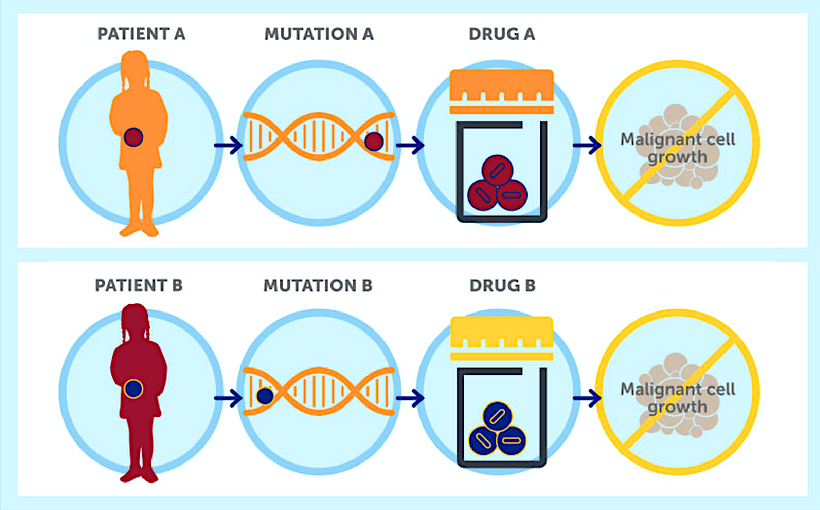

Used alongside these new treatments are specific biomarker tests, which help determine if the cancer is likely to respond to these drugs. Doctors use this information to guide decision making so that in theory, the right patients, who will benefit the most from these drugs, receive them. Without biomarker testing it may be impossible to access these drugs or use them appropriately. 

Sounds great, so what’s the catch?

Unfortunately, we know with traditional cancer treatments (surgery, chemotherapy and radiotherapy), that access is not always decided based on the patients’ needs. There are many complex reasons why this might be - and having a lower socio-economic status is one of them. Socio-economic status means your individual or family’s social and economic standing relative to others. It is measured using factors such as income, education and your job. Socio-economic reasons may impact the number of other health conditions a patient has, their ability to request help or even the conversation they have with a doctor. All of which can affect the treatments they receive and the outcomes from therapy. What we don’t know yet is whether the socio-economic differences we see in traditional cancer treatments are also seen with both biomarker testing and the delivery of precision medicines and immunotherapies described above.

Why is this work important?

The NHS was set up on the idea that treatment should be provided to all on the basis of clinical need. We don’t expect that our level of education, the amount of money in our bank accounts or the power associated with our jobs will affect our access to treatment compared to another patient diagnosed with the same cancer at the same stage and with the same prognosis. Yet if these newer treatments can improve cancer outcomes (for example by increasing tumour responses, minimising side effects and improving survival), socio-economic status should not be a factor in determining access. We already know that socio-economic differences are present in cancer survival, but this could be exacerbated if patients with lower socio-economic status are restricted from biomarker testing and access to new therapies, so we need to assess the size of this problem (if any).

What did we do about it?

To investigate this question, we carried out a new systematic review (reviewing the available high quality research evidence) using 58 previous studies showing information on over 1 million patients. Newer cancer drug access was compared between patients with a low to a high socio-economic status. The review looked at 7 cancers, 5 biomarker tests and 11 cancer therapies. The evidence showed that patients with a lower socio-economic status were 17% less likely to receive newer cancer treatments when compared to those patients with a higher socio-economic status. However, the strength of these differences did vary with cancer type, and were clearest in lung cancer. Similar differences were also seen in access to biomarker testing (often seen as a precondition for new cancer drug access).

Can we trust this evidence?

As 42 of the 58 studies were from the USA, more work is needed using UK data to see if similar patterns are observed here. Also, as studies used different measures of socio-economic status (i.e. some income, others education etc.), we need to be careful making conclusions in case the choice of measure used affects the strength of the findings.

What next?

Our review shows that we need more research questioning why factors such as income and education could still be affecting treatment access when clinical decisions should be guided by the patient and tumour genetics. It is important that whilst continuing the important research in developing new precision medicine and immunotherapies, we work to ensure fair access to all patients regardless of socio-economic differences.

Take home points
  • Cancer treatment is now guided by genetics and new cancer drugs can help personalise care.
  • Having a low socio-economic status can reduce the likelihood of receiving a newer cancer drug and the test linked to your eligibility for the new drug. 
  • We need more UK based research to investigate these differences, to ensure fair access and reduce differences in cancer outcomes.

Friday, 26 June 2020

If you are going to give up smoking, this is a very good moment to do it

In today’s Fuse blog Rachel McIlvenna, from Public Health South Tees, writes about managing a local specialist stop smoking service during the COVID-19 pandemic.


Casting my mind back to when the news started reporting increasing numbers of confirmed cases of COVID-19 in the UK feels like a lifetime ago. Chief on my mind pre-lockdown, was to re-emphasise the need for adhering to our robust infection control procedures, but also given the new threat to health, ensure we had sufficient stock of disposable gloves for clinic venues where there were no hand washing facilities. Looking back now, those days feel like a different era and my team, I and perhaps most people in the UK were unaware that our world was going to be turned upside down. 

In the weeks that followed things changed at a dizzying pace resulting in me activating our continuity arrangements earlier than anticipated, largely dictated by the shifting landscape that depended in part on what we heard from the Government’s daily press briefings but also from our strategy and plans as a Local Authority.

As the rates of infections started to increase exponentially, many services scurried to shut down for the foreseeable future and rightly so; everyone had to do their part to flatten the curve. We, as a service, didn’t have such a luxury by virtue of the fact that stopping support midway through a treatment pathway was not an option. The chances of a client successfully quitting smoking increase with regular behavioral support and uninterrupted access to treatments, like Nicotine Replacement Therapy (NRT) and Champix tablets.

Being responsible for the care of over 200 clients during a pandemic needs careful consideration. Our contingency plans made provision to stop face-to-face consultations in March with interim arrangements to supply stop smoking treatments during the pandemic. This challenge was further amplified when we received guidance from the National Centre for Smoking Cessation and Training (NCSCT) about ceasing all face-to-face consultations immediately and further news that the local community hubs, where clinics would normally be held, were shutting down completely to the public. So, without a location where clients could come and pick up their prescriptions regardless of social distance measures in place, we had to adapt our plans. Eventually and after several phone calls, we managed to support most of the clients via telephone and put arrangements in place for collection of scripts.

It didn’t end there though, as we then had the concern of how we would support new clients who wished to stop smoking, particularly pregnant women who were referred from maternity. Constant in my mind was safeguarding my staff and the public, so I knew that a long-term solution needed to be sought to minimise risk. After talking to several colleagues on the pros and cons of electronic vouchers and other options, we settled on posting prescriptions directly to clients (1st Class and with trackable labels) as it was the least restrictive option.

The next challenge was to introduce this very new way of working to my team, by explaining and demonstrating why this approach was best in these circumstances. Thankfully, a close colleague had helped me to draft a Standard Operating Procedure (SOP), which was soon amended and rolled out. This new way of dealing with scripts hasn’t been without its drawbacks. Sometimes the prescriptions have been delayed in the post for up to 10 days, which has meant that the staff have had to think 2-3 weeks ahead to ensure clients don’t run out of medication. But it has meant that we have minimised risk and enabled the team to work remotely from home, without the need to come to a central location to arrange for medication or go out to pharmacies, which have seen an increased demand during the pandemic.

The last few weeks have now been spent amplifying the #Quit4Covid message, learning from areas like Hertfordshire, Sheffield and Newcastle, and putting our own spin on these messages to engage smokers. This has included sending proactive text messages to unsuccessful quitters, bespoke postcards to homes of known smokers (who have given consent) and using social media. To date, we have seen promising results with many smokers engaging, and I am hopeful that there will be more dividends in future weeks.

What has been insightful for me has been the opportunity to lead our fantastic team of nurses during this period and observe their reactions to the unprecedented changes in their way of working and providing support for smokers. As a manager, it has been a privilege to help them navigate and accept the new realities that COVID-19 presents to all of us. Don’t get me wrong, it’s not all been smooth sailing, there have been several minor blips with a fair dose of IT challenges, to name just one. In the last few weeks, I have felt a quiet steadying as my nurses have become more confident about the change in work practices that they were long accustomed to as clinical staff. The challenges of remote consultations have been accepted, as has the notion that for some clients our weekly or fortnightly contact is literally a lifesaving form of communication.

The emerging evidence around adverse outcomes for smokers with COVID has reinforced what I have believed for a long time. Supporting people to stop smoking is one of most important public health interventions and not just for a host of non-communicable diseases associated directly or indirectly with smoking, but now with the threat of a communicable disease like COVID-19. To echo the words of England’s Chief Medical Officer Prof Chris Whitty to the Health Select Committee:

“If you are going to give up smoking, this is a very good moment to do it”


Rachel McIlvenna works as an Advanced Public Health Practitioner for Public Health South Tees and leads on tobacco dependency and long term conditions. Her portfolio also includes managing the in-house specialist stop smoking service, which includes a small team of vibrant nurse prescribers.

For information on stopping smoking in Middlesbrough / Redcar & Cleveland, visit: https://www.stopsmokingsouthtees.co.uk


Image attribution
3: "Dominic Raab Covid-19 Presser 06/04" by Number 10 via Flickr.com, copyright © 2020: https://www.flickr.com/photos/number10gov/49742982126/ (CC BY-NC-ND 2.0)

Tuesday, 3 December 2019

Scaling the mini Matterhorn - risk and adventure with a disability

Posted by Llinos JehuResearch Associate with AskFuse, Teesside University

Llinos introducing the blog and speaking about her experience of epilepsy

Happy ‘International Day of Persons with Disabilities’! That day set aside by the United Nations to ‘promote the rights and well-being of persons with disabilities in all spheres of society’.

There’s a lot to be happy about. When I was diagnosed with epilepsy in the 1970’s, the world was a very different place. I got used to being treated as a fire and safety hazard (so not allowed into some buildings or events), a risk (so refused insurance), and a liability (excluded from school trips ‘just in case’). Given all the gloom and doom, it’s amazing that I turned out to be such a boringly average sort of person, never knowingly causing anything to spontaneously combust.

Roseberry Topping has been compared to the Matterhorn in the Swiss-Italian Alps
And generally I am happy living as someone with epilepsy, identifying as a disabled person. But then I attend something like the launch of the NIHR Applied Research Collaboration (ARC) in North East & North Cumbria, and get told that I’m going to die 10 years before everyone else. OK, they didn’t actually say that, they didn’t necessarily mean me. But people living with a disability or long term condition are at risk of premature mortality, and that risk isn’t always linked with their condition. For me, good epilepsy management is dependent on taking medication like clockwork. Seizures don’t stop me from taking my medication, but having to remember to order a repeat prescription just might: not more than 10 working days before I run out, but not less than 8 working days as it takes time to process. Good epilepsy management requires a good standard of physical and mental health: managing the weight-gain that the medication can cause, managing stress and anxiety, getting a good night’s sleep. Most people want to achieve some of the things on that list. Epilepsy doesn’t stop me from travelling with my job or going out to see friends; that’s caused by poor public transport. Unless I actually drop down with a seizure (and there’s no reason that I should), epilepsy won’t stop me from doing a 16 mile hike across the Moors. Barriers are more likely to be caused by people asking me, ‘Are you sure you should? Is it safe? Is it wise?’.

Speaking to Steph Kilinc about her research on the experiences of people living with adult-onset epilepsy

So what would make me happy, and possibly live a bit longer? Good, accessible, affordable public transport for starters. And a text from my pharmacist to say that my meds are ready to collect – after all, they know I’m a responsible person who takes them as instructed. They also know I’m not the sort of person who will stock-pile meds to sell on the internet or feed to my goldfish! The text wouldn’t just make sure I had the meds to take, it would make an enormous contribution to reducing levels of stress and anxiety. It would make me feel that I was viewed as an adult with a range of competing demands on my attention, rather than an old child with nothing else to think about.

Phil and Llinos on how technology helps them to navigate both walks and public transport

What already makes me happy is that I’ve had a life filled with friends who’ve supported and encouraged me. They’ve helped to keep the stress and anxiety levels down, to get the good night’s sleep, to manage the risks and have the adventures. There’s still lots to be unhappy about. Sometimes I’m really, really angry. Hate crime targetting disabled people, increasing levels of inequality: sometimes there can seem little to celebrate. But for this year’s event I’ve walked up Roseberry Topping on a glorious day, accompanied by two great friends: Phil Jeffries who’s a very experienced walker and happens to be partially sighted, and Steph Kilinc, a member of Teesside University’s Behaviour, Health and Resilience Research Group who happens to be a somewhat less experienced walker. We’ve compared Steph’s research findings with our own experiences of living with a disability. Phil’s shown how technology can help someone with a visual impairment to read maps (actually how to interpret maps, he was good at orienteering before his sight loss and there’s only so much technology can achieve). Together we’ve managed to navigate the public transport system and arrived at the same place and at the same time. I’m not stressed, I’m not anxious, I’ll take my meds and have a good night’s sleep. I’ll leave being angry until tomorrow, when I might follow up on those ARC presentations and find out what’s to be done to address that premature mortality risk.


References:
  • Stephanie Kılınç a,. The experience of living with adult-onset epilepsy, Kilinc S, van Wersch A, Campbell C, Guy A, Epilepsy & Behvious 73 (2017) 189-196
  • Thomas R & Barnes M, 2010, Life expectancy for people with disabilities NEUROREHABILITATION Volume: 27 Issue: 2 Pages: 201-209