Showing posts with label workshop. Show all posts

Friday, 31 January 2025

Our experience co-producing a zine with LGBTQIA+ young people

Posted by Scarlet Hall, Research Assistant, Durham University and Fuse

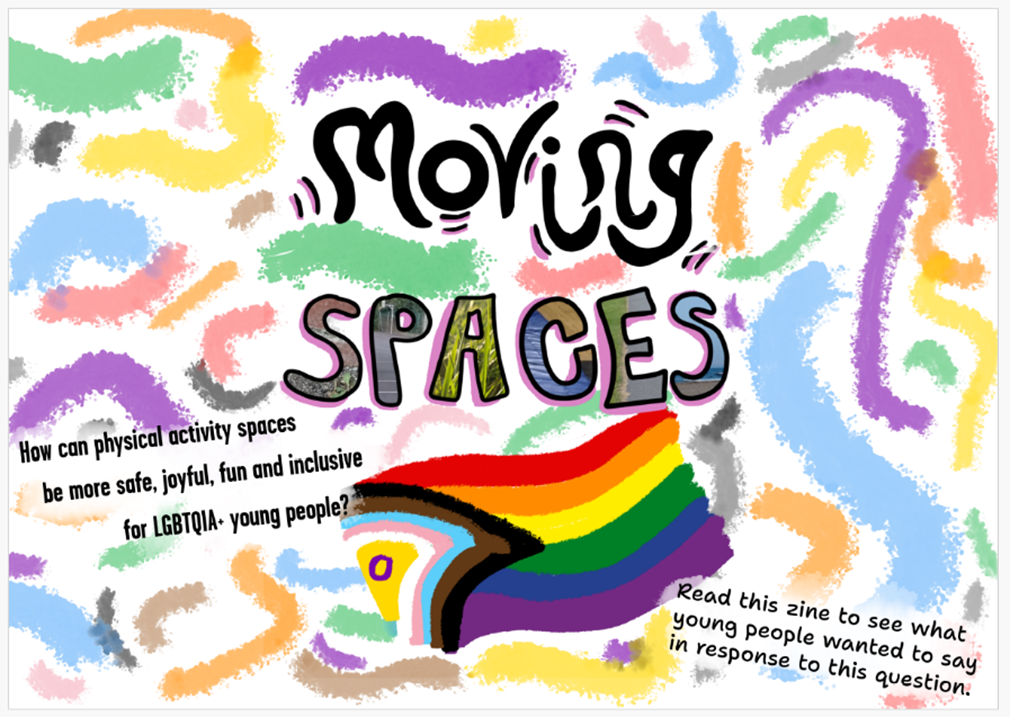
We have been collaborating with LGBTQIA+ young people in the North East and South Yorkshire, through Fuse led research funded by the NIHR School for Public Health Research (SPHR) exploring how physical activity spaces could be more joyful and safe. This blog describes how the ‘Moving Spaces’ zine was made and makes suggestions for those wishing to co-produce creative research outputs.
This blog draws from reflective conversations between Caroline Dodd-Reynolds (Fuse), Mary Crowder (University of Sheffield) and Shevek Fodor (Sounds Like Shevek) during the making of the zine. It is written with contributions from Caroline, Mary and Shev.

Seek continuity between research methods and research outputs

At the start of our research project we knew we wanted to host a series of research workshops and then co-produce a physical activity resource with the young people we were working with. After seeing the results of using visual creative approaches in our workshops, we knew we wanted a highly visual and creative resource that would connect and resonate with people.

Shevek Fodor
Working with the right designer and format

We sent an advert out to LGBTQIA+ networks for a graphic designer who would understand the lives of diverse LGBTQ+ people, in particular young neurodiverse people. When Shevek Fodor shared their zines with us our eyes and hearts lit up. We invited Shev to lead on making a collaborative zine. We chose the zine because of its DIY ethos, radical history of self- publishing and as a vehicle for self or group expression of thoughts and feelings.

What is a zine?

Zines originated through people writing letters and sharing information about things they were driven and passionate about. They’ve been used as a way for people who were overlooked within mainstream media to have their voices heard.

Practice reciprocity

We thought the young people would be inspired meeting Shev, a young neurodiverse queer artist. For Shev, this role offered a new opportunity to experiment with collaborative zine-making in a research setting. We offered hands-on guidance (budgeting, finance systems, mentoring) as part of co-production principles of reciprocity. We introduced Shev to the young people prior to the zine session and their curiosity was piqued…’is this person one of us or one of them.…?’

Involving artists at later stages of research is not straightforward. We aimed for a balance between giving Shev space to design and lead the sessions while also sharing our own knowledge, ideas and learning. The trust built in earlier research workshops meant we could also pass on an established  quality of ease in the group when it came to the zine making workshops.

Trust the creative process of each person and the group

Shev laid the zine making table out in a beautiful, organised chaos of found images, stickers, magazines and cards. Young people made creative contributions to the zine, inspired by earlier conversations about physical activity. They found ways to take part and to also hang out in their safe space – which we were encroaching on. Some people chewed and chewed over the right words to express themselves with contributions coming together at the end. One person got stuck and did their piece later with a youth workers’ support. Two zine contributions were made that involved multiple voices, through Scarlet documenting conversations around particular images. Scarlet also made contributions from a researcher’s perspective. Shev took these contributions – writings, drawings and collages – and wove them together into a first draft.

Allowing the time for collaborative editing – it brings difference into conversation

We shared this draft with the youth groups, the SPHR and Fuse communications teams and academic colleagues. We received a lot of feedback – the zine was provoking conversations. The young people gave detailed feedback on what they liked, what was missing, and sequencing of ideas. They spoke the words that became the introduction and expressed their small hopes for a few people to engage with the zine. There was a thoughtful conversation across the youth groups, about whether to personalise individual contributions or depersonalise to show that it could be any LGBTQIA+ young person saying this.

Academic colleagues also read and shared reflections with us, including feedback that policymakers might struggle to engage with the zine’s non-linearity and various people suggested we include a page of key take-home messages and recommendations ‘so things don’t get lost’. The young people responded to this feedback saying that people needed to listen and pay more attention to the messages that were implicitly in there. This dialogue led to the writing of a framing document for the zine. 

Value queer embodied theory and practice 

Another dialogue arose around authorship. Some reviewers found it confusing not knowing who had written what and had a strong wish to know who – a young person or adult – had written different bits – a desire perhaps for a clear identification of distinct voices. For Scarlet, a queer researcher, the ‘queer polyvocality’ (Brice et al., forthcoming) of the zine – many voices that weaved together in to more than sum of their parts – reflected queer practices of overflowing notions of stable identity, disrupting predetermined binaries and unsettling ideas of authenticity (Lescure, 2023).

This somewhat aligned with ideas from the young people. For some, there was a wish for attribution so ‘friends and family would know I made this’, and there was also a wish for zine contributions to be unnamed ‘because any queer young person could have made any piece’ and ‘we made it all together’.

One young person said they appreciated that researchers ‘weren’t butting in with your opinions but also giving your views when right to do so’ and another adding ‘it’s important that the adults’ voices are also in there as you were part of the conversation, and some adults have also had similar experiences’. The young people decided to make creative doodles in place of signatures which were mixed in with academic doodles/logos to show the talking and making and editing together – the polyvocality – of the zine making process.

Through this collaborative editing process (over three months), the young people began to converse indirectly with interested adults who wanted to help, including with the funders. These conversations happened with the young people keeping editorial control. We sense this may open up and shape more generative future encounters between these young people and further influential adults.

Indeed, some of the young people involved have made a plan to hand deliver zines to local venues around town (hairdressers, surgeries etc.). It seems empowerment and co-ownership inadvertently leads to physical activity!

Explore the zine

To find out more about this work, please contact Scarlet scarlet.hall@durham.ac.uk or Caroline caroline.dodd-reynolds@durham.ac.uk 


References

Lescure, R.M., 2023. (Extra) ordinary Relationalities: Methodological Suggestions for Studying Queer Relationalities Through the Prism of Memory, Sensation, and Affect. Journal of Homosexuality, 70(1), pp.35-52.

Brice, S. Marston, K. Wright, R. and Hall, S. (forthcoming). ‘Mycelial Love’ in Harrison, P. Joronen, M. and Secor, A. Love and Catastrophe in Cultural Geography. Edinburgh University Press

Friday, 19 July 2024

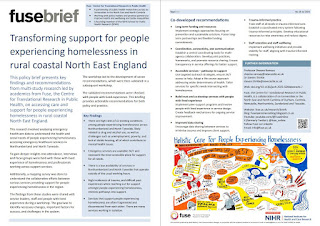
From crisis to collaboration: Transforming support for people experiencing homelessness in North East England

Posted by Steven Thirkle, Research Associate, Newcastle University

People experiencing homelessness often have multiple and complex health and social care needs that require support from many services. However, accessing and coordinating this support can be difficult when services are disconnected geographically or relationally. Often the person who is experiencing these challenges is the one who has to reach out for help, and this can be extremely hard for someone also managing day-to-day homelessness.

During our workshop, More Than Minutes visually captured our discussions, providing a dynamic summary. These visuals encapsulate key insights and recommendations, offering an engaging snapshot of our collective journey towards transforming support for people experiencing homelessness.


Over the past two years, our team has been working with services that provide support to people experiencing homelessness in rural and coastal areas of North East England. Our goal has been to explore innovative ways to improve access to care and support for these vulnerable people. Here, we share our research findings, shed light on the challenges faced by people experiencing homelessness and present our co-produced recommendations for creating a more effective and holistic (whole person) support system.

What does hospital data tell us?

To understand why people experiencing homelessness in the North East often turn to emergency care services in rural and coastal areas rather than seeking alternative forms of support, we examined hospital data on people attending emergency care services who had no recorded address. We discovered that there are many contributing factors, including struggles with alcohol and drugs, mental health issues, and challenging social situations. These challenges often occur at the same time, exacerbating their complexity and approaches to treatment.

What is stopping homeless people accessing services?

While this numerical data provided valuable insights, it did not uncover the underlying reasons behind the lack of engagement with other support services. To gain deeper insights, we interviewed people experiencing homelessness as well as those providing support in rural and coastal areas. The interviews aimed to explore experiences with emergency care services, overall health, social lives, and past traumas. They revealed significant barriers to accessing services, such as limited resources, transportation challenges inherent to rural areas, and the isolation often felt in coastal communities. Additionally, rigid service criteria and thresholds prevented people from receiving the support they urgently needed, further compounded by the sparse availability of services in these regions.

What is the current picture?

A comprehensive and integrated approach tailored to the rural and coastal context was needed to provide effective support to people experiencing homelessness in these areas, so we mapped out existing services and their collaborative relationships in the areas. Our findings showed a fragmented system, with many services operating independently and lacking essential connections to the core network of services necessary for addressing the unique challenges faced by people in rural and coastal areas.

How do we address the gaps?

In response to these gaps, we organised a workshop at the Community Hub in Cramlington, Northumberland, bringing together over 70 people including professionals from health, housing, social services, local authorities, law enforcement, emergency response, and third-sector organisations, as well as people with lived experience of homelessness and mental health issues in these regions. Together we developed recommendations for a more effective and collaborative approach to supporting people experiencing homelessness in rural and coastal areas. Seven key areas for recommendations were identified:
  1. Long-term funding and resources: Campaign for sustained funding and increased resources to support comprehensive and ongoing assistance for homeless people.
  2. Coordination, connectivity, and communication: Establish robust ways to coordinate, foster better connectivity between services, and improve communication channels to ensure a seamless and integrated support system.
  3. Accessible services - pathways to support: Develop clear and accessible pathways for homeless people to access a wide range of support services, including health, housing, social services, and mental health resources.
  4. Building trust and co-developing services with lived experience: Foster trust and inclusivity by actively involving peoples with lived experience of homelessness in the design, development, and evaluation of support services.
  5. Trauma-informed practice: Implement trauma-informed approaches across all support services, recognising and addressing the underlying trauma experienced by homeless people.
  6. Improved data sharing: Establish efficient data-sharing agreements for support services to ensure comprehensive and up-to-date information, enabling better coordination and informed decision-making.
  7. Staff retention and wellbeing: Prioritise the wellbeing of support staff by providing resources, training, and support to prevent burnout and turnover, fostering continuity of care.

We have developed a handy two-page Fuse research brief which pulls out the key findings and recommendations for practice and policy co-developed with people with lived experience. 

Friday, 10 December 2021

Once upon a time in research... the power of storytelling for scientific communication

Posted by Peter van der Graaf, Associate Professor, AskFuse Research Manager & NIHR Knowledge Mobilisation Research (KMR) Fellow, Teesside University

A Christmas story about gifting knowledge (featuring Evidence Man)


It was the week before Christmas. After a long day in the office at her university, Ana Lyst rushed out to do some last-minute Christmas shopping. She had been too busy writing grant applications and journal papers to even think about presents for family and friends. It was already dark, with a stiff, cold breeze and snow started falling around her.

As she approached the high street, Ana noticed a bookshop she hadn’t seen before. It looked rather grand, a bit like an ivory tower, but with more doors. Through large windows at the front, she could spot frantic people in white lab coats running between the shelves, carrying big loads of paper and folders. ‘Bingo!’, she thought: books make great Christmas presents and I can sort out all my gifts in this one shop. She merrily stepped inside and was greeted by a large, vaulted ceiling underneath which stood endless rows of books in all shapes and sizes, reaching all the way to the ceiling. On first impression, the books looked rather dull and colourless, many of them gathering dust, with long, incomprehensible titles edged on their spines in gold.


Undaunted by the ambush of knowledge and people, Ana walked over to the applied research section (which sported a large swirly sign, fusing five different colours) and spotted several books that looked like decent presents for friends. Taking them to the till, she was met by a stern looking clerk, named Pierre View, who inspected the books carefully and with an authoritative tone explained that many of the selected books were not yet ready to leave the bookshop, as they needed more work and review. Could she please come back in 17 years to collect them? The 14% of books that were ready to leave, were neatly packaged in shiny, glossy covers with pictures and key phrases all over them that Ana Lyst was sure would really impress her friends.

However, when she tried to leave, Ana noticed that there were many doors to exit the shop (the entrance was no longer visible) and when she tried the first door in front of her, it wouldn’t open. She went to the next five doors with the same result: all of them were firmly locked, or the ones that did open led to a dead-end. Ana started to panic and her earlier optimism
 quickly melt away, replaced with visions of being stuck in the bookshop over Christmas with not a mince pie in sight.

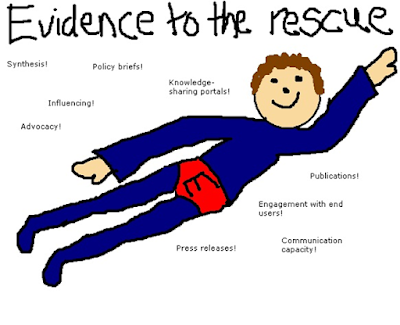
At that moment, a small backstage door hidden in a corner of the shop opened and a bold bespeckled man stepped out, fully dressed in a superhero outfit with bright blue tights and top (that looked a bit too tight), over which she wore red underpants featuring a large letter ‘E’. Ana Lyst didn’t know what to make of this man, but he looked friendly enough and was walking over to her to offer his services. As the man came closer, he produced a large set of antique brass keys from beneath his cape and began opening several doors. “Are you a bit lost?”, asked Evidence Man (for that is who he was) in an accent with a Dutch lilt. “Stuck between here and the outside world? Not to worry! I know the way out to some safe spaces with a friendly audience who would love to hear all about the books you just bought. They would even be interested in the ones that are not ready yet, and they might have a few books of their own to share with you. Shall we go?”

True to his word, when Ana stepped through the first door unlocked by Evidence Man, she emerged back in the now snow-covered high street, where a group of her friends were waiting and, even better, one of them was carrying a large plate of mince pies! Ana Lyst’s spirits lifted immediately, and she vowed to tell her friends all about the helpful Evidence Man in the bookshop. But when she turned around, the nice man had disappeared and through the windows of the bookshop could be seen flying to assist another confused customer.

The End.


The power of storytelling for scientific communication


I was inspired to write this Christmas tale (and blog) after attending a storytelling workshop at the Fuse end-of- year social event on 3 December, which was led by Duncan Yellowlees. Duncan is a Communications Trainer who works with researchers to improve their communications, confidence, and impact. Take a look at his online COMMunity website (Research Comms … but better) to find out more. 

In an engaging and entertaining way, he took us through the key elements of storytelling: from key principles (putting pictures in people’s heads; construct a narrative of causes and effects), to different types of stories (metaphorical, motivational or monster stories, stories as hooks, and point-of-view stories), their structures (problem, solution and results) and what to include in stories (the point, examples, people, heroes & villains, magical helpers, and tensions & conflicts). Did you spot any of these elements in my story? Scroll down to the bottom of this post for spoilers.

Overall, Duncan provided plenty of tips and tricks on how we can use storytelling as academic researchers to communicate our research findings to wider audiences. And this relates directly to the first point (and story) that he made during the workshop: researchers spend too much time throwing the ball (their research findings) but not nearly enough time on making sure there is someone there to catch it (knowledge users). Find your audience first and make them pay attention before you start talking about your research.

His second point was that all this might seem daunting: so many different techniques, plot lines and structures to think about, how can we ever get any good at this? But when comparing it to learning to drive a car, the same principles apply: keep practicing and it gradually (and sometimes quite quickly) becomes second nature. This is because storytelling is already embedded in everything we do in our daily lives: from telling our family and friends about our everyday experiences, to reading books or ‘binging’ on Netflix series.

Finally, Duncan suggested some simple techniques for storytelling in science communication: making stories relatable and relevant (e.g. stress before Christmas) by including named people and adding details (e.g. dark, snowy high streets and describing the interior of the bookshop), which start to paint a picture in people’s heads. Most importantly, start with a hook: a story to draw in your audience, so they want to hear more, or use a question or bold statement as bait (e.g. only 14 percent of research makes it into practice and policy after 17 years).

My story might not have been all you hoped for this Christmas, but the Fuse social event brought some useful gifts for the Fuse Communications toolkit and much needed festive cheer at the end of another challenging academic year. 

Merry Christmas everyone and happy storytelling!


Spoiler alert:
  • The point: knowledge mobilisation between academia and practice is facilitated by a knowledge exchange broker. Plus some points about the time it takes and difficulties faced by researchers when trying to get research into practice and policy.
  • Heroes: academics producing research and papers, while running between bookshelves.
  • Villain: Bookshop clerk (Reviewer 2).
  • Magic helper: Evidence Man (Knowledge Exchange Broker)
  • Tensions & conflicts: research dusting away on bookshelves or not being ready to leave the building, while access to knowledge users is restricted or confusing.
  • Type of story: metaphorical story, overlapping with stories as hooks (to introduce this blog and talk about the storytelling workshop).

Friday, 30 April 2021

Can putting distinct services under one roof prevent mental illness? We (cold) called in the experts to find out

In today's Fuse blog post, Fiona Duncan, Postdoctoral Research Associate from Durham University, writes about co-locating services to improve mental health and the perils of pulling together an expert panel during a pandemic. 

'Cold Calling' by Darren Tennant
This past year has been tough for many of us.  Financial worries, feeling socially isolated and lonely, facing unemployment, and missing opportunities for physical activity are just some of the things that have impacted on mental health and wellbeing during the pandemic.  This means that finding ways to improve mental health and prevent mental illness in our communities is more important than ever.

Over the past few months, I have been working on a NIHR School for Public Health Research (SPHR) project which aims to investigate how “co-located” services based in the community can be used to promote wellbeing.  A co-located service is where two or more distinct services are in the same physical space and the staff of each service interact with each other, either formally or informally.  Co-located services are often found within traditional health services like GP practices when welfare, legal and/or mental health services are delivered in the same building.  The project will investigate the benefits and disadvantages of co-locating in community spaces, rather than within traditional health services.  For example, a debt service within a faith institution, a welfare service in a library, a mental health support service in a sports centre, or a money advice service within a foodbank.  We are interested in finding out exactly how co-location helps to improve mental health and whether they work for all people in all circumstances, or just some people in certain circumstances. For instance, does co-location increase access, reduce stigma, or encourage a higher quality of service by allowing professionals to work together better?

To start this research, I was given the task of setting up and facilitating an expert panel workshop. The idea being that if we want to gain a deep understanding of how co-located services may or may not work then we should ask the people who actually design, fund or deliver these services in the real world.  We hoped that this workshop would consist of service practitioners, policy-makers, and commissioners at local authorities and people who work for organisations that provide funding for community projects. 

My first challenge in setting up the workshop was getting people to take part.  Where was I going to find these experts and would they be able to give up two hours of their time in the middle of a pandemic?  I was planning on the workshop being small (5-8 people) but, in the circumstances, I realised that I was probably going to have to ask a lot of experts to even hit this target!

I used a variety of approaches to find my experts.  I asked members of the wider research team to email any suitable contacts, we approached the other NIHR Schools and we advertised the study on twitter.  I also personally contacted some people that had participated in a previous research project and my colleague, Dr Emily Oliver from Durham University, mentioned the workshop during a webinar at which she was presenting. Through these methods, three experts signed up.  To get a few more people, I then started to ‘cold call’ potentially suitable people and organisations, including almost 40 local authority Directors of Public Health in England.  Despite the pressures that this group of people are currently under due to COVID, this ‘cold calling’ led to three more people agreeing to attend.

Having six people confirmed still felt like a very precarious position to be in, and it turned out that I was right to be nervous, as one person unfortunately had to pull out on the morning of the workshop. However, luck was on my side as at the last minute another expert who had found out about the workshop from a colleague at one of the organisations I had contacted, asked if they could come along.  Panic over!

Selfridges
The nerves kicked in again at the start of the event, as I had never facilitated a Zoom workshop before and it was clear that some of our experts were feeling nervous too.  This could have been a problem as we wanted them to freely and openly talk about the benefits and disadvantages of co-located services.  Luckily, Gillian Samuel, a member of our research team from the McPin Foundation, was able to facilitate a brilliant icebreaker exercise.  She asked everyone to talk about something that we all had in common, specifically, what we are looking forward to most when lockdown ends?  Everyone had some great answers to this question (the re-opening of Selfridges was my personal favourite answer) and this made for a more relaxed atmosphere.

This almost certainly helped the workshop discussions flow as our experts provided rich and detailed information about co-located services.  However, in some ways the workshop did not go as I had expected.  I thought the experts would talk about the benefits of their co-located services and the mechanisms involved in how these services work. I had prepared a long list of questions to prompt such a conversation, but it soon became clear that the panel had a lot to say about how co-located services quite often don’t work.  They were all clearly very passionate about what they do but expressed frustrations surrounding service delivery.  One theme to emerge was that co-located services are dependent on different types of professional working together, but the reality is that they often don’t communicate well with each other at all.

Although I wasn’t expecting the panel to say these things, I’m glad they did.  It helps us to understand how co-located services are working, or not, and is very important if we want to improve services and therefore improve mental health and prevent mental illness in our communities. This information will also be very helpful in the next part of our study where we will be interviewing people who work at and use selected co-located services.


Fiona works on the NIHR School for Public Health Research (SPHR) Public mental health programme through Fuse's membership of the School.


Images:

1. 'Cold Calling' by Darren Tennant via Flickr.com, copyright © 2014 (Attribution-NonCommercial-NoDerivs 2.0 Generic (CC BY-NC-ND 2.0)): https://www.flickr.com/photos/10678076@N03/16001016758

Friday, 11 December 2020

Being part of UC:US

Posted by Maria Thompson, UC:US member, and Ruth Patrick, Lecturer in Social Policy, University of York

Illustration by: www.hatiillustration.com 
In this blog post we hear from Maria, a member of UC:US, a group of people claiming Universal Credit in Belfast working to share experiences of the benefit and to make recommendations for change.

Maria was introduced to Fuse by Ruth Patrick, from the University of York, after an exclusive showing of a new play called 'Credit', described in this accompanying Fuse blog post by Mandy Cheetham.

Maria took part in research with Universal Credit claimants living in Northern Ireland funded by Joseph Rowntree Foundation (JRF)*.

The below is in Maria's own words and has been unedited.


Two years ago, I was made redundant. Due to my postcode I had to claim Universal Credit. This created a massive snowball effect and after two years I am still dealing with the negative consequences. Claiming Universal Credit was the easy bit. I found myself in rent arrears of £1600 and with an old tax credit overpayment of £1400. A week later the eviction letters arrived. Even after explaining my situation, I was faced with third stage eviction letters. I got legal advice from my solicitor as I was already getting divorced and I contacted my MLA (Member of the Legislative Assembly of the Northern Ireland Assembly) for more help.

Listen to Maria's experience of Universal Credit

My MLA asked if I’d be interested to get involved in a research project funded by the Joseph Rowntree Foundation and working with Mark Simpson (Ulster University) and Ruth Patrick (University of York). Mark met with me first, and we talked about my experiences on Universal Credit. Then, we met up as part of a wider group with about 12 people who are on Universal Credit across Belfast. The group met over the course of a year and we decided to name ourselves UC:US.

The purpose of the project was to gather information from different participants’ experience of Universal Credit. We discussed our stories individually.

From day one, nobody had anything positive to say. We all agreed that Universal Credit needed to be drastically improved or scrapped. We worked with an illustrator to show our journeys on universal credit; talking about how the benefit made us feel. We also heard from other experts about their ideas for change to Universal Credits. We put it all together in a leaflet setting out our recommendations for change.

We found that for Universal Credit to be improved, there is a need to:
  • Increase the amount paid to avoid people living in poverty
  • End the 5 week wait time for a first payment
  • Stop the benefit triggering debt 
  • Have experienced and trained staff 
  • Make Universal Credit user friendly. 
After we concluded our findings, we were delighted to be invited to speak at the House of Lords. We were all excited about a day trip to London and to the Houses of Parliament. This was cancelled due to Coronavirus. We did eventually though get to participate in a meeting virtually at the House of Lords on Universal Credit via Zoom, hosted by Baroness Ruth Lister, and organised by the Social Policy Association. This for our group was very empowering to hear our voices being spoken, listened to and approved by Members of Parliament and the House of Lords.

UC:US hope the government can learn from past mistakes so that Universal Credit can be improved. We want a future where new claimants are not financially scarred or mentally drained from a never ending battle for pennies only to end up owing thousands.

You can find out more about the work of UC:Us at www.ucus.org.uk


* More about the research

As part of research funded by Joseph Rowntree Foundation (JRF), Universal Credit claimants living in Northern Ireland took part in a series of six participatory workshops in 2019. These workshops - which were conceived as 'experts by experience panels' - were a chance for participants to share their experiences and journeys on Universal Credit, and to work together to develop recommendations for change. Importantly, the project adopted a participatory approach; and participants were involved in all the key decisions; including choosing which arts-based output to develop to share key project findings. Participants decided to develop an illustrated flyer; working in partnership with illustrator Hannah Miller. Participants also had the opportunity to hear from people with other forms of expertise about their views about what changes are needed to Universal Credit, and why, and to use that information to inform key decisions about their final recommendations for change. 
 
The project findings have been published by JRF, and participants have since taken part in policy meetings and discussions with Northern Irish politicians and officials, as well as talking at a number of national parliamentary events. The project is now entering a new phase, with funding from the Economic and Social Research Council enabling collaborative work to continue policy discussions between the participants - who call themselves UC:Us - and policymakers and work to create a guide for new claimants of Universal Credit.

Friday, 2 November 2018

Why dramatic enquiry as a form of public engagement gave me my most enjoyable week as an academic

Guest post by Santosh Vijaykumar, Vice Chancellor’s Senior Research Fellow, Northumbria University

“It’s important to eat healthy but we also need sugars, although in moderation.” These are not the words of an expert on BBC’s Food Programme, but a Year 5 student at Chillingham Road Primary School in Newcastle, fidgety and impatient for the next activity to resume. And the caution came about not through a series of in-depth interviews by public health researchers such as myself, but through ‘dramatic enquiry’. Brad McCormick and Katy Vanden from Cap-a-Pie, the theatre company that developed this approach, describe it as one that “places participants in a fictional scenario where they are in-role from start to finish. They are placed in a situation where there is no clear ‘right’ or ‘wrong’ answer and where they have to express their own beliefs and values.”

Brad directing the drama

Over the course of a week, we conducted four such dramatic enquiry workshops with three schools in Newcastle, each session comprising approximately 30 Year 5 pupils (10-11 year olds). Although these workshops were part of the public engagement strategy of my ongoing ESRC funded project* that seeks to understand psychological drivers of confidence in probiotics products, we decided to explore broader themes beyond just probiotics. The aim – suggested by Brad and Katy and gladly welcomed by us – was to avoid a top-down health education approach, and instead utilise this engagement format to get children to think and talk about fundamental issues: why do they eat what they eat? Can food be healthy and unhealthy at the same time? Should the government control what foods we consume? What is the relationship between responsibility and choice in the context of food? We used these themes as a funnel to eventually involve the children in a discussion on probiotics.

Each workshop starts with the children seated in a semi-circle. As soon as they are settled, Brad catches them off guard. He starts shaking hands with one of them and says “I ate at your restaurant last week, superb!”, and then goes to another: “I read your article on raw food diets, so interesting!”, and so on and so forth, setting off a series of giggles or muffled peals of laughter among the children as they make sense of the goings on. Soon after they are informed that they are all members of the Food and Drink Committee of Arcadia (a fictional country) and are asked to take a pledge of allegiance to Arcadia. A series of dramatic games such as DilemmaRama, Shake Hands/High Fives and Stop/Go has now completely warmed them up to Brad and to each other. This lays the foundation for their enthusiastic participation in the ensuing small group activities, each of which is followed by a philosophical discussion or reflection.

The small-group activities include identifying and enacting their favourite dish in a freeze frame, contemplating what it means to be healthy, and explaining the rationale for why they agree or disagree with a certain food policy from different viewpoints (as a journalist, scientist, manufacturer, etc.). In the second half of the session, they are introduced to a fictional probiotics product, to develop a commercial for it, and then asked to make a decision about whether it should be sold after exposing them to news articles reporting conflicting evidence related to the health effects of probiotics products.

As a researcher, observing these sessions live can be tough – it’s so much fun, you want to participate with the kids and leave taking notes for later. And taking notes is not easy either, even after you have committed to it. For, you realise quickly that every activity and philosophical discussion reveals a new strand of thought among children, a sharp, counter-intuitive insight, or a larger ethical perspective. As someone who is newly baptised to this form of public engagement, I realise how uninhibited and enthusiastic kids are in terms of participating in what would seem tricky terrain for adults, and how even seemingly quieter kids volunteer to voice their opinions. I am beginning to understand how this approach lends itself to unearthing perspectives of greater complexity and nuance than a traditional research method, such as a survey or experiment would. Essentially, if one were to invest in dramatic enquiry as a means of formative research for investigating a public health problem, they would reap a rich, and dare I say endless harvest of research questions worth investigating in a format that’s fun, engaging, and revelatory.

If you are waiting to know what we learned from these workshops, I will share links to a podcast series (on this blog) sometime over the next few weeks. These podcasts will give you a more detailed idea about dramatic enquiry, how the participating children benefited from it, and some perspectives that emerged about how kids perceive scientists, media, and the industry that really surprised us.

When I first arrived into the UK academic environment in February 2017, public engagement seemed a policy or media interfacing, translational exercise for researchers. Being involved in dramatic enquiry has now broadened my personal understanding of public engagement and triggered a cascade of ideas about creative ways to get a conversation going with communities whose lives we seek to positively influence through public health research. And, without a doubt, it has given me my most enjoyable week in eight years as an academic. Brad and Katy deserve some chocolate cake, but in moderation.

*Acknowledgment: This project was funded by the Consumer Data Research Centre, an ESRC Data Investment, under project ID CDRC 085, ES/L011840/1; ES/L011891/1.

Friday, 21 September 2018

Collaborating, meandering and consolidating to identify research priorities on welfare advice and health

Posted by Natalie Forster, Senior Research Assistant and Monique Lhussier, Associate Professor in Public Health and Wellbeing, Northumbria University and Fuse

As the judges of the Man Booker prize for fiction whittle down their long list and decide on the shortlist of books in the running for best novel of the year, we’ve been making a few (more research focused) lists of our own.

Setting aside our individual research plans and ambitions to focus on welfare and health
Funded by the NIHR School for Public Health Research, we are currently working collaboratively (from across Fuse, University College London, The University of Sheffield, and London School of Hygiene and Tropical Medicine) to set the future research agenda in the area of welfare advice and health. Working across this number of institutions, we have managed to set aside our individual research plans and ambitions and combine our expertise in a series of workshops to focus on the issues of welfare and health. Colleagues from the welfare advice sector have agreed to join us and are keeping the discussions grounded in the realities of practice, over the course of four workshops (this blog marks our half way point).

The first workshop saw us (tentatively at first) present our research to each other; with both our detailed topics and methodologies varying significantly, as one might expect. Deciding which research questions to pursue is a daunting task. Shortlisting questions was a delicate juggling act of managing our respective interests and expertise, while keeping practice perspective up front and centre, to ensure the usefulness of our future findings. This process also opened up fundamental discussions about the role of welfare advice in society, and how this should be studied.

One key area of debate concerns whether we should study the health impact of welfare advice, welfare itself, and/or systems of welfare provision in their broadest sense. At present, the UK boasts a welfare system that, in its complexity and inaccessibility, needs the intervention of advice services for users to access their entitlements. As researchers, should we therefore focus our attention on this hostile welfare environment, thought to perpetuate or deepen health inequalities, as opposed to advice services themselves? For example, a research emphasis on the health outcomes of advice might have been interesting but could play into wider failings to make benefits accessible if the advice-health relationship is proved any less than definitive. The group also considered whether advice services should be studied as an intervention or in terms of their function within society.

Further discussions centred around which outcomes, and particular user groups to focus on, and whether to study universal or means tested benefits, continuously swerving between the pragmatic and the theoretical, the national and the local. These fruitful meanderings were captured in a long list of possible research questions which we then worked to weigh up against agreed criteria. The result? A consolidated and (slightly!) shortened list of research questions, focused on five priority areas:
  1. Are there inequalities in the impact and reach of advice services across social groups? How/ does advice delivery mode matter?
  2. What are the individual and system level impacts of the de-implementation of advice services?
  3. What are the impacts of changes to welfare provision on children, inter-generationally and throughout the life course? 
  4. How do experiences of social welfare vary by social group, geographically and across generations? How do different identities combine to influence how social welfare is understood? 
  5. What is the impact of the rise in precarious employment and low wages on advice seeking and provision?
So quite a research agenda to fulfil! Throughout the remainder of the project, we’ll be engaging with advice sector representatives and recipients of advice to hear their views on the directions research in the area should take before developing concrete plans for how we could actually carry out this research. After that it’s time to commit pen to paper and draft those grant applications!

Friday, 6 July 2018

Game of Thrones: King in the NoRTH… Workshop is coming… but has anyone actually read the books?

Dr Sonia Dalkin, Senior Lecturer in Public Health and Wellbeing, Northumbria University

Unless you’ve been living in a box since 2011, it’s likely that you will have heard of the series Game of Thrones. For those of you still in your boxes – Game of Thrones is fantasy drama television series created by David Benioff and D. B. Weiss. It is an adaptation of A Song of Ice and Fire, George R. R. Martin's series of fantasy novels, the first of which is called A Game of Thrones. The series has been acclaimed for many things including its acting, complex characters, story, scope, and production values. Notably, it has also received praise from both The Guardian and The Times for what is perceived as a sort of medieval realism. Here, I want to talk about a different type of Realism, that of Scientific Realism, or more specifically Realist Approaches to Research.


What is realist research?

Just as Martin’s novels rely on believable characterisation and relatable motivation to create enough suspension of disbelief to enter a world of dragons and sorcery, realist research focuses on social interventions to explain not only whether an intervention works or not, but for whom and under which circumstances. The focus therefore embraces and explains the complexity of social interventions. It aims to understand the responses people have to programme resources, therefore understanding the reasoning and motivations behind their actions. In order to do this, we focus on programme theory and utilise context, mechanism and outcome configurations. It provides rich findings, explaining why interventions work in some contexts, but not in others. For example – why is Daenerys impervious to fire when others are burnt? Because she’s a decedent of House Targaryen. Context is important, people! Alongside context is its trusty friend mechanism – similar to Ghost (an albino dire wolf) and Jon Snow – they go hand in paw. Mechanisms can be referred to as a combination of intervention resources and participant reasoning. More information is available on mechanisms here.

Altogether, the analytical tools of realist evaluation described above are used in the following way: Intervention resources are introduced in a context, in a way that enhances a change in reasoning. This alters the behaviour of participants, which leads to outcomes.

The methodology is not without its difficulties. Often realist researchers describe feeling that they are in a ‘realist swamp’; going down different alleyways, trying to understand and explain how a programme works, for whom and in which circumstances, but not getting too far. Often in this phase, realist researchers are similar to the White Walkers (an ancient race of humanoid ice creatures who really aren’t too friendly), in both looks and temperament. This phase can be frustrating, but like Arya against The Waif (acolyte of the Faceless Men), in most projects there is a sudden moment of clarity, where the dark alley becomes your friend, it all comes together, and you come out fighting.

Here at Northumbria University we have engaged in many projects using realist methods and want to help other realist researchers beat The Waif as quickly as possible, where possible. In order to do this, we’ve engaged a three-pronged approach as sharp as Arya’s sword, ‘Needle’:

1. Realist research Team Hub (NoRTH)

We felt it was time to highlight ourselves as key players in the realist game and to create a hub of realist research. What does every hub need? An acronym! We are now the Northern Realist research Team Hub (NoRTH).

NoRTH’s priorities will be to: advance the implementation of the methodology; collaborate with others focusing on realist research; contribute to and host realist education platforms; support PhD students in realist research; and continue to offer methodological expertise to those who seek it.

One thing of importance to note here is that we don’t feel we are the only big players in the North in terms of realist research – The Starks (University of Leeds) are obviously the long term true Kings of the North, with Professor Ray Pawson at the helm (our Jon Snow) for many years, and Nick Emmel, Joanne Greenhalgh, and Ana Manzano (Bran, Sansa and Arya) now fighting strong. But being ‘Northumbria University’, the acronym NoRTH seemed too good to resist… please take this blog as a token of our affection and don’t give us a fate like that of the Red Wedding!

2. Winter’s coming… along with a workshop in realist approaches

Winter is coming and soon we’ll have dark nights and frosty mornings, but never fear; alongside winter we have a brilliant offer of a Realist Approaches Workshop. Like Daenerys, mother of dragons, we wanted to educate others and decided one way to do this would be to provide a workshop. Whilst we can’t promise dragons, rebirths in blood and fire, or steamy scenes with Jon Snow, we can offer a fantastic line up of realist researchers, ready to take you on an exciting methodological journey.

Day 1 of the workshop will focus on Basic Principles of Realist Research, whilst day two will focus on contemporary developments such as realist ethnography and realist economic evaluation. To find out more and to book, check out the website.

3. ‘Doing Realist Research’ – a new book

As much as a lot of people claim to be Game of Thrones fans, how many of them have actually read the original books? TV series and films can bring whole worlds to life before our eyes, make characters into living people, but books take you into the detail, the nooks and crannies of the story. For example, the maps in Martin’s book displaying the geography of the mythical Kingdom aren’t as well portrayed in the TV series, despite efforts in the opening titles. Books provide the details that are often overlooked yet important in really understanding the overall story or the characters. Thus, if interested in realist research, I would like to suggest you read the new book ‘Doing Realist Research’, available to pre-order now), which provides much more detail on realist approaches, covering topics such as: realist review problem-solving, literature searching for realist reviews and mechanisms at higher levels of abstraction.

Edited by Nick Emmel, Joanne Greenhalgh, Ana Manzano (The Starks), Mark Monaghan and myself, this book celebrates the possible ways in which realism can contribute to researching complex social puzzles, providing practical advice on the ‘how to’ of realist methods.

Similar to Game of Thrones, so far, it’s received rave reviews, like that from Professor Kieran Walshe, (University of Manchester): “I wish all social science researchers would read this book”. Best of all, it has absolutely no Game of Thrones references – and that’s a promise (similar to that of Ned Starks to Lynna Stark in the infamous Tower of Joy Scene)…


Acknowledgements

Many thanks to Dr Phil Hodgson (Northumbria University) for helping me in identifying so many obvious Game of Thrones parallels with realist research…


Image: "Game of Thrones. Xbox One. 1080.P. 😁 Gameplay Part.04.-06. On my YouTube Channel 😁 https://youtube.com/playlist?list=PLwsjII0MclEGZnmdii3LZb9FZLby_iP4Q 😁 by Rob Obsidian via Flickr.com, copyright © 2015: https://www.flickr.com/photos/65092514@N08/18679295525

Wednesday, 9 May 2018

Getting physical activity research moving

Posted by Louise Hayes, Research Methodologist, Newcastle University and the Fuse Physical Activity Group

So, we all know we should be more physically active – the evidence is out there. People who are more active are less likely to suffer from many chronic diseases, have more energy, better mental health, sleep better…… But how do we get people to be more active?

We knew researchers across North East England were working on physical activity related research and we knew that practitioners were delivering physical activity interventions, with the aim of getting more people active. What we didn’t know was who was doing what and whether or not the evidence from the researchers was getting to the practitioners or if the practitioners were delivering evidence-based intervention or evaluating their interventions. So, a little over five years ago, Martin White, the then Director of Fuse, Laura Basterfield and I (two physical activity researchers at Newcastle University), set about getting physical activity researchers from across the region together. We wanted to provide a forum for researchers to share information on current and future research and to identify opportunities for collaborations across individuals and teams conducting PA research in the Fuse partner universities. The inaugural Fuse Physical Activity Workshop (#FusePAW) was held at Newcastle University in May 2013.

It quickly became apparent that there was an appetite for a Fuse Physical Activity Group to be formed to build upon the enthusiasm for collaborative working and developing a shared physical activity research agenda that was in evidence at this first PAW. Several people also made it clear (and yes, we do mean you, @Scottylloyd1979!) that there was a need to widen the base of the group to include our practitioner partners involved in delivering physical activity interventions on the front line and to build relationships across sector boundaries. And so the Fuse physical activity group was born!

Liane Azevedo and I took on the role of leading the group, along with a team including Scott Lloyd, Caroline Dodd-Reynolds, Alison Innerd and Natalie Connor representing the North East Universities and public health partners. Since then we have had twice yearly Fuse PAWs, hosted by each of the five Fuse Universities and covering a range of topics from inequalities in physical activity to measurement of physical activity and physical activity during pregnancy. We’re proud to say that we’ve achieved an equal balance of academics and practitioners attending the events.

From the outside it might look like it’s been plain sailing – we’ve attracted an amazing cast of physical activity researcher royalty to present at our events, (see the list below - to name but a few!). On the inside there has been blood, sweat and occasional tears! Will the speakers agree to come? Will anyone sign up to attend? Will there be enough parking spaces/coffee? Will we be able to afford fruit during the breaks or just (unhealthy, but delicious) biscuits? (The latter has often been uppermost in the minds of some of our delegates if the feedback we receive in our, now infamous, shiny blue feedback box* is anything to go by!)

We were nervous that attendance might suffer when austerity measures cut into our budget meaning we were no longer able to provide lunch – but happily attendance has steadily increased and we have begun to attract individuals from outside the North East and sometimes even from outside the UK!

It was great to celebrate our tenth PAW on 20th April 2018, following #Fuse10 on 19th April, and to think about our previous events. All the hard work definitely felt worthwhile as we reflected on the many interesting presentations, workshops and discussions that have come out of the FusePAWs as well as collaborations, including a joint evaluation of the Redcar school pedometer intervention by Northumbria and Leeds Beckett Universities.

As #FusePAW, we have a responsibility to ‘do
’ physical activity research better and try to capture how FusePAWs inform physical activity within the region and further afield. To this end we discussed how we can work together more effectively as academics and public health practitioners to challenge traditional methods for delivering and evaluating physical activity interventions to nudge the field forwards at this event.  If you have any suggestions on how we can do this please contact me at louise.hayes@ncl.ac.uk

Watch this space for findings!


The Fuse Physical Activity Group is Louise Hayes, Liane Azevedo, Scott Lloyd, Caroline Dodd- Reynolds, Alison Innerd and Natalie Connor


Just a few of our amazing cast of presenters

Professor Ashley Cooper (University of Bristol), Dr Esther Van Sluijs (University of Cambridge), Dr Paul Kelly (University of Edinburgh), Dr Nick Cavill (Public Health England), Bob Laventure (Loughborough University), Prof Charles Foster (University of Oxford) Dr Mark Tully (Queens University), Prof Tess Kay (Brunel University), Prof Adrian Taylor (University of Plymouth) and Prof John Saxton (Northumbria University).

* Look out for our next event to see it for yourself!

Friday, 8 December 2017

Is it possible to have a research career without being a workaholic?

Posted by Peter van der Graaf, AskFuse Research Manager, Teesside University

This was one of the burning questions that NIHR trainees put to an esteemed panel of career advisers at their annual meeting in Leeds. Every year the National Institute for Health Research brings together their trainees at a two-day event to network, share experiences, take part in workshops and generally learn more about the largest national clinical research funder in Europe. This year’s theme: Future Training for Future Health.


With all these bright minds in the room and a dedicated session on successful fellowships and grant applications, you would think ‘top tips on surviving an interview’ and ‘what mistakes to avoid in an application’ would be on the top of their list. However, after several inspiring presentations from previous and current award holders who had climbed the academic ladder - including Fuse Director Ashley Adamson a NIHR Research Professor - participants were equally, if not more, concerned about maintaining a healthy life-work balance.

Follow the yellow brick road to academic success
While Brexit questions made a brave entrance (Q: How will Brexit affect future research? A: In the long term, not all all!), they could not knock questions about mental health and wellbeing from the top spot. When Ashley included pictures of her son in a musical-inspired animation of her academic pathway (follow the yellow-brick road!) to explain that she preferred part-time work to spend more time with her family, participants immediately asked “but how do you fit family in with an academic career?”.

New gadget SLI.DO was introduced by the NIHR at the meeting this year: participants could submit questions through a mobile app, which others could vote to be answered by the panel (Bush Tucker Trial for academics). Not having to stand up in front of an audience to say who you are, might have given some participants the confidence to ask uncomfortable questions. The honest and open stories from the presenters about their own struggles and failures in academia (“my new post oscillated between agony and despair”) might also have contributed to this confidence.

Paul McGee emphasises the importance of
 looking after your mental health in academia
Experiences of stress and concerns over mental health in academic careers were acknowledged throughout the conference in various presentations and workshops. This was perhaps most evident in the closing session by Paul McGee (aka The Sumo Guy) who emphasises the importance of looking after your mental health in academia. His four key messages (be kind to yourself; get perspective; hippo time - to wallow - is ok; and keep pushing) resonated with many participants and provoked a strong response on social media.

As public health researchers, we are familiar with these messages. In our studies, we underline the link between physical and mental health, express our deep concern over the lack of mental health services and highlight the importance of resilience training from an early age in schools. However, it appears that we are not very good at applying this evidence to our own life and work.

This was recently confirmed by a systematic review of published work on researchers' well-being featured in the Times Higher Education. The review, commissioned by the Royal Society and the Wellcome Trust, found that academics face higher mental health risk than many other professions. Lack of job security, limited support from management and weight of work-related demands on time were listed as factors affecting the mental health of those who work in higher education.

Given this evidence, is it possible to have an academic career and stay healthy? Despite the questions raised at the annual event, the NIHR trainees were keen to acknowledge positive mental health messages: you can have a life and family outside academia (no need to be workaholic, although being a data geek is acceptable*); it’s ok to be different and carve your own path to develop your intellectual independence; and most of all: the key to success is self-care and not funding.

* An after-dinner presentation by @StatsJen taught us that there is a perfect correlation between eating cheese and death by entanglement in bedsheets. Will midnight cheese feasts be the next public health scare?

Friday, 20 October 2017

Monopoly money, pitching to the converted, and sending Mr Grumpy away happy: doing home and healthy ageing research differently

Dr Philip Hodgson, Senior Research Assistant, Northumbria University


Endings are rubbish, right?  Whether it be a great novel, play, film, TV series – there’s always that feeling that no matter how things are pulled together, it will never be as good as you have pictured in your imagination.  And then, you know, it just ends…

It was perhaps with this in mind that we decided to take a different approach in the last of our four workshops on home and healthy ageing.  Rather than guest speakers being invited to share their knowledge and prompt discussion, the project team attempted to summarise and pitch their ideas for future research back to the group (think Dragons’ Den).  This proved to be challenging, as the previous sessions had been so rich that even synthesising them into brief slides was difficult, never mind placing them in a strategic context for the participants to critique and reflect upon.  Yet, three key themes were identified.  These were in addition to the concept of a ‘home’ being more than just bricks and mortar but personal/psychological, physical and social/environment space(s) – an idea that we used as a starting block in week one and illustrated below.

More than just bricks and mortar
'Home' illustration used in the seminars 
The key themes were:
  • Policies and contexts: not only a tension between housing and health policies, but also the need to consider market and narrative factors influencing housing and health decisions;
  • The life course approach: the need to think about housing as an individual pathway, in which preventative measures and services are considered before crisis point;
  • Transitions and soft services: the need for support to be available as and when people experience key housing and life changes, such as reduced physical health, retirement, or the loss of support networks and being able to navigate different services on offer.
However, this is where we’d like to leave you with a cliff hanger: rather than going through each of themes in-depth (fans of this series will have to wait for our spin off…  er, research papers for that!), we’d instead like to reflect on our process at this stage.  These sessions took a slightly different approach as, rather than being a series of open seminars with presentations that people could dip in and out of, we invited several key individuals to attend each session in turn.  The reasons for this were many, but primarily we wanted to ensure that a diverse range of backgrounds were represented throughout (housing providers, architects, academics, local authority workers, homelessness workers, etc.) to go on a learning journey with us as a research team.  This meant that by the time we reached the final session, there was enough of a shared understanding that we could make the most of the group’s commitment to the project – we would be actually able to start to pin down quite complex concepts, practical issues and, hopefully, future projects.

We tried out different formats to structure the discussions: from world cafés, to games (with Monopoly money!) with researchers pitching ideas to mock panels, which worked to various degrees but always ensured a lively debate.

Do not pass Go. Do not collect £200
Pitching ideas with Monopoly money 
There were, of course, some difficulties.  As I’m sure everyone reading this will know, it is a lot to ask of a practitioner to take one morning out of their schedule, let alone for four seminars.  As a result, engagement had to remain a constant focus and I spent much time nervously lingering by the registration desk hoping for just a few more name badges to disappear before we started!  It was also a challenge in terms of managing the conversations during the sessions: you want all voices to be heard in such a diverse group but we all needed to be pulling in the same direction by the end.

Yet, by the final session, the rewards were immense.  Not only were we able to pitch ideas to a group who had already undergone some of the same learning as us, but this gave everybody the confidence to relate the complex theoretical issues to their own practice (allowing us to capture the breadth of what was possible).  It allowed us to discuss concrete projects, and leave the session with a sense of trust that networks were in place to actually deliver on them.  Perhaps most importantly we found that, what started as a broad idea, was something of relevance across the housing and health sectors.  Even the grumpiest of the project group (naming no names) left the day with a spring in their step.  For that alone, everyone who attended deserves some massive thanks…

So, who needs endings, when we can all just sign up to the sequel?

To be continued…


Photo 2: By James Petts from London, England (Monopoly) [CC BY-SA 2.0 (https://creativecommons.org/licenses/by-sa/2.0)], via Wikimedia Commons

Friday, 10 February 2017

The importance of partnership working to improve priority-setting in public health decision-making

Guest post by Sarah Hill, Fuse PhD student, Newcastle University

Last month I attended a workshop in London that explored how local authorities could be supported in setting priorities to improve people’s health and wellbeing. The workshop provided a platform to report the findings of a follow-on study to the Fuse led "Shifting the Gravity of Spending?" project and to explore methods for supporting local authorities in priority-setting.  Watch the video below to find out more about the study.

As a health economics PhD student looking into methods of evaluating public health interventions, the workshop was of interest to me since the prioritisation tools focused on at the workshop are a part of the evaluative toolkit I am examining. Additionally, as a health economist by trade - who was thrown-in at the deep-end of public health just over a year ago when I started my PhD research - any opportunity to meet those working in the public health field is one that I seize in order to broaden my knowledge and appreciation of the public health context.  Particularly public health officers and those working outside of the academic realm.

A full report of the workshop can be found here for those who are interested in the outcomes of the event; I will focus here on a few of the key points from the event.

Small group discussions centred around partnership working
At the close of the workshop, following small group discussions, each group of delegates was asked to feedback one key point that came out of their discussion regarding how to aid the use of prioritisation tools for public health spending decisions. Interestingly, a number of the points fed back from each group were related to partnership working to make decisions; such as:
  •  “gathering together” with NHS partners to ensure funding for effective interventions is secured when benefits may fall outside of public health’s remit and more under the NHS umbrella; 
  • considering a “place based” approach to seek good outcomes within a place rather than within separate organisations and;
  • working with local politicians to move decisions forward by understanding their objectives.
The take-home message I got from these points was that for priority-setting to be most successful in public health, a wider viewpoint needs to be considered given the number of stakeholders outside of public health teams that are involved in funding decisions and interventions being successfully implemented. This point echoes a sentiment voiced by Professor Peter Kelly at the recent Fuse meeting on inequalities (see Professor Paul Johnstone’s blog on the meeting here) who emphasised the huge reduction in both alcohol-related hospital admissions and smoking rates in the North-East since a regional approach has been taken to tackling tobacco and alcohol through pooling local resources to invest in initiatives like Fresh and Balance.

The impetus placed on collaborative working coming out of the workshop has given me something to think about for my PhD research since it appears that being able to evaluate interventions in such a way that incorporates and reflects that way of working is valuable. In fact, this is not necessarily a new thought; incorporating intersectoral costs and consequences has been established as a challenge to be addressed when evaluating public health interventions by health economists previously. A review I recently conducted on existing economic evaluations of public health interventions indicates that there is still a lot of room for improvement when it comes to overcoming this challenge and actually incorporating intersectoral costs and consequences. Often evaluations are conducted from either a health care or provider perspective, thus only considering the costs to those sectors exclusively. Also, of the evaluations I reviewed and those previously identified in the literature, the incorporation of consequences (i.e. benefits or disbenefits) to sectors other than the intervention provider is practically non-existent.

Perhaps if more evaluations were able to reflect who benefits from an intervention and to what extent this may enable more collaborative working between different partners and sectors in either funding and/or aiding with the implementation of interventions. Of course the availability of appropriate data is a real barrier since an evaluation is only as good as its data, thus a drive needs to be made within public health departments to stipulate the collection of appropriate outcomes data from the very beginning of an intervention being commissioned to build up the database for effective evaluations.

Shifting the Gravity of Spending? Workshop to explore methods in public health priority-setting was held on the 17 January 2017, and funded by the NIHR School of Public Health Research and supported by the Local Government Association and Public Health England.  The “Shifting the Gravity of Spending?” project is led by Fuse Deputy Director Professor David Hunter at Durham University.