Showing posts with label physical activity. Show all posts

Friday, 5 June 2026

Why safer spaces matter for young people’s physical activity

Posted by Caroline Dodd-Reynolds, Professor of Physical Activity, Durham University

Fuse Associate Professor Caroline Dodd-Reynolds explores what can be done to create environments in which LGBTQ+ young people feel safe to enjoy physical activity. Fuse blog in Pride Month.

This work forms part of the Joyful and Safe Physical Activity (JASPA) project, funded by the National Institute for Health and Care Research (NIHR). This project, and the funding that supports it, are only possible through Fuse, the Centre for Translational Research in Public Health, and its membership of the NIHR School for Public Health Research (SPHR).


The 2026 Commonwealth Games come to Scotland this summer, showcasing elite athletes at the top of their game. But for most of us, physical activity looks much more ordinary: walking to school, joining a PE lesson, dancing in the kitchen or going to the gym.

Now think about how that kind of movement feels. Easy? Enjoyable? Safe?

For many LGBTQ+ young people living in disadvantaged areas, the answer to those questions is no.

In our creative joyful and safe physical activity project, young people aged 14-21 showed us how adults can make physical activity feel more fun, safe and inclusive. They did this by reimagining what it means to be active, and by bringing colour, creativity and vibrancy into traditional sport and exercise spaces.

Around 80% of adolescents globally do not do enough physical activity, and global physical inactivity has remained largely unchanged for the past two decades. This affects growth, development, mental health and physical health. We also know that some young people face greater barriers than others, including those living in poorer areas, disabled and neurodivergent young people, and those with questions around their gender or sexuality.

Every child and young person should be able to take part in movement and physical activity without feeling disengaged, excluded or unsafe. Physical activity can, and should, bring joy. But this is not only about competitive sport, PE or joining a gym. Movement can also mean walking, dancing, playing active games, skating in the park, or simply feeling able to move through a space without fear.

In our earlier research, young people often knew exactly where they could be active: outdoors, at school or college, or in a local leisure centre if one was available. But knowing where to go was not the same as feeling able to take part. They described feeling harassed, worried, unsafe or excluded from physical activity.

We call this “physical activity insecurity”: when a young person’s ability to be active is limited because a space feels uncomfortable, exposing or unsafe. This can be especially acute for young people whose experiences of poverty, disability, neurodiversity, gender or sexuality overlap. Some transgender and non-binary young people in our research described harassment, exclusion and gender discrimination that made ordinary movement feel difficult or risky.

We worked with young people to explore what safer, more joyful physical activity spaces could look like.

Creating inclusive spaces

So what can adults, schools, youth workers, leisure centres and other community organisations do?

First, the language we use matters. Terms such as sport, gym or exercise can be immediately off-putting for some young people, especially if they already associate these words with embarrassment, exclusion or previous bad experiences.

Thinking about physical activity more holistically and using the term “movement” instead can help. Physical activity can be something as simple as walking.

Second, adults need to have honest conversations with young people about how they relate to physical activity. This might include talking about stereotypes around sport, PE or exercise, and how these make young people feel. It might also mean recognising that some young people have many other pressures in their lives, making physical activity feel like one more difficult or exposing thing.

Young people are most likely to engage with someone they already know and trust, in a calm and welcoming space. From there, adults can help reimagine physical activity as movement that might be enjoyable, informal and part of everyday life. This could mean dancing in the kitchen, roller-skating in the park, going for a walk, or simply feeling able to enter a room without bracing for judgement. More traditional sporting examples may work too, but they should not be the only starting point.

Third, adults can ask what might help organised and formal physical activity spaces feel more like the spaces young people imagine for themselves. That means listening to young people’s ideas, being open to challenge and rethinking what counts as a good physical activity space. For example, a good space may not be the one with the best equipment. It may be the one where young people can choose whether to join in, wear clothes they feel comfortable in, see signs that they are welcome, and leave for a quieter area if they need to.

Welcoming and safe

On a practical level, most physical activity spaces, whether indoor or outdoor, can be made to feel more inclusive and safe. Small changes can make a big difference. These might include using more vibrant colours, displaying friendly messages and avoiding long lists of rules and instructions.

It can also help to make participation optional rather than compulsory, provide a quiet space where young people can step away when needed, and reconsider clothing rules, which can be a major barrier for some.

The point is not to make every young person love sport. It is to ask why some spaces make movement feel exposing, difficult or risky. If adults want young people to be more active, the first step is not another rule, target or campaign. It is creating places where they do not have to brace themselves before joining in.

Find out more


Adapted with thanks to The Conversation

Friday, 31 January 2025

Our experience co-producing a zine with LGBTQIA+ young people

Posted by Scarlet Hall, Research Assistant, Durham University and Fuse

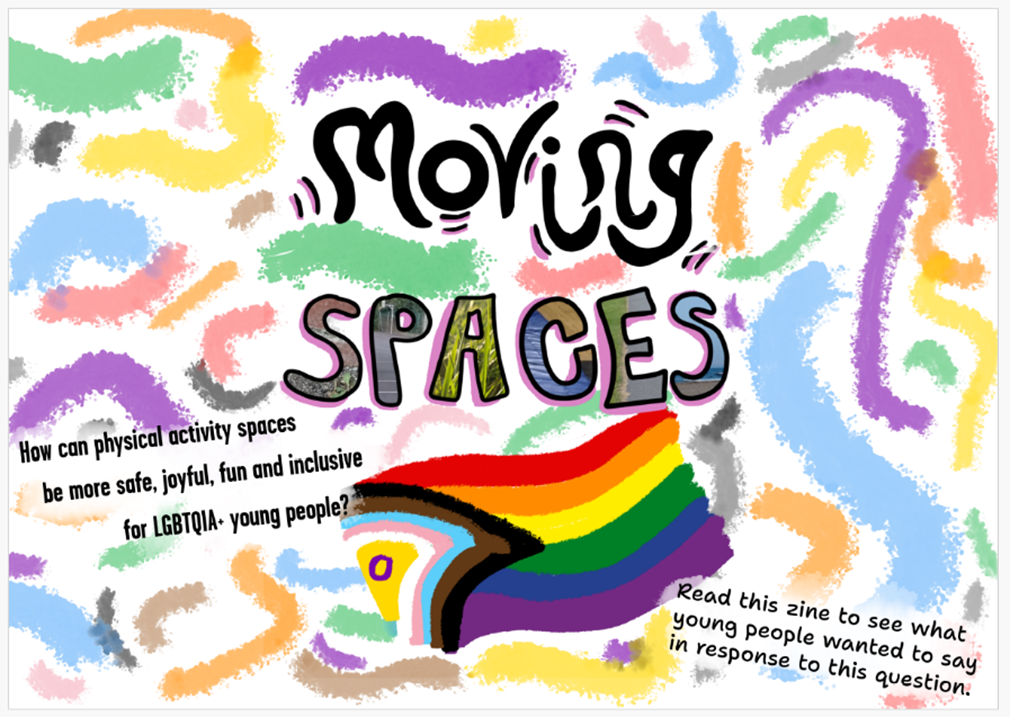
We have been collaborating with LGBTQIA+ young people in the North East and South Yorkshire, through Fuse led research funded by the NIHR School for Public Health Research (SPHR) exploring how physical activity spaces could be more joyful and safe. This blog describes how the ‘Moving Spaces’ zine was made and makes suggestions for those wishing to co-produce creative research outputs.

This blog draws from reflective conversations between Caroline Dodd-Reynolds (Fuse), Mary Crowder (University of Sheffield) and Shevek Fodor (Sounds Like Shevek) during the making of the zine. It is written with contributions from Caroline, Mary and Shev.

Seek continuity between research methods and research outputs

At the start of our research project we knew we wanted to host a series of research workshops and then co-produce a physical activity resource with the young people we were working with. After seeing the results of using visual creative approaches in our workshops, we knew we wanted a highly visual and creative resource that would connect and resonate with people.

Shevek Fodor
Working with the right designer and format

We sent an advert out to LGBTQIA+ networks for a graphic designer who would understand the lives of diverse LGBTQ+ people, in particular young neurodiverse people. When Shevek Fodor shared their zines with us our eyes and hearts lit up. We invited Shev to lead on making a collaborative zine. We chose the zine because of its DIY ethos, radical history of self- publishing and as a vehicle for self or group expression of thoughts and feelings.

What is a zine?

Zines originated through people writing letters and sharing information about things they were driven and passionate about. They’ve been used as a way for people who were overlooked within mainstream media to have their voices heard.

Practice reciprocity

We thought the young people would be inspired meeting Shev, a young neurodiverse queer artist. For Shev, this role offered a new opportunity to experiment with collaborative zine-making in a research setting. We offered hands-on guidance (budgeting, finance systems, mentoring) as part of co-production principles of reciprocity. We introduced Shev to the young people prior to the zine session and their curiosity was piqued…’is this person one of us or one of them.…?’

Involving artists at later stages of research is not straightforward. We aimed for a balance between giving Shev space to design and lead the sessions while also sharing our own knowledge, ideas and learning. The trust built in earlier research workshops meant we could also pass on an established  quality of ease in the group when it came to the zine making workshops.

Trust the creative process of each person and the group

Shev laid the zine making table out in a beautiful, organised chaos of found images, stickers, magazines and cards. Young people made creative contributions to the zine, inspired by earlier conversations about physical activity. They found ways to take part and to also hang out in their safe space – which we were encroaching on. Some people chewed and chewed over the right words to express themselves with contributions coming together at the end. One person got stuck and did their piece later with a youth workers’ support. Two zine contributions were made that involved multiple voices, through Scarlet documenting conversations around particular images. Scarlet also made contributions from a researcher’s perspective. Shev took these contributions – writings, drawings and collages – and wove them together into a first draft.

Allowing the time for collaborative editing – it brings difference into conversation

We shared this draft with the youth groups, the SPHR and Fuse communications teams and academic colleagues. We received a lot of feedback – the zine was provoking conversations. The young people gave detailed feedback on what they liked, what was missing, and sequencing of ideas. They spoke the words that became the introduction and expressed their small hopes for a few people to engage with the zine. There was a thoughtful conversation across the youth groups, about whether to personalise individual contributions or depersonalise to show that it could be any LGBTQIA+ young person saying this.

Academic colleagues also read and shared reflections with us, including feedback that policymakers might struggle to engage with the zine’s non-linearity and various people suggested we include a page of key take-home messages and recommendations ‘so things don’t get lost’. The young people responded to this feedback saying that people needed to listen and pay more attention to the messages that were implicitly in there. This dialogue led to the writing of a framing document for the zine. 

Value queer embodied theory and practice 

Another dialogue arose around authorship. Some reviewers found it confusing not knowing who had written what and had a strong wish to know who – a young person or adult – had written different bits – a desire perhaps for a clear identification of distinct voices. For Scarlet, a queer researcher, the ‘queer polyvocality’ (Brice et al., forthcoming) of the zine – many voices that weaved together in to more than sum of their parts – reflected queer practices of overflowing notions of stable identity, disrupting predetermined binaries and unsettling ideas of authenticity (Lescure, 2023).

This somewhat aligned with ideas from the young people. For some, there was a wish for attribution so ‘friends and family would know I made this’, and there was also a wish for zine contributions to be unnamed ‘because any queer young person could have made any piece’ and ‘we made it all together’.

One young person said they appreciated that researchers ‘weren’t butting in with your opinions but also giving your views when right to do so’ and another adding ‘it’s important that the adults’ voices are also in there as you were part of the conversation, and some adults have also had similar experiences’. The young people decided to make creative doodles in place of signatures which were mixed in with academic doodles/logos to show the talking and making and editing together – the polyvocality – of the zine making process.

Through this collaborative editing process (over three months), the young people began to converse indirectly with interested adults who wanted to help, including with the funders. These conversations happened with the young people keeping editorial control. We sense this may open up and shape more generative future encounters between these young people and further influential adults.

Indeed, some of the young people involved have made a plan to hand deliver zines to local venues around town (hairdressers, surgeries etc.). It seems empowerment and co-ownership inadvertently leads to physical activity!

Explore the zine

To find out more about this work, please contact Scarlet scarlet.hall@durham.ac.uk or Caroline caroline.dodd-reynolds@durham.ac.uk 


References

Lescure, R.M., 2023. (Extra) ordinary Relationalities: Methodological Suggestions for Studying Queer Relationalities Through the Prism of Memory, Sensation, and Affect. Journal of Homosexuality, 70(1), pp.35-52.

Brice, S. Marston, K. Wright, R. and Hall, S. (forthcoming). ‘Mycelial Love’ in Harrison, P. Joronen, M. and Secor, A. Love and Catastrophe in Cultural Geography. Edinburgh University Press

Friday, 27 January 2023

Public Health at a crossroads again: meeting the challenge of a reformed system in England

Posted by David Hunter, Newcastle University, Peter Littlejohns, King’s College London, and Albert Weale, University College London


With health policy understandably preoccupied with the pressures on, and changes occurring in, the NHS arising from the impact of COVID-19, implementation of the Health and Care Act 2022, and various strikes among the workforce, it is imperative not to overlook the public health system reforms in England.

Public Health England’s (PHE) sudden demise in August 2020 followed mounting criticisms of its performance during the early stages of the pandemic and general unpreparedness.1 Rather than consider how PHE might be reformed, the government rushed to replace it with two new bodies: UK Health Security Agency (UKHSA), and Office for Health Improvement and Disparities (OHID). Like PHE, the UKHSA is an executive agency with close ministerial oversight while still permitting ‘independence in the delivery of policy advice’. It will act as a ‘system leader’ for health security with responsibility for pandemic preparedness and external threats across the UK while bearing in mind that health is a devolved responsibility.

PHE’s remaining functions in respect of the wider public health, including health improvement and population health, lie with OHID. Located within the Department of Health and Social Care (DHSC) and jointly accountable to the Secretary of State for Health and Social Care and the Chief Medical Officer for England, it enjoys even less independence than the UKHSA. Building on the work of PHE, OHID’s priorities include tackling obesity, improving mental health, promoting physical activity and other population health issues, notably inequalities.

There is merit in taking stock to identify any lessons which might be gleaned from the mixed life of PHE and whether the new bodies offer hope to do things better.2

Learning the lessons

The findings from a research project to explore the circumstances surrounding the rise and fall of PHE may assist with the learning process.3 Five broad underlying issues were identified in the research which contributed to PHE’s demise.
  • PHE did not possess the capacity to undertake a testing regime
     of the size and complexity required by the pandemic
    Severe funding cuts in public health spending, nationally and locally, since 2010 meant that PHE functioned with reduced capacity when the pandemic struck
  • PHE did not possess the capacity to undertake a testing regime of the size and complexity required by the pandemic, the absence of which was the basis of the case against the organisation
  • The governance of PHE as an executive agency meant it lacked independence
  • While decisions made by PHE at the start of the pandemic were later considered mistakes (and judged outside the law by a judicial review) at the time there was little information about the nature and possible effects of the virus and limited capacity in the health system which required tough prioritisation decision to be made
  • The sudden closure of PHE without any consultation was widely reported to be due to blame-avoidance behaviour on the part of key actors, principally Dominic Cummins (as former Chief Advisor to the Prime Minister, Boris Johnson) and Matt Hancock (as former Secretary of State for Health and Social Care). There was also a view that the decision was based on policy favouring use of the private sector and contracting out functions like test and trace.
Key lessons from these findings centre on two major areas of concern: the respective remits of the new bodies, and their governance.

Remits


The respective remits of UKHSA and OHID need to be clearer and more transparent if the risk of fragmentation is to be avoided. A welcome feature of PHE was its attempt to bring together the key public health functions that had previously operated in separate silos. As things now stand, separating communicable diseases (CDs) from non-communicable diseases (NCDs) is a retrograde move since, as the pandemic highlighted in stark terms, close links exist between them when it comes to those groups and communities which suffered most in terms of illness and death. A syndemic understanding of diseases and their underlying social factors is pivotal in preventing disease in the future and avoiding fragmentation.4

Governance


Governance of the new public health bodies requires careful attention. As an executive agency, PHE was criticised for its lack of independence from government which restricted its ability to ‘speak truth to power’. Given UKHSA enjoys the same status, it remains unclear how it intends to avoid a similar fate. The problem is a deep-seated and pervasive one within government. The idea that OHID being housed in the DHSC will allow it to exercise greater influence and have a closer collaboration with ministers could be a good move, or, more likely if history is any guide, it may be overly optimistic. There is a risk that OHID may disappear into Whitehall and become invisible, lacking even the limited degree of independence PHE had. To succeed, OHID has to be visible and have allies inside government.

A further issue concerning the governance and working style of both agencies, especially OHID, centres on their ability to operate effectively across government. Public health comprises numerous ‘wicked issues’, that is, multi-faceted problems that are complex and for which there are no simple or single solutions. Confronting them will be especially challenging for a government which, for all its rhetoric about ‘levelling up‘, remains topic- and department-focused, operating in silos rather than concerned with cross-government issues.5

OHID has a steep hill to climb if it wants to lead a transformational agenda across the wider determinants of health which demands a whole-of-government approach. The hill just got steeper following government delays in tackling child obesity and its failure to implement a national food strategy. In keeping with the prevailing political ethos, there is a renewed focus on individual behaviour change and lifestyle choices rather than tackling the influence on health of commercial interests via taxation and regulation.6,7 If significant inroads into the population health agenda are to be made, then confronting powerful vested interests in, and lobbying from, the food and drinks industry and their ’friends’ in government engaged in what has been termed ’institutional corruption’ cannot be avoided.8 Whether OHID has either the backing from government or competences for such a struggle remains doubtful in the extreme.

Conclusion

Public health once again finds itself at a crossroads. It can either continue to ‘muddle through’ with a broken political and public policy system that is not fit for purpose.9 Or there is an opportunity to construct a strong and confident public health system that is well-placed to confront the challenges facing it. The aftermath of COVID-19 should make the choice of options self-evident. However, as things stand, it is unlikely that the UK’s broken political system with its focus on short-term fixes is up to the challenge. Without major systemic change aimed at overhauling the UK’s political system, a risk of further deterioration in the state of the public’s health may be unavoidable.


References:
  1. Calvert J, Arbuthnott G. Failures of state: the inside story of Britain’s battle with coronavirus. London: Mudlark, 2021. https://harpercollins.co.uk/products/failures-of-state-the-inside-story-of-britains-battle-with-coronavirus-jonathan-calvertgeorge-arbuthnott?variant=39528280391758
  2. Vize R. Controversial from creation to disbanding, via e-cigarettes and alcohol: an obituary of Public Health England. British Medical Journal 2020; 371:m4476 http://dx.doi.org/10.1136/bmj.m4476
  3. Littlejohns P, Khatun T, Knight A, Hunter DJ, Markham S, Coultas C, Kelly MP, Ahuja S. (2022) Lessons from the demise of Public Health England: where next for UK public health? London: NIHR ARC South London. https://arc-sl.nihr.ac.uk/sites/default/files/uploads/files/public-health-report-sept-2022-final.pdf
  4. Horton R. Offline: COVID-19 is not a pandemic. The Lancet 2020; 396: 874. https://doi.org/10.1016/S0140-6736(20)32000-6
  5. Pope T, Shearer E, Hourston P. What levelling up policies will drive economic change? The need for a long-term focus on skills and cities. London: Institute for Government, 2022. https://www.instituteforgovernment.org.uk/publications/levelling-up-policies?
  6. British Broadcasting Corporation (BBC). Junk food: obesity strategy falling apart, Jamie Oliver says. 15 May 2022 https://www.bbc.co.uk/news/uk-61449921
  7. Ralston R, Smith K, O’Connor CH, Brown A. Levelling up the UK: is the government serious about reducing regional inequalities in health? British Medical Journal 2022; 377:e070589 https://doi.org/10.1136/bmj-2022-070589
  8. Draca M. Institutional corruption? The revolving door in American and British politics. SMF-CAGE global perspectives series: 1. 2014. http://www.smf.co.uk/wp-content/uploads/2014/10/Social-Market-FoundationInstitutional-Corruption-the-revolving-door-in-American-and-British-politics.pdf
  9. Ricketts P. Hard choices: the making and unmaking of global Britain. London: Atlantic Books, 2022. https://atlantic-books.co.uk/book/hard-choices

David J Hunter, Emeritus Professor of Health Policy and Management, Population Health Sciences Institute, Newcastle University

Peter Littlejohns, Emeritus Professor of Public Health, Centre for Implementation Science, Institute for Psychiatry, Psychology and Neurosciences, King’s College London

Albert Weale, Emeritus Professor of Political Theory and Pubic Policy, University College 
London


The views and opinions expressed by the authors are those of the authors and do not necessarily reflect those of Newcastle University, King’s College London, University College London, or Fuse, the Centre for Translational Research in Public Health.

Friday, 16 December 2022

Walking football for people with chronic breathlessness – has it got legs?

Posted by Callum Bradford, Research Associate, Teesside University

Following on from the recent success of the England Women’s football team, and with the Men’s World Cup final just around the corner, now seems like a good opportunity to talk about our walking football project, designed exclusively for people with chronic breathlessness. What is walking football you ask? Well it's football, without running (you don’t say?!), and the physical contact is a bit more restricted. Thankfully, FIFA hasn't got its hands on walking football just yet, with the World Cup being an example of why we perhaps should avoid such a thing.


Chronic Breathlessness is predominantly caused by pulmonary conditions, such as chronic obstructive pulmonary disease (COPD), impacting 75 million people globally. With Covid-19 and an ageing population this number is expected to rise, increasing the burden on families, carers, and health and social care services. For individuals, breathlessness is associated with a lower quality of life, decreased capacity to do exercise, and higher levels of anxiety and depression

Pulmonary rehabilitation is recommended for everyone with breathlessness. Consisting of both exercise and education, its benefits on health are unequivocal, however, any benefits gained by patients are often reduced three months after completion. This is primarily because patients go back to doing less physical activity once the programme has finished and support from healthcare professionals is removed. With this in mind, we wanted to develop an intervention that could step-in when patients finish their rehabilitation, offering a form of exercise maintenance and continued social support. Given the nation's love of football (most of the time), we believed walking football might have potential.

To develop the intervention, we initially consulted pulmonary physiotherapists, and a local walking football team. The physios were initially very sceptical, raising concerns that the pace would be too fast, and highlighting the number of people with breathlessness who required oxygen or walking-aids. Walking-aids?! Oxygen?! I hadn't even considered that. I was starting to worry that this idea might be a complete non-starter.

So next stop was to see some walking football for myself at Middlesbrough’s Herlingshaw Centre. I left the session with mixed feelings. They played three-touch, meaning everyone got the opportunity to play, forcing that one player who thinks they're Allan Saint-Maximin to pass the ball. It was also proactively refereed to the benefit of everyone, with players encouraged to talk to the ref if they felt the pace of the game was too fast. However, after giving it a go myself, the pace was still surprisingly quick, despite what Father Ted might have you believe, bringing back concerns as to whether it would be too high an intensity. What I really needed to know was what patients themselves thought of walking football.

So we linked up with Breathe Easy Darlington, a local support group for people with lung conditions. Describing the input from Breathe Easy members as invaluable to our research over the last few years would be a massive understatement. So much so that, as a small thank you, we held a fundraiser for them last month on World COPD Day, raising £1120.76.

Their opinions would be vital to walking football’s success... however, they were also dubious of the idea. Again, concerns were raised about the speed, the walking-aids, and the balance required to play. So I asked, under what circumstances – if any – would they consider giving walking football a go? They stated that if the football was exclusive to people with breathlessness like themselves, they would give it a try, as they would be able to dictate the pace of the game and not feel too self-conscious of their footballing abilities. Our original plan involved asking patients to join onto sessions at the Herlingshaw. Luckily, by consulting with Breathe Easy members, I now understand how that plan – to mix people with and without breathlessness - would have likely ended in disaster, demonstrating the importance of including end-users when designing research studies.

Twelve Breathe Easy members agreed to play and the stage was set for our walking football taster sessions, and as you can see from our video, I don't think it could have gone much better.

The players embraced the competitive aspect of football, stating that “On the pitch you forget about breathlessness”; and the concern for walking-aids was turned on its head after we agreed that hitting the ball with a walking-stick is a perfectly fine way to score a goal. Our coach, Monty Towers, was key to its success, mixing up the session with fun games, while allowing everyone to play football at their own pace. In our follow-up conversations, members also suggested implementing a buddy system, where more experienced participants take responsibility for introducing new patients to the group so they feel more welcome – a brilliant idea that we intend to implement in the future.

Throughout 2023 we will be assessing the feasibility of walking football following pulmonary rehabilitation in collaboration with both North Tees & Hartlepool and South Tees NHS Foundation Trusts, plus the North Riding FA; and I’m confident if it’s anything like our sessions with Breathe Easy members, it will be a great success.

And if you’re still upset about the World Cup, don’t worry, I’m sure our walking football team will bring it home next year.


The views and opinions expressed by the author are those of the author and do not necessarily reflect those of Teesside University or Fuse, the Centre for Translational Research in Public Health.

Tuesday, 9 August 2022

How Covid-19 changed the takeaway landscape

Posted by Callum Bradford, Research Associate, Teesside University

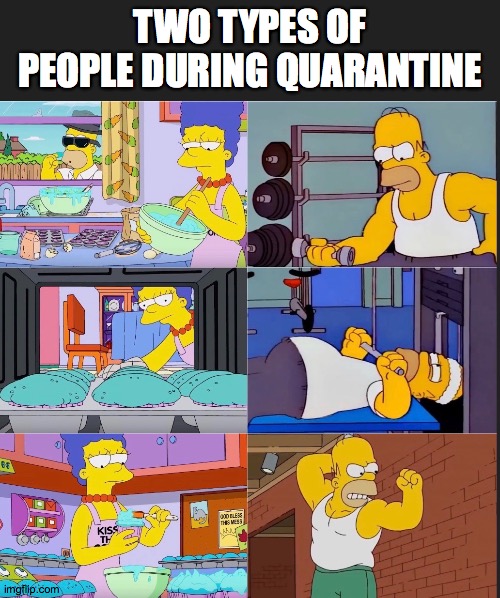
During the Covid pandemic, you may have seen the memes for how there are two types of people during lockdown. First there were those who used lockdown as an excuse to exercise more, eat well, and generally take care of themselves in a manner of which they had never had the time for previously. Then there were those who out of sheer boredom, decided to drink and order takeaway on more days than not as it was ‘something to do’.

As you can probably guess, I very much fell into the second category.

To my detriment, takeaways typically sell food which is relatively cheap, high in calories, low in nutritional value, and (annoyingly) very appetising; all delivered to your front door in a matter of minutes. Now I don’t want to come across as anti-takeaway, or anti-business, there is a place in our society for unhealthy food, nor do I blame anyone else for my questionable dietary choices. However, I’m sure most of us agree that we can have too much of a good thing at the impairment of not only our own health, but also the health of the high-street.

Apparently I’m not the only one who is too easily tempted by takeaways, with local governments implementing planning regulations to further prevent this takeover-of-takeaways, in the knowledge that our willpower is often lacking. You’re likely familiar with some of the rules already in place, such as no takeaways within 200m of a school, or that most restaurants and pubs can only provide takeaway food on an ‘ancillary’ basis.

However, with the Covid-19 lockdowns pubs and restaurants lost their ability to trade. In an attempt to combat the potential loss of business, the government introduced new temporary measures allowing these businesses to trade as takeaways, without needing to apply for planning permission. In other words, my options for takeaway just increased threefold, and by ordering-in I was ‘doing my bit’ to keep businesses open.

As we were now stuck indoors, every occasion was now an excuse for a takeaway; Birthday? Takeaway. Passed Uni? Takeaway. Anniversary? Slightly fancier takeaway with cocktails (highly recommend).

With these temporary regulations in mind, we consulted with various planners, public health leads, and environmental health officers from across the North East, to better understand how these regulations were impacting their roles, alongside any public health trepidations they may have (if my diet alone wasn’t enough cause for concern).

The main theme throughout our conversations was an overwhelming sense of uncertainty. Covid had an unprecedented impact on the priorities of local authorities. Because of this, they could not organise the infrastructure needed to identify how many businesses were choosing to trade as takeaways. Even today as we slowly return to a sense of normality, the role of collecting this data appears to be unassigned as authorities play catch-up on work lost to Covid. Therefore, as you can imagine, gauging the impact of these regulations became very challenging and speculative. There was also uncertainty around how and when these regulations would end, or what elected members planned to do (if anything) about the potential long-term consequences to health.

Surprisingly, the main finding from our research had little to do with the regulations themselves, but rather how Covid has accelerated change in the takeaway landscape. During Covid, we all developed new habits (for better or worse); one of which was the use of online delivery services such as Deliveroo and Uber Eats.

Despite the temp Covid regulations now ending, with these delivery services, many businesses that could not originally offer takeaway now can, and local authorities have limited ability to prevent them from doing so since they aren’t technically providing the deliveries themselves. A quick search on Deliveroo in Middlesbrough for example offers me delivery for Burger King, Starbucks, and Creams Cafe. None of these options are well-known as takeaways, but all now provide the delivery of unhealthy food. And although these services were technically available pre-Covid, the pandemic has led to a huge increase in their popularity, allowing for more unhealthy-food options and the changing of shopping habits. There are also traffic implications. Have you ever tried to walk through Liverpool city centre during lunch hour? Attempting to dodge Deliveroo riders on their bikes as you stroll through town is quite the experience.

To summarise, the Covid pandemic had an unparalleled impact on public health professionals, to the extent that the government implementing new regulations regarding takeaways was considered low priority. Ambiguity surrounding the impact of these regulations remains, with the ending of the regulations becoming somewhat nullified given the rise of online delivery.

In conclusion I offer some advice. if you’re trying to eat healthier, writing a blog post on takeaways whilst doing ‘research’ on Deliveroo, might not be the wisest of ideas – speaking from experience.

Friday, 1 October 2021

“Next slide, please!” Newcastle children’s reflections on the pandemic

 Posted by Laura Basterfield, Research Associate, Newcastle University

Often in research, once we’ve collected the data, analysed and published it, we don’t have the opportunity to go back to the participants to discuss what we found. When children are involved, we may give a feedback presentation at a school assembly, but let’s be honest it can be difficult to make Powerpoint fun!


I’ve worked closely with Walkergate Community School over the last few years on my research into children’s physical fitness and mental wellbeing and I wanted to deliver my feedback in an assembly that the children would enjoy. I thought the best way to do that might be to let them do it themselves, as who knows what children like better than other children? And I am so pleased I did; it was a fascinating process. 

The ‘Young Science Communicators’ project was due to have taken place in June/July 2020, but had been delayed due to the COVID-19 school closures. Whilst I was initially disappointed last year, the realities of the past 12 months brought an added dimension, intensity and poignancy that would not have been there otherwise.  

There weren’t many rules, but the assembly should include some of the results of the study, including both the physical and mental benefits of physical fitness and activity. Other than that I was happy for the children to take the assembly wherever they saw fit. To start, thirteen Year 6 pupils (aged 10-11 years) discussed with me the project specifically, fitness in general, and about the impact the COVID-19 lockdowns and school closures had on them and their families. Then I taught the children some of the key skills they would need to do my research. I wanted them to really understand why I do what I do, and what better way than to then practice on your friends?! There were some wonderful comments from the children about how they liked the experience: “I enjoyed it because I want to do your job when I’m older” and “I liked being in control!” (which must be quite unfamiliar at 11 years old), and they quickly learned both the techniques and how to talk politely to their class-mates! 

The following week it was over to the children and their ideas. The goal was for them to create an assembly, film their performance, and share it with the rest of the school – all within three days. Scott and Claire are practitioners with local theatre company Mortal Fools and they led the children on a games-based journey to increase their confidence, public speaking and team-working skills. The children were all totally engaged and willing to share their thoughts, feelings and experiences to create a collegiate and supportive atmosphere. For me as an observer at this point, I was struck by the children’s recreations of the school closure periods and how they articulated their feelings: “I had no motivation to do anything”, “I was lonely”, “frustrated”, “isolated”. This was especially the case for those without their own mobile phone – some were unable to speak to friends for weeks. They also showed a mature insight into how the adults in their life had been affected, acting out money worries, family health issues, the stress of getting children to do schoolwork and go to bed on time, when there was nothing to get up for the next day…

As the group moved on to the awkwardness of meeting up with people after such a long time “Errr… so have you been up to much?!”, to their joy and excitement of seeing family, friends and teachers again, the whole process felt reflective and cathartic. Claire and Scott’s skill was evident as the children’s confidence grew before my eyes. Along the way the children had us in stitches with impressions of Boris Johnson, ‘next slide please’, and Joe Wicks.

Finally, they got to film their creation with the help of a proper film-maker. Most scenes only took a couple of takes, and the children showed incredible focus and concentration throughout. The final co-produced 9-minute film is informative, funny and affecting, and the children should be incredibly proud of their efforts. We still weren’t able to completely escape COVID, as three children missed the filming day due to a positive case in their class, but their input on the previous days made it a true team effort. 

The process showed me how important it is that we involve children not just in our research but in everything that affects them – simply asking children how they are, what they are feeling, and what they would like to be involved in gives us a hugely important insight into their world. 

I hope you enjoy their film.


Thanks go to all the children and staff at Walkergate Community School; Scott Wilson, Clare Rimington and Helen Ferguson at Mortal Fools, and Matt Jamie the film-maker. Permission to share this film has been granted by the parents and school of the children involved. 

Funding from EngageFMS at Newcastle University supported this project. 

Originally written for VOICE.

Friday, 23 July 2021

Find the gap: where is the healthy, enjoyable human body in policy?

Posted by Rachel Kurtz, PhD researcher at Durham University

Balancing varied and sometimes conflicting priorities within a large geographical area and between multiple departments is not a job to be envied. Ensuring the detail is suitably deliberated while also holding in mind how a policy affects other interests must be attempted but cannot possibly be achieved to perfection. My role on behalf of County Durham Sport was much easier. Over three weeks in June, I reviewed Durham County Council documents and the priorities of the Area Action Partnerships (AAPs) to identify areas of local strategy that did (or did not) address the issues of physical inactivity and the climate emergency. As an environmentally-informed, lifelong dancer-turned-researcher, I simply had to view the documents from two perspectives in which I am already personally invested and consider possible changes. Some interesting things emerged.

As you might expect, topics are viewed through whatever lens highlights policy concerns in that area. For example, the County Durham Plan understands physical activity functionally, through land use, waste, and movement of people, advocating for active travel (walking, cycling etc.) and providing and improving recreational areas. Meanwhile, the Joint Health and Wellbeing Strategy considers the environment as either beneficial or detrimental to public health, e.g. air quality. Thinking that is limited by departmental divisions can make it difficult to link overlapping policy areas. Consequently, councils are attempting to increase communication and collaboration by forming multi-disciplinary teams to create joint policy and consider issues from multiple perspectives. The County Durham Health and Wellbeing Board (author of the previously mentioned strategy) is one such team. This ongoing shift towards a collaborative approach is already countering siloed thinking and Durham County Council is taking a systems perspective through its work in Mental Health, from its strategic partnership both within and outside the council to delivery vehicles like the AAPs (which give local people and organisations a say on how services are provided). Nonetheless, a change of perspective inevitably exposes assumptions and raises new challenges, and this was no exception.

Encouragingly, some of the documents reviewed, such as the 2018 Open Space Needs Assessment, comprehensively address both focus areas, however in most cases the environment features more prominently than physical activity. A Physical Activity Strategy is still being developed, therefore gaps in this area might be expected and indeed in many cases the human body was entirely absent from policy. However, what was most noticeable was the underlying attitude where physicality was mentioned. Almost none of the policy documents feature the healthy, enjoyable human body. To cite a specific example: while addressing a rising mental health crisis, the Health and Wellbeing Strategy implicitly regards bodies as problems to be solved. This is particularly noticeable in the section on older people who are seen as frail and in need of preventative and remedial support. The framing of the strategy is already being addressed in this case but overall, any focus on the impact of health and wealth inequalities on the body tends to see physical inactivity as a problem rather than an opportunity. There were exceptions at delivery level (e.g. the Healthy Weight Action Plan and some AAP interventions, both of which are very much about enrichment) but at the strategic level, bodies are overwhelmingly framed as problematic. This is true even where you might expect an enrichment perspective such as the Children and Young People’s Strategy and Strategic Walking and Cycling Delivery Plan.

As a dancer and embodiment researcher this outlook is all too familiar, and I understand it as cultural rather than a failing of the council. In the main bodies are accommodated, objectified and treated as problems to be solved, while the sensual, experiencing body is largely ignored. Unfortunately, when we take this deficit perspective, we lose important, humanising opportunities for productive fun. Policy could be very influential in this respect. If we choose instead the underpinning belief that bodies are an incredible gift through which we explore and enjoy an endlessly engaging world, we automatically find more playful and interesting solutions. Suddenly new possibilities abound, like generating power from playground equipment or a dancefloor made with kinetic tiles. When we remember our sense of fun, urban environments become play spaces for curious bodies. Street furniture is for parkour, roller blading or skateboarding as well as resting. Outdoor games and gyms spill out of parks and line the route of our walking commute. Community growing spaces (already a popular solution to poor diet, food miles, climate change preparedness, physical inactivity, social isolation and low income) are no longer confined to small allotment plots but proliferate around the city alongside the begonias, encouraging healthy eating and a pedestrian habit.

Negotiating such varied needs and uses does of course require extensive consultation and consideration, which again highlights the importance of a partnership approach through which all voices are heard, but as I said at the outset, policy making is inevitably a difficult job. The bonus of reframing in this way is that by using strategies that are intentionally enjoyable rather than those that feel worthy or obligatory, uptake is likely to be far higher and as a result there is a better chance of achieving positive outcomes. Surrounded by the richness of creative human expression and snacking on free, community-grown fruit as we walk, jog, cycle or even dance our way to work and school, why would we choose to drive? 


Images:
1. Photo by Anthony Fomin on Unsplash
2. Photograph 'Exercise Machines' (2103264189_e26de7ba22_z) by Catherine via Flickr © 2007: https://www.flickr.com/photos/30325243@N00/2103264189 (CC BY 2.0) Adapted (cropped)
3. Photo by markusspiske on Pixabay

Friday, 2 April 2021

Working together to tackle inequalities and inactivity

Posted by Sophie Phillips, Fuse & NIHR School for Public health Research (SPHR) funded PhD Researcher, Department of Sport and Exercise Sciences, Durham University, and Dr Rachel Mowbray, Insight Coordinator, County Durham Sport, Active Partnership.

In today's Fuse blog post, Sophie and Rachel tell us about collaborating during Sophie's secondment at County Durham Sport between January and March 2021.

It seems obvious that we would work together, right?

I conduct research in an academic institution and Rachel promotes evidence-based working in an Active Partnership which collaborates closely with Durham County Council. Our day-to-day roles are quite different. But, we have a shared goal: to tackle inequalities that stand in the way of physical activity engagement and support children and adults to be more active. By working together, combining knowledge, skills, and connections, we think we can make even greater progress towards improving people’s health and wellbeing.

How is academic research positioned within the physical activity landscape?

Physical activity policy and practice is a large and complex system made up of many different organisations, approaches, and settings. Academia is often positioned as external to the system, trying to create impact from the outside through activities referred to as ‘pathways to impact’. But in reality, academic research could be a crucially important element of the system in its own right (but often doesn’t have that position). Can positioning academic research as part of the system (as opposed to outside the system) make creating impact less of a hurdle and more of an opportunity?

Through my secondment to County Durham Sport, academic research has been embedded into the local Active Partnership. This gave me a huge opportunity to make an impact (on a daily basis!) by simply talking to others in different parts of the system. By sharing my knowledge and passion through conversations, I felt like I could make a real difference. Sharing information and ideas can challenge and influence thinking. This can (and does) influence the way things are done.

What are the benefits of an embedded researcher in policy or practice?

Rachel:
Non-academic audiences often cannot access academic publications in meaningful ways because of financial barriers and/or because of the academic format. Having Sophie embedded in our organisation brought academic research to life and into the conversations happening between practitioners, policy makers, and non-academic researchers. These conversations allowed us to access the most up-to-date and robust information about physical activity. In the same way, County Durham Sport were able to offer extensive knowledge of the local physical activity system and inequalities. Working together, we created a stronger evidence-base on which to tackle the challenge of inactivity.
Sophie: I was able to communicate knowledge from academic research papers on physical activity into meaningful insight for County Durham Sport. One of the pieces of work I conducted during the secondment was a report on early years physical activity and movement. This included translating evidence from academic research papers into meaningful and accessible outputs (including reports, overviews in tables, and presentations). I was also able to engage with different stakeholders and physical activity providers across multiple settings, who are involved with local early years provision. This helped to bring together both the research evidence and the current local landscape, to make evidence-based and actionable recommendations about future early years provision.

Take-home messages from our collaborative experience…

Our day-to-day roles are very different, as are the expectations and outcomes of our work. Although this presents some challenges (such as differing timescales and required outputs), ultimately, we share a goal - to tackle inequalities that stand in the way of physical activity engagement, support everyone to be more active, and help to improve people’s health and wellbeing. Finding this common ground can foster true collaborative thinking and drive connections between academic and non-academic players in the physical activity system. Integrating our different perspectives and approaches is beneficial and necessary to create meaningful system change.

Rachel: Tackling big issues (like inequalities in physical activity) requires a collaborative and evidence-based approach. I would encourage other third sector organisations to engage directly with academic researchers - both to learn from their expertise, and to share your own experience of practice or policy. We can achieve more working together than we can alone!

Sophie: My experience of collaboration with County Durham Sport has been invaluable. It has influenced the way I think about conducting and communicating research. I would encourage other public health research PhD students to explore the opportunities of engaging in a short time with policy and practice partners in their field, to help view their work from different angles.


Sophie’s academic research is about measuring the physical activity and movement behaviours of pre-school aged children. Her secondment at County Durham Sport was funded by UK Research and Innovation (UKRI) QR Strategic Priorities Fund awarded through Durham University.

Rachel promotes evidence-based partnership working to tackle inequalities in physical activity through her role with County Durham Sport, Active Partnership funded by Sport England.


Images:

2 & 3. Photo of Rachel (https://www.countydurhamsport.com/about-us/meet-the-team) and Sophie (https://www.countydurhamsport.com/homepage/news/) with thanks to County Durham Sport.

Friday, 19 March 2021

Simple, likeable, luck? How to get physical activity research into practice

Posted by Nicola McCullogh, Post-graduate Researcher, Northumbria University

Sometime last year – I can’t remember exactly when due to lockdown blur – I was asked by my mentor Caroline Dodd-Reynolds if I’d like to join the Fuse Physical Activity Network. I’d been to a number of workshops and I loved the focus on putting knowledge into practice, so I said yes and spent the rest of the year being in awe of the speakers we’ve had from across the world. And the discussion following the first workshop of 2021 (22nd January) was so rich that we wanted to do a bit of a follow-up to – as they say – ‘continue the conversation’.

                                     Watch a recording the 5th Fuse Physical Activity Workshop

This isn’t a report on the workshop itself, but it would be wrong to start on the discussion between the attendees without first acknowledging the speakers who inspired that discussion. First Professor Adrian Bauman (University of Sydney) spoke about how we can improve physical activity practices locally and nationally, and then Ben Rigby (Durham University) took us through 10 guiding principles for local physical activity practice which were developed by the Fuse Physical Activity Network. Some of the points that jumped out from the chat box during the presentations were around the topics of:
  • Inclusivity: How can we make sure that physical activity messages get to specific groups of people? (e.g. can we do this via carers?)
  • Scalability: Physical activity interventions tend to be less effective when scaled up; is this because they are often adapted in the scaling-up process?
  • ‘Business as usual’: Should we move away from thinking about physical activity programmes and towards encouraging physical activity by integrating it into people’s daily lives?
  • Making every contact count: How can we measure the effects of conversations between health professionals and patients about regular physical activity in a way that meets the definition of ‘evidence’ for all of the different groups interested in this sort of practice and research?
As you can see, there was so much going on that it’s no surprise there were a few things we didn’t get to explore on the day! So we pulled together the remaining key themes from the chat and these are considered below.


Are physical activity interventions long enough, as it can take years to become active/inactive? And when we’re researching interventions do we give enough thought to people staying active afterwards?

This seems to be one of those areas where there’s an unfortunate disconnect between research and practice. At the workshop we discussed the value of academic research in understanding the needs of communities but also acknowledged the potentially lengthy timeframes involved before research hits policy and practice. On the other hand, limitations on the practice side can include timescales over which practitioners need to deliver interventions due to funding requirements, meaning that interventions may be shorter than they would ideally be. When it comes to people staying active, although studies with follow-ups do exist, interventions tend to try to give their participants the skills to stay active on their own once the programme finishes, rather than being ‘maintenance interventions’. Maybe we need to try an approach a bit like weight loss groups for ongoing support?


Could we use financial incentives to increase people’s physical activity?


Anyone who knows me knows I love a bit of self-determination theory so I’m going to default to that for my answer, though of course other theories are available! Tying in with the above question, I think what we all want to see is interventions with long-term effects. Financial incentives might encourage physical activity while incentives are available, but we’re unfortunately not giving people the motivation to continue without these rewards and we know the rewards won’t last forever. On another level, those running the interventions have targets to reach to show the effects of their work, so they’re operating under short-term reward systems, too. Shifting our targets towards long-term effects may help.


How can we address the social factors that influence physical activity?


Social determinants of health (conditions in which people are born, grow, work, live, and age) are well recognised by physical activity researchers and practitioners. On a broad level, interventions try to reduce anything that would hinder participation for the groups they aim to help. But an interesting area of thought is how we can use people’s sense of belonging to a group, and their perception of what that group does, to encourage them to be active (e.g. encouraging new parents to be active together at parent and baby groups). We just need to explore the best ways to do this when people identify with groups to different degrees and their group identifications can change over time.


Our efforts can be supported by following the 10 guiding principles for local physical activity practice, which bring together some of the issues discussed above including social determinants of health, inclusivity, and harnessing things that are already happening to promote physical activity. Over the years there have been many different initiatives to encourage people to get active, and some of them have really stuck. The Daily Mile is a simple idea to get children moving in schools, and it seems to be something that works for pupils and staff because it’s been running for over five years now. And Park Run has been successful around the world for over a decade. So it might seem like it’s difficult to get something in place that has an effect, that is sustainable and that people actually like, but sometimes with a bit of luck we can put research into practice and it all comes together.

I think the overall conclusion – summarised very nicely by Professor Bauman – was "keep trying".

What do you think? Let us know in the comments below.


Thank you to everyone who attended the webinar and contributed to the discussion, and to everyone involved in the Fuse Physical Activity Network for their support.

Friday, 6 November 2020

Changing the habit(s) of a lifetime: an intense body and mind affair

Posted by Fiona Ling, Senior Lecturer in Sport & Exercise Psychology, and Gavin Tempest, Senior Lecturer in Exercise Neuropsychology, Northumbria University

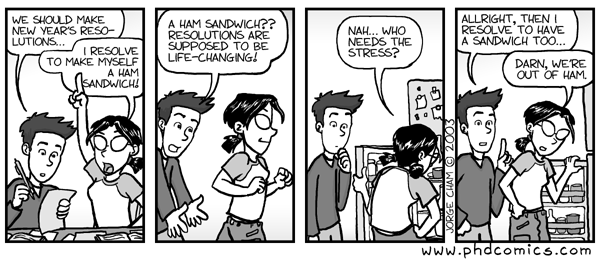
Many of us will be soon be thinking about making New Year’s resolutions, whether it’s to do with eating more healthily or doing more exercise. However, how many of us have actually managed to stick to our resolutions even though we know they are good for us? The question is – why is it so difficult to change our health habits?

While it’s well recognised that our environment does not help in encouraging a healthy lifestyle - from food and drink marketing to electronic devices promoting inactivity - could there be other reasons why we find it hard to change behaviour?

"Piled Higher and Deeper" by Jorge Cham www.phdcomics.com

What actually drives our behaviour?

Currently there exists many theories that try to explain why we do what we do, however, explanations are still lacking in regards to how our body and brain works together to directly drive our behaviour. When it comes to changing our habits, a key point to remember is that this involves stopping ourselves from doing things we consider pleasurable. For example, if you’re on a diet, every time you see an unhealthy snack, you have to tell yourself to STOP. Or, if you’re not a fan of exercising, why would you get off the sofa and slip on your running shoes? Making ourselves do things that don’t provide us with an instant reward can be stressful. These examples suggest that changing our habits can be stressful, that is, (the thought of) diet or exercise can become a source of stress (a stressor), and this makes our brain’s impulse control system work harder in order to adopt a new habit. Researchers have found that some of us can become stressed when seeing images of food, and are also not as good at controlling our impulses.1 Food craving, especially from seeing foods that we like, is a known stressor and the stress experienced from having to control our cravings is likely to tire out the impulse control system that can lead us to give in to temptations.

We might be able to change our habits for a short time as we become vigilant towards our goals, that is, the need to stick to our diet or exercise. However, we all have our limits and if stress from restricting our behaviour continues it will sap our ability to control our impulses, and our behaviour will return to what we are used to (or our ‘normal’). We saw another example of short-term success in behaviour change during our research. When monitoring children’s physical activity, some showed a burst of activity level at the start, but before long, it quickly dropped.2 These children were characterised by being hyper-vigilant towards stressors and they were generally more inactive than other children. We speculated that it was our monitoring of the activity that increased stress as the children felt that they had to show us they were more active which might spur on the initial activity spike, but as the children’s impulses for inactivity built up, it resulted in a considerable drop later on.

What’s next - how can we possibly take up, and keep up with, good health habits?

To influence health behaviour, it is crucial to understand the stress-impulse control mechanisms that DIRECTLY drive the behaviour. To use an analogy, if a person has a fractured arm, a direct treatment would be fixing the bone, rather than taking painkillers which would help to relieve the pain but not fix the problem. Similarly, if it is the stress from behaviour change and its influence on impulse control that directly causes us to succumb to temptations, we ought to target psychological interventions that reduce stress, or the brain’s impulse control system. Being able to manage our stress-impulse control system is particularly vital in the current environment where we are constantly exposed to temptations that lead to an unhealthy lifestyle. It is important to note that other factors, such as motivation and intentions, are also influential in changing our behaviour, however, this stress-impulse control process may more directly dictate the way we behave within split seconds and without our conscious awareness.

A possible psychological intervention is mindfulness training which can increase awareness of the stress cues, so that self-control can be executed before the brain’s impulse mechanism takes over. So next time we have a craving for an unhealthy snack or we are getting worked up about going for a run, we can potentially cope by containing and managing stress and impulses.

We believe that more research needs to be invested in the stress-impulse control mechanisms as it can potentially enhance the effectiveness of future individual health behaviour interventions and public health messages in getting us live a healthier lifestyle, and crucially, it can revolutionise the way we think about health behaviour change.


References
  1. Spitoni, G.F., Ottaviani, C., Petta, A.M., Zingaretti, P., Aragona, M., Sarnicola, A.,. & Antonucci, G. (2017). Obesity is associated with lack of inhibitory control and impaired heart rate variability reactivity and recovery in response to food stimuli. International Journal of Psychophysiology, 116, 77-84. https://www.sciencedirect.com/science/article/abs/pii/S0167876016307310?via%3Dihub
  2. Ling, F.C.M., Masters, R.S.W., & McManus, A.M. (2011). Rehearsal and pedometer reactivity in children. Journal of Clinical Psychology, 67, 261-266. https://onlinelibrary.wiley.com/doi/abs/10.1002/jclp.20745

The views expressed here are those of the authors and do not necessarily reflect those of Fuse (the Centre for Translational Research in Public Health) or the author's employer or organisation.

Friday, 17 April 2020

What is the recipe for a happy retirement?

Independence, identity, planning and staying socially connected says Anastasiia Fedeeva, Postgraduate Researcher, from Northumbria University


For the last two and a half years, I have been working on a PhD that aims to promote wellbeing and physical activity in retirement. Over this time some people have asked me whether I ever felt too young to understand what retired people might need to live their lives better. I must admit that is a fair question but not just because of the potential age difference with my target population.
 
First, before designing and implementing any initiatives to promote wellbeing or physical activity, it is recommended that you have a good knowledge of the people that you want to help; their needs, preferences, and feelings (Laverack, 2017). Furthermore, retirement itself is a unique and complex phenomena. Retirement experiences vary considerably between individuals and are influenced by a variety of contextual factors, for example the characteristics of a job, personal health, social networks, or whether a spouse is working (Wang, 2007). Therefore, it is important to understand the gaps in what can predict positive retirement (Amabile, 2019; Van Der Zwaan et al., 2019). One way to explore retirement more comprehensively is by conducting qualitative research to find out about the experiences of retirees, as this allows us to identify the key ways in which people adapt to a successful retirement in connection with individual and contextual factors. That’s why I spent several months last year conducting focus groups and individual interviews in order to better understand psychological predictors of retirement adjustment such as people’s attitudes, feelings, and behaviours.
 
To understand what is so good and bad about retirement, it is important to recognise what people leave behind after quitting their jobs. Work brings a lot of positives to our lives and this is not only limited to our finances. Among the most common benefit is the feeling of belongingness and connectedness with our colleagues. Retired people can be very concerned about losing valuable connections from their previous employment. For some, work may be the main source of social interaction, and those people might feel particularly vulnerable in retirement. 
 
Another positive aspect of work is in giving us an identity. If you ask people: “Who are they?”, very often the first answer would be related to the person’s work role. As people leave employment, they can no longer define themselves by their professions, and it brings the question: “Who are they now?” Although work identity can be substituted with other roles, such as those that are family or hobby-related, this process might take some time and individual effort. For those with a particularly strong attachment to work, such identity transition can be very challenging. 
 
However, one benefit associated with retirement that many look forward to, is increased freedom and independence. Most are excited to have the opportunity to finally live in accordance with their own preferences and choices, free from work-associated obligations and routines. This desire for independence seems to develop beyond just freedom from work commitments. Retired people value independence in other areas of life as well, and sometimes this even takes precedence over the importance of social connections. One reason can be that people of retirement age have already had all variety of commitments, including work and family responsibilities, and retirement is viewed as a relief from that. Another possible reason is that retirement is seen by many as the beginning of ‘old age’. As individuals acknowledge age-related health decline, they start appreciating physical and mental independence more than ever.
 
Additionally, some recently retired people see creating a new routine as another restriction to their freedom but planning day-to-day activities can be beneficial for wellbeing in the long-run. Planning seems to enable a better use of this increased freedom by helping retirees to participate in different activities of their choice. Thus, establishing new routines can be remarkably empowering as they foster feelings of control, sense of purpose and self-value, that “I’ve got my life back!”. 
 
As such, regardless of the differences in experiences and expectations, social connectedness, independence, successful identity transition, and planning activities in retirement appeared to be important for the vast majority of my participants. These findings supported and added to our ideas on how to promote healthy retirement. 
 
Personally, I feel privileged to have shared in the stories of retired adults. This has made me feel much closer to them – they aren’t ‘just participants’ anymore but real people who have gone through life’s joys and struggles. I have realised even more that despite the generational, cultural, and life experience gaps, we might just be looking for the same things that contribute to our happiness and wellbeing after all.
 
  
References:
  1. Laverack, G. (2017). The challenge of behaviour change and health promotion. Challenges, 8(2), 25. Retrieved from: https://www.mdpi.com/2078-1547/8/2/25
  2. Wang, M. (2007). Profiling retirees in the retirement transition and adjustment process: Examining the longitudinal change patterns of retirees’ psychological well-being. Journal of Applied Psychology, 92, 455-474. Retrieved from: https://www.ncbi.nlm.nih.gov/pubmed/17371091 
  3. Amabile, T. M. (2019). Understanding Retirement Requires Getting Inside People’s Stories: A Call for More Qualitative Research. Work, Aging and Retirement. Retrieved from: https://academic.oup.com/workar/article/5/3/207/5521007
  4. Van der Zwaan, G. L., Hengel, K. M. O., Sewdas, R., de Wind, A., Steenbeek, R., van der Beek, A. J., & Boot, C. R. (2019). The role of personal characteristics, work environment and context in working beyond retirement: a mixed-methods study. International archives of occupational and environmental health, 92(4), 535-549. Retrieved from: https://link.springer.com/article/10.1007/s00420-018-1387-3

Image:
  1. "Your father's opted out of a dignified retirement." by Grizelda Grizlingham via University of Kent, British Cartoon Archive (Reference number: GGD1456, Published by: Spectator, 02 Mar 2018, with thanks to Copyright holder: Grizelda Grizlingham): https://archive.cartoons.ac.uk/Record.aspx?src=CalmView.Catalog&id=GGD1456&pos=23