Showing posts with label sugartax. Show all posts

Friday, 12 January 2018

Kale and running shoes

Posted by Amelia Lake, Associate Director of Fuse, Dietitian and Reader in Public Health Nutrition at Teesside University

"January is our busiest month" said Hayley in the bustling fruit and vegetable shop in the small North Yorkshire market town where I live. This was on the first Saturday of January. She said their sales of kale had rocketed as people started juicing, eating better and generally trying to improve their diet. All this following the excesses of Christmas.

On Sunday morning, when I was out running (or trying to run on the icy pavements!), I was surprised at the number of runners pounding the streets in our small town. Then I remembered, it's the first weekend in January. Maybe, like me they have a shiny new gadget that they are somewhat obsessed with (how many steps have I done today?). There must be an exponential increase in the number of runners and kale consumers.

What is it about 'New Year, New You' that never fails to deliver and how long will these new behaviours be sustained? Why is it that our print and broadcast media don't grow tired of feeding us (excuse the pun) the same January story of …”you've eaten and drunk to excess in December now it's time to abstain from alcohol (Dry January) and go on an excessive unsustainable dietary regime”... Or the most recent health “craze” of ‘raw water’.

Our social media feeds are filled with so called 'nutrition and fitness experts'. The Instagram squares show us before and after pictures of success stories, quick fixes, rapid weight loss etc. etc... Not so many squares saying - look at your diets, your lifestyle, make sustainable changes as these are more likely to succeed in the long term (well apart from one of my professional organisations The British Dietetic Association).

What about the evidence? Does it advocate New Year's resolutions? Are we programmed to wait for the longer term goals or do we need to have instant results? A study published in 2016 suggests that while individuals may exercise for the long term goal of improved health, it is actually the immediate reward that predicts their persistence in that behaviour.

Ultimately these resolutions are about an individual's behaviour change. Much of our public health policy focuses on individuals changing their behaviours. Anyone who has tried to do this knows how difficult it is. Yet, we (professionals, the media, society) continue to focus on the individual who is generally living in an environment where kale isn't an everyday option and running shoes only go on at the weekend – or sit looking pristine in the cupboard.

What we need is a change in the system or what is called a 'whole systems approach' to health and lifestyle problems. The most obvious lifestyle related problem is that of obesity. There is a chronic problem of energy imbalance affecting our whole population young, middle-aged and old. We are encouraged to eat less and exercise more but really, the environment doesn't support those changes (for the majority of the population). Will our policy makers have any New Year's resolutions to focus less on the individual and more on the system in which we make our behaviours? With changes such as a sugar levy coming into play, we are seeing food manufacturers reformulate or change product size. But we also hear reports of people stockpiling sugary drinks that are about to be reformulated. Is this the start of a shift away from the individual and to systems thinking? I very much hope so.

Kale and running shoes are not the answer to addressing a health and lifestyle crisis but long term supported and sustainable changes are.


Image: 'Marinated Kale Salad-2' (23204695074_92c53db643_z) by 'jules' via Flickr.com, copyright © 2015: https://www.flickr.com/photos/stone-soup/23204695074

Friday, 13 October 2017

From shock to the system, to system map and beyond: evaluating the UK sugary drinks tax

Guest post by Jean Adams, Centre for Diet & Activity Research (CEDAR), University of Cambridge

Mostly you don’t get to watch TV at work. The day that George Osborne announced he would introduce a tax on sugary drinks in the UK, here at CEDAR HQ we all stood huddled around a computer monitor watching and re-watching the words coming out of his mouth. 

Oh. My. Goodness. I did not see that coming. 

The “soft drinks industry levy”, to give it it’s proper name.

A rather senior professor has since told me that he totally saw it coming.

After we’d got over the shock of the announcement, the conversation turned pretty quickly to research (well, this is a university, after all). We have got to evaluate this!

Colleagues at CEDAR had already written papers about how sugary drink taxes could be evaluated. We had talked with colleagues in other countries about evaluating their taxes – only for those taxes to fall through at the final political hurdle. I have more than one half-written application for research funds to evaluate sugary drink taxes stashed down the back of my computer.

And here it was, all systems go for designing an evaluation for a UK sugary drinks tax! In our back yard!

OK, so we have to work out whether it impacts on diet. But, what about jobs? Will people lose their jobs? Surely we need to know if it changes price and purchasing of sugary drinks. Right, but even if it does people might just shift to other foods – maybe they will just eat more cake instead? We are Public Health researchers, we need to focus on health: does the tax change how many people get diabetes? Or tooth decay? Or the number of obese children? And what about how this even happened? Did you see it coming? Why has this happened? Why now? Why don’t we do interviews with politicians and find out how it happened?

Woah, woah, woah! Ten seconds in and this is getting way more complicated than we (I) had ever thought it might. Before we did anything, we needed to work out what we thought might be going on here. Once we understood what the potential impacts might be, then we could start thinking about how we might evaluate them.

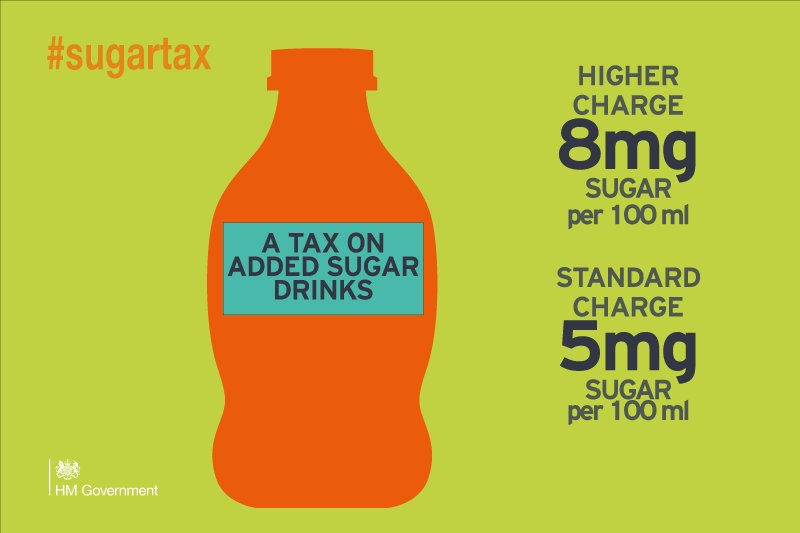
So that’s what we did. We spent 6 months developing a ‘systems map’ of the potential health-related impacts of the UK Soft Drinks Industry Levy (aka sugary drinks tax). The tax is explicitly designed to encourage soft drinks’ manufacturers to take sugar out of their drinks. There are two levels – a higher tax for drinks with the most sugar, a lower one for only moderately sugary drinks. So we started there (at ‘reformulation’) and worked out.

Then we sense-checked our map with people working in government, charities, and the soft drinks industry. They made lots of suggestions for things we’d missed, or needed to clarify. We changed our map and asked people to check it again. We changed it again. Only then did we decide what we should, and could, evaluate.

The current version of our systems map (we still think of it as a work in progress). Larger version here.


Yes, we are going to look at how the price of sugary drinks changes over the next few years. But we are also going to look at the amount of sugar in soft drinks in UK supermarkets, and the range of drinks available. We’re going to use commercial data to look at purchasing of soft drinks, as well as other sugary foods. We’ll use the National Diet & Nutrition Survey to explore whether there are any changes in how many sugary drinks, and other sweet foods, people in the UK eat. We’ll use hospital data to see if the number of children admitted with severe dental decay decreases. We’ll use statistical modelling to predict how changes in how many soft drinks people drink might translate into cases of diabetes and heart disease. We’ll look at the impact of the tax on jobs, and the economy. We’ll explore the ‘political processes’ of why and how this tax happened at this time. And we’ll conduct surveys to find out what people in the UK think of sugar, sugary drinks, and the tax itself – and whether this changes over time.

Obviously it’s going to be a lot of work. We’re going to need some excellent people to join the team to help us actually do this thing. Personally, I’m feeling a little overwhelmed/excited/overwhelmed/excited. It’s going to be brilliant!

Wanna be part of it?

Friday, 16 December 2016

Understanding the health benefits of the ‘sugar tax’: how will the soft drinks industry respond?

Guest post by Oliver Mytton, Centre for Diet and Activity Research (CEDAR) & MRC Epidemiology Unit, University of Cambridge
Today our paper, a health impact assessment of the government’s proposed ‘sugar tax’ was published in the Lancet Public Health. The government’s proposal, announced in April of this year, took health campaigners by surprise. Not only was it unexpected, but the government’s proposal was unusual.


Other countries, notably Mexico, have introduced a sales or excise tax on sugary drinks. However, the UK government proposed a levy on soft drinks manufacturers or importers based on the volume of sugary drinks sold. There will be two levels of tax, a higher level on drinks with more than 8g per 100ml, and a lower level on drinks with 5g to 8g per 100ml.

With others, I have previously modelled the potential health benefits of a ‘simple’ excise tax on sugary drinks, but the industry levy is more complicated.

Industry levy – how it might work  


The levy might lead to a reduction in sugary drinks consumption through a number of pathways, and from listening to industry experts and reviewing statements made by soft drinks manufacturers, it was apparent that nobody knew quite how the industry would respond.

The nature and magnitude of these responses might lead to very different health outcomes, which is what we describe in our paper. For our health impact assessment, we identified three broad responses that the industry might make:
  1. reformulation (reducing sugar content); 
  2. price rises that pass the cost on to consumers; and
  3. changes in marketing practices to ‘shift’ consumer preferences, e.g. away from high sugar drinks to diet drinks.
For each response, we then identified a ‘best case’ and ‘worst case’ scenario.

Modelled health benefits


From these six scenarios, we were able to estimate changes in consumption of sugary drinks. We then estimated changes in health, using data describing the relationship between sugary drinks consumption and three outcomes (dental caries, type 2 diabetes and obesity).

The most beneficial modelled scenario for health was reformulation (reduction of sugar content by 15% for ‘mid-sugar’ drinks and 30% for ‘high-sugar’ drinks), with an estimate of 140,000 fewer adults and children with obesity; 19,000 fewer incident cases of diabetes each year, and 270,000 fewer decayed, missing, or filled teeth annually in the UK. Important reductions in disease were also associated with the maximum expected price increase (equivalent to half the levy cost being passed onto consumers) and changes in marketing share.

The least beneficial modelled scenario for health was a change in market share that resulted in consumers switching not only from high-sugar drinks, but also from diet drinks, to low sugar drinks. This might result in an (small) increase in consumption of sugary drinks and consequent (small) increase in disease (using the measures we looked at). If the price is passed on to all soft drinks (rather than just sugary drinks) the health benefits were also substantially reduced.

Across the scenarios the most striking finding was the concentration of the health benefits in terms of obesity and dental caries amongst children and younger adults. They are the major consumers of sugary drinks. Diabetes follows a different pattern with many more cases likely to be prevented amongst adults than children, because there are relatively few incident cases of type 2 diabetes among children and young adults.

In doing this, we have not made an overall estimate of the health benefits of the new levy, rather we have identified the benefits attributable to different industry responses to the levy and put upper and lower bounds on those responses.

Policy implications

Consumers appear to be turning away from sugary drinks


Our assessment shows that the health benefits of the levy will be greatly affected by how the industry responds. We have identified scenarios where the health benefit is minimal (or conceivably negative). However, we think this is unlikely: there are strong signs from industry that there will be significant reformulation, consumers appear to be turning away from sugary drinks and most of the scenarios we modelled were beneficial for health.

While we are not as optimistic about reformulation as others, our work does further suggest that reformulation of sugary drinks has potential to mitigate some of the health risks associated with regular consumption of sugary drinks. Reformulation of soft drinks probably has more scope than I previously thought. The government levy may, particularly by using two tiers, be a relatively effective tool to incentivise reformulation.

It also suggests that the industry levy may not be a ‘simple’ intervention. Whilst we have described discrete responses, it is possible that the levy may stimulate several changes. Not just the changes described in our study but others, e.g. changes in consumer attitudes, reductions in portion sizes and introduction of new low sugar products. If it does do this, the government’s approach may be very effective, perhaps more effective than a ‘simple’ excise tax.

On the flipside, it may also be more uncertain or risky as its success depends on how industry responds. This creates a potential role for government and health organisations to apply pressure on industry to respond in ways that improve health. This uncertainty also underscores the need for a careful evaluation that can capture the important industry responses.

Finally, whilst there are reasons to be optimistic and the government should be applauded for this initiative, it does underscore the need for ‘brave and bold’ action across a variety of areas concerned with food and physical activity (which the recent Childhood Obesity Plan failed to deliver) to markedly reduce obesity. As I have written before, this measure alone will not ‘solve’ obesity, but it can be an important step towards improving population health.

Thursday, 17 March 2016

Obesity: many perspectives, no magic solution

Lorraine McSweeney, Research Associate, Newcastle University

To coincide with Nutrition and Hydration week Lorraine reports back from the Westminster Food and Nutrition Forum.

On the 9 March I attended a Westminster Food and Nutrition Forum titled: ‘Next Steps on Policy for Obesity - Prevention, Sugar Consumption and Priorities for Children’s Health’. The original purpose of the forum was to discuss the Government’s childhood obesity strategy. However, as publicised in the Guardian on the 26 February, this has been delayed; with the Department of Health calling it a ‘complicated issue’ that they want to ensure is a ‘game changing moment’. Despite the strategy delay the forum went ahead to allow ‘experts’ in the field to share ideas and possible approaches for the strategy.

Speakers and panel members were a diverse group ranging from Public Health England (PHE); School Food Plan; Southampton Health and Wellbeing Board; Children’s Food Trust; ukactive kids; Family Lives; primary care; Advertising Standard’s Authority; British Retail Consortium; Kantar World Panel; Food and Drink Federation; and London Food Board… the list goes on...

The McLympics - advertising and sponsorship
PHE stated that the average diet in the UK is poor with too much saturated fat and sugar and too little fibre, fruit and vegetables. This is having a knock-on effect on our children, with one in five primary school kids overweight or obese, by the time children leave primary school, this figure rises to one in three. Contrary to popular belief, this is not just an issue of poverty; obesity is happening in both the most and least affluent areas. We are bombarded with opportunities to eat 24 hours a day and there are many drivers to buy and eat. Advertising and sponsorship, which some people don’t associate with advertising, can have a negative impact on child health.

The Chief Executive Officer from the Children’s Food Trust argued that good food should be a part of a child’s life from day one, right through their life. Food should not be tailored to be ‘child-friendly’. Children should be encouraged to eat smaller portions of adult food and should not be targeted by the food industries. Parents need to be listened to and families should be helped to cook more.

The need to get children moving more was discussed and included comments about modern life not encouraging children to be active; and schools too scared to work with parents and tell them how to keep their children active. It was stated that only a third of children enjoy sports and other solutions need to be encouraged. The primary care representative felt that too many patients are being treated with the consequences of obesity. She believes that primary care professionals are missing opportunities to discuss weight with parents; however, GPs reported not wanting to cause offence and felt they did not have the time to deal with the issues.

An overarching theme from the ‘health’ representatives was that prevention is key and that the food industry was part of the problem and should be involved in solving the problem. We were informed that in an average supermarket consumers have 30,000 products to choose from and consumer change is very hard to drive.

The impact of volume of sales of products such as sugar and bread, which have no immediate substitute, are shown not to be affected by price rise. The introduction of a sugar tax was highly debated; some felt it would not change consumer behaviour, whilst others argued it would offer one solution. However, following the success of the reformulation of products to reduce salt and saturated fat, it was agreed that the reformulation of products containing sugar could be a way forward. However, representatives from the food and drink industries stated that sugars would be more difficult as it has a structural function in food.

In addition, if a product was made ‘healthier’ consumers may be inclined to eat more of the product but it was agreed that alongside reformulation, portion size control could be beneficial. There was much discussion of whether legislation should be enforced on food and drink companies – the representatives believed that due to diversity of companies, a voluntary approach was better. However, it was argued that ‘if consumers continued to make incorrect choices – legislation was all that was left’.

As you can see from this very brief summary, obesity continues to be a very complex issue; it was thought-provoking to hear the different perspectives from health, policy, practice and industry. However, the discussions emphasised the point that there is no magic solution; the publication of the Government’s childhood obesity strategy is eagerly awaited.

Photo attribution: flickr.com, Santo Chino, "McLympics": https://www.flickr.com/photos/santochino/2797034750

Thursday, 18 February 2016

From school dinners to sugar tax: Jamie Oliver to the rescue!

Guest post by Dr Victora J. McGowan, Research Associate, Teesside University

I have to say thanks to Jamie Oliver, the media attention from his School Dinners programme led to research questions which went on to form my PhD project (the effect of school meal legislation on child malnourishment). After completing my PhD I thought that would be the end to my connection with the celebrity chef, little did I know that our paths would cross again a few years later. I began work at Teesside University in October 2014 charged with conducting a systematic review into the effects of fiscal strategies on sugar consumption in collaboration with Public Health England (PHE). PHE had recently published 'Sugar reduction: responding to the challenge' which outlined the work they would undertake to assess the evidence base and identify potential areas that would be effective in reducing sugar consumption.

While we were busy searching through over seven thousand research papers the media were just as diligent in searching for almost anyone (including me) to provide information on whether the government would introduce a sugar tax. As we inched closer to the final number of relevant studies which we’d include in our review, Jamie Oliver waded into the debate. I admire the way he uses his celebrity status to push a healthy food agenda, however, I’m often left thinking whether his involvement does more damage than good. In terms of school food, I interviewed school cooks who said his School Dinners series resulted in an almost immediate decline in children taking a school meal. Some might say this was a good thing if the food was as bad as Jamie portrayed it. Well, it wasn’t that bad everywhere and this reduction in school meal uptake had a detrimental effect on the cooks as their salary was based on the number of children taking a school lunch. So when he entered the debate on a sugar tax it made me nervous. Jamie was branded a "patronising bully" by Alex Deane Executive Board Member of the People Against Sugar Tax campaign and tory MP Andrew Percy said Jamie’s suggestion of a sugar tax was "a classic nanny state reaction and it won’t work". I truly believe Jamie means well but his celebrity status often clouds the evidence and can result in detrimental consequences.


As we were in the process of finalising our review of the evidence, a total of 11 published studies, Jamie’s sugar tax campaign was gathering momentum with an online petition to have the issue debated in parliament and a new series being aired, Sugar Rush. Jamie wasn’t alone in his campaign, groups such as Action on Sugar and the Children’s Food Campaign, had been pushing for a tax long before Jamie came along, however, the addition of one more cook had the potential to spoil the broth. The authors of the School Food Plan, John Vincent and Henry Dimbleby have also advocated the introduction of a sugar tax and already introduced a 10p levy on sugar sweetened drinks in their LEON restaurants. However, with great celebrity status comes great responsibility. A recent article by Sian Griffiths discussed how the proceeds from these unofficial sugar taxes could be used to pay for drinking fountains in public parks with the view that it may help children access free drinking water rather than purchase sugary drinks. A novel idea but would it work? I asked John Vincent on Twitter whether kids would use these drinking fountains, he hasn't responded.

Before the ink had dried on our final copy reviewing the scientific evidence, Jamie Oliver et al had already decided that a sugar tax would reduce consumption and the government must take action. When PHE published Sugar reduction: evidence to action (see annexe 2 for our fiscal review) in October 2015 it almost seemed like closing the barn door after the horse had bolted. The media furore around the topic was so great that articles were too busy calling Jamie names and telling readers it was nanny state gone mad to pay any attention to the evidence. Our review of the evidence, although based on a small number of studies, suggested that consumers are responsive to changes in food and drink prices and this supports the evidence from modelling studies which indicate a tax of 10-20% would have a significant impact on purchases. Moreover, recent evidence from Mexico has shown that purchases of sugar sweetened drinks declined by up to 12% after the introduction of a sugar tax.

The evidence collated by PHE indicates that a sugar tax could have an impact on population health if implemented alongside a range of other strategies such as reducing marketing exposure and price promotions on high sugar products (we also reviewed the marketing evidence see annexe 3). However, this seems to have been diluted by the media whose attention has been focused on taxation. There are benefits to celebrity chefs wading into the public health arena as they can help bring some attention to important issues. However, I think they need to be mindful that their high media profile could have negative consequences. Parents, children, and school meal staff did not take too kindly to Jamie “transforming” school lunches and the skewed media attention on a sugar tax has the potential to undermine the evidence base before any attempts are made to implement a potentially beneficial health policy.