Showing posts with label environment. Show all posts

Friday, 10 November 2023

What is the best way to reduce the amount of meat we eat?

Posted by Jack Hughes, PhD Candidate in Behavioural Science; Mario Weick, Professor of Behavioural Science; and Fuse Associate Milica Vasiljevic, Associate Professor of Behavioural Science, from Durham University

The science is clear that eating meat can be bad for our health; eating meat has been linked to an increase in cardiovascular risks, diabetes, stroke, cancers, and even dementia. Meat is also bad for the planet, with the livestock industry being estimated to be responsible for up to 15% of greenhouse gas emissions. Eating meat is also surprisingly closely connected to the risk of pandemics, with zoonotic diseases (caused by harmful germs that spread between animals and people) much more easily spread from eating animals.


Governmental policy and legislative choices play an important role in our excessive meat consumption. The Committee on Climate Change has recommended a 20% reduction in UK meat consumption by 2030 if we want to hit our net zero targets. Additionally, the Department of Health and Social Care recommends eating no more than 70g of meat a day, but average meat consumption in the UK is closer to 90g. So, what is the best approach? Do we advocate for a ‘nanny state’ that bans meat or imposes hefty taxes? Or do we advocate for a removal of all subsidies for meat farming and just let the market and people decide how much meat we consume under the hopes that awareness of the dangers of meat will drive down consumption?

There are of course significant problems with both approaches, but maybe there is a third option. One that can be applied not just to meat but to all society’s destructive large-scale behaviours, from alcohol to tobacco to ultra-processed foods to sedentary lifestyles.

In 2003 Richard Thaler and Cass Sunstein coined the phrase Libertarian Paternalism. Essentially arguing that the best way to produce policy is to design interventions that change behaviour without affecting people’s right to choose. So, you can still eat as many steaks as you like but policy will build an environment that unconsciously discourages eating an excessive amount. This idea could be argued to balance individual and government responsibilities, the government is nudging people to healthier choices, but the individual still gets to make the final decision.

For example, in a recent study of ours we found that sticking a graphic warning label (similar to those you see on cigarettes) onto meals could reduce the amount of meat chosen. Not only were the labels effective, leading to between a seven and 10 percent reduction in meat meals chosen, but the idea of introducing them as policy received fairly neutral responses. Which, let’s be honest, makes it more popular than most policy proposals!

When we look at recent research we can see that a variety of interventions have shown promising effectiveness on reducing meat consumption. Whether changing the ratio of meat to non-meat meals on offer, making meat meals less appealing by using less flattering descriptions, changing which meals appear at the top of the menu, or adding eco and warning labels to discourage the selection of meat meals, there are many ways of changing the environment without reducing the freedom of choice consumers ask for.

The question is though: is this approach the best or the worst of both arguments? Does Libertarian Paternalism thread the needle between governmental and personal responsibility? Others might say the approach is too hands off, or too hands on. If we accept that as a society we would benefit from eating less meat, which policy strategy do you support? The ‘nanny state’, the free market, or the libertarian paternalist approach?

The paper described in this blog-post can be accessed here:

Hughes, J. P., Weick, M., & Vasiljevic, M. (2023). Impact of pictorial warning labels on meat meal selection: A randomised experimental study with UK meat consumers. Appetite, 190, 107026. https://www.sciencedirect.com/science/article/pii/S0195666323024881

Tuesday, 31 May 2022

Are we really aware of the harm Big Tobacco causes our planet?

Posted by Ailsa Rutter OBE, Director of Fresh and Balance on World No Tobacco Day

The annual World Health Organization (WHO) campaign highlights the many harms of tobacco. This year’s theme explores the growing threat to our environment.


We know that smoking is the worst thing that we can do for our health – 8 million people around the world lose their lives from it each year.

Many of us are already taking action to do our bit in tackling climate change. But do we ever think about how tobacco is polluting our world globally, nationally and here in North East England?

As we face a climate emergency, our fragile ecosystems are being put under even more pressure by the tobacco industry. Tobacco damages the environment, from growing and production, distribution to waste.

Reflecting on my 24 plus years in tobacco control, I’ve seen many appalling tactics from Big Tobacco (the largest global tobacco companies who make billions in profit from killing people and destroying the planet) – including ploys to get kids hooked on a life-long addiction.

It takes a lot to shock me these days, but even I am shocked to read the things that the tobacco industry is doing to our environment.

What we see on the surface is just the tip of the iceberg. Some of the mind-blowing statistics every year:
  • 600 million trees chopped down for tobacco.
  • 84 million tonnes of C02 released into the air, raising global temperatures.
  • 22 billion tonnes of water used to make cigarettes.
  • 4.5 trillion cigarette butts not disposed of properly across the globe, generating 1.69 billion pounds of toxic waste and releasing thousands of chemicals into the environment.
Big Tobacco ‘greenwashes’ its impact on the environment through sustainability corporate social responsibility and marketing initiatives, designed to make people and investors think it cares.

Every day we see its impact on our streets and beaches. Cigarettes are the most commonly littered item in the world.

Cigarette butts are made of cellulose acetate, a man-made plastic material, which takes years to degrade and dump a toxic mix of nicotine, arsenic and heavy metals into our water, soil and oceans before turning into microplastic pollution. It makes me so sad to think what this toxic waste is doing to our marine and river wildlife.

Eight out of 10 (81%) North Easterners in a YouGov poll commissioned by Action on Smoking and Health (ASH) want to see plastic in cigarette butts banned. As part of our World No Tobacco Day activity, we’re joining forces with environmental campaigners to protect the region’s beaches from plastic cigarette butts.

Beyond our region, in the developing world, deforestation for tobacco plantations is happening on a vast scale. Around 3.5 million hectares of land are destroyed for tobacco growing each year. That’s the equivalent of over 1.4 million football fields!

The environmental burden is falling on the countries which are the least able to cope with it. Farmers in low- and middle-income countries are left in debt, with widespread poverty and illness among farm workers. Meanwhile the global tobacco companies continue to make billions in profit.

I reflect on when I attended a world conference in 2006 and heard about young children being exploited for child labour by tobacco companies; picking tobacco leaves and exposed to toxic pesticides and hazardous working conditions. The consequences are life-long and this is happening around the world, as shown in the devastating 2016 Human Right Watch report “Harvest is in my Blood”.

As a mother, with children and grandchildren, I am extremely concerned about the future impact.

The question I think we should ask ourselves is – are we really aware of the harm that the tobacco industry is causing to the environment? If the answer is no, then let’s pledge to read some of the fantastic resources on the issue, including those on the WHO website. Talk to people about it, call for action. Learn more about the tobacco industry; the harm it causes.


We are supporting national colleagues Action on Smoking and Health in calling for a levy on Big Tobacco, to clean up the harm and to further reduce smoking to reach the Government’s target of a Smokefree 2030 (5% by 2030).

In the North East we’ve seen smoking rates fall faster than anywhere else in the country, thanks to the hard work and dedication of colleagues in the region.

But as the major threat of climate change looms, it’s vital that we go further and faster than ever to reduce the tobacco industry’s destructive impact and make smoking history for the next generation.


Ailsa Rutter OBE, is Director of Fresh and Balance, the North East’s combined alcohol and tobacco programme, working to reduce the harm, the death and disease caused by smoking and alcohol.

Tobacco is still the biggest cause of premature death in the UK, with an estimated 74,000 deaths each year in England and over 113,000 deaths from smoking in the North East since the year 2000.

Friday, 23 July 2021

Find the gap: where is the healthy, enjoyable human body in policy?

Posted by Rachel Kurtz, PhD researcher at Durham University

Balancing varied and sometimes conflicting priorities within a large geographical area and between multiple departments is not a job to be envied. Ensuring the detail is suitably deliberated while also holding in mind how a policy affects other interests must be attempted but cannot possibly be achieved to perfection. My role on behalf of County Durham Sport was much easier. Over three weeks in June, I reviewed Durham County Council documents and the priorities of the Area Action Partnerships (AAPs) to identify areas of local strategy that did (or did not) address the issues of physical inactivity and the climate emergency. As an environmentally-informed, lifelong dancer-turned-researcher, I simply had to view the documents from two perspectives in which I am already personally invested and consider possible changes. Some interesting things emerged.

As you might expect, topics are viewed through whatever lens highlights policy concerns in that area. For example, the County Durham Plan understands physical activity functionally, through land use, waste, and movement of people, advocating for active travel (walking, cycling etc.) and providing and improving recreational areas. Meanwhile, the Joint Health and Wellbeing Strategy considers the environment as either beneficial or detrimental to public health, e.g. air quality. Thinking that is limited by departmental divisions can make it difficult to link overlapping policy areas. Consequently, councils are attempting to increase communication and collaboration by forming multi-disciplinary teams to create joint policy and consider issues from multiple perspectives. The County Durham Health and Wellbeing Board (author of the previously mentioned strategy) is one such team. This ongoing shift towards a collaborative approach is already countering siloed thinking and Durham County Council is taking a systems perspective through its work in Mental Health, from its strategic partnership both within and outside the council to delivery vehicles like the AAPs (which give local people and organisations a say on how services are provided). Nonetheless, a change of perspective inevitably exposes assumptions and raises new challenges, and this was no exception.

Encouragingly, some of the documents reviewed, such as the 2018 Open Space Needs Assessment, comprehensively address both focus areas, however in most cases the environment features more prominently than physical activity. A Physical Activity Strategy is still being developed, therefore gaps in this area might be expected and indeed in many cases the human body was entirely absent from policy. However, what was most noticeable was the underlying attitude where physicality was mentioned. Almost none of the policy documents feature the healthy, enjoyable human body. To cite a specific example: while addressing a rising mental health crisis, the Health and Wellbeing Strategy implicitly regards bodies as problems to be solved. This is particularly noticeable in the section on older people who are seen as frail and in need of preventative and remedial support. The framing of the strategy is already being addressed in this case but overall, any focus on the impact of health and wealth inequalities on the body tends to see physical inactivity as a problem rather than an opportunity. There were exceptions at delivery level (e.g. the Healthy Weight Action Plan and some AAP interventions, both of which are very much about enrichment) but at the strategic level, bodies are overwhelmingly framed as problematic. This is true even where you might expect an enrichment perspective such as the Children and Young People’s Strategy and Strategic Walking and Cycling Delivery Plan.

As a dancer and embodiment researcher this outlook is all too familiar, and I understand it as cultural rather than a failing of the council. In the main bodies are accommodated, objectified and treated as problems to be solved, while the sensual, experiencing body is largely ignored. Unfortunately, when we take this deficit perspective, we lose important, humanising opportunities for productive fun. Policy could be very influential in this respect. If we choose instead the underpinning belief that bodies are an incredible gift through which we explore and enjoy an endlessly engaging world, we automatically find more playful and interesting solutions. Suddenly new possibilities abound, like generating power from playground equipment or a dancefloor made with kinetic tiles. When we remember our sense of fun, urban environments become play spaces for curious bodies. Street furniture is for parkour, roller blading or skateboarding as well as resting. Outdoor games and gyms spill out of parks and line the route of our walking commute. Community growing spaces (already a popular solution to poor diet, food miles, climate change preparedness, physical inactivity, social isolation and low income) are no longer confined to small allotment plots but proliferate around the city alongside the begonias, encouraging healthy eating and a pedestrian habit.

Negotiating such varied needs and uses does of course require extensive consultation and consideration, which again highlights the importance of a partnership approach through which all voices are heard, but as I said at the outset, policy making is inevitably a difficult job. The bonus of reframing in this way is that by using strategies that are intentionally enjoyable rather than those that feel worthy or obligatory, uptake is likely to be far higher and as a result there is a better chance of achieving positive outcomes. Surrounded by the richness of creative human expression and snacking on free, community-grown fruit as we walk, jog, cycle or even dance our way to work and school, why would we choose to drive? 


Images:
1. Photo by Anthony Fomin on Unsplash
2. Photograph 'Exercise Machines' (2103264189_e26de7ba22_z) by Catherine via Flickr © 2007: https://www.flickr.com/photos/30325243@N00/2103264189 (CC BY 2.0) Adapted (cropped)
3. Photo by markusspiske on Pixabay

Saturday, 15 May 2021

Is it ethical to promote quitting smoking to patients with mental health issues?

Posted by Susan Jones, Research Associate, Teesside University

Smoking rates and levels of dependency are high in people with psychiatric problems and, it has been argued, that smoking helps people with mental health disorders to cope with the struggles in their lives (Malone et al., 2018). On the other hand, the National Institute for Health and Care Excellence (NICE, 2013) argues that introducing a smokefree culture into NHS Trusts offers an opportunity for patients and staff to benefit in terms of physical and mental health and is achievable with appropriate support. Certainly this viewpoint was supported in our research:
"I think for some of our patients because it’s actually a learning disabilities hospital but obviously a lot of them have mental health issues as well, it increased their confidence and self-esteem. A lot of our patients had poor self-esteem and they actually achieved something by stopping smoking, they achieved something that was extremely difficult and I think it made them think, if we can do that we can do other things as well." 
Frontline Staff, Trust B
Nevertheless, by taking this position, NICE have highlighted a contentious issue. In our research we found that the patients and healthcare community were still divided about introducing smokefree policies and supporting patients and staff to quit smoking (Jones et al., 2020). There was a lot of passion on both sides! In some wards (mostly those with non-acute patients, such as those with learning difficulties or associated with forensics) staff and patients took on the challenge to change their environment and behaviours and embrace a smokefree way of life. They were creative in how they prepared for quitting and even made it fun, with games and decorations.

In other areas e.g. acute services, the challenges were different and there was much more scepticism about the ethics and value of offering support to quit smoking. Although awareness raising and training in smoking cessation was available, the role of choice and a pro-smoking narrative was widespread. 

Normalisation of smokefree policies

In mental health, smoking is an established cultural norm both in the community and in healthcare settings. We found that it is seen as an acceptable, even beneficial, coping mechanism for people who suffer from mental health disorders.

Research evidence would argue the converse; that the physical and mental benefits are far greater than continuing to smoke (Harker & Cheeseman, 2016). People with psychiatric problems tend to be highly addicted and there is a definite need to push through the initial stages of withdrawal from nicotine, which can be harder due to greater dependency, and more complicated due to interactions with psychiatric medication. Nevertheless, the evidence shows that people still want to be physically healthier, free from the downsides of addiction and supported to achieve these goals (Harker & Cheeseman, 2016).

Promoting normalisation through collective action

Perseverance is required to change any norm; old habits and perspectives die hard and continual reinforcement of new patterns are needed for success (Jones et al., 2020). This applies at an individual level but also at the organisational level.

Role of context

Our environment is so important in enabling or blocking behaviour; or even ‘nudging’ it in a certain direction (Ratschen et al, 2011). If a hospital is smokefree, then patients who don’t smoke will be able to maintain their status as non-smokers more easily. Alternatively, a smoking environment legitimises and encourages continued smoking. 

Sustainability

Maintaining changed behaviours, like smoking, is known to be challenging; however there is an inherent contradiction in implementing smokefree policies on-site only. Patients and staff move between hospital and community and it is all too easy for this to be seen as abstaining while in hospital, rather than quitting for good.

What we found 

Two mental health trusts in North East England - Northumberland Tyne and Wear NHS Foundation Trust and Tees, Esk and Wear Valleys NHS Foundation Trust - went smokefree in March 2016. In our research to evaluate the implementation of smokefree policies within the trusts, we found that:
  • Inroads had been made in changing an entrenched, smoking culture into one that was smokefree on Trust sites. However, there remained variations across specialities and challenges to full implementation.
  • Once there was sufficient ‘buy-in’ to a non-smoking culture it was anticipated that the issues relating to enforcement and perceived risk would diminish.
  • Long-term perseverance is required to establish smokefree sites in participating mental health trusts, supported by robust, routine, data collection.
  • Normalisation Process Theory and logic modelling are helpful in increasing understanding of the dynamic implementation process. 
Policy relevance and implications
  • Careful use of language is needed to encourage smokefree policies to be seen positively.
  • When interpretation of the term ‘patient leave’ was left open for leave to be used for smoking, it led to inconsistent practice.
  • Consistency of enforcement is key to success.
  • There were many details that needed to be worked out following the introduction of the policies; suggesting a requirement for ongoing review and response in a timely manner.

Read more about Sue's research in this Fuse research brief: Introducing smokefree policies into hospital mental health services.


References:

Harker K, Cheeseman H. The mental health and smoking action report: the

Jones, Susan E; Billett, A; Mulrine, S; Clements, H; Hamilton S. (2020) Supporting mental health service users to stop smoking: findings from a mixed method evaluation of the implementation of nicotine management policies into two mental health trusts. BMC Public Health, 20:1619

Malone V, Harrison R, Daker-White G. Mental health service user and staff
perspectives on tobacco addiction and smoking cessation: a meta-synthesis
of published qualitative studies. J Psychiatr Ment Hlt. 2018;25(4):270–82. https://doi.org/10.1111/jpm.12458

National Institute for Health and Care Excellence. Public health guidance 48:
smoking: acute, maternity and mental health services. London: NICE; 2013. https://www.nice.org.uk/guidance/ph48

Ratschen E, Britton J, McNeill A. The smoking culture in psychiatry: time for
change. Brit J Psychiat. 2011;198(1):6–7. https://doi.org/10.1192/bjp.bp.110.081372


Images:

1. “Smoke-Free Bench” by Michael Coghlan via Flickr.com, copyright © 2011: https://www.flickr.com/photos/mikecogh/5645977385/in/photostream/ (CC BY-SA 2.0)

2. Copyright © South Tees Hospitals NHS Foundation Trust: https://www.southtees.nhs.uk/news/services/trust-to-go-completely-smokefree/ (2019)


The views expressed here are those of the authors and do not necessarily reflect those of the author's employer or organisation.

Friday, 31 July 2020

It’s not just teaching and curriculum that need a boost in September - what about school fruit and veg?

The School Fruit and Vegetable Scheme offers 2.3 million children aged 4 to 6 attending state-funded primary schools in England a free piece of fruit or veg each school day. It was suspended in March and after months of campaigning the Government finally confirmed the scheme will resume in the Autumn. But how could this Scheme go further to better meet Government aims?


Sofia Parente, Sustainable Food Places Policy & Campaigns Coordinator at Sustain: alliance for better food & farming

Credit: Pexels.com cottonbro
School holidays are upon us and this year, for the first time, 1.3 million UK children on free school meals will have access to support during July and August. Universal Infant Free School Meals and the School Fruit and Vegetable Scheme, suspended when schools closed in March, will be back in September. This should be cause for celebration but unfortunately, it’s not just teaching and curriculum needing a boost in September. Even in ‘normal times’ 80% of children were not eating their 5 A Day. Following lockdown, there’s been a massive decrease in fruit and vegetable intake reported by children receiving free school meals, according to a study from Northumbria University’s Healthy Living Lab. In this study just over half of pupils who would have received free school meals on site stated they had eaten no fresh vegetables across a three-day period following the UK’s COVID-19 lockdown. Vegetable intake dropped from just over two portions per day when children were attending school, to an average of half a portion per day at home. Almost half said they had eaten no fruit in the same period, yet many reported a large increase in their consumption of sugary drinks and snacks. 

As a school Governor and mother of two children in primary school, I’ve heard countless praises of the School Fruit and Vegetable Scheme. Children are naturally hungry mid-morning and fruit and vegetables are the perfect snack. By eating together in the classroom or playground, pupils try fruit and veg that they wouldn’t otherwise try at home. Only last week my niece (a fussy eater when it comes to veg) told me the first time she had ever tried sugar snap peas was in Year 2 when she had free fruit and veg at school. Teachers often integrate it in the curriculum too by using fruit and vegetables in numeracy and literacy lessons.

The reinstatement of the School Fruit and Vegetable Scheme is good news but still some way off when it comes to tackling historical low levels of fruit and veg consumption and under-investment in school food. It only reaches children in Key Stage 1 (pupils aged between 5 and 7) in England and there is no comparable scheme in Wales or Northern Ireland, although in Scotland some local authorities fund fruit in schools.

BIGGER

One of the best ways to ensure children increase access to fruit and vegetables at school is to bring back the scheme bigger and better and to introduce it to other nations in the UK. An efficient procurement process and network of delivery centres makes it possible to deliver 2.3 million pieces of fruit and vegetables to 16,600 schools in England every school day working out at around 8p per child per day. We’ve seen extraordinary progress in food and farming strategy this week. The first report from the National Food Strategy includes strong recommendations to address food poverty and inequality. And the Government’s obesity strategy has arguably some of the most ambitious new policies to date, particularly the 9pm advertising watershed for unhealthy food, with parallel restrictions online and on social media, along with constraints on promotions and progress on labelling. Expanding the scheme to all children in primary school using the set up already in place would be a remarkable value for money measure to help Government meet the ambitions of these two new strategies by helping to level off some of the inequalities in access to fresh fruit and vegetables and would be a game changer given the low levels of fruit and veg eaten by children. The latest evaluation of the scheme shows that while it leads to an increase in younger children eating fruit and veg, longer and integrated interventions would lead to long-lasting impact and sustained levels of consumption in older children.

Better

The first and easiest change to improve the scheme would be to increase the proportion of British seasonal fruit and veg produced to higher standards. According to the Soil Association, only 30-40% of this produce is grown in the UK. Why are we serving imported rock-hard apples to children in schools surrounded by apples in season in orchards in Kent and Somerset or to children anywhere in the UK come to that? This flagship Government procurement scheme should be supporting British farmers and traders, not least to support the aims of other Government departments, but to help the economy, especially now after Britain’s departure from the EU and the uncertainty in the food and farming sector triggered by COVID-19.

The School Fruit and Vegetable Scheme should be re-specified to provide a year-on-year percentage increase of seasonal and certified sustainable produce - such as the Organic or LEAF (Linking Environment And Farming) mark - to help drive towards the Government’s aims in the Environment Bill, Agriculture Bill and climate legislation. This would result in increased fruit and vegetable consumption and benefit British farmers, children and the environment.


Image: Credit: Pexels.com cottonbro

Friday, 6 March 2020

Out of the shadows: Corporate activity and our health

Posted by Nason Maani, Harkness Fellow, Boston University School of Public Health

When considering the impact of commercial actors on health, our minds in public health turn immediately to tobacco. However, while the tobacco industry has earned its reputation and associated exclusion from policymaking, what is unique about those actors misleading policymakers and the public for commercial advantage? Arguably, nothing at all. Asbestos, leaded paint, fossil fuel, sugar-sweetened-beverage and alcohol companies and their proxies have been found to pursue similar tactics.

This is not to say that large commercial actors cannot in many cases benefit society while making a profit. Rather, it is to say that such commercial actors have a track record of focusing on maintaining profit while avoiding litigation, negative PR, and regulatory burdens. When these goals conflict with population health, such actors have the power and scale to negatively influence health, the evidence base, policy options, and even public discourse. The commercial determinants of health, in their broadest sense, are defined as activities of the private sector that affect the health of the population.

As we discussed in a recent commentary, there is a need to progress our understanding in this area because all these areas of influence matter to societal progress, and there are commonalities across many different industries in terms of their motivations, strategies, networks, tactics and interventions that merit the attention of public health researchers.

There is also currently a lack of conceptual focus on these powerful actors by policy-makers and non-governmental organisations, and some gaps in our thinking about these issues. We know that it is largely the conditions in which we are born, grow, live, work and age that determine our health, sometimes called “the social determinants of health”. However, in a recent review, we showed that commercial determinants were often absent from conceptual frameworks of the social determinants of health. This is problematic because such actors have the incentives, resources and strategic ability to influence everything from individual behaviours, attitudes and preferences, to the pollution of the environment, and the funding of politicians who are unwilling to consider the weight of evidence on a particular issue.

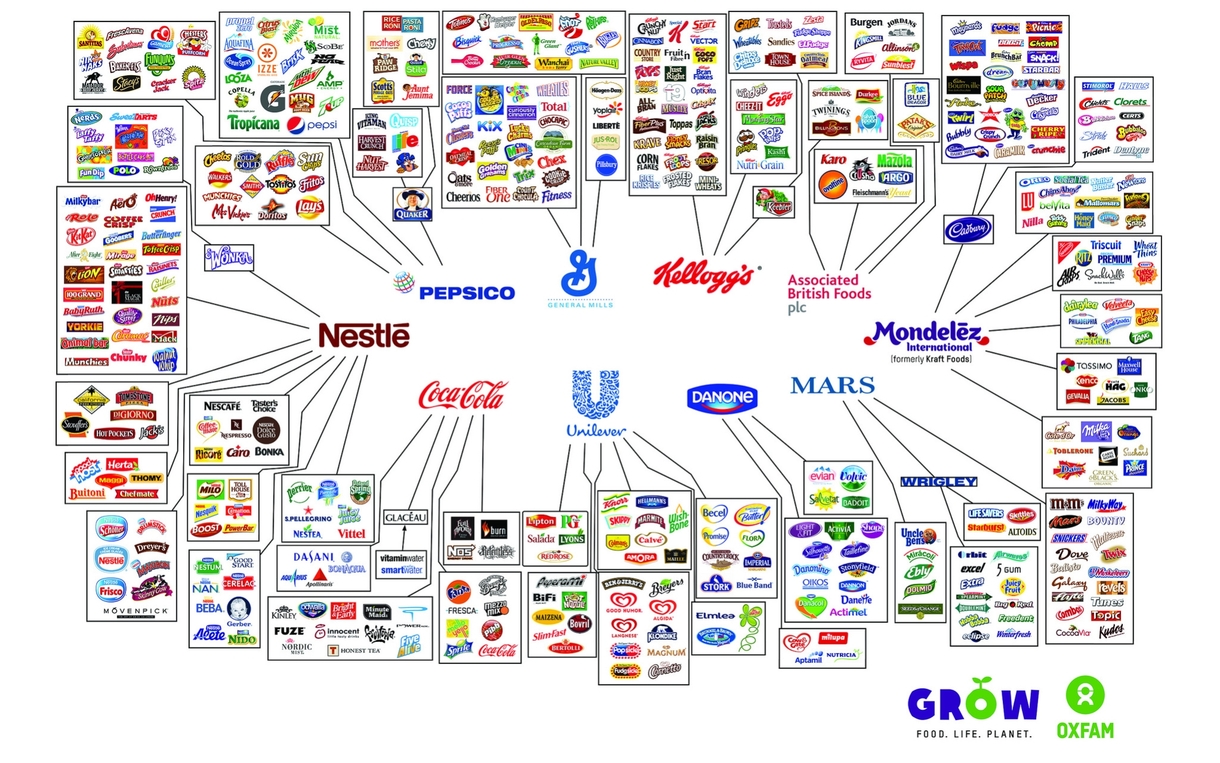
Oxfam’s infographic making the connections between big companies and some very familiar brands.


There is a large space for study in this area, but many challenges to doing so, not least because there is relatively little research funding or political will to tackle these issues directly. Many researchers and advocates remain “silo-ed”, focusing on a particular product, or discipline. This “zoomed-in” view stands in contrast to the intersectional ways in which a single large company might act, never mind an industry sector as a whole, or different industry sectors with overlapping interests, acting, for example, to diminish employment rights or environmental standards. We argue that there must be much greater scope for the convening of interdisciplinary research to explore these issues and offer potential solutions.

What about practice?

Aside from research, what about practice? There is also a need for the evidence that does exist to translate more effectively into policy. The challenge public health practitioners often face is that there is a strong political will for partnership and collaboration with the private sector at the local, national and global level, both through direct partnerships, and multilateral engagements. Such arrangements are, on the face of it, appealing. Access to the resources of the private sector is an obvious solution to the problem of increasingly restricted budgets for public health departments, particularly as these private resource pools are so large. Voluntary commitments between the public and private sectors are also conceptually appealing, echoing the type of multi-stakeholder engagement that public health advocates strive for.

However, in the UK, the evidence suggests such activities are often characterised by an abundance of words (in the form of voluntary pledges) and a paucity of deeds (in the form of meaningful changes to how harmful products are produced and marketed). Without regulatory safeguards, it appears unlikely that harmful product manufacturers will voluntarily act in ways that could reduce their own profit margins or lead to “stranded assets”. Instead, such actors will go to great lengths in framing themselves as part of the solution to a “complex” problem, while attempting to diminish the role they play in creating that problem, and rejecting what they termed “one size fits all” approaches such as policy best buys.

There is, however, progress on the research front. Research on specific harmful products and the industries that produce and market them continue apace, and commonalities in corporate strategies are being increasingly discussed. Networks of interested researchers in related topics are beginning to emerge. Perhaps most promisingly, it is becoming clear that commercial determinants are an important component of the broader determinants of health. As the “elephants in the room” become more widely perceived in issues such as alcohol harm, climate change and the opioid crisis, let us hope that, informed by a growing evidence base, the tools to properly address them will follow.


Photo attribution:
  1. "140/365 - Coke Shadow" by Adam Wyles via Flickr.com, copyright © 2011: https://www.flickr.com/photos/the-travelling-bum/5418900013 (CC BY-ND 2.0).
  2. Oxfam infographic courtesy of Oxfam, copyright © 2013: https://firstperson.oxfamamerica.org/2013/03/10-everyday-food-brands-and-the-few-giant-companies-that-own-them

Friday, 10 January 2020

Now that's what I call blogging 2019

Posted by Mark Welford, Fuse Communications Officer, Teesside University

Happy New Year – can I still say that or have we reached peak-greet when this obligatory salutation is no longer required in email, phone, or awkward fleeting corridor exchange?

This time of year is all about numbers: the 12 days of Christmas, the pounds you’ve gained (lbs) or lost (£), counting steps, units, the 31 days of Dry January, Veganuary, or the point at which you can grant yourself a run free day.

It therefore seems fitting that the Fuse blog has a countdown of its own.  Last year was a fine vintage for blog posts but you may not have had the opportunity to read all 40 of them.  To save you time we have had a look back and created a Top 5 Chart of the ‘bestsellers’.

So without further ado, here’s our chart toppers:

5. The provocatively titled Can cancer ever be a good thing? in which Fiona Menger (@slt_fi) revisits the writing of 'cancer columnist' John Diamond while working on a head-and-neck cancer research study with a focus on a phenomenon called post-traumatic growth.

Page views: 585.  Posted: 31 May 2019 

4. In What old crisp packets dig up Duika Burges Watson (@debedub) gets hands on to unpack the mystery of the humble crisp.  What is their continued value as ‘food’ and can we still enjoy them as a cultural icon without creating so much waste and damaging our health?

Page views: 640.  Posted: 22 February 2019

Still from the animation
3. Why do some women continue to smoke when they are pregnant?  Sue Jones (@Susan_E_Jones) shares research findings on overcoming barriers to implementing NICE guidance on supporting pregnant women to quit smoking.  The blog includes a short animation which was developed based on the findings.

Page views: 663.  Posted: 10 May 2019

2. If at first you don’t succeed, try, try, try & try again...  Suzanne Moffatt (@SuzanneMoffatt) reflects on 58 months of knock backs in her efforts to secure ‘the big grant’ because multiple failures before success is often untold and sometimes persistence pays off.

Page views: 686.  Posted: 15 February 2019

Courtesy of Children's Future Food Inquiry via twitter
1. "It’s time to act!  It’s time this country gave every child the right to food!"  Pamela Graham (@PamLGraham) begins her blog post with this powerful statement from Corey (pictured right), a 15-year-old Young Food Ambassador who sat on a stage in Westminster and bravely told an audience about her experiences of food insecurity.  With more than double the views of its nearest competitor, Young people taking a stand for their #Right2Food takes the crown as most popular blog post in 2019.

Page views: 1474.  Posted: 03 May 2019

So there you have it, the top five Fuse blog posts from 2019. Can we can do any better in 2020? If you fancy giving it a go, please find out what we are looking for and how to take part here.


P.s. perhaps we need to look more closely at what's going on in February and May!?


Image:
  1.  'Now That's What I Call Music! 1989' by brett jordan via Flickr. Attribution 2.0 Generic (CC BY 2.0): https://www.flickr.com/photos/x1brett/45056607035/

Friday, 6 September 2019

Health inequalities in rural and coastal areas

Last November we, a team of Fuse academics, were successful in winning competitive funding from Public Health England (PHE) and given just four months to complete a rapid evidence review investigating health inequalities in older populations in coastal and rural areas. The team from Northumbria University and led by myself, consisted of Professor Katie Brittain a Social Gerontologist and Dr Sonia Dalkin Co-lead of the Fuse Healthy Ageing Research Programme (HARP). Read a case study about the review on the HARP pages of the Fuse Website.

The short timescale and vast quantity of literature made this a challenging project from the outset but the evidence was urgently needed to provide recommendations for taking an asset-based approach to reducing inequalities and promoting productive healthy ageing in rural and coastal areas. We worked closely, consulting and collaborating, with stakeholders including PHE Centre leads, Knowledge and Libraries Service, the Health Inequalities Team and Director of Public Health representatives from rural and coastal authorities. Key partners were approached from the start to recommend grey literature and case studies.

One hundred and eleven studies later the report is finally published and launched by our colleagues at Public Health England with this great blog showing how we age is strongly influenced by our environment, including where we live.

Katie Haighton, Associate Professor in Public Health, Northumbria University


How we age is strongly influenced by our environment, including where we live


Helen Brock - Programme Manager for Adults & Older Adults at Public Health England
Dr Rashmi Shukla - Director, Midlands and East of England at Public Health England

The impact of where we live

The long-term trend in life expectancy in the UK has been upwards; however, our experience of getting older varies across the nation. Some people have good physical and mental health well into old age, whereas others become frail or ill.

How we age is strongly influenced by our environment, including where we live. For both men and women, there is a 19-year difference in healthy life expectancy between those living in the most and the least deprived areas of the country.

Whether or not we live in an urban setting can also make a difference. While many of our country’s rural and coastal areas are picturesque, they can present significant challenges to protecting the health of the local population.

Our new evidence review builds on the existing evidence and suggests that older people living in rural or coastal areas may experience specific inequalities in their physical and mental health.

With almost 10 million of us living in rural areas, and older people making up a growing number of this group, it is important to understand why these health inequalities exist so that we can help to tackle them.

The evidence review aims to provide a synthesis of the evidence to support leaders in local areas in their efforts to reduce health inequalities.

Why are there public health inequalities in rural and coastal areas?

There are several drivers of health inequalities in rural and coastal areas.

One significant factor is social exclusion and isolation. Research suggests that loneliness can increase the risk of premature death by 30%.

Rural and coastal areas can face infrastructure challenges, with many villages and small towns lacking frequent and reliable public transport and high-speed internet. Having sufficient numbers of healthcare workers and carers in certain areas is an additional problem.

However, living in a rural or coastal area also has benefits. Rural places often have a strong sense of community, easier access to green space and lower crime rates than urban areas. ONS figures indicate that a higher proportion of people living in rural areas feel a sense of belonging and safety in their neighbourhood compared to people living in urban areas. Coastal environments may also provide benefits, through increased opportunities for physical activity as well as the restorative and stress-reducing impact of blue space (water).

What can we do to reduce these inequalities?

Local government and NHS partners, alongside the voluntary and community sectors, play a key role in taking action to improve the health and wellbeing of their populations.

PHE and NICE recognise that local interventions which bring communities together are some of the most valuable in addressing rural public health challenges.

Good social relationships and engagement in community life are necessary for good mental health and can help people become more resilient. By providing and maintaining community areas, green spaces and promoting public and community transport, councils can help to create a positive local environment and tackle social isolation.

Creating communities

Community activities such as lunch clubs can encourage older people to socialise and participate in community life. Bringing groups together in a village hall or other community space also provides the opportunity to reach older people with services, helping them to look after their wellbeing.

It is important to encourage social connections and contact for those in marginalised groups, who may be particularly affected by social exclusion. Involving older men who often find it harder than women to make friends later in life and may be reluctant to engage in community activities or social groups can also be a challenge.

Men’s Sheds is a programme that provides a place for older men in rural communities to participate in physical activities and projects such as gardening, woodwork and model-building. The initiative helps older men to meet, socialise and learn new skills, alleviating social isolation and creating a sense of purpose. With over 480 Sheds open in the UK, and more than 100 in development, it’s estimated that over 11,000 ‘Shedders’ are benefitting from Men’s Sheds across the country.

Promoting physical activity and making use of natural assets

There is potential for coastal and rural areas to use their natural assets to promote physical activity and reduce social isolation, for example, through volunteer-led walking groups or outdoor activities.

‘Stepping into Nature’ is a project led by Dorset Area of Outstanding Natural Beauty using Dorset’s natural and cultural landscape to provide activities and sensory-rich places for older people, including those with dementia and their carers. It seeks to increase physical and mental wellbeing, to reduce social isolation and loneliness, and to increase confidence and motivation for people to access the countryside.

Promoting and normalising physical activity as part of the experience of daily living for older people living in sheltered housing or residential care settings can result in further benefits.

In rural Norfolk, Active Norfolk – a partnership of organisations working to encourage people to participate in sport and physical activity – trialled Mobile Me, a physical activity programme for older people funded through Sport England.

For ten weeks, Mobile Me visited 65 sheltered housing and residential care homes to encourage them to get moving through games such as bowls and table tennis. The programme helped to reduce older peoples’ sedentary behaviour and fear of falling as well as increasing overall wellbeing.

Harnessing technology

Technology can be useful for providing care services to older people in the country’s most remote areas.

NHS Highland recently trialled video conferencing in remote care homes to allow doctors to speak to dementia patients in a familiar setting without the need for extensive travel.

The technology enabled care home residents to be assessed and reviewed more quickly and monitored more regularly. Video conferencing also helped care home staff to access specialist knowledge and advice more easily, helping them to feel more confident and actively involved in their residents’ care.

However, it’s important to find a balance between remote and direct face-to-face contact that many older people value.

Supporting local areas

With advances in healthcare and a greater understanding of how healthy lifestyles, supportive communities and environments can help us to live longer, enabling older people to lead fulfilling lives for as long as possible is more important than ever.

Recognising the health inequalities faced by people in different areas of the country, including rural and coastal places, is a crucial step to ensuring that all older people have the opportunities and care relevant to their needs, no matter where they live.

PHE’s evidence review seeks to share what is known about these issues, so that through Locality Plans, local Health and Wellbeing Strategies and other mechanisms, local authorities and the NHS locally are supported to prioritise work to address the health inequalities that exist within and between coastal and rural areas.

To find out more you can read the full report: An evidence summary of health inequalities in older populations in coastal and rural areas. You can also read our rural health report produced with the Local Government Association: Health and wellbeing in rural areas, and our recent health inequalities report: Place-based approaches for reducing health inequalities.


Reproduced with thanks to Public Health England and Exposure: 
https://publichealthengland.exposure.co/health-inequalities-in-rural-and-coastal-areas


Images:

Friday, 22 February 2019

What old crisp packets dig up

Posted by Duika Burges Watson, Lecturer at Newcastle University based in the Institute of Health and Society

It appears that I’m an academic litter picker. I like to have hands on experience of topics I write and teach about. Inspired by the new module I’m leading on Global Health in the Anthropocene, and in particular a lecture on plastic pollution and health, I went litter picking. The Anthropocene is a new (ish) term to public health - considered to mark a turning point where “changes to the structure and function of the Earth's natural systems represent a growing threat to human health”[1].


I certainly found a good site for it. In less than 10 minutes from a 2 metre square area, I collected 69 crisp packets amongst the plastic bags and other items. I was intrigued, so I took them home and washed, sorted and ‘analysed’ them. Some use by dates were no longer visible, but of those I could read, 49 of 69 were Walkers crisp packets (parent company Pepsico) with use by dates from between 1996 to 2014. I went back the following weekend to the same site, dug a little deeper, and collected a further 89 crisp packets of which 51 were Walkers. The oldest packet was a Geordie company, Tudor (more on them later), with the use by date 10th January 1992.

Walkers bought out Newcastle
based company Tudor in 1987
There is a lot to be explored on crisp packets including use by dates, ingredients, health labelling and advertising.  Many even listed the time of production, often very late at night. For example, a Walkers smokey bacon use by 23rd June 2012 was made at 10.48pm. The irony of time was not lost on me in terms of the Anthopocene: we can know the exact minute the crisps were made (but not the date), they take about 2 minutes to eat and result in decades of rubbish.

Walkers began using foil bags in 1993 with plastic coatings. Yet people have been finding perfectly preserved plastic Walkers bags from the 80s in litter picking efforts. In September 2018, no doubt inspired by David Attenborough’s shocking profile of marine plastics in the series ‘Blue Planet’, the public started sending their bags back to Walkers. Royal Mail protested that people had to put them in envelopes first.

Walkers took up the challenge created by public protests. They have promised to find alternative solutions to the pesky bags by 2025, and until then have set up a recycling deal with company terracycle across the UK. There are collection points all over the UK.

But it wasn’t just the plastic pollution that concerned me. Crisp consumption is one of those things that people in public health worry about because these are classic examples of the high fat, salt, sugar foods where over-consumption can play havoc with our health. But we’ve been eating crisps for a long time, long before epidemics of obesity, and they have a cultural history to boot. A Brief History of Crisps (2012), suggests they were a British invention that turned up in the English edition of The Housekeeper’s Manual in 1829. The ‘modern’ industrial crisp really found its crunch after the first World War when the Smith’s company enrolled grocers and butchers across the UK to offer crudely made crisps (made in house with lots of fatty smells apparently). In the 1950s it all changed, technologies were imported from the USA and production scaled up. The first company to employ this technology was the previously mentioned Tudor. In 1967 they introduced the first ‘salt and vinegar’ chips to the UK market from their base in Sandyford, Newcastle. Tudor’s 1970s-80s commercials have a distinctly Geordie feel (note the ‘Dunstan Rocket’ in the first ad below – an iconic piece of architecture!). As a more recent immigrant to Newcastle, I had always wondered why every time I got served a sandwich it was with crisps – now I know – they have a proud Northern heritage. Walkers bought out the Tudor company in 1987.


In my ‘analysis’ of crisps, I have been wondering about their continued value as ‘food’. Is there a way we can still enjoy them as cultural icon without creating so much waste and without damaging our health? The one thing I’ve learned about food is that preferences change, tastes change – is the solution to learn to like something else? Last year the Walker’s crisp factory in Peterlee was bought by Heather Mills for her vegan food empire VBites. She is now looking to take over an abandoned factory in Northumberland. If successful, this would be the largest vegan food producing factory in the UK.

One of the sessions I’ll be leading in the Anthropocene module is on food – from source to senses. There is growing international concern about what kind of diet we ‘can’ eat if we want to protect and preserve the planet in the face of the Anthropocene and global climate change. The Eat Lancet Commission produced some rather controversial findings in January that offers their vision of what a ‘sustainable’ diet might involve[2]. Not unexpectedly, it involves cutting back on meat and eating more veg. Most agree that urgent change is required to farming systems and diet, but getting exactly the right mix of dietary components has created tensions. The Sustainable Food Trust, for example, points out that some land is not suitable for vegetable production and that grazing is the best option in some places. So, no simple solutions, and more debate to be had.

Another area of interest that will be covered in the course is new understanding of what it is that makes food ‘delicious’, how we ‘sense’ food, and what promotes ‘satiety’ or feelings of fullness. The ‘flavour’ of food involves a fusion of sensory inputs: smell, taste, colour, sound, trigeminal nerve stimulation[3], and our enjoyment of it is mediated by our culture, our history, our environment. Crisps are not difficult to figure out from a sensory perspective, like many other ‘fast’ foods, they are particularly heavy on salt, fat and sugar: what I would call ‘tongue’ foods. More complex ‘flavours’, particularly those involving smell, have been found to better trigger satiety – that’s why you can keep eating crisps without feeling full. But why do we like these ‘tongue foods’ so much? It’s complex; you’d have to join the course to explore this question.

So what about crisps then? Can we as public health researchers do more with ‘flavour’ to inspire different kinds of food choices? Could we encourage archaeological litter picking to engage the younger folk given so many foods are in single use plastics? People seem willing to give up plastic bags - could we encourage people to stop eating crisps until 2025 when they are in recyclable bags?  I don’t know the answer to these questions, but it will require more than litter picking to know. Food choice is academically interesting from a flavour point of view.  The crisp example throws up other challenges for public health - the Anthropocene creates interesting ethical questions about how we eat ‘beyond’ questions of the food itself. In March we will be running flavour masterclasses for the public where we get hands on to unpack the mystery of the humble crisp, why we like them, and what we should do about it! These questions are also being addressed by the Altered Eating Research Network (AERN) at Newcastle University, a new interdisciplinary collaboration that considers how our relationships with food are diverse, sometimes problematic, and how they intersect with the changing environments we live in and co-create. Keep an eye on the AERN website for details of flavour masterclasses and other upcoming events.


References:
  1. Whitmee, S., Haines, A., Beyrer, C., Boltz, F., Capon, A.G., de Souza Dias, B.F., Ezeh, A., Frumkin, H., Gong, P., Head, P. and Horton, R., 2015. Safeguarding human health in the Anthropocene epoch: report of The Rockefeller Foundation–Lancet Commission on planetary health. The Lancet, 386(10007), pp.1973-2028.
  2. Food in the Anthropocene: the EAT–Lancet Commission on healthy diets from sustainable food systems (Walter Willett et al.). https://www.thelancet.com/commissions/EAT
  3. The trigeminal nerve is responsible for sensations in the face and for motor control of biting and chewing. It is how we experience the ‘spiciness’ of food, the ‘coolness’ of mint or the ‘fizziness’ of carbonated drinks. Spence, C., Smith, B. and Auvray, M., 2015. Confusing tastes and flavours. Perception and its modalities, pp.247-274.

Friday, 18 January 2019

Sustainable diets must be a public health priority

Guest post by Tom Embury, Public Affairs Officer at the British Dietetic Association

The publication this week of the EAT-Lancet Commission report on healthy diets from sustainable food systems makes it clear that our health and the planets are inextricably linked. As such, improving the sustainability of our diets must be a public health priority. This is something that the British Dietetic Association (BDA) has recognised for some time, and we have recently launched our One Blue Dot toolkit to help dietitians, as key public health actors, deliver on that priority.
Pale Blue Dot - photograph of Earth taken by the Voyager 1 space probe

One Blue dot – the only home we have

The BDA chose to name our Environmentally Sustainable Diets Toolkit 'One Blue Dot' for the famous image taken by Voyager 1. It is of the Earth from a distance over 3.5 billion miles, and in it our planet appears as a pale blue speck, less than one pixel wide, in the vast darkness of space. The astronomer Carl Sagan said of the image:
"To my mind, there is perhaps no better demonstration of the folly of human conceits than this distant image of our tiny world. To me, it underscores our responsibility to deal more kindly and compassionately with one another and to preserve and cherish that pale blue dot, the only home we've ever known"
Our eating habits are having an adverse impact on the environment and we are endangering the future of the planet – up to 30% of greenhouse gas emissions (GHGe) come from the production of food – and it’s the only one we’ve got. We also know that our current food system is not providing for human health either. Over 800 million people worldwide still do not have enough to eat, while nearly two billion are now overweight or obese.

We believe that eating more sustainably can be a win-win – good for us and good for the planet. It’s also the responsible thing to do. As Ursula Arens, one of the dietetic experts who helped us write the toolkit put it: "Eat healthily for you, eat sustainably for your grandchildren".

Practical help

The BDA’s 2017 policy statement on sustainable diets emphasised the central role we believe dietitians need to play, translating the complex science of environmental sustainability as it relates to food into practical dietary advice for patients and the public at large. The statement was well received by our members but they also made it clear that we needed to do more to support them to make this policy a reality. This is a big topic and can be daunting, not just for the public but for healthcare professionals as well. That is why the idea for a toolkit was born, designed to provide a summary of the key evidence, some practical tools and links for more advice.

So far, we’ve developed a comprehensive reference guide which looks in detail at the key elements of a sustainable diet, outlines the evidence on the impact of certain foods on areas like GHGe, land use and water use. We’ve included practical meal swaps, which highlight the relatively easy ways in which common meals can be made both more nutritious and have less impact on the environment. We then include detailed information on specific nutritional considerations, in particular those nutrients that may be lacking if red meat is reduced and dairy intake moderated, such as calcium, iron and iodine.

Key recommendations

The main two recommendations within the toolkit are to reduce red and processed meat (RPM), and to moderate dairy intake. These two actions will lead to the biggest reduction in GHGe in particular, and we know that there are positive health benefits from reducing RPM and shifting away from certain dairy sources such as cheese which have high environmental impact and are also typically high in saturated fat and salt.

Other considerations, like sourcing sustainable fish, eating more fruit and veg, consuming locally produced food and reducing food waste will also make an important contribution to public health. No one action will be enough on its own. It becomes clear once you delve into the science and evidence on sustainable diets just how complex this issue is, and that even seemingly innocuous differences in the way (or indeed where) food is produced makes a big difference to its environmental impact.

What next

This toolkit is not finished; it remains a live document which we hope to add to and update over the coming months and years. While the first part is focused on dietitians themselves, we know that the next phase will be to make this a public health message. We’ve already got some more materials planned, and been delighted with all the questions and suggestions from dietitians and others about what we could look to include in future iterations. If you have any further suggestions, including on how this message can be translated for public health audiences, they’re very welcome!

We know that changing our diets alone will not save the planet - we also need to make big changes in transport, energy, waste and many more besides. However, as the experts in diet and health, it’s the area in which we have the expertise to make the biggest difference.

You can find out more about the One Blue Dot toolkit on the BDA website: www.bda.uk.com/onebluedot


Image: 'Carl-Sagan-Pale-Blue-Dot' by Owen Iverson via Flickr.com, copyright © 2006: https://www.flickr.com/photos/oweniverson/4671868416

Thursday, 11 October 2018

Safe negotiation of neighbourhoods should be non-negotiable

Posted by Lesley Haley, AskFuse Research Associate, Teesside University

It’s World Sight Day today. This annual event highlights a range of issues surrounding visual impairment, and the day is linked to the World Health Organisation’s Global Action Plan on sight health. Today is also ‘bin collection day’ where I live, when wheelie bins and recycling boxes migrate from their backyards and gardens to clutter our pavements. It’s a weekly event that occurs in every village, town and city. It’s also a weekly hazard to be negotiated and endured by thousands of our neighbours. Especially those with visual impairment.


It’s not an obvious connection - World Sight Day and ‘bin day’. And frankly it was a connection that didn’t occur to me either, until I went to the ‘Negotiating Neighbourhoods’ event earlier this year, run by Fuse, the Royal National Institute for the Blind (RNIB), and the Sight Service. The event examined getting around our neighbourhoods, and gave feedback on Newcastle City Council/RNIB’s Newcastle Street Charter. The Charter describes the barriers faced by people with sight loss or mobility issues, and the actions and commitments needed and agreed to reduce these barriers (Newcastle City Council 2017). At the event, policy makers, researchers and people who are experts by experience shared their opinions and insights into safely getting around the built environment of our streets, local neighbourhoods and public spaces. This included feedback on the proliferation of street furniture such as advertising boards, lamp posts, bollards, street signs, bushes, cars parked on pavements, and wheelie bins (Newcastle City Council 2017).

Sight loss affected more than two million people in the UK in 2015, with one in five people aged over 75 living with some form of sight loss, including macular degeneration (RNIB 2018c). So for a significant number of our neighbours with mobility or sight issues, street ‘clutter’ is an increasingly frustrating and problematic issue.

It’s a public health issue too. Street furniture is impacting the health and wellbeing of people with mobility or sight loss issues. The built environment, and the street furniture cluttering it, “is restricting physical activity participation for people with sight loss” (Phoenix et al, 2015, p.127). Sight loss is associated with reduced physical activity, and the adverse social, economic and psychological effects of sight loss are being more widely recognised, including loneliness and isolation (Sim and Mackie 2015). Even the Design Council (2017) reported that ‘hostile’ public spaces could increase people’s risk of disease as it contributed to sedentary lifestyles and social isolation.

Can the humble wheelie bin really be classed as ‘hostile’? The experts by experience at the ‘Negotiating Neighbourhoods’ event have bitter experiences to prove it. Research in public health would also back them up. In 2015, 95 per cent of blind and partially sighted people reported that, in the previous three months, they had collided with a street obstacle, and a third said they had injured themselves while walking around their local area (RNIB 2015a). Many participants in the research carried out by Phoenix et al (2015) talked about injuries and also damage to their self-esteem when outdoors, because of a poorly designed built environment. Street ‘clutter’ is literally having a big impact on our neighbours as they try to navigate our streets.

At the ‘Negotiating Neighbourhoods’ event, the audience was asked “What changes could make the situation better?” Well, from a personal perspective, I have tried to stop parking my car on the pavement, have changed where I place my wheelie bin on ‘bin day’, and have tried to write (this) my first ever blog to raise awareness of the issue.

So what are your thoughts? Could you make one small change in your neighbourhood to make everybody’s everyday journeys just a little bit safer?

Surely, on World Sight day in 2018, being able to safely negotiate our neighbourhoods, should not be negotiable?

#WorldSightDay


References:

Design Council (2017) Creating Health Places Available at: https://www.designcouncil.org.uk/what-we-do/built-environment/creating-healthy-places (Accessed: 23.08.2018).

Newcastle City Council (2017) Newcastle Street Charter. Newcastle: Newcastle City Council. Available at: https://www.newcastle.gov.uk/sites/default/files/wwwfileroot/your-council-and-democracy/equality-diversity-and-citizenship/newcastle_street_charter_final.pdf (Accessed on: 23.08.2018)

Phoenix, C. Griffin, M. Smith, B. (2015) ‘Physical activity among older people with sight loss: a qualitative research study to inform policy and practice environment,’ Public Health 129 (2) pp. 124-130

Royal National Institute of Blind People (RNIB) (2015a): Daily assault course of street obstacles and dangerous crossings injuring blind people. Available at: http://www.rnib.org.uk/daily-assault-course-street-obstacles-and-dangerous-crossings-injuring-blind-people. (Accessed 26.04.2018)

Royal National Institute of Blind People (2018c) Key information and statistics on sight loss in the UK. Available at: https://www.rnib.org.uk/professionals/knowledge-and-research-hub/key-information-and-statistics (Accessed: 01.06.2018).

Sim F, and Mackie, P (2015) ‘Sight – the most critical sense for public health?’ Public Health. 129 (2) pp. 89–90. Available at: http://dx.doi.org/10.1016/j.puhe.2015.01.009. (Accessed: 22/08/2018)

World Health Organisation (2009) Global Action Plan for the Prevention of Avoidable Blindness and Visual Impairment 2009-2013. Available at: https://www.iapb.org/resources/who-action-plan-for-the-prevention-of-avoidable-blindness-and-visual-impairment-2009-2013/ (Accessed: 23.8.2018)