Showing posts with label Fuseblog. Show all posts

Friday, 24 July 2026

Sparking curiosity with Twinkle, Twinkle Arti

Posted by Nicola Aldridge, Research Associate, and Cassey Muir, Research Associate / Co-lead of the Fuse Early Life and Adolescence Research Cluster, both from Newcastle University

We were recently given the exciting opportunity to showcase the Twinkle, Twinkle Arti project at Discover Festival, a free, one-day festival organised by Newcastle University that brings together families, communities, and researchers through interactive activities and inspiring ideas.

Nicola and Cassey
Discover Festival is designed to spark curiosity, build connections, and encourage people of all ages to explore new ideas. Each year, the university creates a packed programme of family-friendly events, and this year, we were delighted to be part of it as members of the Twinkle, Twinkle Arti research team.


Bringing Arti's story to life

Throughout the day, we invited families to step into Arti’s world through the Twinkle, Twinkle Arti storybook. Developed by Fuse researchers at Newcastle University, with funding from the NIHR School for Public Health Research, the book was created and co-produced with families to support the wellbeing of children experiencing challenging family circumstances, such as drug and alcohol use. While these experiences inspired the story, its themes of feelings, belonging, resilience, and hope resonate with all children.

Visitors to our stall in the Great North Museum had the chance to watch a CBeebies Bedtime Stories style video of it being read aloud by the author. They could also explore puppets and original illustrations from the book, and view artwork created by primary school-aged children who had participated in a pilot study of classroom lessons based on the story.

Families were also able to take home a free copy of the storybook, along with a link to the online read-aloud video and a set of simple conversation prompts designed to encourage creativity, emotional expression, and meaningful family time at home. We handed out nearly 80 copies on the day!


Conversations that matter


Beyond engaging with families, it was equally exciting to see the conversations that the project sparked among professionals attending the festival. We spoke with people from a range of sectors, including teaching, school governance, clinical psychology, and general practice with social prescribing links. Their curiosity about the project and enthusiasm for its potential applications highlighted the broad relevance of Twinkle, Twinkle Arti and the importance of creating accessible resources that support children's emotional and social wellbeing.

One particularly rewarding conversation was with a family who shared their personal experience of the impact of alcohol on family life and how they might be able to use the book. Hearing their reflections was both moving and affirming. It served as a powerful reminder of why the project began in the first place and reinforced the continued need for resources that help children navigate difficult experiences. Moments like these bring the research to life, reminding us that behind every study, storybook, and activity are real families whose experiences matter and whose voices continue to shape our work.

Creating a community star mural

Another highlight of the day was our evolving community star mural. We invited children to create their own star by drawing, colouring, or writing ideas about what they or Arti could do when they felt sad or worried, with 114 stars being created on the day. It was wonderful to see children enthusiastically embracing the activity, and even more special to watch parents, carers and grandparents join in too, talking to their children about the messages in the book. The excitement on their faces as they added their stars to the mural was a lovely reminder of the power of creativity to bring people together.


A colourful celebration of hope and resilience

By the end of the day, the mural had grown into a colourful display of hope, kindness, and imagination. It was a privilege to share the Twinkle, Twinkle Arti project with so many families and to see first-hand how children connected with Arti’s story and messages of hope, resilience and belonging. Events like Discover Festival provide a fantastic opportunity to bring research into the community, and we were grateful to be part of such an inspiring day.


Find out more about Twinkle, Twinkle Arti

Friday, 3 February 2023

Welcome to your Wrapped, Fuse Open Science Blog

Posted by Mark Welford, Fuse Communications Manager, Teesside University

If you use Spotify (other streaming platforms are available) then you will no doubt have received your own personalised ‘Wrapped 2022’. A helpful (if somewhat creepy!) summary of your annual listening habits in one eye-searing psychedelically coloured package. Apparently, my most listened to song in 2022 was Baby Shark - I have a 3 year old.

Around this time of year I do a similar (if slightly less garish) job of pulling together the top 5 Fuse blog posts from the previous year.

But this year is a little different.

It’s award season and this year the blogs listed below were in the running for a coveted gong. Not at the GRAMMYs, Oscars, Emmys, BAFTAs, or BRITs but the (much more prestigious) first ever Fuse Awards!

Earlier this week (30 January), the post with the most views was crowned best blog of 2022 with the author awarded a shiny trophy at our ceremony in Durham *link may contain SPOILERS*.

So without further ado, here is the full list of the runners and writers in reverse order, culminating with the post that received the most views...


Posted by Tim Townshend, Professor of Urban Design for Health, Newcastle University


“...primarily designing around the needs of the private car - rather than humans - has been a disaster.”

Prof Townshend explores how we can plan for a healthier future by intervening in the built environment. From the 'toxic high street', to the green (and blue) spaces in our cities that encourage physical activity and social interaction, positive for physical health and mental wellbeing.

Posted: 13 May 2022


4. Science, and the art of communication


Posted by Louis Goffe, Research Associate, NIHR Policy Research Unit in Behavioural Science

"...building the evidence-base isn’t enough, we all need to work on at least one aspect of the artistic craft of research promotion."

COVID19 has brought into sharp focus that health promotion takes more than good science, there is an art to the delivery. In this post, Louis explores vaccine misinformation, the infodemic, involving the public and advocacy.

Posted: 28 January 2022


3. What support do children and young people actually want when their parents use drugs and alcohol?

Posted by Cassey Muir, Fuse & NIHR School for Public health Research (SPHR) funded PhD Researcher from Newcastle University and Kira Terry, Lived Experience Expert.

“No-one has ever asked me about how I feel in any of this.”

Fuse PhD student Cassey shares her research aiming to understand the experiences, perceived impacts and coping strategies of young people whose parents use substances. The post ends with Kira’s thoughts about contributing to the project as a Lived Experience Research Advisor.

Posted: 9 December 2022


2. Is a picture truly worth a thousand words?


Posted by Emma Adams, NIHR ARC NENC Mental Health Fellow at Newcastle University, and Experts by Experience from Fulfilling Lives Newcastle Gateshead & #HealthNow Newcastle

Find out how Emma and her Experts by Experience worked together to develop striking visuals to share what they had learned from a study exploring access to community based mental health and substance use support during the COVID-19 pandemic for individuals experiencing homelessness and those providing support.

Posted: 25 March 2022


And in at number one our award winner...


1. Universal Credit experiences and research co-production

Posted by David Black, Fuse Public Partner and Expert by Experience. Introduction by Mandy Cheetham, Research Fellow in the Applied Research Collaboration North East and North Cumbria (ARC NENC), Northumbria University

“In the past I'd always found the process of seeking
 help from the unemployment benefit system to be
 relatively easy, but Universal Credit was a disaster
 for me.”

Ever wondered how you could help shape research as a member of the public? In this Fuse blog, David shares his personal experiences of claiming benefits and how this has informed research to assess the impact of Universal Credit.

Posted: 11 March 2022


Below is a photo of David (second from the right) along with the other Fuse Award winners. Congratulations to all! 
 

Catch up with all the award winners using #FuseAwards23 or see the event programme on the Fuse website for all those shortlisted.

Join Fuse to be in with a shout of winning a coveted Fuse Award in 2024!

Friday, 20 December 2019

Happy New Year from everyone at Fuse

We would like to wish all our readers and contributors a very Happy New Year - why not make a resolution to blog in 2020 and send us your posts?


Image (adapted with thanks):
The original uploader was Rsabbatini at English Wikipedia. [CC BY 4.0], via Wikimedia Commons.

Thursday, 1 August 2019

School's out for summer

The blog will be back, refreshed and raring to go, on Friday 6th September 2019.

To be the first to hear about new posts in the autumn, follow @fuse_online.


Just because the blog is on holiday, doesn't mean you should be too. We always need your posts.

Please continue to send your 600-800 word posts to m.welford@tees.ac.uk and they will be published just as soon as the blog is back in the office.

Here's how to take part and why you should blog.


Image: Ross Halfin [CC BY 3.0], via Wikimedia Commons

Friday, 10 August 2018

Blogiday

The blog is on holiday over August but we still need your 500-700 word blog posts so that we can start September in style.

Please email them to Mark Welford (m.welford@tees.ac.uk).

Here's how to take part and why you should blog.


Image: "'Gone fishing'" by Stephen McCowage via Flickr.com, copyright © 2015: https://www.flickr.com/photos/130768092@N05/16139476647

Friday, 22 December 2017

Merry Christmas from Fuse

We would like to wish all of our readers and contributors a very happy festive season. We will return in the New Year - why not make a resolution to blog in 2018 and send us your posts?


Friday, 4 August 2017

Summer is coming

The blog was there at the very beginning, before it became ‘cool’. It’s even read all seven volumes of the book series A Song of Ice and Fire. It’s a self-confessed Game of Thrones geek. But watching the show isn’t enough, so it’s off on an adventure holiday to follow in the footsteps (or flight) of white walkers, wildlings and dragons.

First to Dubrovnik, Croatia and Mdina, Malta to explore King’s Landing, the biggest city in fictional Westeros (with a quick stop off at Lokrum Island - 4kms from Dubrovnik as the dragon flies - to visit the ancient port of Qarth).

Then on to Essaouira, Morocco - Gulf of Grief at Slaver’s Bay (you know, where Daenerys Targaryen - the dragon lady - freed an army of slaves to help her invade Westeros),

Next stop Castle Ward in Northern Ireland - the historic farmyard is the location of Winterfell, the seat of the ruler of the North and the traditional home of House Stark.

Finally arriving in Iceland to see the magnificent Vatnajökull Glacier, the Nordic island nation's largest and most voluminous ice cap to get the full 'North of the Wall' experience.

The blog will return in September.  If you are inspired to write for the Fuse blog in the meantime, please send your posts to m.welford@tees.ac.uk.  More here about who we are and what we're looking for.


Image courtesy of "https://kristina-finds.tumblr.com" via pinterest.co.uk: https://www.pinterest.co.uk/pin/314055773985524526/ 

Friday, 16 June 2017

400 not out

Posted by Mark Welford, Fuse Communications Officer, Teesside University

This is the 400th post on the Fuse blog and in the spirit of using arbitrary milestones as worthy of note, I thought it was time for some (blog) post-match analysis.

Brian Lara who holds the record for the highest individual score in a Test innings
 after scoring 400 not out against England playing for the West Indies in 2004.

Over the last five-and-half-years, we have had 399 posts, written by 116 authors, and more than 395,000 page views. There has also been a lot of #fuseblog twittering, coffee room chats, and (you surely didn’t think it could be any other way?) blog-related committee discussions.

We even won a UK blog award last year (not that we mention it much!) and were shortlisted in two award categories earlier this year. But shortlisted isn’t winning and on the train back from those awards in April, I contemplated what we could do to improve the blog or - dare I say it - if the blog had run its course, done its job, had its time.

In academia, more than any sector that I’ve worked in (and I’ve worked in a few) you are encouraged to STOP, put down your machete, and climb above the canopy to see if the direction that you’re heading in is getting you to where you want to go. Academics will quite happily interrupt you in mid-flow to ask: ‘so what?’, ‘what impact are we making?’, ‘who are we reaching?’.

Since taking the wheel from blog founder Jean Adams I have enjoyed myself. I have learnt a bit about community and herding cats, I have made some real-life and virtual friends. I have written the odd post, although admittedly not as many as Jean, and I have enjoyed the discipline of having to write 500 -700 words for public consumption (usually when I can’t find anyone else to post).

I think the other writers have enjoyed it too, once they’d got past their initial reservations.

From all of this, I surmise that people value both reading and contributing to the blog. But I don’t have a clear view of who you are. You also seem to be discussing it in some forums. But you aren’t leaving comments on the blog itself. We have had a grand total of 480 comments posted, of which 234 were spam. So that’s 246 sensible comments. From 395,000 views.

So, I would now like to invite you to use the comment box below to post your thoughts on the blog so far. What sort of things do you like? What stuff would you rather we skipped? What would you like more of? Who are you? You don’t need to tell everyone your name, but what got you here? Why are you interested in this blog? What would make you more interested?

It isn’t that tricky:
  1. Depending on how you got to this page, you either start typing straight in the white box, or you need to click the orange link “No comments” at the bottom of the post to get the white box to appear.
  2. After writing your thoughts, click on the “Comment as” pull-down. If you know what any of the branded options mean, select one. If not, just chose “Name/URL” or “Anonymous”. Then do the ‘prove you’re not a robot’ thing and you’re done.
I’ll get an email. If you’re not flogging Viagra or using a barrage of abuse, I’ll approve your comment and you’ll be published.

And, just before you get to work: thanks. Thanks to the writers, the readers, the reviewers, the commenters, the retweeters, and the lurkers. See you all again at the next arbitrary milestone.

Thursday, 8 December 2016

The one where we ask you to vote...

Posted by Mark Welford, Fuse Communications Officer, Teesside University

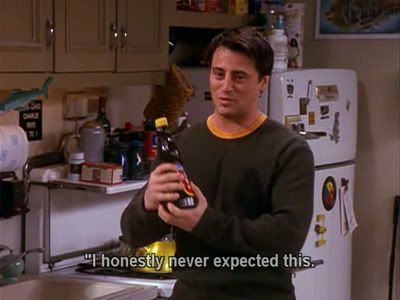
This post is a little like those episodes of Friends in which one of the cast says: “Do you remember the time when [cue wobbly vertical lines]…” and the rest of the 22-23mins is made up of clips from previous shows.

Courtesy of photobucket.com/user/xuyu79/media/blog/s7/s07e18 / Warner Bros.
Let me take you back to a post on Thursday 7 January in which we made a shameless plea to ask for your votes in the UK Blog Awards 2016.  In that post we told you how the blog’s 334 posts had received just over 167,000 views.  Eleven months on and 40 additional blog posts later, the page views have risen to nearly 325,000 - a fantastic achievement I hope you’ll agree!  I discovered this when an ambitious academic asked me if I could provide them with some killer stats about the blog to support their bid for a promotion. The power this blog wields!

This year we have had posts covering everything from Dry January, the ‘nanny state’, animation, Jamie Oliver's school dinner and sugar tax campaigns, to ‘fat shaming’, indigenous Australians, Baywatch, energy drinks, Grandmothers, e-cigarettes, and 'legal highs'.

Five years on from the blog's inception and we have reached the point where people are actively approaching us and generously giving up their time to write posts, rather than having to send in our crack team (the fear inducing) ‘blog working group’ to chase, harry and cajole*.  Could this - and the increased viewing figures - have something to do with the little matter of winning a UK Blog Award last year?  I'd like to think so.

And now, we come to the crux of this post.  It is you, our dear readers and contributors that make the blog a success and it is thanks to you that we won a national award.  So we've decided to go for it again in the UK Blog Awards 2017!

Here comes the shameless plug

The blog has again been entered into two categories: 'Health and Social Care', and 'Education'.  You can vote for us in either category but of course we would really appreciate it if you voted for us in both.

Vote now by following this link

The above link takes you to our profile page on the UK Blog Awards website in which we have chosen two of our favourite posts from 2016:
Voting closes at 10am on Monday 19 December.  One vote per email address.

Hopefully it won't be a maple syrup bottle we'll be holding aloft in celebration come April 2017!

Thank you for your support.

*We do still need your posts!  Please contact me (m.welford@tees.ac.uk) if you would like to write a post for the Fuse blog. Here’s how to take part.

Thursday, 5 May 2016

You are now reading the award winning Fuse blog

Posted by Mark Welford and Emma Dorée, Fuse Communications team, Teesside University

You may recall that in January we used this platform to make a shameless plea inviting readers to vote for the Fuse blog in the UK Blog Awards and a month later you may have heard the news that we had been shortlisted in the categories of Education, and Health and Social Care.

Well… (drum roll) …. We only went and won!  That’s right, you are now reading an award winning blog – fancy contributing?!


Last Friday (29 April), we took the Fuse blog monster on a road trip to the big smoke, that there London, where the streets are paved with, well… paving stones to attend the awards ceremony, in eager anticipation.

The awards ceremony was held at the swanky Park Plaza Hotel in Westminster, London and it is safe to say that it more than exceeded our expectations.  The invitation advised that we ‘dress to impress’ but some of the attire on show would have made Lady Gaga and James Bond feel underdressed.

We were welcomed to the event, themed on Roald Dahl’s The BFG with free drinks and canapes (not to mention all the frogsquinkers, buzzwangles, and bugwhiffles we could handle), while we networked with other bloggers and even the Big Friendly Giant himself. The most exciting part however was still to come: the awards ceremony itself.

Tech Reporter Kate Russell (you might know her from BBC show Click) hosted the evening and provided a great commentary, making every blogger there feel very welcome.  Her quirky comments worked to relax the atmosphere and ease frayed nerves.

Each category had two blogs that were highly commended by the judges, followed by an overall winner.  As the Education category came up on screen, we watched in anticipation - the Fuse Blog wasn't announced as Highly Commended - oh well there was still the other category - but then to our surprise as the overall winner of the category!

Having let out a little scream of excitement (and possibly the odd expletive), we went up onto the stage to collect our trophy – a rather lethal looking glass affair - and have our photograph taken with Kate and the judges. It was a surreal moment and very much unexpected with a dash of relief as there were no speeches.

Obligatory award selfie
Once the presentations were over, we were invited to have our photograph taken with the other winners. After which it was time to celebrate properly with more free prosecco (consumed in moderation), posh food and of course a little bit of disco dancing.

This was a great event to be a part of and the venue made it feel even more special and exciting. As the night drew to a close and we collected our certificate and goody bags (with complementary BFG themed dream jars), the fact that we had actually come away as winners had not yet sunk in - it still hasn't now to be honest!

Dream jars - also good for storing ginger biscuits
  
 This is a fantastic achievement for Fuse, as more than two thousands blogs were submitted. There were more than seventy eight thousand votes in total and it is great to think that the Fuse Blog has such a loyal following and a lot of support.

A special thank you must go to Jean Adams who founded the blog in 2011 and to everyone who has contributed over the years.  The posts have sparked great discussion and helped our readers learn what it is really like to work in public health.  Our many writers make the Fuse blog what it is.

We really hope that you will continue to enjoy reading our posts and don’t forget, if you would like to contribute to the Fuse Blog then please do not hesitate to get in touch.

If you would like to discuss a potential blog post or have something already written then please get in touch with Emma Dorée (E.Doree@tees.ac.uk).

Thursday, 14 April 2016

'Inappropriate' A&E attendance: One out of four ain't bad

Guest post by Dr Simon Howard, Associate Lecturer in Public Health, Northumbria University

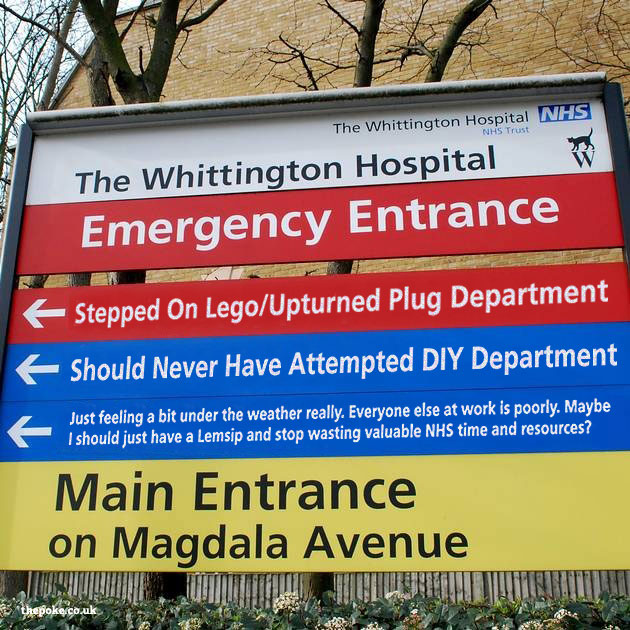
Last week on the blog, Emma Dorée wrote about a statement from South Tees NHS Foundation Trust urging people not to attend Accident and Emergency departments for stomach aches caused by excessive consumption of Easter Eggs. Emma explained that one in four A&E attendances is considered inappropriate, and highlighted the NHS Choose Well campaign which helps people to select the right place to take their symptoms.

Photo attribution: www.thepoke.co.uk
This made me wonder… is one in four A&E attendances being ‘inappropriate’ really so bad?

Clearly, the NHS is stretched at the moment, and nowhere more so than A&E, where only 83% of patients are seen and sent on their way within four hours, as compared with a target of 95%. It is natural for us to want to see performance improve, and waiting times are doubtless inflated by ‘inappropriate’ attendees.

Of course, we should wonder what is meant by ‘inappropriate’ in this context. There are many possible classifications. Of course, attending A&E seeking treatment for a sick dog is undoubtedly inappropriate. But is it inappropriate to attend for ‘hangover help’? What if the symptoms of your hangover are difficult to distinguish from the symptoms of meningitis? The final diagnosis and healthcare provider’s perspective is not necessarily the best viewpoint from which to determine ‘appropriateness’.

Even if we assume that one in four attendances truly is inappropriate, it’s reasonable to question whether that is so bad. Considering the problem in terms of sensitivity and specificity, it is vastly preferable that the self-triaging process is sensitive (i.e. all people who really need A&E attend A&E), even if that’s at the expense of a degree of specificity (i.e. some of the people who don’t need A&E still attend A&E). As a doctor, I want everyone who has a life-threatening emergency to attend A&E, not for one or two to go to their local pharmacy, and I’m willing to accept that making that happen might mean that some less urgent cases also slip through the net.

People presenting to services inappropriately is anything but a new problem. Writing in The Lancet in 1849, Joseph Hodgson - the founder of what is now known as the Birmingham Midland Eye Centre - complained of the “growing evil” of “the indiscriminate admission of out-patients to charitable institutions”. His problem was, perhaps, a little different: people referring themselves to charitable hospitals even though “one half of the patients can afford to pay the surgeon his fee”. In order to avoid detection, many of his patients chose to “dress shabbily, and even borrow their servants’ bonnets and shawls”.

To my mind, the root of the modern problem is that we expect people, most of whom rarely use the health service, to self-triage between six (or more) levels of care. This is not sensible. Campaigns admonishing people for making obviously incorrect choices don't help this core problem, and may even counteract campaigns like Be Clear on Cancer, which encourage people to consult health services with symptoms which they may not recognise as ‘red flags’.

One solution to this problem is to introduce professional triage. Back in 1849, Hodgson suggested that “each applicant be compelled to bring a note of recommendations from the clergyman”; perhaps not quite such a useful recommendation for the 21st century. NHS Direct, and its successor NHS 111, were perhaps intended to provide the modern equivalent of the clergyman’s note, but do not enjoy a high degree of public or professional confidence. This is probably because triage over the phone is very difficult, even if it has been shown in research to reduce A&E demand. Perhaps options such as embedding GPs within A&E, as proposed by South Tees CCG, will provide an answer.

For now, here’s the bottom line: even as someone working in the system, I couldn't tell you where I'm supposed to take myself if I develop an unclear symptom. Telling me how inappropriate other people’s attendances are don’t help signpost me to the right place if I have, for example, sudden hearing loss or eye pain. Like very many other people, in situations of uncertainty, I am likely to err on the side of accessing a higher level of care, as I would not want to delay urgent treatment. Though I probably wouldn’t turn up wearing my servant’s bonnet.

Thursday, 24 March 2016

Supporting vulnerable communities in Australia and the UK: linking data through knowledge exchange

Posted by Theodora Machaira, PhD student at Teesside University

On the 8th of March we were pleased to welcome Jen Lorains, researcher from Australia, in Fuse. Jen was successful in winning a Winston Churchill fellowship and decided to visit Fuse as her main research interest is knowledge exchange and translational research.

As part of her visit, Jen delivered a Knowledge Exchange Seminar on ‘Early Childhood Data with Communities in Australia’. Her presentation focused on the Australian Early Development Census (AEDC) which is a national census which measures physical health, social skills, communication and general knowledge, language skills and emotions of 5 years old children. The AECD data is publically available and although it is not primarily used for knowledge exchange, it certainly facilitates it by enabling key stakeholders in early years to work with the data in order to improve child development outcomes.

Theodora (left) with Jen Lorains
Jen’s presentation was interesting on a number of levels but from a PhD researcher’s point of view, two things were most striking. First of all, thinking about child development assessments in diverse populations, I felt that Australia and the UK are not as different as I thought. In Australia, diversity exists mainly between indigenous and non-indigenous populations. Indigenous Australians have their own language, rituals and beliefs, which in early years and education settings can be challenging to deal with. Although, diversity in the UK is different and not as clear cut with many different cultures calling the country their home, diversity is also an issue over here and is now perhaps more prominent than ever. With that in mind, I was wondering, how fair (or accurate for that matter), is it to collect data on child development from all 5 years old children in English? Isn’t it possible that an indigenous child has good communication skills but in a different language? Of course, this cannot necessarily be taken into consideration in a national census. But surely that begs the question, are we classing children as having delayed development when perhaps we shouldn’t?

The second thing that got my attention was the issues with knowledge exchange in Australia that Jen discussed. She talked about how different professionals use the data and how challenging it is to have everyone on board when trying to develop common approaches to help children in areas where vulnerable children are identified as different professionals identify different solutions for highlighted problems. As my PhD focuses on systems change and developing a common approach between early years’ professionals, I again, thought about the similarities between Australia and the UK. Perhaps foolishly (I am only a year into my PhD!) I thought that these issues are a UK phenomenon, however, I quickly realised during Jen’s presentation that they are not.

Intrigued by these observations, I started talking to Jen after the seminar (and because Jen had an hour and a half to kill before her train) we decided to go for a drink after her seminar. Although some people might disagree, I thought that the pub was a great setting for knowledge exchange! We discussed my and her thoughts having travelled to the UK, USA, Canada and Peru, and realised that using research data with different communities in these counties requires researchers to be skilled in knowledge exchange. This will enable researchers to include these communities in interpreting the data and developing useful interventions with these communities. This might sometimes feel like fighting a lost battle but is essential to support vulnerable children identified through collected census data.

Thursday, 7 January 2016

The blog monster returns with a shameless plug

Posted by Emma Dorée, Fuse Communications Assistant

Just over a year ago, we wrote about how far the blog had come since it hatched and it’s safe to say that the waistline of the - now fully grown - ravenous blog monster continues to expand.

Feed me, Seymour!
Since its creation in May 2010, the Fuse blog has had just over 167,000 views and we’ve posted 334 blogs – a great achievement, right?!

As a result, we wanted to do something to celebrate this success and to see if we could reward all the contributors that make the Fuse blog what it is, so we have entered the UK Blog Awards 2016!

The blog has been entered into two categories: 'Health and Social Care', and 'Education'. You can vote for us in either category but of course we would really appreciate it if you voted for us in both.

You can vote for the Fuse blog once a day by following this link. We will be encouraging people to do this via our social media feeds but it would be even better if you could spread the word and encourage your friends and family to vote for us too.

http://www.blogawardsuk.co.uk/ukba2016/my-entry/fuse-open-science-blog
Click here to vote for the Fuse blog now

Most importantly however, we still need people to continue sending us blog posts so if you work in public health then please get in touch.

We want to hear about your aims, priorities and challenges or which issues you think need to be brought in to the public eye and debated. Could you give an insight into your role within public health for those not directly involved? Or is there a public health campaign in your area that you wish to promote or a topical news issue or event happening which could coincide with your post?

We post blogs at least once a week and publicise them via our Facebook page and Twitter account. The blog has its own website but of course, you can also view the blogs by visiting the Fuse website.

Email your posts to me (E.Doree@tees.ac.uk) and please let us know if you think there is anything we can do to improve the blog.

Thank you to everyone who has contributed to the blog so far. You have sparked great discussion and helped our readers learn what it is really like to work in public health, no matter what your role is.

The UK Blog Awards 2016 competition closes at 9pm on the 25 January so don’t forget to keep voting for us as much as possible until then!

Photograph ‘into the mouth’ by Len "Doc" Radin via Flickr.com © 2005: https://www.flickr.com/photos/drurydrama/1079598181

Thursday, 17 December 2015

The big countdown

Posted by Emma Dorée, Communications Assistant for Fuse

It’s that lovely time of the year again when we count down the days to Christmas. Whilst we are frantically running around trying to complete our Christmas shopping, we are also eagerly waiting in anticipation to see if this year’s X Factor winner will make the number one top spot and whose festive Foxtrot will lead them to become the Strictly Come Dancing winner.

The Fuse Blog however is having a countdown of its own. Seeing as so many great blogs have been written this year, we thought it would be a good idea to have a look at all of the blogs from 2015 and create our very own ‘Top 5 chart’ of the ‘bestsellers’.
 
So let’s begin….

At number five: No time to run: role overload contributing to physical inactivity in parents? Caroline Dodd-Reynolds’ post looks at how parents find it difficult to fit physical activity into their daily busy routines. With 604 views, this is clearly a subject that lots of people, especially parents, can relate to.

At number four: How active are pregnant women? Measuring the methods. Louise Hayes and Cath McParlin debunk the ‘pregnant pause’ and tell us that guidance recommends that pregnant women should actually be doing at least 30mins of exercise on most days of the week to help reduce the risk of gestational diabetes. This post squeezes into fourth spot by the narrowest of margins, reaching 606 views since publication in May 2015.

In at number three: The troubled families programme: what’s health got to do with it? A guest post by PhD student Stephen Crossley explaining how the Government is helping (or rather not helping) families that need the most help. Stephen goes into great detail about the Troubled Families Programme explaining that health plays a huge role in this issue. This post has had 657 views since it was published in June 2015.

At number two: Bull Sperm and ‘poor parents’: the role of myths in public health practice. Another entry for Stephen Crossley. In this post he takes on the urban myths that surround energy drinks and political myths about benefits and austerity. This post has had close to 750 views.

And finally, time for the top Fuse blog post of 2015. Drum roll please….

Thunder, thunder, thunderclap: when a blog post hits the campaign trail. This blog was written by Fuse Communications Officer Mark Welford and has had an amazing 1575 views. It describes how a Fuse blog post caught the imagination of readers and became a national viral campaign, prompting a campaign page to be set up for people to support the idea that supermarkets should remove unhealthy food from their checkouts. This post followed two other ‘big-hitters’ on the same subject by Mel Wakeman and Amelia Lake: Who’s opting out of responsibility? Battle of the checkouts and Time to chuck the checkout junk? Both have received more than 900 views.

So there you have it, the top five Fuse blog posts from 2015. Let’s see if we can create even bigger and better blogs for 2016!

Did you enjoy reading this post? If so, please vote for Fuse in the UK Blog Awards 2016 by clicking here

Thursday, 25 December 2014

Thursday, 20 November 2014

52 weeks in public health research, part 46

Posted by Amelia Lake, Mark Welford, Sarah Smith, and Shelina Visram


From Amelia Lake: My office mate Duika Burges Watson (@debedub) doing her daily handstand #yogaintheoffice


From Mark Welford: Discussing blogging with Lisa Briggs and Kirsty Metcalfe from the Graduate Research School at Teesside University (@TeesUniResearch). They wanted to know all about the inner workings of a research related blog with a view to entering the blogosphere.


From Sarah Smith: Meta-analysis masterclass courtesy of the Centre for Reviews and Dissemination (CRD) York where I've been on the Systematic Reviewing course this week.


From Shelina Visram: Fieldwork for the HYPER! (Hearing Young People’s views on Energy drinks: Research) study is now underway. The focus groups with schoolchildren include a fun sorting exercise to explore perceived differences between energy drinks, soft drinks and sports drinks.

------------------
A reminder from the Fuse blog group:

Each Thursday of 2014 we’ll try and post around four pictures on the Fuse blog that capture our weeks in public health research, from the awe-inspiring to the everyday and mundane. Given that more of the latter than the former exists in most of our lives, we foresee problems compiling 208 images worth posting on our own. So this is going to have to be a group project. Send an image (or images) with a sentence or two describing what aspect of your week in public health research they sum up and we’ll post them as soon as we can. You don’t have to send four together – we can mix and match images from different people in the same week.

Normal rules apply: images you made yourself are best; if you use someone else’s image please check you’re allowed to first; if anyone’s identifiable in an image, make sure they’re happy for it to be posted; nothing rude; nothing that breaks research confidentiality etc.

Email your posts to m.welford@tees.ac.uk or contact any member of the Fuse blog group.

Tuesday, 19 November 2013

Sci-comm-ing

Posted by Jean AdamsI went to my first science communication conference at the weekend. I’ve wanted to do this for ages. Going to my two favourite academic conferences – the annual meetings of the Society for Social Medicine and the UK Society for Behavioural Medicine – makes me feel so alive. They are environments where I feel entirely immersed in my people, buzzing with ideas, invigorated to go back to my desk and do new and better things. And also often both physically and mentally exhausted.

I thought a science communication conference might make me feel more part of that community. Oddly, it didn’t. Probably because I’m not part of the scicom community and one conference a community member does not one make. Probably this feeling of being a little out of it and like I’m not absolutely sure I’m following the conversation is exactly how I felt the first time I went to SSM in Oxford all those years back. 2001 if you must know.

At SpotOn London 2013, I was taking part in a session on scientist-2-scientist communication – primarily via the medium of blogging. If you happen to be interested (and have an hour to kill), you can see a video of the session here.

Beforehand I’d been worried that talking about blogging at a scicom conference was a little passé – preaching not just to the converted, but to the evangelical. A quick show of hands on the day confirmed that about 90% of the 40-50 people at the session were bloggers.

But it seemed to go okay. The session generated a lot of Twitter chatter (#solo13blogs). Predictably, although the panel discussion covered a lot of ground, the audience conversation seemed to get a little bogged down in the very last (and, I think, maybe least important) issue we discussed – if it matters whether or not people comment on your blog.

Are we in the Wild West of science blogging?
I’ve previously whinged a bit that hardly anyone comments on this blog. But I’ve got used to it. I know that posts can generate discussion in other forums and I’ve started to believe that people genuinely do read these posts – that we’re not just sending words into the void. It was still nice to hear that we’re not alone in our virtual comment-less-ness. One of the science correspondents at The Guardian confirmed that only about 0.5% of visitors to The Guardian website leave a comment and that about 80% of those are left by the same hard core of commenters. There are just a lot more comments on The Guardian website because they get a lot more traffic that the Fuse website (hard to believe, I know).

The other thing the guy from The Guardian pointed out was that building community takes time and effort. I know this. Who could not? But it’s nice to be reminded of it. I think that we could do more to build community within and beyond Fuse and I’d be interested in your thoughts on how we might do this. You could leave a comment if you’d like…

When I was originally asked to take part in SpotOn, I was pretty hesitant. I don’t think I’m some massive expert in blogging, or science blogging. I feel like we at Fuse came to the blogging party pretty late and that we are a fair way behind the curve, not in the vanguard of some great revolution. For me, this is okay. I mean, we’re a research organisation run by committees of academics, not a hack day run by precocious teenagers. But the current situation of science blogging was described by one participant as “the wild west” – a place with no rules yet, where only the strong enter and only the brave survive. I’m still not sure how much I agree with this. But it brought some fun images to mind.


With thanks to Roland Krause and Ingo Helbig of Channelopathist; and Lauren Tedaldi of What’s a PhD to do? for being part of a very well behaved and easy to manage panel.