Showing posts with label complexity. Show all posts

Thursday, 5 February 2026

More than quit rates - our smoking research was about complexity, trust, and real voices

Posted by Angela Rodrigues, Associate Professor at Northumbria University, and co-lead of the Fuse Behaviour Change Cluster, and Team

By the time we wrapped up our final interviews, we felt a mix of pride, exhaustion, and curiosity. Pride because we’d managed to complete a complex mixed-methods evaluation across four pilot sites. Exhaustion because, well, public health research never seems to run smoothly, and we had a few recruitment bumps along the way. And curiosity because we still weren’t sure how all the pieces would fit together. This was a mixed-methods evaluation of a 20-week smoking cessation service in the North East & North Cumbria.

The context: why this service mattered

When we first got involved, the idea was simple: evaluate an enhanced stop smoking service designed specifically for people living with severe mental illness (SMI). People with SMI experience stark health inequalities. On average, they die 15-20 years earlier than the general population, largely due to chronic physical health conditions rather than psychiatric causes. Smoking is a major reason for this health gap, and it is something that can be changed. Yet many tobacco dependence services do not adequately meet their needs.


The service offered more support than the standard provided by the local council, combining behavioural support with medication-assisted treatment over 20 weeks. It followed a ‘cut down to quit’ model, and aimed to be person-centred, flexible, and responsive.

Our approach: mixed methods and lived experience

We used a mixed-methods approach, including quantitative analysis of recruitment and outcomes, surveys with service providers, qualitative interviews with both staff and service users, and a review of Smokefree Taskforce documents. We started with a well-defined plan, but the process taught us to embrace flexibility. Recruitment was slow. Referral pathways shifted. Data systems didn’t always talk to each other. And finding service users willing to be interviewed was harder than we expected.

One of the most rewarding aspects was working with our Lived Experience Advisory Panel (LEAP). They helped shape our protocol, refine our interview questions, and interpret findings. Their input reminded us why we do this work. It’s easy to get lost in methodological frameworks, but the real insight often comes from lived experience. One LEAP member words stuck with us:
“You need to understand what it’s like to be told to quit smoking when smoking is the only thing that gets you through the day.”
What we found: complexity at every level

The Behaviour Change Wheel framework (figure 1) helped us make sense of what was happening on the ground. Service providers used a range of strategies, including medication, leaflets, nicotine e-cigarettes, planning, and social support. Most felt capable and motivated to deliver the service, but some found it more harder than expected. Complexity was a recurring theme, as illustrated in one advisor words:
“It’s not just about smoking, it’s about everything else going on in their lives.”
Figure 1: Visual map of key themes identified in our study

We also saw how broader systems shaped delivery. Some sites had strong links with primary care; others struggled. Data recording was patchy. Staff wanted more training, not just in smoking cessation, but in understanding mental health complexity more broadly. And while the service was designed to be flexible, that flexibility sometimes created confusion. Who was eligible? How long should support last? What counted as a successful quit?

For service users, the benefits were clear: 
  • better physical and mental health
  • financial savings
  • fewer unpleasant smells
  • and fewer side effects than expected.
But staying engaged was tough. Motivation fluctuated. Life got in the way. Participants reminded us regularly that behaviour change doesn’t happen in a vacuum:
“I wanted to quit, but then my meds changed and everything fell apart.”
The challenge and value of qualitative work

Personally, we found the qualitative interviews both the most challenging and the most illuminating part of the process. Some participants were open and reflective; others were more reserved and required extra support and reassurance to feel comfortable speaking openly, particularly service users. We learned to be flexible in our approach, arranging a casual phone call with service users to build a rapport prior to the interview.

Despite the difficulties recruiting service users, once they were engaged in the interviews, all were eager and willing to share their experiences. We learned that it is important to develop a level of trust with service users, and that patience and empathy can encourage openness and in-depth understanding.

There were challenges too. We had hoped for more interviews with service users, more consistent data, and deeper engagement with those delivering the service. In particular, connecting with service deliverers proved difficult, largely due to the time lag between service implementation and the research evaluation. By the time we began our research, staff had moved on, memories had faded, and priorities had shifted, making it harder to capture a full and accurate picture of delivery. But public health research rarely hands you a neatly packaged story. What it does offer is insight into systems, into people, and into the messy, unpredictable reality of trying to improve lives.

Why it worked: partnership and collaboration


Looking back, we think the study worked because it was grounded in genuine partnership. The Smokefree NHS strategic team were incredible, collaborative, responsive, and deeply committed to making the service work.

We built relationships with service providers who shared their experiences openly, with LEAP members who challenged our assumptions, and with service users who trusted us enough to talk. Within our research team, we supported each other through the inevitable ups and downs. That collective effort, across roles, organisations, and lived experiences, is what made the project feel meaningful.

This experience has already shaped how we’re approaching future projects. Next time, we’ll go in with clearer expectations, more flexible timelines, and a deeper appreciation for the emotional labour involved, not just for us as researchers, but for the people we’re working with.

Researching smoking cessation in people living with severe mental illness isn’t just about measuring quit rates or evaluating service models. It’s about recognising the complexity of their lives, earning trust, and ensuring their voices shape the research process. More than anything, this project reminded us that we, as researchers, must be more attuned, more patient, and more willing to adapt.


About the authors:

Dr Angela Rodrigues, Associate Professor, Northumbria University, and co-lead of the Fuse Behaviour Change Cluster

Dr Lauren Hoult, Associate Lecturer, Researcher in Behaviour Change & Public Health, Northumbria University

Prof Katie Haighton, Professor in Public Health and Wellbeing, Northumbria University

Friday, 17 December 2021

The way the Government talks about ‘childhood obesity’ is flawed. Should we even be talking about it at all…?

Posted by Naomi Griffin, Fuse SPHR Post Doctoral Research Associate, Sport and Exercise Department, Durham University

‘Childhood obesity’ has been a key public health priority area for those with an interest in challenging health inequalities among children and young people. This is because we can see, at a population level, that children living in the most deprived areas in England are twice as likely to measure as ‘obese’ than children in the most affluent groups (as measured by Body Mass Index (BMI)*). The gap between the most and least deprived is growing.

Logic may suggest that if certain children are more likely to be categorised as ‘obese’, we should focus on ‘childhood obesity’. However, when exploring wider evidence, it is clear that this approach misses out important pieces of the puzzle. Our research used an approach to policy analysis developed by Professor Carol Bacchi called 'What’s the problem represented to be?', whereby the researcher infers what the policy makers are implying the ‘problem’ to be addressed is by looking at what is proposed. For example, if a policy calls for teacher training, the problem is represented to be: teachers lack training. We used this approach to investigate the way UK government ‘childhood obesity’ policy (which I will call ‘The Policy’ from this point) frames the ‘problem’ of ‘childhood obesity’ in relation to health inequalities.

What we did in our research


Firstly, we looked at the way ‘obesity’ is defined in the policy. The Policy’s definition of ‘obesity’ focuses on child weight status, rather than presence of health problems, where the determinants of change are calories consumed vs energy expended: 
‘at its root obesity is caused by an energy imbalance: taking in more energy through food than we use through activity’ (Chapter 1, p.3).
However, the causes of ‘obesity’ (as defined by BMI) are embedded in an extremely complex biological system that interact with cultural, structural and economic contextual factors, none of which exist in isolation. In truth, BMI is a rather crude measure of height versus weight. BMI data can tell us about population level trends in BMI, but it is not complex enough to tell us about individual health status. It is also not a particularly appropriate measure for children as it was designed for use in adults.

Food bank volunteer
Secondly, The Policy proposes ideas around ‘choice’ and ‘informed decisions’, implying the ‘problem’ is a lack of information or poor choices. For example:

‘I want to see parents empowered to make informed decisions about the food they are buying for their families when eating out.’ (Chapter 2, p.5).

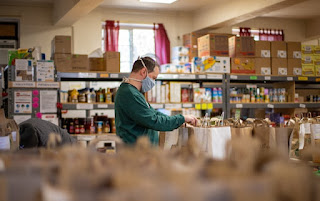
However, it lacks consideration of the accessibility of a balanced diet due to: affordability of food, practical considerations on physical cooking equipment and energy costs of preparing and cooking food, skipping meals, needing to use food banks, or varied availability of healthy food options.

Thirdly, in The Policy, ‘stigma’ was given as a reason for the need for a childhood obesity policy, as children deemed ‘obese’ are likely to experience:
‘bullying, stigmatization and low self-esteem’ (Chapter 1, p6). 
However, there was no targeted response to stigma itself. The attention paid to stigma is necessary. The physical and psychological harms caused by stigma, and the negative impact that stigma can have on the quality of healthcare has been evidenced. Not only is stigma and misinformation about ‘obesity’ likely to impact an individual’s health and wellbeing, it also causes barriers to appropriate and timely treatment of many health concerns, not just those that have been linked to weight status. By framing stigma as the result of ‘obesity’, rather than a problem to challenge head-on, The Policy supports individual behaviour change and responsibility, rather than addressing the wider determinants that are necessary to understand these social trends and the negative impacts of weight stigma.

Challenging inequality


So, is ‘childhood obesity’ really the policy ‘problem’ we should be addressing in order to challenge health inequalities? I don’t think so. We propose that inequality itself is the ‘problem’ we need to challenge. For example, the unequal distribution of wealth that leaves millions of children in poverty, increasing food insecurity, unequal access to healthy food and green spaces, and unequal opportunities for physical activity. Policy decisions that have drained public services and policy approaches that unfairly tip the scales of responsibility for addressing the effects structural inequalities onto individuals must be challenged.

The proposals in The Policy, and the evidence bases drawn on (and those absent), reflect a broader ideological trend in government policy on health to move from addressing social/structural dynamics to focussing on individual responsibility. The Policy reflects ideological decisions which are difficult to challenge. The notable absence of the impact of austerity on health budgets and spending on child health inequalities in The Policy is evidence of this.

With Chapter 3 of The Policy potentially delayed due to COVID-19, I hope that government will revisit and review the aims of The Policy with a focus on structural dynamics like health inequality and poverty. At the very least, the government must work to remove barriers to healthy eating and physical activity, regardless of socioeconomic or weight status, for healthier outcomes for all young people.

Failing this, the government’s messaging about ‘obesity’ directly impacts the wider conversation and so I feel that it is the duty of those of us working in public health to challenge the ineffective proposals and damaging narratives that have been put forward in these policies, especially where we cannot change the policies themselves. I hope that our review can be used to challenge and strengthen future policy development, pushing for effective action against health inequalities and policy/intervention-generated inequalities in child health.

Reference: An open access research article detailing the project which informed this blog post is available via BMC Public Health.

For further information on the research project, please visit the NIHR School for Public Health Research website.

Friday, 28 May 2021

What came first, food insecurity or severe mental illness?

Posted by Heidi Stevens, Research Associate, Teesside University, and Jo Smith, Consultant Dietitian and Clinical Academic, Tees, Esk and Wear Valleys NHS Foundation Trust 

Well before the current COVID-19 pandemic hit our shores, it was already apparent that food insecurity was an emerging issue in the UK. In 2014, the Children’s Society presented evidence to an All-Party Parliamentary Group (APPG) to raise awareness of the issue. Four years later after a visit to the UK, Special UN Rapporteur Sir Phillip Alston highlighted the increase of people depending on foodbanks across the UK. Despite these high-profile reviews of the evidence, it has taken a pandemic and the persistent efforts of a professional footballer to thrust the circumstances of food insecurity in children firmly into the spotlight. 

Marcus Rashford has led campaigns to end child food poverty over the course of the pandemic


While the issues around food insecurity and the longer-term detrimental implications of this for children are now well documented, the implications of food insecurity in other vulnerable groups have been seldom considered. Research has documented the effects of food insecurity on mental health, but less is known about the impact of food insecurity specifically on those with existing severe mental illnesses (SMI) (ie. bipolar disorder and schizoaffective disorders). For example, research has shown that people with a mental health diagnosis face an income gap as high as £8,400 per year compared to the general population. Additionally, almost 25% of food banks have reported an increase in the number of people with mental health conditions accessing them. However, this does not distinguish between mental health conditions and severe mental illness which can be complex to manage often impacting every aspect of a person’s daily life.

Public health guidelines encourage a balanced diet, for a healthy lifestyle. But when faced with financial constraints, food purchases are often restricted to poorer quality foods which are more accessible on lower budgets. Research by Jones et al. (2014) found an average price disparity of £2.50 per 1000kcal of less healthy food products versus £7.49 for more healthy food products. The study classified food products in their data set (basket of food) according to the Eatwell Guide to include carbohydrates (bread, pasta), fruit and vegetables, dairy, protein (meat, beans) and high fat/sugary foods.

Cheaper foods may often be high in salt, saturated fat and/or sugar, the effects of which on long-term health are well documented. However, for people with SMI there are also additional health risks because they may already be at risk of weight gain due to psychiatric medication. Additionally, for those taking prescribed lithium for bipolar disorder, too much salt in a diet can be very dangerous.

UN Sustainable Development Goal 2.1 ‘Zero Hunger’ challenges us to ensure access to nutritious and sufficient food for everyone but in particular poorer people and those in vulnerable positions. This certainly will not happen until we take a “Marcus Rashford approach” and use the current impetus from the COVID crisis to highlight the issue of food insecurity in other vulnerable groups of people, such as those with SMI. The syndemic nature of having severe mental illness in conjunction with food insecurity means these two factors may interact to further marginalise and disempower people with SMI and yet this remains an under-researched area worldwide. This potentially leads to food insecurity in those with severe mental illness being under-managed and under-supported in mental health practice. In order to achieve parity of esteem between physical and mental health it is essential that we understand the issues relating to food insecurity in this population group.

To this end, we are currently working on research aiming to assess the prevalence of food insecurity in adults with a diagnosis of SMI and explore their experiences for better understanding and increased exposure to the issues they face. Preliminary findings of our review of the available research on this topic (a systematic review) show a lack of targeted measurement for this group of people who are sometimes included as part of wider studies. The issue of cause and effect (or causality) is also often referred to; what came first, food insecurity or SMI? We hope our overall findings later this year will provide an overall picture of food insecurity in people with severe mental illness and potentially a basis for affirmative action.


Supporting authors: Lauren Bussey, Emma Giles and Amelia Lake from the School of Health and Life Science, Teesside University.


Image: 'Rashford Mural' by Rathfelder via Wikipedia, copyright © 2020: https://en.wikipedia.org/wiki/File:Rashford_Mural.jpg (CC0 1.0)

Wednesday, 10 March 2021

Should pregnancy 'be incentive enough' to quit smoking?

Guest post by Susan Jones, Research Associate, Teesside University

I have seen many people on twitter express the view that thinking about their baby should make pregnant women automatically quit smoking. Indeed many women when they decide to try for a baby or find out they are pregnant do quit smoking. However, it does seem illogical - and shocking - to many that this is not always the case.
 

For those who do continue to smoke, it is perhaps more of a hint of a complex web of reasons behind their smoking behaviour, rather than any greater willingness to harm their baby. Smoking throughout pregnancy is often associated with environmental and social deprivation, which gives us a clue. Hilary Graham’s seminal work into women’s smoking and its association with family health, published in 1987, opened the door to a new understanding of what some of the reasons might be for this apparently illogical and paradoxical behaviour on the part of pregnant women from deprived communities. Graham concluded that:
"The study suggests that, for a significant minority of mothers, poverty and caring combine with low levels of physical and emotional energy, with sleep problems and with feelings of social isolation. In this context, smoking appeared to provide a way of coping with caring-in-poverty: a way of coping alone with the demands of full-time caring and with the struggle of making ends meet."
This work revealed that there were other, stronger reasons to continue smoking, which counteracted any impulse to quit.

Guilt and shame

An earlier study of ours heard pregnant smokers confess to feeling guilty and ashamed of smoking in pregnancy and how they are very aware of the stigma associated with their behaviour:
“But then once I lit it up and had half of it I felt guilty. But it took that edge away, but I still felt guilty. So if I felt even more guilty I probably mebbees wouldn’t have touched it, but I feel weak because I have had to do it.”

“I think the kids always make it like, they have more effect on you than what anyone else does, because they're, well you feel guilty if you're letting them down and doing something they don't want you to do.”
We also found that sometimes it can be a distrust of public health messages combined with a real lack of knowledge about the mechanics of how smoking affects the developing baby. Nevertheless, it must be acknowledged that, for whatever reason, not everyone says they want to quit; but of those who do want to quit, some say they do not feel able to. For the sceptics out there, this may seem only subtly different to choosing to smoke, alternatively it may be a real barrier to quitting. Graham’s work would suggest the latter. More recent research has built on her findings and investigated what methods of support may work for these pregnant women, who do not quit, and for whom the health outcomes are comparatively worse for themselves and their babies.

What can be done?

Research over several decades has shown that there are ways to support pregnant women to quit smoking, focusing on:
  • Referring to stop smoking support services
  • Offering support to change behaviour
  • Support through medication.
It is clear now that opt-out approaches to referral and carbon monoxide monitoring and much more personalised support are also helpful to women (see our short video below).


Work has been undertaken to implement these supports more fully; e.g. the Local Maternity Systems (LMS) in North East England designed the Maternity Pathway and have led the work across the organisational systems to integrate these mechanisms. Becca Scott, the North East Local Maternity Systems Public Health Prevention Lead says:
"The LMS have led North East organisations and service users to contribute to the target of 5% or less women smoking in pregnancy by 2025. That would mean 2723 fewer women smoking at time of delivery across the North East since 2018. It does this by offering all expectant mothers, and their partners, a multiagency-developed, smoke-free pregnancy pathway and minimum service standards (as detailed in each of the Maternity providers bespoke plans). The impact of the engagement with the work has seen prioritisation throughout all Local Authority Health and Wellbeing boards, as well as consistency in the way smoking in pregnancy is identified and supported, which is demonstrated in significant improvement in adherence to NICE Guidance."
What more can be done?

The results of this partnership work are encouraging. Is there anything else that can be done? The evidence for the effectiveness and cost-effectiveness of financial incentives to support pregnant women to quit has been building. Trials have been conducted which have found that there is "substantial evidence for the efficacy of incentives for smoking cessation in pregnancy" – however this idea has encountered significant public scepticism and opposition.

ash. Smoking in Pregnancy Challenge Group Webinar - Incentive schemes


Although there has been more balanced reporting too and more recently, the headline below suggests the idea has become more acceptable.

Capture from The Sun online (09/03/21)

Modelling financial incentives in smoking in pregnancy

A team of us (details below*) have been awarded funding from the NIHR Applied Research Collaboration (ARC) North East & North Cumbria Open Funding Competition to look into an alternative way to take into account the views and responses from all stakeholders, including staff, pregnant women, and the public. We will also be building a mathematical model based on Evolutionary Game Theory (EGT). EGT is a mathematical framework of contests, strategies and analytics into which Darwinian evolution can be modelled. It is designed to capture the strategic interactions between stakeholders, because ultimately these interactions will drive health behaviour. Incentivisation will be modelled to see how it affects some behaviours and in what contexts. We hope the model will be able to guide commissioning and provision, so that any intervention is as effective and cost-effective as possible, without having to conduct further lengthy and expensive trials beforehand. Watch this space!


*Associate Professor Emma Giles (Teesside University), Professor Falko Sniehotta (Newcastle University and University of Twente), Dr Jean Adams (University of Cambridge) and other partners working in NHS Trusts and local authorities. Colleagues in the School of Computing, Design and Digital Technologies, Associate Professor The Anh Han and Tedy Cimpeanu from Teesside University.

Friday, 14 June 2019

Battle planning to reduce childhood obesity

Michael Chang, Co-founder, Health and Wellbeing in Planning Network

Latest statistics show that obesity prevalence is highest in London, the West Midlands and the North East and there is a significant gap in children living in the most and least deprived areas. So I am supportive of Local Planning Authorities (LPAs) using relevant planning powers at their disposal to promote a healthier food environment to help reduce childhood obesity levels and close the inequalities health gap.

Here I want to reflect on efforts by councils to introduce planning policies and guidance to manage unhealthy food environments around schools and other educational settings. It follows on from a previous blog on whether councils have what they need to help tackle obesity?

The context of this blog is the recent session from the draft New London Plan examination on draft Policy E9 C which seeks to control proposals containing hot food takeaway uses (A5 class use in planning terminology) within 400 metres walking distance of an existing or proposed primary or secondary school. Many other local authorities are proposing similar policies and undergoing similar stages of the local plan in the North East and other parts of the country.

The London Plan is the Mayor of London's strategic planning document and sits above individual borough Local Plans. It sets out 'issues of strategic importance' (note terminology used) for all of London while individual borough issues are dealt with at borough level. It is a powerful and influential planning document for borough level planning policies and planning decisions across the 32 London Boroughs and the City of London. It is as upstream as you can get in terms of policy influence. Other areas with Combined Authorities or joint planning units will also be developing these strategic planning documents.

London Plan examination held at London City Hall
What is an examination?

Draft policies need to be tested through an ‘examination’ before they can be adopted by councils. Don't let the terminology put you off - essentially an independently qualified person(s) from the Planning Inspectorate carries out an inquisitorial process on whether to accept, suggest revisions or reject the proposed policies. Often policies on takeaways fall at this hurdle and are subsequently watered-down or deleted altogether.

Policy approaches to managing fast food takeaways

Fast food takeaways, in planning terms in England (Wales, Scotland and Northern Ireland will have their own variations of the use class classification), is a specific use class - A5 - for selling food to be consumed off the premises. Planning permission is needed for change of use to A5 from other uses such as a hairdressers. There are many 'planning' approaches to managing fast food takeaways and only recently have the approaches been influenced by a need to tackle public health issues such as obesity. Latest research by Keeble at al. found 50.5% of LPAs had a policy specifically targeting takeaways with 34.1% focused on health. Planning Practice Guidance, Health and Wellbeing Paragraph 6 sets out examples of approaches for consideration including over-concentration and proximity to certain activities.

Opposing arguments

There are opponents to takeaway policies who believe them to be overly restrictive. Their arguments have some merit, particularly against economic reasons in areas desperate for economic activity. I would suggest policies can be justified as part of a package of policies to tackle unhealthy environments as well as prosperous diverse local economies. Common themes from those opposing include:
  • "The policy does not meet National Planning Policy Framework (NPPF) soundness tests"
  • "There is no objective evidence for any link between the incidence of obesity and the proximity of hot food takeaways to schools" 
  • “Obesity is complex and you can’t narrow it down to just takeaways”. 
  • "The local area has the lowest percentage of overweight or obese children" 
  • "There are unintended consequences for local jobs and employment" 
  • "The policy would limit consumer choice and access to retail" 
  • "The policy would also ban healthy takeaways and does not address unhealthy food sold in other non-A5 outlets".

Hold your ground: defending a 'sound' takeaways policy

This singular policy issue or public health intervention of managing takeaways is deceptively complex, and battles are taking place up and down the country as councils defend the soundness of policies against objectors as well as the probing questions from inspectors. When defending a takeaway policy, there should be a combination of the following:
  • Valid consideration: Be confident that efforts to tackle obesity through the environment can be a material planning consideration.
  • Planning basis for obesity: Recognise that the NPPF requires planning to consider all three social, economic and environmental factors equally. But make sure there are priorities on tackling obesity through the environment in local health strategies. 
  • Local evidence: Do your research and build up a local evidence base, including the use of up to date data and mapping to demonstrate the scale and location of the problem. This should also include knowing the background of those who operate local businesses – independent or chain. 
  • Whole systems approach: Take a corporate approach by referring to programmes such as promoting healthier catering, food growing and education to demonstrate the action is part of a cross-council initiative. Also demonstrate you are planning for a healthy weight environment, and that the takeaways policy is an important part of the jigsaw. 
Researchers, local government and national agencies are aware of these practical challenges hindering local action to make it less easy for kids to become overweight. Concerted efforts and peer support are needed so let’s keep the conversations going.


References:
Image:

Friday, 12 April 2019

Making the rural a bit more idyllic

Guest post by Christina Dobson, Research Associate, Institute of Health and Society, Newcastle University

Ah, the countryside. The home of all that is natural and healthy, the epitome of the ‘good life’. Where you can stroll down the lane to collect fresh eggs or veggies from your neighbour, simply dropping your money in the honesty box left at the end of their drive. I grew up in a rural area, and still live in one now. I love that I only have to walk (more like dawdle - I have a very curious and distractible three year old!) for 10 minutes (five minutes without said three year old) from my front door and I am in the North Yorkshire Moors National Park.

And it seems that living in a rural area could actually be good for you in a number of ways. You are likely to be more satisfied with your life, experience better health overall, and live an average of two years longer than people in urban areas. Maybe it’s the un-polluted air, the connection between land and food, the sense of belonging and community? Or maybe that is just a myth, sold to us all through Postman Pat?


Because, actually, living amidst the beautiful rolling hills may not be so good for you if you develop cancer. In fact, it may even put you at greater risk of developing certain cancers and make you less likely to survive your cancer. With roughly 20% of the population of England living in a rural area, this poses a serious public health problem.

However, we don’t really know why rural patients are facing poorer survival rates than urban patients. One of the strongest factors is that cancer is often diagnosed at a more advanced stage in rural patients, limiting the treatment options available to them. We know that delays in diagnosis are strongly linked to advanced stage cancers, and, as such, encouraging early diagnosis has been central to UK cancer policy for over a decade.

When we begin to think about where diagnostic delays may be occurring for rural patients, it seems that they are investigated and diagnosed just as quickly as urban patients, after referral to hospital for specialist assessment. It follows then that there may be problems prior to referral to hospital that are slowing down rural cancer patients’ diagnoses, either in the way patients respond to symptoms, or the way they are managed in primary care.

Thanks to funding from Yorkshire Cancer Research, and alongside colleagues from Aberdeen and Glasgow, we are starting to look for answers to some of these questions. This study will involve interviewing people in rural Yorkshire to understand their experiences of bowel cancer symptoms and decisions around if, how, and when to seek help about them. The findings from these interviews will be used to work with local communities to think about what interventions we may be able to design to encourage people in rural areas to present to their GP and, hopefully, increase the likelihood that their cancer is diagnosed at an earlier stage and that they will survive.

It is an exciting study, as there is so little known about symptom experiences in rural populations, with lots of issues to explore. For instance, availability and regularity of public transport, provision of health care services in rural areas, hidden poverty, cultural beliefs and experiences of ill health and employment, to name but a few. And then there’s the messy complexity of defining the ‘rural’, or maybe we should be looking to instead describe the multitudes of ‘rurals’? Plenty to keep me busy!

With the arrival of National Bowel Cancer Awareness Month it’s been valuable to reflect on the importance of this study and the opportunities and challenges that lie ahead. Understanding some of the barriers to timely presentation that exist for rural populations, and devising ways to overcome them is our challenge for the next two years, and beyond. Maybe, longer term, we can help to make the ‘rural’ a bit more idyllic.

Friday, 1 March 2019

Is public health ready for complexity?

Guest post by Brian Castellani, Professor of Sociology at Durham University

Public health, presently, is at a difficult crossroads. Its massive success in making the world a healthier place has led to a global embrace of its incredible insights; but still, the challenges currently faced have not given in so easily, as they are deeply entrenched complex problems - or, alternatively, what are more generally referred to as wicked problems!  The global spread of infectious disease; an exponentially growing (or, alternatively, greying) population throughout many parts of the world; the negative impact ecological upset is having on climate and health; urbanisation and the development of mega cities and metropolitan regions; the increasing costs of health and healthcare; air pollution; the opioid epidemic; and so forth.

Still, despite this increasing complexity, public health has been rather resistant to making the shift, falling back on tried-and-true ways of thinking about and modelling public health issues. This is particularly true when it comes to the harsh realities of getting funded or published!  This needs to change! The challenge, however, is how?

Here are, in my mind, six things that public health researchers and practitioners can do to make more effective use of the complexity sciences and advance the use of these ideas across the field:

Six ways to advance the study of complexity in public health


1. Public health is in a difficult position: it realises its work is more complex, but it is struggling to embrace the tools and concepts of complexity science and computational modelling, as it means doing things differently.
  • This is particularly problematic in terms of funding streams and publishing in journals.
  • The only way forward, then, is to get on with it and actually start funding and publishing such work. High risk can lead to high reward! 
2. Related, the best way forward is for public health to employ a mixed-methods approach, as most public health issues require more than one method, including computational modelling.
  • This includes embracing the old and the new, particularly in terms of complex networks, machine intelligence, participatory systems mapping, qualitative comparative analysis (QCA), and agent-based modelling.
3. Public health needs to adopt a critical approach to complexity, as not all methods or theories are equally useful. In other words, the advance of complexity thinking in public health has to be more than the simple application of hard science methods.
  • For example, while complex network analysis is powerful, it has significant limits.
4. Public health also needs to develop its theoretical and conceptual understanding of public health topics as complex. This is also true in terms of policy evaluation.
5. Public health needs to recognise the important role it plays - both in terms of theory and practical experience - in the development of the complexity sciences, as most of these scholars are trained in other fields. Practitioner expertise, combined with the latest advances in computational methods, will go a long way to improving health. It cannot, however, just be one or the other.

6. Finally, public health needs to adopt a case-based approach to modelling its various complex topics, as health (be it an individual or population) is about cases.
  • In turn, it needs to move away from the strict study of variables and variable-based statistics.
  • Statistics remains very important for complexity modelling; but variables need to be attached to context and cases and their various path-dependent trajectories.
  • Related, the field needs to shift to modelling multiple case-based trajectories, rather than designing a single model.

I want to thank Fuse for the opportunity to present a brief overview of the value of the complexity sciences for public health (and, in turn the value of public health for complexity science!) on 14 February 2019 at Newcastle University.  For those interested, here is a link to the presentation.

Friday, 30 November 2018

Please mind the health gap: turning complex equations into a call for action

Guest post by Heather Brown, Senior Lecturer in Health Economics, and Michelle Addison, Research Associate, Newcastle University

As a quantitative researcher, I sometimes find it difficult to see how the output from complex equations can make a difference to people’s lives. The launch event for the Northern Health Science Alliance (NHSA) Health for Wealth report was a fantastic opportunity to see first-hand how statistical analysis can actually be used to influence policy and practice.


The productivity and health gap

There is a well-known productivity gap between the Northern Powerhouse and the rest of England of £4 per person per hour[1]. There is also a high health gap between the Northern Powerhouse and the rest of England, with life expectancy 2 years lower in the North. Given that both health and productivity are lower, the NHSA commissioned the Health for Wealth report to understand the impact of poor health on productivity and to explore the opportunities for improving UK productivity by unlocking regional growth through health improvement.

The perfect setting

The launch of the report took place in Newcastle at the Boiler Shop in the morning and at Lancaster House in London in the evening. The Boiler Shop is an impressive, urban industrial building set back from the Central Station. It was built in 1820 and was where Robert Stephenson and Company developed the world’s first locomotives. This has to be the perfect setting for the launch of the report. What better way to discuss how to build a healthier Northern Powerhouse for UK productivity than in this historically important space regarded as the ‘crucible of the Industrial Revolution’? The space is filled by a 100 plus audience of local policy makers, employers, health care practitioners, representatives from third sector organisations, academics, and the general public.

The morning event in Newcastle was kick started with a welcome address by Dame Jackie Daniel, Chief Executive of Newcastle Hospital and NHS Foundation Trust. She outlined how the Trust was very good at meeting targets and is one of the best performing Trusts in the country. But, the North East is still faced with reduced life expectancy and worse health outcomes than the rest of England. To solve this problem she said, we need a joint approach working with employers, local government, the voluntary sector, and the NHS. The report makes the case why it is in everyone’s interest to work together and that improving health, will improve economic prospects.

Fuse Deputy Director Professor Clare Bambra presents the report findings 
This was followed by a summary of the report findings by Fuse Deputy Director Professor Clare Bambra highlighting how 30% or £1.20 of the productivity gap between the Northern Powerhouse region and the rest of England can be explained by health. Reducing this health gap would generate an additional £3.2 billion in Gross Value Added (a measure of economic productivity). 

Next up was the leader of Newcastle City’s Council Nick Forbes. He discussed how in his role he can take the results from the report to try and make a positive change to the economic and health prospects for Newcastle. He also outlined the challenges faced from the current political climate in terms of squeezed budgets for local authorities and public health in particular.

Then there was a Q&A session where interesting questions were raised by a member of the voluntary sector on implementation and the need to involve the local community.

Finally, there was a closing address by Dr Hakim Yadi OBE, CEO of the NHSA, stressing how there was a need to make an economic case for improving health to get the central government to listen and take actual steps to make a difference.

I left the event thinking about how I present my research questions and findings and that when presented in a way that can be understood by key stakeholders, quantitative analysis can be meaningful and useful. The focus does not need to be on the complex equations but how the output from these equations can be used to change opinions or make a case for action.

I hope that the findings from this report lead to real change in improving health and economic prospects for all of us living in the Northern Powerhouse. I also hope that it changes the way I think about how I present my findings and research questions to generate evidence that can easily be used to make a real difference to public health and reducing health inequalities.


Report: Health for Wealth: Building a Healthier Northern Powerhouse for UK Productivity 
News: Major new report connects North’s poor health with poor productivity

The universities involved in the Northern Health Science Alliance (NHSA) commissioned ‘Health for Wealth’ report are: Newcastle University, University of Manchester, University of Lancaster, University of York, University of Liverpool and Sheffield University.

Reference:
  1. Office for National Statistics (2015), Regional and sub-regional productivity in the UK, https://www.ons.gov.uk/employmentandlabourmarket/peopleinwork/labourproductivity/articles/regionalandsubregionalproductivityintheuk/jan2017

Friday, 24 February 2017

Two perspectives on arts and public health

Andrew Fletcher, PhD researcher, Faculty of Health & Life Sciences, Northumbria University

Engagement with the arts and/or creative practice benefits wellbeing in multiple ways. I am a musician and relatively new to public health. This post argues that arts and culture should have greater prominence in health and social care.

Courtesy uk.pinterest.com
So what of arts-based therapies? Compared to Cognitive Behavioral Therapy (CBT) for example, such programmes are not heavily promoted. Perhaps this is right; CBT is cheap and effective, whereas things like music therapy are often reserved for individuals with more complex needs. But this hierarchy contributes to the idea that arts-based therapies are ‘alternative’ – potentially placing them in the same category as, say, homeopathy. This is not a helpful perception, but anyone who’s tried to advocate for creative therapies will know it exists.

Then there’s ‘evidence-based medicine’, which is of critical importance, but whose dominance has been challenged.2,3  This is particularly relevant to approaches to health and wellbeing that are seen as ‘alternative’, which still seem to remain the preserve of those who can afford to try more ‘esoteric’ interventions – thereby reinforcing inequality. So what’s the response? Promote holism*; make arts therapies mainstream; emphasise their part in everyday life; make creativity and cultural engagement as vital as exercise, healthy eating or social interaction. The idea that creativity is intrinsic to wellbeing needs to be established in the early years and beyond, and to neglect this idea is missing a trick.

Courtesy tinybuddha.com
Why do people do art? Usually to express a political statement, to communicate a specific feeling or sentiment, or to satisfy some intangible ‘urge’. Making a painting to hang on your bedroom wall cultivates a more pleasurable living environment; putting your kid’s collage on the fridge boosts self-esteem; and who never listens to music? Creative practice, in one way or another, feeds into numerous wellbeing outcomes. Artists know this instinctively, yet policy around art and culture focuses on tourism and/or entertainment income, and a vague ‘intrinsic’ social value. Lip service is paid to health, but as Tiffany Jenkins says: “If you’re competing with hospitals, you’ll lose”.4

But art and wellbeing are significant components of the lived experience. They make us human. They sit at the apex of Maslow’s hierarchy** and most people understand the inherent value of culture to either social or personal wellbeing. If prevention really is better than cure, we must pay attention to the cultural-wellbeing landscape and the atmosphere these concepts exist in. Perceptions are changed through innovative and creative information delivery – so creativity not only has its own wellbeing outcomes, it’s also the key to shifting arts and culture towards being a major pillar in overall wellbeing.

I can’t help but wonder what the world would be like if the perceptions of arts therapies were different. Stickley (2014)5 outlines one potential scenario as follows:
The year is 2080. A new textbook has been published. The book is called ‘A Century of Healthcare’ and I would like to quote from this book:

"For most of the last century it was unusual for people to be treated holistically. Incredible as it sounds today, healthcare systems separated physical interventions from anything they referred to as "mental". Thus a dualism existed and people were treated as divided objects. At the time, there were many attempts at holism, especially by those who practised alternative or complimentary therapies. However, anything that remotely threatened the domination of the medical model was largely side-lined and researchers gave little credence to anything that was not considered scientific.

We should however give a great deal of credit to those who foresaw the potential contribution that the arts and humanities could make to healthcare and wellness but they operated in a narrow scientific paradigm that gave little acceptance to holism…”
The contexts in which creative practice occurs are complex, but the benefits are multiple and well-known. The key here is changing perceptions. This takes time, but perhaps Stickley’s vision will bear out. I hope so.


Footnotes:
* The idea that the human experience of wellbeing is social, cultural and complex, and extends far beyond medical definitions of health.
** 'Self actualisation' appears at the apex of psychologist Abraham Maslow's 'hierarchy of needs' model and includes in its definition (among other things): "expressing one's creativity".

References:
1. Various demographic data available from www.theaudienceagency.org
2. Greenhalgh, T., Howick, J. & Maskrey, N. (2014). Evidence based medicine: a movement in crisis? BMJ g3725.
3. Stickley, T. (2015). A little rant about evidence, available from: https://ayrshirehealthandarts.wordpress.com/2015/03/31/dr-theo-stickley-a-little-rant-about-evidence/
4. Jenkins, T. (2015). Front Row debate (23rd Feb, 2015). Are artists owed a living? Online: BBC.
5. Monologue delivered at ESRC funded Seminar Series on Arts, Health & Wellbeing, 15th September 2014.

Thursday, 17 November 2016

What do I really get from a conference?

Posted by Christina Cooper, Fuse Postgraduate Researcher, Faculty of Health & Life sciences, Northumbria University

As a PhD student there comes a point in your research when you are ready to start disseminating your work and opening it up to feedback from your peers. This is not only important for your personal development as a researcher, but also in demonstrating your contribution to knowledge, a vital step, the importance of which is reinforced throughout the PhD process. Conferences provide an accessible and valuable way for students to present their work, as either a poster or short oral presentation. Attending a conference can feel daunting at first, but regardless of whether you are presenting or not, the benefits of attending and participating cannot be highlighted enough. Conferences can be regional, national or international, but they all share in common the opportunity to learn from, and network with peers and experts with some shared common interest.

Far from being 'just a poster' - an opportunity to discuss my work
I am a public health PhD student at the beginning of my third, and final, year investigating what works, for whom, and in what circumstances in the prevention of risky behaviour by young people, using realist methodologies. For me, my second year felt like the ideal time to begin disseminating my work, through publishing in peer reviewed journals and attending conferences. I have participated in a number of conferences over the last year, from small university based and local regional conferences, to larger national and international conferences. Submissions so far have been in poster format, detailing various aspects of my research covering the research protocol, methodology, and early findings. Far from being ‘just a poster’ these presentations have provided me with an opportunity to discuss my work with other students, and professionals in the field, helping me to develop my ideas, make connections with those investigating similar subjects, and perhaps most importantly, to build up a support network with those in a similar position to myself. The expert advice and guidance gained from a conference is of course invaluable, but often there is nothing more reassuring, when you are struggling with a difficult concept, than hearing the words ‘me too’. Knowing you are not alone can be just the motivation you need to keep reading, keep talking, and keep going until you find a way through.

Most recently I attended the 2nd International Conference on Realist Evaluation and Synthesis held by the Centre for Advancement of Realist Evaluation and Synthesis (CARES), in London. The focus of which was Advancing Principles and Strengthening Practice. Aside from the benefits of presenting
as discussed above, attendance at this three day conference allowed me to attend talks and presentations by a wide range of researchers, including some of the biggest names in realist research. Covering subjects addressing complexity in public health research, attaining funding for realist projects, and knowledge building and translation. The breadth and depth of the material presented provided insight into the realist methodology that would be hard to gain elsewhere. In addition to these thought provoking sessions, time was given to discussion of the myriad of ways in which the realist methodology is employed in research, and how these may be developed to advance knowledge, not just within our specific fields, but also within the methodology itself. These ‘open mic’ sessions, in which disagreement was not only welcome, but encouraged, provided an opportunity to think through new ideas, allowing us to present, debate, challenge and defend our use of the realist methodology regardless of level of expertise. For me, being present for and involved in these discussions was a unique opportunity which allowed me to engage with my chosen methodology at a deeper level.

"...disagreement was not only welcome, but encouraged..."
As a student, relatively new to realism, two key themes emerged repeatedly over the course of the conference. Firstly, how do I know what I am doing is really realist? Secondly, the difficulty of grappling with the complexity of realist research as a lone working student. Both issues I have experienced myself in the last two years, and were indeed part of the reason I wanted to attend the conference; it was greatly reassuring to discover I was not the only one. Not only were there other students there feeling exactly the same way, many of the other delegates, including some of the ‘big names’ such as Professor Ray Pawson, Dr Gill Westhorp, and Professor David Byrne were able to identify with us, and provide support and encouragement. There is still a great deal of work to be done in taking the realist methodology forwards and I am excited about being a part of that, both in the work towards my PhD, and as a researcher in the future.


Photo attribution: “Academic fact fight - debate” by Frits Ahlefeldt FA-L.com via Flickr.com, copyright © 2015: https://www.flickr.com/photos/hikingartist/17163831686

Thursday, 27 October 2016

Mapping collaboration and constructing a compass

Guest post by Lindy Turnbull, Senior Lecturer, Faculty of Health and Life Sciences, Northumbria University

Collaboration is promoted as a key aspect of commissioning and delivery in public health (NHS England, 2016) and health care (NHS England and NHS Improvement, 2016). Joint working and integration of services are seen as the way forward for the future NHS with new integrated models of care at the forefront of service redesign, and collaboration core to managing increased demands with diminishing resources. Although collaboration is a familiar concept and has been the subject of research and discussion it is still an area of practice which is poorly understood. It is striking that existing definitions of collaboration identify professional sharing with the focus on patient care, yet there is little representation of patients in most studies and the role of patients in collaboration seems to be missing from the existing theory.


I began my research after leading the development of Outpatient Parenteral Antimicrobial Therapy (OPAT) a new model of care which required collaborative working across secondary and primary care to deliver treatment in patient homes. The development of this service was challenging and required strong collaborative relationships to overcome the organisational barriers to integration. Having experienced the challenges of collaborating to develop an integrated service I wondered if these difficulties continue into the delivery of the service in practice, and how collaboration takes place within the challenging environment of the constantly reorganised NHS.

The aim of my research was to develop substantive theory about what collaboration means in the delivery of integrated care, the way it is manifested in day-to-day practice and how it is shaped by the situation in which it takes place. I viewed patients and professionals as participants in collaboration and interviewed three patients and 21 professionals. I have used a social constructionist approach to grounded theory (Charmaz, 2008) and a range of situational mapping techniques (Clarke, 2005)1 to map collaboration within the situation of integrated care delivery. Analysis was a fascinating and absorbing experience as I used mind mapping software to analyse and compare the perspectives of those involved in collaboration and then to combine perspectives to map and analyse the complexity of the situation.

Participants expressed a number of interactive mechanisms (trusting, communicating, co-ordinating and rehearsing) which were influenced by a range of situational co-ordinates (goals, limits, certainty, uncertainty and power) and these were used together to navigate the complexity of the healthcare situation and direct the process and outcomes of collaboration. The capability of individuals to act, or interact was informed by their interpretation of the situation and this directed the capacity for collaboration within the care situation. Positional mapping techniques identified four directions of collaboration: developing, maintaining, limited and disrupted, and I found that limiting factors were significant in changing the direction of collaboration. The communication of some social limitations such as terminal illness, professional roles or work requirements altered an individual’s capability to collaborate and the capacity for collaboration within the situation.

My analysis has constructed a collaboration compass which is used to navigate the situation and direct the collaboration experienced by patients and professionals. I am in the process of writing up and still fighting my enthusiasm to write about everything I found and learned during my study; there simply aren’t enough words!

Reference:
  1. Clarke, A. (2005). Situational analysis: Grounded theory after the postmodern turn. Thousand Oaks, CA: Sage.
Health Research Authority summary: The Meaning and Manifestation of Collaboration in Domiciliary Outpatient Parenteral Antibiotic Therapy: A Grounded Theory Situational Analysis.

Tuesday, 28 July 2015

Would you accept money to be healthier?

Guest post by Emma Giles, Senior Research Lecturer in Public Health, Teesside University

As newspaper headlines have shown, the issue of encouraging individuals to adopt healthier lifestyle behaviours by paying them is controversial. Whilst many of us know that we should do a bit more physical activity, eat our five-a-day fruit and vegetables and even attend our vaccination and screening appointments, we don’t always do this. Many barriers prevent us from fully engaging with these healthy behaviours, and these barriers are often complex, individual, and are not always easily surmountable. These barriers range from living away from green spaces which would allow outdoor exercising, to deep-seated social norms that stop individuals from engaging in healthy behaviours because they are not well accepted by family, friends or the wider community.

In recent years there has been a growing body of research looking at paying people to be healthier. This essentially means providing individuals or groups with cash, shopping vouchers or gifts in return for the adoption of healthier behaviours. Such schemes include the Pound for Pound weight loss incentive scheme, the Give it Up for Baby scheme, and offering incentives for breastfeeding.


In order to hear recent research evidence, and to provide a forum for friendly debate, I organised the recent Fuse Quarterly Research Meeting, which focused on payment for health behaviours. Last Wednesday (22 July), policymakers, practitioners, and academics came together to hear presentations from four academics and practitioners working in the broad field of incentives. As Claire Sullivan, a Consultant in Public Health from Public Health England mentioned in her opening address as Chair of the meeting, often incentives can take various forms – including paper pants for Chlamydia screening!


In terms of specific incentives, Professor Pat Hoddinott, Chair in Primary Care, Nursing Midwifery and Allied Health Professions Research Unit at the University of Stirling, presented research which focused on incentives for breastfeeding and to quit smoking in pregnancy – the BIBS study. Key findings suggest that tailoring of incentives is important to meet local needs, but that they show promise to encourage these behaviours.

Professor David Tappin, Professor for Clinical Trials in Children within the School of Medicine at the University of Glasgow, followed Pat by showcasing data from the CPIT trial – a smoking cessation in pregnancy trial in its second phase. Results showed that there was a 14% increase in quit rate and further analysis showed that there was a 150g increase in birth weight of babies born to mothers who quit smoking. Findings suggest that financial incentives were found to be acceptable by the women involved, and may double the quit rate when used with existing smoking cessation services.

A practitioner perspective was provided by Mr Andrew Radley, Consultant in Public Health Pharmacy, NHS Tayside, who talked about operationalising the use of financial incentives in a stop smoking programme within a community pharmacy setting. In particular, 393 women in Tayside engaged with the smoking cessation services, and incentives were found to be effective. Of note was the finding that mothers preferred receiving their incentives on a weekly basis.

I spoke last and presented qualitative data exploring the acceptability of incentives. The findings suggest that incentives are more likely to be accepted if they are provided to certain population groups including pregnant women and those on a low income, but not for those who may have alcohol or drug problems. The ‘perfect’ incentive has yet to be identified, but it will need to be shown to be cost-effective for it to be accepted on a wider scale.

The presenters were then joined by Peter Kelly, Director of Public Health Stockton Borough Council, Jim Beall, Health and Wellbeing Board Chairman, and Dr Jean Adams NIHR Research Fellow at CEDAR for a panel discussion. The audience raised many questions and comments around the use of incentives, with particular concerns around incentives increasing health inequalities, aggressively placing the blame of poor health on individuals, and that incentives may result in moral implications when individuals are rewarded for their behaviour. The debate suggested that more research evidence is needed to discover what type of incentive works for whom, and in what setting, and to better explore group (rather than individual) incentives.


What is obvious is that paying people to be healthier is an emotive topic, a highly contested intervention approach, but at the same time, it also shows promise to encourage individuals to adopt healthier lifestyle behaviours. It certainly provides food for thought…how many of us would accept money to be healthier?

Follow this link to find out more about the Fuse Quarterly Research Meeting ‘Payment for health behaviours: the case of health promoting financial incentives’ on the Fuse website.


Did you enjoy reading this post? If so, please vote for Fuse in the UK Blog Awards 2016 by clicking here

Thursday, 4 June 2015

Complexity in health organisations: setting ourselves up for chaos or enjoying the simple things in life?

Posted by Peter van der Graaf

Can applying a complexity lens to health organisations be more than an academic exercise with practical applications for service delivery? This question was central to a two-day meeting last week in London at the Health Foundation between researchers, policy makers and health practitioners. The event was organised by The Knowledge to Action Group (KTAG), an international team of senior academics and coordinated by two leading members of Fuse’s Complex Systems research programme, Prof David Hunter and Dr Emily Henderson. The group brought together the crème de la crème of health research and knowledge mobilisation, with about 40 handpicked participants from across the UK to debate a green paper on the topic (which is a tentative government report and consultation document of policy proposals for debate and discussion).


The essence of this meeting was about getting to grips with the consequences of doing research and developing interventions in a world that is inherently complex (which is not to be confused with just being complicated!). The green paper (Knowledge-to-Action: Addressing Complex Problems in Health Systems, May 28/29 2015) described complex systems as non-linear; dynamic; and having no single point of control.  Because of these characteristics, outcomes in a complex system are unpredictable and resistant to interventions. So are health systems really complex? Anyone trying to get research evidence into practice will quickly discover that knowledge mobilisation is prone to all the characteristics outlined above for complex systems.

In one of the breakout sessions during the event the difference between complicated and complex was illustrated with the example of building a rocket versus raising a child.  Building a rocket is complicated but will lead to a predictable outcome (successful launch) if all the different pieces are correctly assembled according to the guidebook. However, raising a child is complex (as many parents will testify) and often leads to chaos in many academic households. This is bad news for academic parents and health service managers: you cannot steer the thing (but you are still accountable for it) and even if you find the solution to a problem in the system it is likely not to work when you try it again. The dynamic nature of systems means that what works in one context or at one point in time may not work the same as the system changes.

How do you work within such a system? Fortunately, the event provided four case studies of research projects where the academics had managed to work within a complex health system to produce change across different areas, often in co-production with policy makers and health practitioners. The authors of the green paper distilled four themes from these case studies to inform future research and interventions:

  1. the balance of central and distributed authority in organisations and systems; 
  2. the importance of emergence (continuous learning and adaptation); 
  3. the need for co-produced knowledge; and 
  4. a range of leadership positions and styles.
These four themes were discussed in more detail in various breakout sessions over the two days.

Participants embraced the spirit of the event and discussed a wide range of topics (from the need for a critical discourse department to finding positive deviants), whose relationships with the four themes were sometimes unclear and mostly unpredictable. Nevertheless, some key messages emerged from the event that will soothe the nerves of academics and service managers. By visualising complex organisations as “patterns of conversations between interdependent individuals” (as quoted in a presentation from Allan Best on the first day), working in complex systems becomes conversation management and engagement. According to the researchers involved in the successful case studies, this works all the better outside the normal context of everyday work by taking commissioners to the pub or baking a cake for a meeting with service managers to get the conversation really going. Isn’t it ironic that to work inside complex systems, one needs to go back to basics in a more simple system?