Thursday, 14 April 2016

'Inappropriate' A&E attendance: One out of four ain't bad

Guest post by Dr Simon Howard, Associate Lecturer in Public Health, Northumbria University

Last week on the blog, Emma Dorée wrote about a statement from South Tees NHS Foundation Trust urging people not to attend Accident and Emergency departments for stomach aches caused by excessive consumption of Easter Eggs. Emma explained that one in four A&E attendances is considered inappropriate, and highlighted the NHS Choose Well campaign which helps people to select the right place to take their symptoms.
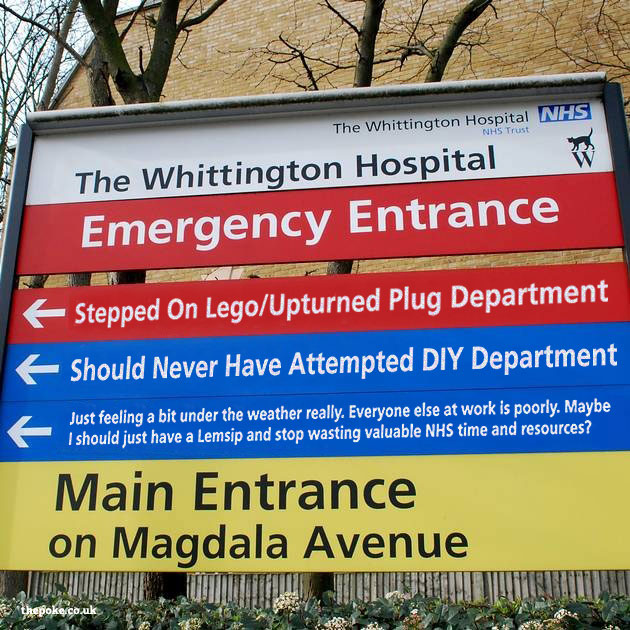
Photo attribution: www.thepoke.co.uk
This made me wonder… is one in four A&E attendances being ‘inappropriate’ really so bad?

Clearly, the NHS is stretched at the moment, and nowhere more so than A&E, where only 83% of patients are seen and sent on their way within four hours, as compared with a target of 95%. It is natural for us to want to see performance improve, and waiting times are doubtless inflated by ‘inappropriate’ attendees.

Of course, we should wonder what is meant by ‘inappropriate’ in this context. There are many possible classifications. Of course, attending A&E seeking treatment for a sick dog is undoubtedly inappropriate. But is it inappropriate to attend for ‘hangover help’? What if the symptoms of your hangover are difficult to distinguish from the symptoms of meningitis? The final diagnosis and healthcare provider’s perspective is not necessarily the best viewpoint from which to determine ‘appropriateness’.

Even if we assume that one in four attendances truly is inappropriate, it’s reasonable to question whether that is so bad. Considering the problem in terms of sensitivity and specificity, it is vastly preferable that the self-triaging process is sensitive (i.e. all people who really need A&E attend A&E), even if that’s at the expense of a degree of specificity (i.e. some of the people who don’t need A&E still attend A&E). As a doctor, I want everyone who has a life-threatening emergency to attend A&E, not for one or two to go to their local pharmacy, and I’m willing to accept that making that happen might mean that some less urgent cases also slip through the net.

People presenting to services inappropriately is anything but a new problem. Writing in The Lancet in 1849, Joseph Hodgson - the founder of what is now known as the Birmingham Midland Eye Centre - complained of the “growing evil” of “the indiscriminate admission of out-patients to charitable institutions”. His problem was, perhaps, a little different: people referring themselves to charitable hospitals even though “one half of the patients can afford to pay the surgeon his fee”. In order to avoid detection, many of his patients chose to “dress shabbily, and even borrow their servants’ bonnets and shawls”.

To my mind, the root of the modern problem is that we expect people, most of whom rarely use the health service, to self-triage between six (or more) levels of care. This is not sensible. Campaigns admonishing people for making obviously incorrect choices don't help this core problem, and may even counteract campaigns like Be Clear on Cancer, which encourage people to consult health services with symptoms which they may not recognise as ‘red flags’.

One solution to this problem is to introduce professional triage. Back in 1849, Hodgson suggested that “each applicant be compelled to bring a note of recommendations from the clergyman”; perhaps not quite such a useful recommendation for the 21st century. NHS Direct, and its successor NHS 111, were perhaps intended to provide the modern equivalent of the clergyman’s note, but do not enjoy a high degree of public or professional confidence. This is probably because triage over the phone is very difficult, even if it has been shown in research to reduce A&E demand. Perhaps options such as embedding GPs within A&E, as proposed by South Tees CCG, will provide an answer.

For now, here’s the bottom line: even as someone working in the system, I couldn't tell you where I'm supposed to take myself if I develop an unclear symptom. Telling me how inappropriate other people’s attendances are don’t help signpost me to the right place if I have, for example, sudden hearing loss or eye pain. Like very many other people, in situations of uncertainty, I am likely to err on the side of accessing a higher level of care, as I would not want to delay urgent treatment. Though I probably wouldn’t turn up wearing my servant’s bonnet.

Thursday, 7 April 2016

It's April: happy stress awareness month everyone!

Guest post by Dr Emily Henderson, Lecturer in Knowledge Exchange in Public Health and Research Fellow in Complex Systems at Durham University

April is stress awareness month. Why, you may ask? Maybe because it’s tax season. Or because parents have to look after their children during the Easter holidays. Or perhaps it’s to help recover from all the April Fools’ Day jokes, like the poor guy in Canada this year who reportedly collapsed from heart palpitations after his work colleagues convinced him he had to cut his holiday short to meet a deadline that had been moved forward.

 
Whatever the reason, it is happening this month. The Health Resource Network has deemed it so. And we at Fuse think it is a good opportunity to raise awareness about stress.

But I am already aware that I’m stressed
, I can virtually hear you reply. Fair enough. Nearly half of UK adults report feeling stressed every day or every few days, according to the Mental Health Foundation. With budget cuts, job insecurity and global crises, just to begin with, we all are stressed.
  
So what am I to do about it? We all have our coping strategies, which are biologically understood responses that humans and animals alike have evolved. Chimpanzees are known to groom each other to cope with threats and re-establish bonds. Stress and suffering are human universals. We can measure stress via stress hormones like cortisol, and there are physiological and some behavioural responses we can predict, like the ‘fight or flight’ response. But some behaviours are not predictable, and do not always make (immediate) sense. For example, Hilary Graham’s ethnographies of low-income single mothers showed us that, paradoxically, smoking was used to cope with suffering and thus improve wellbeing.

You, dear reader, have asked so many good questions up to this point, I have one for you: Considering the ‘causes of the causes’ of ill health, is the actual problem that these women smoked or is it the disadvantage they experienced? We have no choice but to cope in our own ways with stress. After trial and error, I know better now what I need to get perspective and find stillness inside. I am addicted to the oxygen highs I get through practicing yoga, and require connection with nature and people. But as a native to San Francisco, I am under cultural obligations to indulge in wine. Nobody is perfect. And nor should we ever aspire to this elusive ideal. Indeed, evidence for the health benefits of practicing compassion - either compassion for ourselves or for others - is growing. Beyond changing our behaviours, we must change the structures and systems that generate stress.

Spring is actually not about chocolate bunnies, but about renewal. So this April, in addition to trying new ways to cope with stress (see the Huffington Posts compilation of articles for Stress Awareness month, or NHS Choices mindfulness article), maybe get involved in a cause that seeks to alleviate suffering.

Please check out the Stress, Health and Wellbeing special interest group that I run through the Wolfson Research Institute for Health and Wellbeing at Durham University.

Photo credits
1. http://slstpaso.com/wp-content/uploads/2015/03/April-for-email.png
2. http://missinghumanmanual.com/wp-content/uploads/2011/05/grooming-chimps.jpg
3. https://thimesblog.files.wordpress.com/2014/02/keep-calm-make-your-voice-heard.png?w=600

Thursday, 31 March 2016

An egg-cellent reason to go to A & E?

Posted by Emma Dorée, Fuse Communications Assistant, Teesside University

Easter is a time that many people look forward to, not only because we get a couple of extra days off work but because it is an excuse to over indulge in copious amounts of chocolate.

This year however, it seems that Easter has become a problem for many people, especially the NHS. South Tees Foundation Trust NHS have this weekend released an urgent statement on their social media sites, urging people who have given themselves stomach ache from eating too many Easter eggs not to attend Accident and Emergency.

Data for NHS England in January showed that 88.7% of patients attending Accident and Emergency were dealt with in four hours – the worst monthly performance since the target of 95% began in 2004. These figures show that Doctors are under a lot of time pressure but what they don’t show is why.

I did a piece of investigative journalism to unearth the most comical reasons why people attend A&E departments in the UK and need your help in deciding which reason is the most outrageous one.

Below are 10 reasons, most of which featured in the The Choose Well campaign developed by NHS North West in 2011 to urge people to go to the right place for NHS treatment after new figures revealed that one in four A&E patients could care for themselves or get treatment elsewhere. The campaign includes a number of short films depicting "inappropriate" A&E scenarios being played out by actors, which are very entertaining and might help you to make an informed choice.

We added stomach ache from eating too many Easter eggs as the ninth reason to keep the list up to date. Which one will get your vote?

Make sure to keep an eye on our Twitter page to find out the results!

Create your own user feedback survey

Thursday, 24 March 2016

Supporting vulnerable communities in Australia and the UK: linking data through knowledge exchange

Posted by Theodora Machaira, PhD student at Teesside University

On the 8th of March we were pleased to welcome Jen Lorains, researcher from Australia, in Fuse. Jen was successful in winning a Winston Churchill fellowship and decided to visit Fuse as her main research interest is knowledge exchange and translational research.

As part of her visit, Jen delivered a Knowledge Exchange Seminar on ‘Early Childhood Data with Communities in Australia’. Her presentation focused on the Australian Early Development Census (AEDC) which is a national census which measures physical health, social skills, communication and general knowledge, language skills and emotions of 5 years old children. The AECD data is publically available and although it is not primarily used for knowledge exchange, it certainly facilitates it by enabling key stakeholders in early years to work with the data in order to improve child development outcomes.

Theodora (left) with Jen Lorains
Jen’s presentation was interesting on a number of levels but from a PhD researcher’s point of view, two things were most striking. First of all, thinking about child development assessments in diverse populations, I felt that Australia and the UK are not as different as I thought. In Australia, diversity exists mainly between indigenous and non-indigenous populations. Indigenous Australians have their own language, rituals and beliefs, which in early years and education settings can be challenging to deal with. Although, diversity in the UK is different and not as clear cut with many different cultures calling the country their home, diversity is also an issue over here and is now perhaps more prominent than ever. With that in mind, I was wondering, how fair (or accurate for that matter), is it to collect data on child development from all 5 years old children in English? Isn’t it possible that an indigenous child has good communication skills but in a different language? Of course, this cannot necessarily be taken into consideration in a national census. But surely that begs the question, are we classing children as having delayed development when perhaps we shouldn’t?

The second thing that got my attention was the issues with knowledge exchange in Australia that Jen discussed. She talked about how different professionals use the data and how challenging it is to have everyone on board when trying to develop common approaches to help children in areas where vulnerable children are identified as different professionals identify different solutions for highlighted problems. As my PhD focuses on systems change and developing a common approach between early years’ professionals, I again, thought about the similarities between Australia and the UK. Perhaps foolishly (I am only a year into my PhD!) I thought that these issues are a UK phenomenon, however, I quickly realised during Jen’s presentation that they are not.

Intrigued by these observations, I started talking to Jen after the seminar (and because Jen had an hour and a half to kill before her train) we decided to go for a drink after her seminar. Although some people might disagree, I thought that the pub was a great setting for knowledge exchange! We discussed my and her thoughts having travelled to the UK, USA, Canada and Peru, and realised that using research data with different communities in these counties requires researchers to be skilled in knowledge exchange. This will enable researchers to include these communities in interpreting the data and developing useful interventions with these communities. This might sometimes feel like fighting a lost battle but is essential to support vulnerable children identified through collected census data.

Thursday, 17 March 2016

Obesity: many perspectives, no magic solution

Lorraine McSweeney, Research Associate, Newcastle University

To coincide with Nutrition and Hydration week Lorraine reports back from the Westminster Food and Nutrition Forum.

On the 9 March I attended a Westminster Food and Nutrition Forum titled: ‘Next Steps on Policy for Obesity - Prevention, Sugar Consumption and Priorities for Children’s Health’. The original purpose of the forum was to discuss the Government’s childhood obesity strategy. However, as publicised in the Guardian on the 26 February, this has been delayed; with the Department of Health calling it a ‘complicated issue’ that they want to ensure is a ‘game changing moment’. Despite the strategy delay the forum went ahead to allow ‘experts’ in the field to share ideas and possible approaches for the strategy.

Speakers and panel members were a diverse group ranging from Public Health England (PHE); School Food Plan; Southampton Health and Wellbeing Board; Children’s Food Trust; ukactive kids; Family Lives; primary care; Advertising Standard’s Authority; British Retail Consortium; Kantar World Panel; Food and Drink Federation; and London Food Board… the list goes on...

The McLympics - advertising and sponsorship
PHE stated that the average diet in the UK is poor with too much saturated fat and sugar and too little fibre, fruit and vegetables. This is having a knock-on effect on our children, with one in five primary school kids overweight or obese, by the time children leave primary school, this figure rises to one in three. Contrary to popular belief, this is not just an issue of poverty; obesity is happening in both the most and least affluent areas. We are bombarded with opportunities to eat 24 hours a day and there are many drivers to buy and eat. Advertising and sponsorship, which some people don’t associate with advertising, can have a negative impact on child health.

The Chief Executive Officer from the Children’s Food Trust argued that good food should be a part of a child’s life from day one, right through their life. Food should not be tailored to be ‘child-friendly’. Children should be encouraged to eat smaller portions of adult food and should not be targeted by the food industries. Parents need to be listened to and families should be helped to cook more.

The need to get children moving more was discussed and included comments about modern life not encouraging children to be active; and schools too scared to work with parents and tell them how to keep their children active. It was stated that only a third of children enjoy sports and other solutions need to be encouraged. The primary care representative felt that too many patients are being treated with the consequences of obesity. She believes that primary care professionals are missing opportunities to discuss weight with parents; however, GPs reported not wanting to cause offence and felt they did not have the time to deal with the issues.

An overarching theme from the ‘health’ representatives was that prevention is key and that the food industry was part of the problem and should be involved in solving the problem. We were informed that in an average supermarket consumers have 30,000 products to choose from and consumer change is very hard to drive.

The impact of volume of sales of products such as sugar and bread, which have no immediate substitute, are shown not to be affected by price rise. The introduction of a sugar tax was highly debated; some felt it would not change consumer behaviour, whilst others argued it would offer one solution. However, following the success of the reformulation of products to reduce salt and saturated fat, it was agreed that the reformulation of products containing sugar could be a way forward. However, representatives from the food and drink industries stated that sugars would be more difficult as it has a structural function in food.

In addition, if a product was made ‘healthier’ consumers may be inclined to eat more of the product but it was agreed that alongside reformulation, portion size control could be beneficial. There was much discussion of whether legislation should be enforced on food and drink companies – the representatives believed that due to diversity of companies, a voluntary approach was better. However, it was argued that ‘if consumers continued to make incorrect choices – legislation was all that was left’.

As you can see from this very brief summary, obesity continues to be a very complex issue; it was thought-provoking to hear the different perspectives from health, policy, practice and industry. However, the discussions emphasised the point that there is no magic solution; the publication of the Government’s childhood obesity strategy is eagerly awaited.

Photo attribution: flickr.com, Santo Chino, "McLympics": https://www.flickr.com/photos/santochino/2797034750

Thursday, 10 March 2016

Social enterprises in health: can you make profit for the greater well-being of all?

Posted by Peter van der Graaf, AskFuse Research Manager, Teesside University

Is it ok to make money in public health? This was one of the key questions that that came out of the Quarterly Research Meeting on social enterprise and health last month, which was jointly organised by Fuse and the Institute of Local Governance (ILG), in association with the North East Social Enterprise Network (NESEP). Social enterprises are often involved in pioneering and transformational work that may help reduce pressure on public health providers within local authorities. But are we taking enough notice of their potential and is there an evidence base for such interventions? The event aimed to explore this theme, highlight best practice and identify barriers and opportunities for future work and research in this area.

The key note speakers first engaged in a bit of myth-busting: a social enterprise is not a legal form and does not mean the same as not-for-profit. They are not replacing the NHS or public health, are not promoting budget cuts and are not a form of corporate social responsibility. So what are they then? Professor Cam Donaldson from Glasgow Caledonian University offered the following definition: “organisations that trade for the common good (e.g. addressing social vulnerability) and where the profits of that trade are used for social and community benefit”.

Making profit for a good cause sounds like a good idea, particularly for cash-strapped health and voluntary and community sectors, but the discussions at the event made clear that this comes with a number of strings attached, which can have far reaching and often unintended consequences for organisations. For instance, bidding for contracts can shift organisational focus from addressing local needs. Organisations also have to be size and investment ready, with plenty of larger competitors out there going for the same contracts. And this can be a big ask, particularly for small community organisations that have no interest in developing a business strategy.
 
There is also an ethical dimension to this decision: moving health provision from the public sector to social enterprises means one less link in democratic accountability. Who governs the governors of social enterprises? Cam Donaldson referred to this as “the shadow state”. Is the market also the right model for public health and wellbeing delivery or does it cause further distortion of social priorities? One participant put it as follows: “Although commissioners understand the importance of well-being, they are unlikely to pay for it unless you can demonstrate that it will save them money”. If everything is all of a sudden an asset, where does that leave an ideology of free access to health and social care for all?

In summary, social enterprises in health leave a lot of questions unanswered but can make quite a difference, be it for better or for worse. Unsurprisingly, there was an urgent plea from participants to academics to develop more research in this area. Studies looking at social enterprises in health are rare and particularly their impact on health and the wider determinants of health is unknown.

Interestingly, participants argued for a move away from “REF impact research” and government favoured approaches, such as Social Return On Investment (SROI) analysis. They argued that economic models were less suited for capturing the wider range of health and social outcomes that social enterprises aim to deliver. Outcomes of social enterprises are often produced in co-production between commissioners, providers and service users and, therefore, needed to be measured as such. Therefore, participants advocated a more anthropological approach to impact research for social enterprises that allowed researchers to leave outcomes and their measurement more open from the start of the research to accommodate new meaning of impact along the way.

Would that perhaps be the greatest asset of social enterprises in health: turning co-production of evidence into a profitable approach?

A summary report of this QRM can now be found here.

Picture attribution: www.flickr.com, Tom Simpson, "I've always been able to turn mistakes into big profits!", https://goo.gl/ku0VRG 

Thursday, 3 March 2016

Practice what you preach

Guest post by Robin Ireland, Chief Executive, Health Equalities Group and Director, Food Active

I am invited to review the morning papers on a regular basis for BBC Radio Merseyside. I mainly pick health subjects to discuss and went for air pollution last week. A recent report suggests that 40,000 premature deaths annually in the UK are attributable to outdoor air pollution. The biggest contributor is diesel engines and we obviously need national policy in place to support people to make the switch; ideally to walking, cycling and public transport but - at a stretch - to engines not kicking out toxic fumes.

I had cycled to the studio that morning, as I usually do, but mentioned I own a car as well. The DJ focused on me and said, “I bet it’s a diesel …..”

Which got me thinking about practising what we preach. Instead of constantly haranguing people to eat better, exercise more, not smoke etc., are we putting our own house in order?  Yes, this can be important on an individual level, but it is critical at a population level.

We look to Government for legislation to support our healthier lifestyles and I was disappointed to hear about the latest delay in the publication of the Childhood Obesity Strategy. Yes, I would like to see a tax on sugary drinks and yes, I would like to see more controls on the marketing of junk food and drinks to young people.

But I would also like to see more powers to local authorities in their efforts to promote healthy weight. This is in fact what the Health Select Committee on Obesity recommended back in November: “Greater powers for local authorities to tackle the environment leading to obesity”

Blackpool Council sign the Local Authority Declaration on Healthy Weight
Back in August 2014, the North West’s Healthy Weight campaign, Food Active, invited Action on Smoking and Health (ASH) to give a presentation in Manchester on their Local Authority Declaration on Tobacco Control. Could this approach also work for overweight and obesity? Essentially, can local authorities look in-house at their own polices to see how they impact on healthy weight?

Healthy Weight has proved to be a lot more complicated than Tobacco Control – I am not in any way suggesting that the latter is straightforward either – as of course we don’t have a product that is toxic in every way!

What has now become the Food Active Local Authority Declaration on Healthy Weight, has gone through many iterations and discussions. Our governance team, which includes myself and local public health practitioners and academics, considered a number of options. Should a Declaration be focused purely on sugar for example? Food Active decided not, as local authority policies on healthy weight would be much the same and could be positive (around encouraging active transport for example) as well as negative.

Of course Sugar Smart Cities, launched at the end of last year in Brighton, is an alternative equally valid approach where, given the evidence base around the amount of sugar in our diet, it has been singled out as a target.

On 20 January 2016, Blackpool Council became the first local authority in the country to pass the Local Authority Declaration on Healthy Weight. It was signed in front of cameras in February by the local Director of Public Health and the Cabinet Member for Reducing Health Inequalities.

The Declaration commits an authority to take measures (there are 12 listed) where possible to, for example: “protect residents from the commercial pressures and vested interests of the food and drink industry ….” and “consider how strategies, plans and infrastructures for regeneration and town planning positively impact on physical activity”. For the full list please visit www.foodactive.org.uk.

So Blackpool Council are practising what they preach and they are doing their best to take on a complex and challenging task. As the declaration states: “We recognise that we need to exercise our responsibility in developing and implementing policies which promote healthy weight”. It won’t be a piece of paper that lies on a shelf …..

And, no, I don’t have a diesel engine in my car.

Thursday, 25 February 2016

Does size really matter for our health?

Posted by Peter van der Graaf, AskFuse Research Manager, Teesside University

A friend of mine recently posted on Facebook a story from a so-called “professional fatty”. In her story published in the New York Times, Sarai Walker took issue with what she called ‘obesity bias’: obese people being portrayed as the baddies. Or as Sarai herself puts it: "Even the most open minded critical thinkers become outraged if fat is spoken about in any positive way: a person can never be simply fat, a fat body always needs to be fixed”.

Instead she argues that the most significant problem for fat people isn't their bodies but the hatred and abuse they receive from society. And she is not alone in this thinking: protest movements have captured the attention of the media by rallying against what they describe as the narrowly focused weight based approach to health. An example is the Health at Every Size (HAES) movement. HAES proponents believe that health is a result of behaviour that is independent of body weight. This is a pretty bold statement that can easily be disputed with research evidence but that is not the point here. The point is that these protest voices chime with a lot of resentment at evidence-based public health messages. Sure enough, another friend joined the debate quickly on Facebook proclaiming her anger on the occasion that her daughter came home from school with a book saying sugar is bad. Public health’s head was once again on the block as the kill joy of everything good and fun and therefore worthy of disputing.

Picture courtesy of  Anna Deflorian/The New York Times
But if we keep getting the message wrong what do we achieve in the end with our evidence-based message? And what is the right message? Should we go along with the ‘Health at Every Size’ claim and focus instead on how to make life more enjoyable at every size? After some highly scientific browsing on Google I came across an article from David Katz, Director of the Yale University’s Yale-Griffin Prevention Research Center, in the Huffington post, which from its catchy title: “Why I can't quite be ok with 'okay at any size' appeared to promise an answer. David Katz also opposes obesity bias; he rejects the notion that widespread obesity among children and adults is somehow due to “an inexplicable global outbreak of personal responsibility deficiency syndrome”. Where he does not agree with HAES is the complete decoupling of weight and health: he is ok with any size if it includes a proviso: as long as health is not adversely affected. Flab is not always fab, he argues, and as a society we should not want to normalise ill health or the factors that impose it.

When I pointed this out to my friend on Facebook, her response was that these were two separate but related issues: one is that obesity carries health risk, which was a matter for the individual and perhaps their doctor. The other was the issue of stigma of obesity under the guise of concern for one's health which is a society problem. But is this really true? Should we define obesity as a private matter that is none of society’s concern and focus instead on developing a culture where people of all sizes feel accepted no matter the risk to their health?

The arguments and evidence presented by both proponents and opponents of the Health at Every Size seem to suggest to me that weight is as much a society/cultural issue as an individual behavioural choice. Hence the emphasis in Public Health on Whole Systems Approaches to Obesity and the impressive Obesity System Influence Diagram, developed in 2007 by the Foresight Project researchers. And perhaps therein lies the problem: if obesity is a complex issue at both individual and societal level (and not just complicated) we cannot simply choose one over the other (accepting fat as an individual’s prerogative for happiness or obesity as societies overriding health responsibility). We also cannot ignore the individual health risk of overweight and obesity but cannot accept the stigma we attach to individuals for failing to be thin. Instead, we might need to find new public health messages that frame individual choices in a cultural framework, for example: “You can be fat and fit but few of us are so why not try together to be a bit fitter?” Maybe it’s not the size but the message that matters more for our health.

Thursday, 18 February 2016

From school dinners to sugar tax: Jamie Oliver to the rescue!

Guest post by Dr Victora J. McGowan, Research Associate, Teesside University

I have to say thanks to Jamie Oliver, the media attention from his School Dinners programme led to research questions which went on to form my PhD project (the effect of school meal legislation on child malnourishment). After completing my PhD I thought that would be the end to my connection with the celebrity chef, little did I know that our paths would cross again a few years later. I began work at Teesside University in October 2014 charged with conducting a systematic review into the effects of fiscal strategies on sugar consumption in collaboration with Public Health England (PHE). PHE had recently published 'Sugar reduction: responding to the challenge' which outlined the work they would undertake to assess the evidence base and identify potential areas that would be effective in reducing sugar consumption.

While we were busy searching through over seven thousand research papers the media were just as diligent in searching for almost anyone (including me) to provide information on whether the government would introduce a sugar tax. As we inched closer to the final number of relevant studies which we’d include in our review, Jamie Oliver waded into the debate. I admire the way he uses his celebrity status to push a healthy food agenda, however, I’m often left thinking whether his involvement does more damage than good. In terms of school food, I interviewed school cooks who said his School Dinners series resulted in an almost immediate decline in children taking a school meal. Some might say this was a good thing if the food was as bad as Jamie portrayed it. Well, it wasn’t that bad everywhere and this reduction in school meal uptake had a detrimental effect on the cooks as their salary was based on the number of children taking a school lunch. So when he entered the debate on a sugar tax it made me nervous. Jamie was branded a "patronising bully" by Alex Deane Executive Board Member of the People Against Sugar Tax campaign and tory MP Andrew Percy said Jamie’s suggestion of a sugar tax was "a classic nanny state reaction and it won’t work". I truly believe Jamie means well but his celebrity status often clouds the evidence and can result in detrimental consequences.


As we were in the process of finalising our review of the evidence, a total of 11 published studies, Jamie’s sugar tax campaign was gathering momentum with an online petition to have the issue debated in parliament and a new series being aired, Sugar Rush. Jamie wasn’t alone in his campaign, groups such as Action on Sugar and the Children’s Food Campaign, had been pushing for a tax long before Jamie came along, however, the addition of one more cook had the potential to spoil the broth. The authors of the School Food Plan, John Vincent and Henry Dimbleby have also advocated the introduction of a sugar tax and already introduced a 10p levy on sugar sweetened drinks in their LEON restaurants. However, with great celebrity status comes great responsibility. A recent article by Sian Griffiths discussed how the proceeds from these unofficial sugar taxes could be used to pay for drinking fountains in public parks with the view that it may help children access free drinking water rather than purchase sugary drinks. A novel idea but would it work? I asked John Vincent on Twitter whether kids would use these drinking fountains, he hasn't responded.

Before the ink had dried on our final copy reviewing the scientific evidence, Jamie Oliver et al had already decided that a sugar tax would reduce consumption and the government must take action. When PHE published Sugar reduction: evidence to action (see annexe 2 for our fiscal review) in October 2015 it almost seemed like closing the barn door after the horse had bolted. The media furore around the topic was so great that articles were too busy calling Jamie names and telling readers it was nanny state gone mad to pay any attention to the evidence. Our review of the evidence, although based on a small number of studies, suggested that consumers are responsive to changes in food and drink prices and this supports the evidence from modelling studies which indicate a tax of 10-20% would have a significant impact on purchases. Moreover, recent evidence from Mexico has shown that purchases of sugar sweetened drinks declined by up to 12% after the introduction of a sugar tax.

The evidence collated by PHE indicates that a sugar tax could have an impact on population health if implemented alongside a range of other strategies such as reducing marketing exposure and price promotions on high sugar products (we also reviewed the marketing evidence see annexe 3). However, this seems to have been diluted by the media whose attention has been focused on taxation. There are benefits to celebrity chefs wading into the public health arena as they can help bring some attention to important issues. However, I think they need to be mindful that their high media profile could have negative consequences. Parents, children, and school meal staff did not take too kindly to Jamie “transforming” school lunches and the skewed media attention on a sugar tax has the potential to undermine the evidence base before any attempts are made to implement a potentially beneficial health policy.

Thursday, 11 February 2016

Animation designers... a day in the life of a researcher (part 2)

Guest post by Dr Victoria McGowan, Research Associate, Alcohol and Public Health, Teesside University, @teamalphatees

Team Alpha recently spent a few days with Arcus Animation Studios and we were joined again by our two young people, Megan and Glen, from local schools who have been helping us develop the animation which introduces our SIPS JR HIGH study to participants. Arcus designed and produced our 2D cartoon animation and kindly let us into their studios for a behind the scenes peek at how they work. Here are some reflections on how it went:

The team at Arcus were so welcoming and introduced us all into their creative world. Megan and Glen were shown how animations are developed and given tutorials on using various different graphic design software and tools, such as the graphic tablet. Team Alpha spent time admiring their work environment (an Aladdin’s cave of toys, games consoles and a miniature Star Wars AT-AT Walker) and were eager to join in the weekly Street Fighter competition held in their fantastic common room.
The animation team at Arcus
While Team Alpha were reliving their youth, Megan (centre above) and Glen were hard at work developing animation characters and storyboards. On day two Megan was interviewed by Arcus and described how her passion for graphic design influenced her decision to assist us in the development of our SIPS JR HIGH animation.

She said: “I have been helping Teesside University in terms of creativity and research for the animation. The reason for this is because I am interested in graphic design myself and would love to get involved in some experience and voluntary work with animation and design companies”

The experiences of Megan highlights the benefits of participant involvement in the development of research, not only to the study, but also to the individuals. Megan and Glen were able to gain experience of working in an animation studio and see first-hand what a career in this area would be like.

“I like how the job will include drawing, animation and creativity. It also inspires me to be myself and not to follow instructions of what to do as part of designing something. I also like how you can design your office to what you like and enjoy, I think that it’s good for people to express their likes of designing and working with people that have the same interests as you”

Megan was very grateful for the opportunity to spend time with Arcus, this gave her insight into the life of an animation designer and gave her confidence to continue pursuing this career.

“I think Arcus has been very useful and they have given me ideas for further experiences and other work that I will be doing. They have given me a warm welcome into their company and also took me through tutorials of how their programs work and what they do to build up an animation. I have enjoyed my time at Arcus and the people here are very nice and outgoing! They each have their own personality which I like and they all have a story behind how they have achieved what they have done to become an animation designer.

Thank you Arcus!”

Thursday, 4 February 2016

Doing the dots

Guest post by Jane Johnson, PhD Researcher at Teesside University

“You coming over to see the New Year in?” asked my sister, munching what I imagined was a handful of salted pretzels in the shape of small Christmas trees.

“Yes if I can do your posture.”

“What’s that?”

“You know, where you stand in your underwear and I stick dots on you.”

“Sure.” She didn’t need convincing, and as a blood relative was beholden to support my requests as long as I turned up with two bottles of something excruciatingly dry with an alcohol content that prevented you from driving anything other than an electronic wheelchair within the next 24 hours.

“Is she doing me?” said a voice in the background, my mum, no doubt trying to find when Downton Abbey was on. Not having had a TV for the last 10 years, period dramas pass me by unless any of the characters have interesting postural faults, not the kind of thing usually reported on in the review section of The Telegraph.

“Mum says are you doing her too?”

“Happy to. Don’t drink anything ‘til I’m done though, ok?”

“Don’t drink anything, it’s New Year’s Eve!?”

“I know. Postural sway. I need to minimize it.”

Many therapists believe there is a link between posture and pain. Postural assessment is carried out in order to help with diagnosis, inform treatment plans and monitor postural change. Most therapists do this with visual assessment alone, the inter-rater reliability (degree of agreement among raters) of which is poor, and despite reasonable intra-rater reliability (degree of agreement among repeated administrations of a test by a single rater), it's unlikely a therapist can visually detect what could be a clinically significant minor change in posture. For many years researchers have been looking into ways to measure posture more accurately and more reliably than with visual assessment alone. This is where my research comes in. Whilst there are ways to do this in research settings, there are none that are yet viable for practicing clinicians to use in situ. My PhD involves the development of a postural assessment app from existing software which has already been validated for use on a PC, which was initially designed for use with patients with scoliosis.

Mum stood first, fresh from a bath and eager for me to finish so she could cover herself in moisturizer. “No you can’t put it on,” I said sternly as she sat in a bathrobe snacking on savories from small china bowls, “otherwise my dots won’t stick.” I agreed she could keep her socks on. She was 80 after all. My sister was next. I only had to admonish for laughing during the procedure.

Once the self-adhesive dots have been applied to specific anatomical landmarks, software can be used to calculate the angles between the dots from photographs. The angles that are calculated describe different types of posture in different parts of the body, more so in the spine. There are other apps on the market but it is not known how reliable these are. Unlike these commercial apps, the purpose of my PhD is to create an app for data collection. It will be used in year three of the project by chiropractors, to record the posture of their patients with back and neck symptoms. Use by chiropractors is important because the project is joint-funded by the Royal College of Chiropractors and Teesside University. The patients of participating chiropractors already complete a validated Patient Reported Outcomes Measures questionnaire. Combining this data with the additional photographic posture data, we will hopefully identify whether postural change occurs as a result of chiropractic intervention and whether there is a relationship between posture and pain (symptoms). In the future we hope we can identify whether any postures increase the likelihood of a subject developing back or neck pain, and whether changing back or neck posture reduces symptoms. If we can do this, we can then advise people proactively and reduce their likelihood of developing symptoms in the first place.

With my sister and mum in their New Year’s Eve underwear I worked consistently, palpating the required anatomical points, peeling off and applying green dots to them. The initial satisfaction of fixing self-adhesive dots to skin wore thin after an hour. I took the 12 photographs knowing that photographs taken by candlelight would not be of publishable quality but were adequate for my purpose, which was simply to have some images with which to practice using the software. “Can we drink now?” asked mum and my sister together? “You can drink now,” I said.

Tuesday, 26 January 2016

Should Nanny be in charge of the tuck-shop (and off-licence)?

Guest post by John Mooney, senior lecturer in Public Health at Sunderland University

Aside from inclement weather and beautiful coastlines, there are a number of more worrying close parallels which the North East of England shares with my native Scotland. Most notable among these are an embedded culture of heavy drinking and an ongoing aversion for substantive proportions of both populations to fresh fruit and vegetables, alongside a fondness for fried and fast food.

The unfortunate consequences of these ‘’lifestyle choices” speak for themselves in the league tables for obesity across the life-course and in the statistics for alcohol related liver disease mortality, where only Scotland has higher rates than the North East. Despite good evidence that parts of Scotland, notably Greater Glasgow and West Central Scotland, have a more significant health burden than comparable areas in England (the widely publicised ‘Glasgow Effect’), there is no room for complacency in the North East, as front-line public health teams know only too well (especially since much of Scotland's culinary delights, including Tunnock's teacakes, are readily available in most major grocery retailers).

Is Scotland ready for a Tunnock’s tea-cake tax?

As an embedded researcher in Sunderland City Council where I work one day a week with the public health team, I have the dubious privilege of being immersed in the reality of what this means for those engaged in efforts to improve population health in the region. Specifically, there is the ever present tension arising from the contrast between the current consensus about what types of intervention might work best, alongside the reality and constraints that can frustrate their implementation. Flipping back to North of the border, Scotland’s best example of that practical tension has to be the ongoing legal machinations of the European Courts, dealing with industry raised legal challenges to alcohol minimum unit pricing.

My own previous experience during a career development fellowship at the Scottish Collaboration for Public Health Research and Policy (SCPHRP), gave me a small taste of comparable “practicality constraints” when our review of the international evidence around obesity prevention highlighted that a sugared-drinks tax would be the most promising and cost effective intervention at a national level. The commonly used slang for all fizzy drinks in Scotland (due to the popularity of a certain rustic coloured tipple) of ‘bottles of ginger’ led the Scottish Daily Mail to pronounce on its front page: “Nanny State Researchers propose a Ginger Tax!”. It’s only fair to say that SCPHRP Director, Prof John Frank’s subsequent telephone conversation with the then Treasury Secretary, Danny Alexander was particularly tense!

The all pervasiveness of the term “nanny state” in relation to public health interventions was recently brought home with a colleague’s recollection of her eight year old daughter’s reaction to school tuck shop restrictions: “I don’t want to be living in a <>~^+*!! nanny state”. It was very much in evidence also with the Chief Medical Officer’s festive cheer about there being no safe minimum level of alcohol consumption in relation to cancer risk. No surprises for guessing how that particular advice was received by New Year revellers in Scotland.

While public health “nudge” messages are often ridiculed as nanny state interventions, what is often forgotten in relation to dietary or behavioural advice is that these “nudge messages”, whether around availability, affordability, or portion (glass size/ strength of beverages), have all been incrementally (and imperceptibly) ratcheted up in the other direction over preceding decades. This could equally apply to the added sugar content of processed food and drink or the cultural normalisation of everyday drinking.

This should not however be a council of despair for public health practitioners and policy makers across the board. Smoking was once thoroughly normalised behaviour in all public and workplace environments. The legal challenges to alcohol minimum unit pricing, the most effective intervention at reducing excessive consumption based on solid international evidence, are steadily being chipped away in my native Scotland and perhaps “a ginger tax” for the whole of the UK might not be far away. Especially now Jamie Oliver has taken up the mantle of the sugared drinks tax debate and NHS Chief (Simon Stevens) seems, as of last week, to be fully on board – for NHS premises at least. Although I dread the reaction of my colleague’s politically savvy eight year old when she finds out!

--------------------------------------------------------------------------------------------------------------------------

John Mooney FFPH is senior lecturer in Public Health at The University of Sunderland and spends one day per week with the public health team at Sunderland City Council.

He will be presenting at Teesside University’s Health and Social Care Institute lunchtime meeting in a talk entitled: Is Scotland Ready for a Tunnock’s Tea-cake Tax and other public health conundrums? On Wednesday 27 January 12.30 – 2pm in C2.22, Constantine Building, Middlesbrough.

Thursday, 21 January 2016

Dry January works for many. I'm going binge-free all year round

Guest post by Dr Victoria McGowan, Research Associate, Alcohol and Public Health Team, Teesside University, @teamalphatees

New Year’s Eve is celebrated around the world and New Year’s Day follows with many debilitating hangovers. In my case this is made so much worse as a close friend’s birthday is on 30 December, so on New Year’s Eve I’m usually nursing a hangover and wondering how I’ll conform to social convention and partake in more alcohol consumption while waiting for the clocks to strike midnight. I always manage. Taking a look at Professor Newbury-Birch’s post from November 2015 I will hold my hands up and tell you over those two nights I binge drink, every year.

About five years ago my friend and I sat in my back garden in an inebriated state and discussed how terrible we’d feel in the morning and that we should, and could, spend a whole month off the booze. I wasn’t aware of any dry January campaigns at the time and according to Wikipedia “Dry January” was registered as a trademark by Alcohol Concern in 2014, so my friend and I were ahead of the game. At the time I thought it would be quite difficult to spend a whole month booze free but I found it surprisingly easy. Although, I often go weeks without consuming alcohol so perhaps abstinence for a month wasn’t a great stretch from my normal consumption patterns. My friend made it until 30 January before she succumbed to social convention when we went out to see a band. But still, 30 days out of 31 is close enough.

Abstaining from alcohol couldn’t happen at a better time in the year, our purses tend to be a little lighter and our waistbands a little tighter so it’s a win-win situation saving £s and shaving lbs, by swapping the wine for water. But also, according to the New Scientist, dry January can have beneficial effects on your liver, and NHS Choices say it can lead to healthier long-term drinking patterns. So if it’s so good for us and it’s only one month out of 12 why am I never doing it again? Because dry January would be easy for me, I do it often without thinking and I have done it successfully in the past. What I would find challenging is consuming the recommended daily units for a woman on the occasions I do drink alcohol. This equates to 3 units (three small glasses of wine) as opposed to the 18 (two bottles of wine) I consumed at the end of 2015. I might abstain from alcohol a month at a time but drinking a whole bottle of wine in one sitting puts me above recommended daily limits. Dry January is a great idea but one booze free month cannot outweigh 11 months of 9 units even if they only happen once a month. A similar argument has been made by other writers, including a recent paper in the British Medical Journal by Ian Hamilton titled: Could campaigns like Dry January do more harm than good?

So instead of taking part in dry January this year I’m attempting binge-free moderate-months by being aware of, and trying to stick to, the recommended daily limits on the occasions when I consume alcohol.

What do you think about Dry January? Post your comments below.

Thursday, 14 January 2016

Christmas dinner: a pleasure not to be underestimated

Posted by Duika Burges Watson, Fuse staff member and Lecturer in Evaluation and Policy Interventions, Centre for Public Policy & Health, Durham University

The final event for our research project exploring the potential of progressive cuisine to improve quality of life for head and neck cancer survivors was a Babette’s feast of sorts. Babette’s feast, the novella by Isak Dinesen (Karen Blixen), centres on the story of a most remarkable and transformative meal. In a remote and austere community in Northern Denmark, Babette cooks up a storm for the abstemious community. A religious cult denying all pleasure, the community is reluctant to eat anything that might be ‘wickedly’ enjoyable. Finally convinced of Babette’s desire to thank them for their support at the time of her father’s death, the French trained chef is permitted to use some new found wealth to prepare a sumptuous feast. During the multiple courses, the community is existentially transformed. Their enjoyment and love of life and feelings of well-being become undeniable as each delicious course is presented, despite their efforts to pretend otherwise...

Courtesy of amazon.co.uk
With our Christmas dinner, we didn’t set out to do anything other than thank the participants for their involvement in the research. We knew from our qualitative food play workshops (25 in all) that participant survivors missed the opportunity to socialise around food; their difficulties with food and eating (including swallowing, speed of eating, limited food choices, and fear of choking) made a ‘normal’ eating out experience unlikely[i]. So we invited the project’s Research Chef to prepare a Christmas meal that we hoped they would enjoy.

The tasting menu, or menu degustation (below) was designed as an adventure in dining, in which multiple very small courses make it easier to undertake - when you know that if you don’t like one, there are plenty more before and after to select from. The delightful setting at Irvin’s brassiere on the North Shields Fish Quay provided an opportunity for survivors to dine out, at their pace; to select from a range of dishes, and to enjoy some of the foods we now knew would be acceptable (with a diversity of eating difficulties, increasing options would ensure there was something on the menu for everyone). What we hadn’t anticipated was how much they’d enjoy the leisurely three hour lunch. Unlike the diners at Babette’s feast, survivors of head and neck cancer do not deny the pleasure of food, it simply may not be an option.

The menu that was offered to participants
Our Resources for Living research has centred on the potential of using some of the progressive cuisine techniques derived from the new ‘science of deliciousness’, an interdisciplinary approach to understanding our sensory perception of food with input from physics, chemistry, neurology and psychology[ii]. Chefs around the world are gaining insights into food in ways never before explored, and we developed the interdisciplinary research project on the assumption that some of these new understandings might improve quality of life for those living with the long term altered eating side effects of cancer and its treatment.

Our research, and the research of others, has showed that the loss of pleasure associated with food can be ‘almost unbearable’. Recent research in neurology suggests that there is one ‘pleasure centre’ in the human brain. In other words, “the pleasure evoked by food is remarkably similar to that of other rewards, suggesting a unitary pleasure system, whether engaging with food, sex, social or higher-order rewards”[iii]. In our research, finding ways to improve quality of life is intimately connected with the loss of pleasure. While we uncovered some ‘compensatory pathways’ such as participants finding pleasure in cooking for loved ones or engaging in exercise, the ability to eat a nine course meal appeared to do much more than just provide satisfaction. Participants reported feelings of well-being and happiness that they’d truly missed, some for years.

For our Christmas meal insights, thanks must go to Sam Storey, our brilliant chef on the project, and to the team of researchers and survivors involved who together have worked to understand, and find ways to manage, the challenge of living with altered eating difficulties.

Resources for Living (R4L) Pilot: Exploring the Potential of Progressive Cuisine for Quality of Life Improvement for Head and Neck Cancer Survivors is funded by the National Institute for Health Research (NIHR) Research for Public Benefit (RfPB) programme.

--------------------------------------------------------------------------------------------------------------------------
[i] Wells, M., 1998. The hidden experience of radiotherapy to the head and neck: a qualitative study of patients after completion of treatment. Journal of Advanced Nursing, 28(4), pp.840-848; Cousins, N., MacAulay, F., Lang, H., MacGillivray, S. and Wells, M., 2013. A systematic review of interventions for eating and drinking problems following treatment for head and neck cancer suggests a need to look beyond swallowing and trismus. Oral Oncology, 49(5), pp.387-400. 

[ii] Mouritsen, Ole G. "The science of taste." Flavour 4.1 (2015): 18.

[iii] Kringelbach, M.L., 2015. The pleasure of food: underlying brain mechanisms of eating and other pleasures. Flavour, 4(1), p.20.

Thursday, 7 January 2016

The blog monster returns with a shameless plug

Posted by Emma Dorée, Fuse Communications Assistant

Just over a year ago, we wrote about how far the blog had come since it hatched and it’s safe to say that the waistline of the - now fully grown - ravenous blog monster continues to expand.

Feed me, Seymour!
Since its creation in May 2010, the Fuse blog has had just over 167,000 views and we’ve posted 334 blogs – a great achievement, right?!

As a result, we wanted to do something to celebrate this success and to see if we could reward all the contributors that make the Fuse blog what it is, so we have entered the UK Blog Awards 2016!

The blog has been entered into two categories: 'Health and Social Care', and 'Education'. You can vote for us in either category but of course we would really appreciate it if you voted for us in both.

You can vote for the Fuse blog once a day by following this link. We will be encouraging people to do this via our social media feeds but it would be even better if you could spread the word and encourage your friends and family to vote for us too.

http://www.blogawardsuk.co.uk/ukba2016/my-entry/fuse-open-science-blog
Click here to vote for the Fuse blog now

Most importantly however, we still need people to continue sending us blog posts so if you work in public health then please get in touch.

We want to hear about your aims, priorities and challenges or which issues you think need to be brought in to the public eye and debated. Could you give an insight into your role within public health for those not directly involved? Or is there a public health campaign in your area that you wish to promote or a topical news issue or event happening which could coincide with your post?

We post blogs at least once a week and publicise them via our Facebook page and Twitter account. The blog has its own website but of course, you can also view the blogs by visiting the Fuse website.

Email your posts to me (E.Doree@tees.ac.uk) and please let us know if you think there is anything we can do to improve the blog.

Thank you to everyone who has contributed to the blog so far. You have sparked great discussion and helped our readers learn what it is really like to work in public health, no matter what your role is.

The UK Blog Awards 2016 competition closes at 9pm on the 25 January so don’t forget to keep voting for us as much as possible until then!

Photograph ‘into the mouth’ by Len "Doc" Radin via Flickr.com © 2005: https://www.flickr.com/photos/drurydrama/1079598181

Thursday, 17 December 2015

The big countdown

Posted by Emma Dorée, Communications Assistant for Fuse

It’s that lovely time of the year again when we count down the days to Christmas. Whilst we are frantically running around trying to complete our Christmas shopping, we are also eagerly waiting in anticipation to see if this year’s X Factor winner will make the number one top spot and whose festive Foxtrot will lead them to become the Strictly Come Dancing winner.

The Fuse Blog however is having a countdown of its own. Seeing as so many great blogs have been written this year, we thought it would be a good idea to have a look at all of the blogs from 2015 and create our very own ‘Top 5 chart’ of the ‘bestsellers’.
 
So let’s begin….

At number five: No time to run: role overload contributing to physical inactivity in parents? Caroline Dodd-Reynolds’ post looks at how parents find it difficult to fit physical activity into their daily busy routines. With 604 views, this is clearly a subject that lots of people, especially parents, can relate to.

At number four: How active are pregnant women? Measuring the methods. Louise Hayes and Cath McParlin debunk the ‘pregnant pause’ and tell us that guidance recommends that pregnant women should actually be doing at least 30mins of exercise on most days of the week to help reduce the risk of gestational diabetes. This post squeezes into fourth spot by the narrowest of margins, reaching 606 views since publication in May 2015.

In at number three: The troubled families programme: what’s health got to do with it? A guest post by PhD student Stephen Crossley explaining how the Government is helping (or rather not helping) families that need the most help. Stephen goes into great detail about the Troubled Families Programme explaining that health plays a huge role in this issue. This post has had 657 views since it was published in June 2015.

At number two: Bull Sperm and ‘poor parents’: the role of myths in public health practice. Another entry for Stephen Crossley. In this post he takes on the urban myths that surround energy drinks and political myths about benefits and austerity. This post has had close to 750 views.

And finally, time for the top Fuse blog post of 2015. Drum roll please….

Thunder, thunder, thunderclap: when a blog post hits the campaign trail. This blog was written by Fuse Communications Officer Mark Welford and has had an amazing 1575 views. It describes how a Fuse blog post caught the imagination of readers and became a national viral campaign, prompting a campaign page to be set up for people to support the idea that supermarkets should remove unhealthy food from their checkouts. This post followed two other ‘big-hitters’ on the same subject by Mel Wakeman and Amelia Lake: Who’s opting out of responsibility? Battle of the checkouts and Time to chuck the checkout junk? Both have received more than 900 views.

So there you have it, the top five Fuse blog posts from 2015. Let’s see if we can create even bigger and better blogs for 2016!

Did you enjoy reading this post? If so, please vote for Fuse in the UK Blog Awards 2016 by clicking here

Thursday, 10 December 2015

"What should I wear?!" - My first conference as a PhD student

Guest post by Roxanne Armstrong, PhD student at Sunderland University

First of all, let me introduce myself. My name is Roxanne and I am currently doing a PhD at the University of Sunderland and I am part of the Fuse partnership. On the 18 – 20 November I attended my first ever conference, the UKCRC public health conference that took place in Edinburgh. I am going to use this blog to guide you through my experience, not to include the academic research that was presented. Hopefully providing an insight into what the “First Conference” feels like for a PhD student.

I am writing this blog, because despite being surrounded by a really supportive supervisory team, there are some things you just wouldn’t ask. A few examples; “do you think a four inch wedge is too formal for the day events? How about with jeans? Do I wear a dress for the conference dinner? Are flat shoes okay?”. This list goes on… This “fashion anxiety” led me to take a suitcase that could clothe a small town, four pairs of shoes and an array of eye shadow shades that a stylist from London fashion week would be proud of.

I started my journey on the train. A busy, smelly, full train. I had reserved a seat, sure, but due to me being (possibly overly) kind, I let someone take it. I glanced around and saw some other Fuse members that I recognised; I braved going over and introducing myself and ended up having a really nice, chatty trip to Edinburgh. Hurdle one – accomplished!
Professor John Frank, Director of  SCPHRP, got into the Scottish spirit at the conference dinner
Second hurdle, accommodation. Would I have a bed? Would I be sharing with a stranger that was prone to sleepwalking? How about free toiletries? I had no idea what to expect and have heard some fairly scathing reviews about conference accommodation. When I walked into my room I practically had to call someone to pick my jaw up off the floor. My accommodation was bigger than my own house! Bed? Check. Free toiletries? Check. Oh and two double beds, two plasma TVs and a kitchen area. I felt like Kate Middleton; surely this means I have made it in the world….

The third hurdle I faced was being in a sociable environment with people I’d only ever seen in a professional light. This was the most rewarding aspect for me; making connections, talking about normal things with lovely, like minded people. We shared mealtime and a couple of drinks and I finished the first evening with people I now class as friends.
Making connections with lovely like minded people
The conference itself was another challenge; I was full of nerves thinking about all of the other academics that would be there and how I’d act around them, but in truth it was so easy going. I was engaging with lots of approachable individuals with a lot of knowledge to share and exchange. I left the conference sessions feeling excited for my own future and how I was so grateful that I have such a diverse and welcoming community around me for at least the next three years and hopefully many more after that.

If I had to give some advice to someone who had never been to a conference before it would be the following: be open minded – every conference is different and you will find yourself being a social chameleon, adapting to whoever you meet, this is a great skill to develop. Secondly, enjoy it! I enjoyed every minute and really made the most of it. Finally, take as many free pens as your pocket will allow… That’s what they’re there for!

Oh, and I couldn’t end this blog without telling you – I opted for three inch wedge boots, jeans and a neutral shade of eye shadow. You’re welcome.

Did you enjoy reading this post? If so, please vote for Fuse in the UK Blog Awards 2016 by clicking here