Saturday, 8 April 2017

Passionate Advocacy versus Dry Evidence

Posted by Peter van der Graaf, AskFuse Research Manager, Teesside University

Should public health researchers be passionate advocates of their work when engaging with policy makers or should they present their findings in the most neutral way possible, sticking to the facts only (and preferably economic figures) to encourage take up of their research? This question was the focus of a heated debate at the recent national School for Public Health Research Annual Scientific Meeting, bringing together researchers from eight different centres of excellence across the UK and a selection of senior health practitioners at the Royal Society in London.

Chris Whitty: academics should present their findings neutrally
to politicians without making any advocacy statements
The tone for the debate was set by Professor Chris Whitty, Chief Scientific Adviser for the Department of Health, who challenged the audience to be more ambitious in their public health goals. At the same time, he warned academics to play to their strengths: if they wanted to ensure impact of their work, academics should present their findings neutrally to politicians without making any advocacy statements, as this would deter politicians. Advocacy should be reserved for politicians, who in turn are supported by economic advisors. Therefore, academics would do well to present their data in terms of opportunity costs and trade-offs; without solid economic back-up, any evidence claim would be quickly dismissed by politicians, according to Whitty.

This provoked strong reactions from audience members and particularly on Twitter, where a lively discussion ensued throughout the rest of the day. People questioned whether it is possible or even desirable to leave advocacy at the door when dealing with politicians. Some argued that, from a social science perspective, there is no such thing as neutral evidence and that it is our duty as public health scientists to take a stand and advocate against increasing health inequalities. Others disputed the need from politicians for dry evidence, stating that purely evidence based approaches can leave politicians cold without a persuasive narrative. Instead, emotionally informed and narrative research was important to persuade local government. Researchers needed to align themselves with local government concerns and cultures and acknowledge the importance of context to have any impact.

Duncan Selbie: academics should be more ruthless, coordinated and angry
in the interactions with policy makers to get them to act on the evidence
Duncan Selbie, Chief Executive at Public Health England, poured oil on the fire in the afternoon by appealing for the exact opposite to Chris Whitty’s call for more neutrality: academics should be more ruthless, coordinated and angry in the interactions with policy makers to get them to act on the evidence that academics have generated. He encouraged public health researchers to make more use of behavioural science to help policy makers take notice and implement their findings. This provoked several reactions, with some participants highlighting the role that advocacy played in the public health fight against the tobacco industry, while others made passionate pleas on soapboxes for the re-politicising of public health science, arguing that it was unhelpful to divide science and politics into two separate worlds.

The storm seemed to settle towards the end of the day, when Twitter users and audience members started suggesting solutions for the debate, which was dubbed “Passionate Advocacy vs. Dry Evidence”. One suggestion was that public health researchers should develop a ‘horses for courses’ approach: at certain times some people needed to be passionate advocates, while others at different times needed be neutral scientists to get the listening ear of politicians. The different approaches were related to different levels at which politicians operate: local politicians were more persuaded by narratives emerging from research and advocacy, while national politicians valued neutrally presented evidence and data.

Others suggested the use of intermediates to make the advocacy case for public health, such as voluntary community organisations that represent the will of the people, and by focusing research on the key questions that front line workers are struggling with. Or even better, persuade policy makers to become advocates of research evidence!

Overall, participants agreed that science needed to be pushed more up the policy agenda, as research is currently losing out to politics and economics. Therefore, in some circumstance researchers need to consider accept that submitting good enough evidence quickly is better than waiting too long for perfect peer reviewed publications. Furthermore, we need to be aware that different kinds of evidence are used in decision making processes.

My favourite solution was proposed by Professor John Frank, Director of the Scottish Collaboration for Public Health Research & Policy: if you want good policy influencers, you need to change the academic model to produce them. The biggest barriers to knowledge mobilisation are structural and often in academia. As long as we don’t train public health students in engaging with policy and practice partners, fail to teach and reward them in how to use different types of evidence and do not involve them in collaborative research, we will keep returning to this debate for many Annual Scientific Meetings to come.

Friday, 31 March 2017

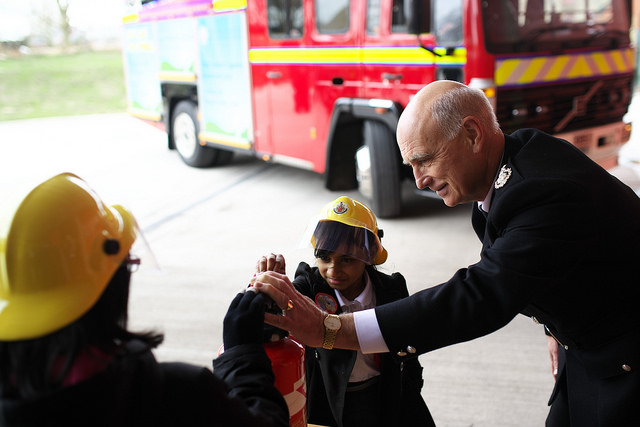
Do public health practitioners make good fire fighters?

Posted by Peter van der Graaf, AskFuse Research Manager, Teesside University

Given ongoing budget cuts and diminishing local capacity, one might be forgiven for thinking that soon public health practitioners will only be responding to emergencies, such as disease outbreaks and substance abuse epidemics. Fighting these public health fires would leave little time and resources for prevention and working with other public organisations. An event co-organised by Fuse, Durham County Council and Darlington Fire & Rescue Service recently proved quite the opposite: fire fighters and other public organisations are very capable of ‘doing’ public health.

Can public health researchers learn a trick or two from fire fighters?
The increasing focus of the Fire and Rescue Services on prevention over the last 10 years has seen the development of innovative approaches that support public health: from helping people with dementia, to tackling child obesity and getting people active (for some excellent examples, see the Local Government Association (LGA) report Beyond fighting fires).

In Durham, the Fire and Rescue Service implemented so-called Health and Wellbeing Visits. As part of home visits to check fire safety, fire fighters ask residents questions about their health and wellbeing (e.g. about falls, smoking and alcohol use, heating and loneliness and isolation) and provide them with advice or signpost residents to relevant services to address any health concerns.

Over the past year (Feb 2016 – Jan 2017), no less than 15,732 Health and Wellbeing Visits have taken place with over 1,800 referrals to various services in Durham and Darlington, accessing vulnerable residents that are often not on public health’s radar. Because of their trusted reputation, the Fire and Rescue Service can get behind the front doors of these people and help them access health services. Perhaps not surprisingly most referrals relate to loneliness and isolation, with an ageing population keen to live at home independently but with a social care system lacking resources to support these people in and outside their homes.

Even the police is getting in on the act of public health prevention with partnerships being established between health and the police across the UK to support, among others, suicide prevention and reduce alcohol-related harm, as was recently illustrated in a Public Health England paper.

In turn, public health practitioners are taking on new activities that were previously deemed outside of their scope. For instance, the Durham County Council’s public health team is actively supporting energy efficiency improvement schemes (such as Warm and Healthy Homes), in recognition of the link between excess winter death and cold houses. Poor quality housing, low incomes and high energy costs result in residents having to choose between food or fuel. To prevent residents from having to make that choice, council officers are providing tenants at high risk (e.g. people with cardiovascular and respiratory conditions) with new central heating, boiler repairs, home insulation and energy saving advice.

This blurring of boundaries between public professionals is not new, but public health moving back into local authorities has created opportunities for linking prevention activities across a wider range or organisations. The event provided many other examples of this, e.g. GPs prescribing boilers to patients with long-term conditions and Citizens Advice providing welfare rights advice to elderly residents.

This new boundary blurring builds on existing policy initiatives, such as Making Every Contact Count and Health in All Policies, which all involve the wider public health system. Participants at the event made it clear though that this is not a simple cost-saving exercise, allowing councils to pass the public health buck to other parts of the system. Instead, these new partnerships are characterised by a genuine exchange of knowledge and practices between public organisations at the front-line. It highlights a new way of working that recognised joint priorities and the values of other professions to achieve these priorities through the sharing of resources and by taking on new roles. As Professor David Hunter outlined in his presentation at the start of the event, these new partnerships require a different form of leadership, which is less hierarchical and formal, not so much concerned with Key Performance Indicators and commissioner-provider splits, but more focused on the value of relationship building, trust and 'soft' skills.

The event provided a platform for looking at these new partnerships and the evidence for their effectiveness. If anything, it highlighted a challenge for public health academics to research these new partnerships: how to make sense of the contribution of each partner in a system where boundaries are rapidly blurring? Maybe public health researchers can learn a trick or two from fire fighters.

Find out more about the event: Creating Healthy Places in the North East: the Role of Fire and Rescue Services and Fuel Poverty Partnerships

Photo attribution: "Rochdale Fire Station Opening Day" by Manchester Fire via Flickr.com, copyright © 2014: https://www.flickr.com/photos/manchesterfire/13288225965/

Friday, 24 March 2017

Beyond bricks and mortar: re-thinking home and health

Dr Philip Hodgson, Senior Research Assistant, Northumbria University

In a time of continued public spending cuts, policy drivers to age in place (to grow old in the home or in a non-institutional setting in the community) and an increasing ageing population, the challenge to ensure that people can live longer and healthier in their own homes is growing. Yet, solutions for this, when a host of other factors – the development of housing to meet commercial rather than health pressures, future generations with little equity in housing that can be used to fund future care, the prevalence of a belief in a “forever home” – are difficult to identify.

That was one of the core messages discussed at the first ‘Home and Health’ research group hosted by Northumbria University and Fuse (via the pump-priming research fund) last month. This brings together researchers, practitioners and policy makers interested in the impact of housing on health. The seminars aim to foster a core working group, culminating in the development of concrete plans for collaborating on further research in this area. Building on insights from previous Fuse Quarterly Research Meetings (‘Creating Healthy Places in the North East’ in October 2015 and ‘Reuniting Planning and Health’ in April 2016), the seminars aim to take stock of existing evidence on how housing conditions can promote or impede healthy ageing, and identify gaps for further research. Our first seminar explored priorities for research from a policy perspective and we were thrilled to welcome Gill Leng (National Home and Health Advisor to Public Health England) to present.

Gill Leng, Public Health England, presenting at the Fuse research meeting
Gill highlighted the need to think about ‘homes’ (a term which people identify with and encompasses emotional connections to a place of living) rather than just ‘housing’ (a term used when referring to the workforce and describing bricks and mortar). While evidence and action often focuses on the risks posed by unhealthy homes, little is done to address unsuitable or precarious housing. Although most older people own their homes, these are not necessarily healthy. The challenge we face is to identify an approach to housing which allows its support to develop and mirror our own changing health needs through the life course. This is not just a case of using adaptations and facilities, but reframing how we conceptualise the home as a physical location, a part of a wider social environment and a personal / psychological space.

The conceptual spaces of home illustration used in the seminars 
Group discussions focused on this issue (among others). At the personal level, a tension was found between the maintenance of private life and the role of external sources of support. Current policy relies on care delivered by family members, but this can in turn cause problems for individuals without these links. Also, how do we develop mechanisms that initiate people’s thoughts on the best accommodation for them before they reach a point when they’re in crisis / a change is urgently needed and driven by necessity rather than choice (e.g. when people with dementia still have capacity to make an informed choice)? At the level of buildings and services, these problems take on a more concrete form, where the permanence, inconvenience and cost of a housing adaptation to support health is seen more as an obstacle to avoid rather than an enabler in the future. Meanwhile, within social and environmental factors, the current focus of housing policy on volume, rather than quality of public space, and a decrease in social cohesion were both noted as linked factors that could influence health as the population ages. The depth of discussion at each of these levels highlighted the importance of issues of home and health. But to address it we need to move beyond the ideas of bricks and mortar, and consider how we think about and use our homes to facilitate our health and wellbeing as individuals and a wider society.


Our first seminar explored priorities for research from a policy perspective
All of these issues will be picked up in future sessions, which will focus on good practice, existing research in the field and funding opportunities. We’ll be continuing to blog about each of these events and their outcomes, so please check back for more information soon.

If you are interested in joining the group and attending future seminars, please contact Phil Hodgson philip2.hodgson@northumbria.ac.uk

From left: Peter van der Graaf, Monique Lhussier, Natalie Forster, Phil Hodgson
and Dominic Aitken; organising team for the home and health research interest group

Friday, 17 March 2017

Food as a job, life and research: the many meanings of what we eat

Posted by Amelia Lake, dietitian and public health nutritionist & Fuse Lecturer in Knowledge Exchange in Public Health, Durham University

Food is my job. As an academic dietitian and public health nutritionist I spend my time questioning why people eat what they eat, and thinking about what we can do to change behaviours. As a mum, I also spend a lot of time at home wondering why a 4-year-old and a 17-month-old eat what they eat!

Its nutrition and hydration week, which aims to highlight, promote and celebrate improvements in the provision of nutrition and hydration locally, nationally and globally. So this is an excellent opportunity to explore the many roles of food in public health.
Top shelf material

Food is life. We need nutrition and hydration for life and to maintain health.

Food is a thread that moves through every aspect of our life from the everyday to the special occasion.

I read somewhere that the origin of culture was when raw ingredients were cooked. The importance of this event was not so much in how food was prepared but in the organisation of individuals around meals and meal times.

Food has shifted populations and started wars; think of the thirst for sugar, tea and coffee (also known as the ‘hot drinks revolution of the eighteenth century’) and the impact that had on various countries and their populations.

Food is our culture and identity; it is an intrinsic description of who we are and where we come from. For example, I am a complex mixture of Persian dishes, Indonesian dishes and some Northern Irish wheaten bread and Tayto crisps.

Food is our comfort. That dish your mother made, it’s a warm familiar blanket; it evokes memories, both good and bad. It is a way in which we show others that we care for them and are thinking of them.

The party bag horde - a focal point for arguments
Food is a focal point for arguments: “No you can’t have any more sweets from the party bag…” A conversation every parent has at one point or another.

Our social media feeds provide us with ‘food porn’, hands that whizz up magical results in seconds. Additionally, social media and the press provide us with self-styled food and nutrition 'experts' presenting us with spiralised courgette and clean eating advice.

Food continues to dominate our life and the public health agenda on a global scale.

The World Health Organization’s global targets for 2025 to improve maternal, infant and young child nutrition tackle a range of issues from obesity to stunting and wasting.

In this country we are familiar with the concept of our obesogenic environment; an environment in which calories are easily accessible and available and with little opportunity to expend that energy. In an attempt to tackle the obesity problem in this country our government will follow Mexico and introduce a sugar levy.

Despite the issues of over-nutrition and the seemingly endless opportunity to buy food, food poverty is a term we have become more familiar with. Despite it sounding like it belongs to another era, it’s a very real issue for a significant proportion of our population. Oxfam estimates that 500,000 people in the UK are now reliant on food parcels. Foodbanks provide nutrition to those who struggle to feed themselves and their families and have sadly experienced rapid growth in recent years, especially in the UK.

How can research help to address these global and local problems?

Free fruit with every purchase
Within Fuse ‘food’ runs through a number of research themes, from behaviour change to healthy ageing. As part of the national School for Public Health Research, a team of Fuse researchers has evaluated a food training programme run by Redcar and Cleveland Council. To promote the findings from this research we decided to create a short film and this week were filming in a small sandwich shop in the market town of Guisborough, where you were offered a free piece of fruit with every purchase. This small business owner’s focus is food. She provides food to customers every lunch time. This owner had attended the training course run by the Council and decided to make a difference by providing more healthy food.

This is an important step, supported by research. On this nutrition and hydration week, I am sure you will agree that there is still much to be done on this important and vast topic across many disciplines and on a global scale.

Friday, 10 March 2017

How I overcame my scholionophobia... a clinical pharmacist in an academic world

By Rachel Berry, Specialist Antibiotic Pharmacist, County Durham and Darlington NHS Foundation Trust, and Health Education England (HEE) and National Institute for Health Research (NIHR) Intern 2016/17

“Scholionophobia* – A fear of school, college or university”

So, I want you to picture the day ….. It was a sunny September morning and there I was, a clinical pharmacist currently working in hospital, standing by the River Tees at Queen’s Campus Stockton about to enter Durham University. And I was terrified. Honestly, the last time I was this scared walking into a university building was in 2004 and I was about to sit my Registration Assessment to become a qualified pharmacist. I was obviously suffering from scholionophobia.

Courtesy of mothmediatech & the creators of The adventures of Worrisome Wilf books

“But why were you so scared?” I hear you ask. Well, the answer is that I was just about to start my Health Education England (HEE) and National Institute for Health Research (NIHR) Integrated Clinical Academic Internship programme.

The HEE/NIHR funded internship is a programme to enable Healthcare Professionals working in clinical practice to gain research experience and skills by working alongside a university academic. I had ahead of me, 30 days away from my clinical commitments that I could use to gain an introduction into clinical academic research.

My fear was based on the fact that I didn't know anything about research or universities. Not one bit. And I definitely wouldn't be able to do it myself. In my mind, research was only done by brilliantly clever people who know everything. I was only a lowly hospital pharmacist. I was pretty sure that I would be the most stupid person there!

Fortunately for me, I was about to meet my amazing academic mentor, and go on an adventure into the unknown world of research. I have gained experience and skills in literature searches and critical appraisal, project design and data collection, statistics, statistical analysis software (SPSS) and writing for publication. I have met so many talented, lovely people who have been interested and willing to help me, even when I probably was the most stupid one there (try explaining Poisson regression and statistics to a person who doesn’t have A-level maths!). It really has opened my eyes to the world of research, and the possibilities for clinical practitioners. My mentor has helped me realise that the skills and experience I have from clinical practice are just as important in clinical research as the skills of doing the research.

I am now coming to the end of my time. I have completed my project, which will be disseminated to local Clinical Commissioning Groups (CCGs) to enable them to focus on key target areas to improve patient safety within antibiotic prescribing. I am also planning on publishing it, and hopefully this will allow the work to have wider impact. I have been able to take what I have learnt about research and its impact on patients back to my clinical work too. This has meant that I am more reflective and research-aware when doing my job. I have also shared this with the colleagues in my department, and hopefully encouraged them to be more research aware and active, to enable us to provide better care to our patients.

In the future I would love to do more research in conjunction with the School of Pharmacy as I have realised that blending our skills and experiences, whether they are clinical or research based, can lead to more relevant patient-focussed clinical research being undertaken. I am also trying to get other members of my department to apply for the Internship next year.

The 30 days spent at Durham University were some of the most challenging, interesting, frustrating and rewarding I have ever spent at work. My scholionophobia has been cured, with no medicines required. If you are a sufferer in clinical practice, I would recommend talking to academics in your clinical speciality and applying for the Internship; there is no need to be scared. And if you are an academic in health research there is a wealth of experience that you could utilise within the clinical teams; they would probably love to be involved, they just might be too scared to ask.


My thanks go to the team at North West Research and Development who ran the 2016/17 Internship Programme on behalf of HEE/NIHR. Also thanks to my managers at County Durham and Darlington Foundation Trust, and especially to Professor Cate Whittlesea and the School of Medicine, Pharmacy and Health at Durham University.

*Also known as Didaskaleinophobian or Scolionophobia.


Friday, 3 March 2017

The challenges (and joys) of evaluating babyClear©: a package of support to help pregnant women to stop smoking

Guest post by Sue Jones, Research Associate, Teesside University

A team of Fuse researchers from Newcastle and Teesside Universities published findings from the babyClear© study a few weeks ago and I thought that I’d put finger to keyboard to share with you the challenges and joys of evaluating the roll out of this innovative intervention.


In 2012, I became involved with evaluating babyClear©, a package of support for maternity and stop smoking services, designed to help them to deliver the stop smoking message more effectively to pregnant women. BabyClear© was due to be rolled out regionally across North East England and evaluated throughout, which presented a number of challenges:
  • Challenge 1: different research questions – we wanted to know if this new approach worked and would it help women quit but we knew that this would not be enough; we wanted to understand what influenced those figures, and what healthcare staff need to do to be most effective.
  • Challenge 2: ethical dilemma – ethically we could not deny pregnant women a test like carbon monoxide monitoring that was known to improve outcomes to some degree, so the regional rollout of babyClear© offered a prime opportunity to evaluate the intervention using a natural experiment1.
  • Challenge 3: wide variety of stop smoking delivery models – the extent of austerity measures experienced by the public sector has been far greater than anticipated when the research was envisaged in 2011. At the same time responsibility for delivery of stop smoking services has been moved to local authorities who themselves are under extreme pressure to reduce spending. This has created a wide variety of stop smoking delivery models, all trying to provide a low cost service but with implications for the implementation. For example: babyClear© was designed to be a package that could easily slot into existing services, however it assumed a number of systems were standard when they were not, such as a midwife available at dating scan appointments and a local stop smoking specialist in pregnancy. All those Heinz 57 varieties of stop smoking service delivery models and systems within maternity services, each one different from every other, made it logistically challenging to implement the new pathway, leading to delays of varying lengths in each Trust area.
  • Challenge 4: researching within a changing system – due to ongoing changes largely in the delivery of stop smoking services, but also in maternity, and their impact on the implementation of babyClear©, data collection plans had to be re-thought again ... and again ... and again to reflect what was happening out in the real world! 
We were greatly helped in approaching some of these challenges by the publication in 2014 of the Medical Research Council (MRC) Guidance on process evaluation of complex interventions. Using this guidance, we were able to start re-shaping our thinking in terms of how the qualitative data could be used synergistically with the numerical data. We set about strengthening the methodology with a retrospective logic model, weaving contextual data into the mix and with an eye on the mechanisms of impact.

After overcoming these challenges, along came the joys: the findings of our study proved that babyClear© was not only effective but also cost-effective, which was a great achievement in such a short timescale. This new approach, which supported midwives to offer universal carbon monoxide screening and refer pregnant smokers quickly to expert help, nearly doubled quit rates.


The findings highlighted that we could systematically help women to stop smoking in pregnancy which will result in already well-evidenced outcomes such as:
  • Help mothers have babies who are heavier and healthier than if they continued smoking
  • Help more mothers lead healthier lives
  • Help mothers live longer and see their children grow up
  • Help the children to live and run and grow up surrounded by smoke free air; and 
  • Enable them to not be held back by smoking-related poor health
So have a read of our paper, this has the nitty-gritty of the statistical outcomes.

Importantly, soon we hope to be publishing the details about the how, what, when, where, why questions that were the focus of the qualitative process evaluation. Without this it is difficult to know how to implement it elsewhere to best effect and why it works well in one place and not another.

Celebrate our findings with us; if the maternity and stop smoking services are able to use the babyClear© approach to implement best practice/national guidance it can offer the support that is needed so that more women stop smoking during their pregnancy than did before. So keep your eyes peeled for my next blog – which will focus on the findings from the process evaluation.


Reference:
  1. “A natural experiment is an empirical study in which individuals (or clusters of individuals) exposed to the experimental and control conditions are determined by nature or by other factors outside the control of the investigators, yet the process governing the exposures arguably resembles random assignment”. (Reference: en.wikipedia.org/wiki/natural_experiment)     More info: Craig P, Cooper C, Gunnell D, Haw S, Lawson K, Macintyre S, Ogilvie D, Petticrew M, Reeves B, Sutton M, Thompson S. Using natural experiments to evaluate population health interventions: new Medical Research Council guidance. J epidemiol commun h. 2012 May 10:jech-2011.
Related content:

Friday, 24 February 2017

Two perspectives on arts and public health

Andrew Fletcher, PhD researcher, Faculty of Health & Life Sciences, Northumbria University

Engagement with the arts and/or creative practice benefits wellbeing in multiple ways. I am a musician and relatively new to public health. This post argues that arts and culture should have greater prominence in health and social care.

Courtesy uk.pinterest.com
So what of arts-based therapies? Compared to Cognitive Behavioral Therapy (CBT) for example, such programmes are not heavily promoted. Perhaps this is right; CBT is cheap and effective, whereas things like music therapy are often reserved for individuals with more complex needs. But this hierarchy contributes to the idea that arts-based therapies are ‘alternative’ – potentially placing them in the same category as, say, homeopathy. This is not a helpful perception, but anyone who’s tried to advocate for creative therapies will know it exists.

Then there’s ‘evidence-based medicine’, which is of critical importance, but whose dominance has been challenged.2,3  This is particularly relevant to approaches to health and wellbeing that are seen as ‘alternative’, which still seem to remain the preserve of those who can afford to try more ‘esoteric’ interventions – thereby reinforcing inequality. So what’s the response? Promote holism*; make arts therapies mainstream; emphasise their part in everyday life; make creativity and cultural engagement as vital as exercise, healthy eating or social interaction. The idea that creativity is intrinsic to wellbeing needs to be established in the early years and beyond, and to neglect this idea is missing a trick.

Courtesy tinybuddha.com
Why do people do art? Usually to express a political statement, to communicate a specific feeling or sentiment, or to satisfy some intangible ‘urge’. Making a painting to hang on your bedroom wall cultivates a more pleasurable living environment; putting your kid’s collage on the fridge boosts self-esteem; and who never listens to music? Creative practice, in one way or another, feeds into numerous wellbeing outcomes. Artists know this instinctively, yet policy around art and culture focuses on tourism and/or entertainment income, and a vague ‘intrinsic’ social value. Lip service is paid to health, but as Tiffany Jenkins says: “If you’re competing with hospitals, you’ll lose”.4

But art and wellbeing are significant components of the lived experience. They make us human. They sit at the apex of Maslow’s hierarchy** and most people understand the inherent value of culture to either social or personal wellbeing. If prevention really is better than cure, we must pay attention to the cultural-wellbeing landscape and the atmosphere these concepts exist in. Perceptions are changed through innovative and creative information delivery – so creativity not only has its own wellbeing outcomes, it’s also the key to shifting arts and culture towards being a major pillar in overall wellbeing.

I can’t help but wonder what the world would be like if the perceptions of arts therapies were different. Stickley (2014)5 outlines one potential scenario as follows:
The year is 2080. A new textbook has been published. The book is called ‘A Century of Healthcare’ and I would like to quote from this book:

"For most of the last century it was unusual for people to be treated holistically. Incredible as it sounds today, healthcare systems separated physical interventions from anything they referred to as "mental". Thus a dualism existed and people were treated as divided objects. At the time, there were many attempts at holism, especially by those who practised alternative or complimentary therapies. However, anything that remotely threatened the domination of the medical model was largely side-lined and researchers gave little credence to anything that was not considered scientific.

We should however give a great deal of credit to those who foresaw the potential contribution that the arts and humanities could make to healthcare and wellness but they operated in a narrow scientific paradigm that gave little acceptance to holism…”
The contexts in which creative practice occurs are complex, but the benefits are multiple and well-known. The key here is changing perceptions. This takes time, but perhaps Stickley’s vision will bear out. I hope so.


Footnotes:
* The idea that the human experience of wellbeing is social, cultural and complex, and extends far beyond medical definitions of health.
** 'Self actualisation' appears at the apex of psychologist Abraham Maslow's 'hierarchy of needs' model and includes in its definition (among other things): "expressing one's creativity".

References:
1. Various demographic data available from www.theaudienceagency.org
2. Greenhalgh, T., Howick, J. & Maskrey, N. (2014). Evidence based medicine: a movement in crisis? BMJ g3725.
3. Stickley, T. (2015). A little rant about evidence, available from: https://ayrshirehealthandarts.wordpress.com/2015/03/31/dr-theo-stickley-a-little-rant-about-evidence/
4. Jenkins, T. (2015). Front Row debate (23rd Feb, 2015). Are artists owed a living? Online: BBC.
5. Monologue delivered at ESRC funded Seminar Series on Arts, Health & Wellbeing, 15th September 2014.

Friday, 17 February 2017

How big food and drink are using sport

Guest post by Robin Ireland, Director of Research, Food Active and Healthy Stadia

You don't have to do much travelling to realise that the unhealthy alliance between sport and the Food and Drink Industry isn't only an issue in the UK.

I am lucky enough to be visiting New Zealand and Australia at the moment and it's easy to see all the same signs - and very similar marketing campaigns and messaging. Whether it's the All Blacks rugby team being pictured with the product of their "Official Hydration Partner", Gatorade, or the recent Australian Tennis Open full of alcohol advertisements (and I haven't even mentioned cricket), it's clear that the Food and Drink Industry have an international agenda.

Advertising featuring the All Blacks rugby team photographed in New Zealand

In January, the British Medical Journal published an editorial (Ireland and Ashton 2017)1 that I wrote (with Professor John Ashton CBE) about how Coca-Cola's publicity machine was subverting the Christmas message.

If anything, it's even more blatant in sport and we have been aware of it for some time from London's "Obesity Games" (Garde and Rigby 2012)2 to Rio's promotion of ultra-processed foods (Loughborough University)3. Even when spectators want healthier food, this choice is rarely made available to them.

George Monbiot recently referred to "Dark Money" (Monbiot 2017)4 which describes the funding of organisations involved in political advocacy that are not obliged to disclose where the money comes from. In public health terms, we may describe this as Commercial Determinants of Health where industry interests impact on our health. It is often linked to the increasingly sophisticated Corporate Social Responsibility policies being adopted by big corporations.

The latest of these is of course the deal just announced by the English Premier League and Cadburys criticised by the Obesity Health Alliance in a letter to The Times (Obesity Health Alliance 2017)5. Cadburys no doubt will argue that they are taking an ethical position to help educate people. But can we really take a chocolate company seriously that wishes to advise schoolchildren on nutrition, healthy eating and exercise?


FC Bayern München's branded energy drink
It is no coincidence that the mantra parroted by food and drink sponsors is that our diets are down to individual choice and that if we simply took more exercise we wouldn't be having the obesity epidemic now prevalent worldwide. This is rubbish. So called energy and sports drinks should have no part to play in the diet of the average member of the public. Kids do not need more sugar (or more protein for that matter) if they are eating a balanced diet with lots of fruit and veg. But of course the food and drink industry do not make their enormous profits in this way.

It is these concerns - amongst many others - that encouraged myself and colleagues to establish Healthy Stadia in 2005, of which I am a Director. Healthy Stadia takes a holistic and integrated approach to developing sports stadia and clubs as "health promoting settings":
"Healthy Stadia are those which promote the health of visitors, fans, players, employees and the surrounding community" (from Healthy Stadia website)6.

Healthy Stadia's Conference which will be held at the Emirates Stadium, London, in April will be discussing food and drink sponsorship in professional sport among other issues. I anticipate that these topics will come under increasing public scrutiny in years to come, as we develop more awareness of the impact that marketing has on our food and drink choices. (Cairns et al., 2013)7.

Sports fans and public health professionals alike should be questioning how 'Our Beautiful Games' are being manipulated by the Food and Drink Industry to promote ultra-processed food and drink - including alcohol - to audiences, often well populated by impressionable youngsters. Let's see if we can link up the campaigns in different countries to make a louder voice demanding change from the governing bodies of sport.
References:
  1. Ireland R and Ashton John R. (2017). Happy corporate holidays from Coca-Cola. BMJ 2017;356:i6833. http://www.bmj.com/content/356/bmj.i6833. 10 January 2017.
  2. Garde A and Rigby N. (2012). Going for gold – should responsible governments raise the bar on sponsorship of the Olympic games and other sporting events by food and beverage companies? Commun Law. 2012:356:42-9.
  3. Loughborough University Press Release (2016). Loughborough research calls for change in spectator food and drink provision at sports mega events such as Rio 2016. PR/16/158. http://www.lboro.ac.uk/media-centre/press-releases/2016/december/loughborough-research-calls-for-change-in-spectator-food-and-drink-provision-at-.html. 05 December 2016.
  4. Monbiot G. How corporate dark money is taking power on both sides of the Atlantic. The Guardian. https://www.theguardian.com/commentisfree/2017/feb/02/corporate-dark-money-power-atlantic-lobbyists-brexit. 02 February 2017.
  5. Obesity Health Alliance (2017). Letter to The Times – Cadbury and Premier League Sponsorship. Accessed online at: http://obesityhealthalliance.org.uk/2017/02/06/letter-times-cadbury-premier-league-sponsorship/?utm_campaign=Cadbury%20letter. 06 February 2017.
  6. European Healthy Stadia Network. http://www.healthystadia.eu/about.html
  7. Cairns G, Angus K, Hastings, G and Caraher M (2013). Systematic reviews of the evidence on the nature, extent and effects of food marketing to children. A retrospective summary. Appetite 2013: 356:209-15. http://www.sciencedirect.com/science/article/pii/S0195666312001511. 03 March 2013.
All views expressed are exclusively those of the author.

Friday, 10 February 2017

The importance of partnership working to improve priority-setting in public health decision-making

Guest post by Sarah Hill, Fuse PhD student, Newcastle University

Last month I attended a workshop in London that explored how local authorities could be supported in setting priorities to improve people’s health and wellbeing. The workshop provided a platform to report the findings of a follow-on study to the Fuse led "Shifting the Gravity of Spending?" project and to explore methods for supporting local authorities in priority-setting.  Watch the video below to find out more about the study.

As a health economics PhD student looking into methods of evaluating public health interventions, the workshop was of interest to me since the prioritisation tools focused on at the workshop are a part of the evaluative toolkit I am examining. Additionally, as a health economist by trade - who was thrown-in at the deep-end of public health just over a year ago when I started my PhD research - any opportunity to meet those working in the public health field is one that I seize in order to broaden my knowledge and appreciation of the public health context.  Particularly public health officers and those working outside of the academic realm.

A full report of the workshop can be found here for those who are interested in the outcomes of the event; I will focus here on a few of the key points from the event.

Small group discussions centred around partnership working
At the close of the workshop, following small group discussions, each group of delegates was asked to feedback one key point that came out of their discussion regarding how to aid the use of prioritisation tools for public health spending decisions. Interestingly, a number of the points fed back from each group were related to partnership working to make decisions; such as:
  •  “gathering together” with NHS partners to ensure funding for effective interventions is secured when benefits may fall outside of public health’s remit and more under the NHS umbrella; 
  • considering a “place based” approach to seek good outcomes within a place rather than within separate organisations and;
  • working with local politicians to move decisions forward by understanding their objectives.
The take-home message I got from these points was that for priority-setting to be most successful in public health, a wider viewpoint needs to be considered given the number of stakeholders outside of public health teams that are involved in funding decisions and interventions being successfully implemented. This point echoes a sentiment voiced by Professor Peter Kelly at the recent Fuse meeting on inequalities (see Professor Paul Johnstone’s blog on the meeting here) who emphasised the huge reduction in both alcohol-related hospital admissions and smoking rates in the North-East since a regional approach has been taken to tackling tobacco and alcohol through pooling local resources to invest in initiatives like Fresh and Balance.

The impetus placed on collaborative working coming out of the workshop has given me something to think about for my PhD research since it appears that being able to evaluate interventions in such a way that incorporates and reflects that way of working is valuable. In fact, this is not necessarily a new thought; incorporating intersectoral costs and consequences has been established as a challenge to be addressed when evaluating public health interventions by health economists previously. A review I recently conducted on existing economic evaluations of public health interventions indicates that there is still a lot of room for improvement when it comes to overcoming this challenge and actually incorporating intersectoral costs and consequences. Often evaluations are conducted from either a health care or provider perspective, thus only considering the costs to those sectors exclusively. Also, of the evaluations I reviewed and those previously identified in the literature, the incorporation of consequences (i.e. benefits or disbenefits) to sectors other than the intervention provider is practically non-existent.

Perhaps if more evaluations were able to reflect who benefits from an intervention and to what extent this may enable more collaborative working between different partners and sectors in either funding and/or aiding with the implementation of interventions. Of course the availability of appropriate data is a real barrier since an evaluation is only as good as its data, thus a drive needs to be made within public health departments to stipulate the collection of appropriate outcomes data from the very beginning of an intervention being commissioned to build up the database for effective evaluations.

Shifting the Gravity of Spending? Workshop to explore methods in public health priority-setting was held on the 17 January 2017, and funded by the NIHR School of Public Health Research and supported by the Local Government Association and Public Health England.  The “Shifting the Gravity of Spending?” project is led by Fuse Deputy Director Professor David Hunter at Durham University.

Friday, 3 February 2017

Mannequin challenge: preparing cancer nurses through simulating emergency situations

Guest post by Gillian Walton, Director of Learning and Teaching, Northumbria University 

Tomorrow (4 February) is World Cancer Day, a day where millions of people across the world unite to raise awareness of cancer. One in two people will be diagnosed with cancer at some point in their lives (cancer research UK), an alarming statistic. Currently, 8.2 million people die from cancer worldwide every year, out of which, 4 million people aged 30 to 69 years die prematurely.

Of the millions of people diagnosed, a high percentage will receive systemic chemotherapy (anti-cancer drugs that are injected into a vein or given by mouth) as a primary, secondary or palliative form of treatment.

Students role play chemotherapy induced emergency situations
As a previous oncology nurse I’m acutely aware that managing chemotherapy and the potential life threatening side effects can be demanding and highly stressful. Management of acute side effects is usually a nursing responsibility which adds extra pressure not only on resources but the knowledge required of the many drugs available to treat over 200 different cancers. Chemotherapy drugs are highly toxic and can have life threatening side effects, so managing severe reactions is essential. This can therefore be a scary environment for both the nurse and the patient!

Mannequins mimic the symptoms of a deteriorating patient 
At Northumbria University I run a chemotherapy module and have designed a simulation based interactive educational (SBE) activity to encourage students to engage in scenarios to simulate chemotherapy induced emergency situations. Simulated practice has been described as the "activities that mimic the reality of a clinical environment and are designed to demonstrate procedure, decision making and critical thinking through techniques such as role playing and the use of devices such as interactive manikins” (Jefferies 2005)1. Ongoing qualitative research by my colleague Alan Platt who collaborates with me on this project has shown that the use of simulation informs and improves student performance. His knowledge and findings have facilitated translating the theory into practice. We use high fidelity mannequins, which can mimic the symptoms of a deteriorating patient so the student can role play chemotherapy induced emergency situations in a safe simulated clinical environment. Students are briefed prior to the encounter about the clinical scenario and their role as a nurse caring for a patient in a chemotherapy day unit. They are asked to be themselves and to act as they would if they were at work in the clinical area. A clinical expert assists the learning experience by providing prompts for the nurses to manage the emergency situation. Covert cameras record the scenario in real time and allow the students to review and reflect “on action” and evaluate their performance following the scenario. I then debrief the group which is widely recognised as a critical element of simulation-based education. Debriefing following the scenario allows the students to engage in reflective learning(Fanning and Gaba 2007)2,3 as well as consider decision making, risk management, patient safety and communication amongst the team. Although the students initially find it a bit daunting being filmed and working with dummies that can actually speak, breath and blink their eyes, they also have said that it’s a fun and great way to learn.

All students complete a questionnaire after the SBE relating to the learning experience. To date, 100% of the students reported that the use of simulation enhanced their learning and that the learning was stimulating and exciting. The majority of the students said that they would recommend the learning experience to a colleague. Comments suggest that they learnt how to react if they experienced the situation again in practice which increased their overall confidence; the main objective of the exercise.

The use of simulation means students feel much better prepared to manage chemotherapy emergencies. Overall they valued the learning experience and the opportunity to reflect on their practice in a safe environment. This in turn translates to greater safety for students and patients.

Evaluation and research findings provide support that simulation is an effective learning technique which prepares students to manage the situation should it arise in clinical practice.

References:
  1. Jeffries, P. (2005) A framework for designing, implementing and evaluation simulation used as teaching strategies in nursing. Nurse Education Perspective; 26: 2, pp96-103
  2. Fanning RM, Gaba DM. (2007) The role of debriefing in simulation-based learning. Simul healthc;2:115Y125.
  3. Gaba DM. (2004) The future vision of simulation in health care. Qual Saf Health Care;13(suppl 1):i2Yi10.

Friday, 27 January 2017

The first step to an equal North

Guest post Professor Paul Johnstone, Regional Director, Public Health England, North of England

The inaugural meeting of the North of England’s research and practitioner network to address health and social inequalities, hosted by Fuse in Newcastle, was an inspiring beginning. Over 350 people have signed up to ‘Equal North’, including most universities and local practitioners. Judging by the energy and ideas in the room this is going to be an interesting and important development and journey.

EQUAL North: how can we reduce health inequalities in the North?


We heard from Professor Dame Margaret Whitehead (pictured left) who chaired the original ‘Due North’ inquiry on health inequality in the north in 2014. Due North had flagged health in all policies as a potential lever and her recent work with the House of Commons All Parliamentary Party Group on Health in All Policies was particularly impressive.


Professor Peter Kelly (right), Director for the North
East Public Health England (PHE) Centre reflected on earlier work by primary care trusts and the health authority from which to draw important lessons.


And I (pictured left) described some of what has happened since Due North was published. In preparing my slides I wanted to go back and look myself at earlier work from Yorkshire and Humber days when we measured health inequalities in life expectancy, a government target 10 years ago.


What I found was striking: affluent areas, such as York, North Yorkshire and East Riding which had life expectancies above the England average five years ago (78.6 years for men / 82.6 years for women) improved still further to the national trend (which has increased by an average of 0.4 years over five years). Lowest for life expectancy - such as Hull for men and Doncaster, Wakefield and Barnsley for women - made no improvement at all. The increasing gap is the challenge; whether we look at health, education, or the economy. In a highly-centralised country like England such inequalities are hardwired into the fabric of the country from infrastructure investment to schools.

The seismic shifts following the Brexit vote could change all of this. Theresa May said on the steps of Downing Street that she wants to address the injustice of inequality and the ‘nine year gap’, referring to recent PHE published data on life expectancy. The new Industrial Strategy, launched on 22 January at a regional Cabinet held in an innovation park in Warrington; the RSA* Inclusive Growth Commission; and the early outputs from the National Infrastructure Commission and the Children’s Commissioner for England’s Growing Up North, again address what is needed.

It is in this context of widening inequality, with new national resolve to address it, that we launched Equal North. As a network of researchers and practitioners across the north this gives us a tremendous opportunity to influence policy:
  • What can we learn from earlier government inequalities polices, from the days of spearheads, for example?
  • How best do we translate complex data on inequalities into simple local actions and how best to influence local devolution deals for elected mayors and local politicians?
This needs to put communities and individuals at the heart of the action, not graphs and charts. I said earlier that this could be an interesting and important journey. Together we made the first step in Newcastle.


For more information about this Fuse Quarterly Research Meeting please visit the event page on the Fuse website.  The presentations from the event will be available soon.


*Royal Society for the encouragement of Arts, Manufactures and Commerce

Friday, 20 January 2017

An education in how research influences parliament, policy & practice

Guest post by Charlotte Kitchen, PhD student, Mental Health Research Centre, Durham University

It seems fitting that my first post for the Fuse Open Science Blog is about my time in the Parliamentary Office of Science and Technology (POST).

I have just returned from a three-month secondment from my PhD; this meant relocating from Durham University’s Queens Campus to POST's Westminster Offices in London. As you can imagine this was a bit of a culture shock for a country girl but it was also an amazing opportunity that I would definitely recommend to others. POST is Parliament’s in-house source of independent, balanced and accessible analysis of public policy issues from across the biological, physical and social sciences, as well as engineering and technology topic areas. POST is responsible for producing briefings (usually four page summaries of a topic) for MPs and Peers in order to place the findings of academic research on these topics into a policy context for Parliamentary use. The main mechanism for achieving this is the recruitment of POST fellows (that's me!) who are PhD students who undertake short placements with the objective of producing a briefing on a topic area of interest to Parliament.

The Parliamentary Archives
Big Ben (Elizabeth Tower) at Christmas


I was tasked with preparing a ‘POSTbrief’ on ‘selective education’ which was a responsive policy briefing based on a mini literature review. This was in reaction to the current debate on the issue and the government consultation on grammar schools, which closed in December 2016. I was required to research and write the brief, interview a range of leading academics and stakeholders, attend debates in the Houses of Commons and Lords as well as liaising with the House of Commons Education Select Committee. My PhD is in adolescent mental health so the prospect of working in a new topic area was daunting but it turned out to be a challenging and rewarding experience that has definitely improved my confidence, ability to articulate complex information and writing skills.

Whilst working at POST, I was asked to support the House of Commons Education Select Committee during the Autumn 2016 term - a lot more interesting than it sounds! I got to meet various MPs, attend a committee meeting where I was asked to brief the committee on the topic and had the opportunity to feed directly into the everyday work of Parliament. The enquiry the Committee was undertaking on the topic will report shortly. My work at POST culminated in the publication of an open-access parliamentary briefing 'Academic Evidence on Selective Secondary Education' which was circulated to MPs on the Education Select Committee and others with an interest in the area. I also had the opportunity to undertake some speech writing for an MP (under supervision, of course) just to keep things interesting!

Mr Speaker selfie
The take home message of my blog is don’t be afraid to apply for a POST fellowship - like I was! Before I applied, people said they were too competitive and it wasn’t a good idea to take time off during your PhD but three months away from your thesis is a small price to pay for the experiences I have had in the Houses of Parliament. Where else do you work where there is not one or two, but three gift shops!? One of the more surreal highlights had to be a selfie with the Rt Hon John Bercow MP, the Speaker of the House of Commons whilst attending a Christmas Carol Service. In all seriousness, this fellowship has added a parliamentary publication to my CV, provided me with much needed policy experience, opened my eyes to how research influences parliament, policy and subsequently practice. I learnt many of the practical ways you can get your research noticed: from keeping an up to date academic biography and profile, publishing open-access so non-academic institutions can access your work, producing blogs to make your work more accessible to non-specialists and utilising social media to publicise your research.

The whole experience at POST is one I will not forget in a hurry and it was made possible through funding from the British Psychological Society; the closing date for this year’s fellowship scheme is 31 August 2017. There are other funders who have different deadlines throughout the year such as research councils, societies and charities. For more established academics there are also opportunities to work more closely with parliament that are worth considering.

And finally, the obligatory tourist shot...

Me and my mum