Friday, 2 October 2020

Only connect: social survival during lockdown

Posted by Mihirini Sirisena, Research Associate, Newcastle University 

During the time when stringent national lockdown measures were in place, I noticed a new habit I had picked up, whenever I was outdoors. Every time I crossed the road to make way for a fellow runner or a walker, I made an attempt to catch their eye to thank, say hello or at least smile. Smiling or saying hello had gained a new meaning for me. It meant that I established a sense of solidarity and therefore rebutted the slightest chance of offending the other through avoidance by crossing the road. I don’t think I was alone in feeling like this. I crossed paths with many who seemed keen to connect at some level, including one woman who pulled a mask out of her pocket as I approached, covered her mouth and said, “I hope we don’t have to do this for long.” Many would agree that one of most significant challenges brought on by the measures to control the spread of COVID-19 was lockdown, for not only did it curtail our movements, it compelled us to do something that we are incapable of doing as a species - staying away from each other.

Initially, as the news of the epidemic spread, so did the stories of our responses. These stories recorded an array of responses, ranging from stock-piling and racism to altruism, and expressions of fear, suspicion, insecurity in the face of uncertainty and looking for culprits to place blame. As the dust started settling, focus shifted ever so slightly to talking about the mental health costs of lockdown, specifically in relation to social isolation. Alongside this developed a repertoire of how we could stay connected.

One of the first things that appeared on social media when the UK government and mass media began speaking about social distancing was that it is not social but physical distancing that we needed to overcome the epidemic. The message did not become a tagline but in myriad ways, it was clear that we had started to pay heed and show that we are together though apart. We sort alternative ways to maintain connections through digital platforms, despite many of us - including myself - being previously cautious about social media. These are not new but during lockdown we turned to them with vigour, deploying the likes of Zoom, Skype, WhatsApp and Microsoft Teams as platforms to live both our professional and personal lives[1]. Even gaming was pointed out as an effective way of socialising during lockdown and an antidote to social isolation.

Along with the quick assertion of social media as the platform to maintain human connection followed the conviction that these platforms are capable of extending human connection. Movements such as ‘clap for carers’ which were initiated and marketed through social media, stood as evidence of this capacity. In celebrating the success of this capacity to reach and connect, which is largely facilitated through social media itself, we run the risk of creating a one-dimensional discourse or version of social connection during lockdown. For instance, placing emphasis on social media as a means of connecting allows less space to recognise the other creative and meaningful methods some of us turned to, such as letters in the post or checking in at the doorstep.

In addition, a less discussed aspect of social media is its use to brandish intolerance - arguably no different to times before COVID-19 - of those who were seen to have violated ‘lockdown rules’ by driving for exercise or those who were seen to have crossed ‘community boundaries’, however they were defined. Cyclists were a popular target of such diatribes[2]. Similar vindications were abundant when the UK government announced plans to open schools to certain pupils. A narrative that was underlying such vindications appeared to be one that called for the celebration of the nucleus social unit, which took different forms. At times, this unit was understood to be ‘family’ as in instances that called for parents to see the lockdown as an opportunity to connect and spend time with their children. At other times, it was the ‘community’ as in instances where residents wanted to protect their locality from visitors. 

Yet another layer worthy of consideration is the effects of recent developments, such as those that emerged during the second wave of COVID-19 related restrictions, where the public was encouraged to ‘snitch’ on neighbours, if they were thought to be flouting lockdown rules. At one level, these expose our convictions about who we connect with, under what conditions, at what level, in which ways and the modes and the media we resort to, to connect and disconnect. At another, they hint at far reaching implications for what we might come to see or mean by social connections. 

As researchers and practitioners, considering the different ways in which connections were made and maintained will be helpful in our efforts to support and improve collective as well as individual wellbeing. Most importantly, we need to consider the less discussed topic of complex realities of everyday life and how they impact upon the connections that we can and cannot make and, the ways in which they impinge upon our collective and personal wellbeing[3]. 


References:
  1. Some suggest the rise in use of social media continues even as lockdown measures have begun to relax: https://thenextweb.com/growth-quarters/2020/07/21/everything-you-need-to-know-about-digital-use-around-the-world-in-july-2020/
  2. See also: https://www.thesun.co.uk/news/11547977/cyclists-coronavirus-lockdown-social-distancing/ and https://www.bristolpost.co.uk/news/bristol-news/covidiot-cyclists-stay-home-spike-4083230
  3. Particularly, in the period of time that followed the lockdown, popular discourses have begun to highlight ‘social connection’ as one of the positive developments that emerged during the lockdown. Such romantic notions of ‘connection’, which propose that it is 'not money nor fame that a good life needs but to be connected with the others,' tend to undermine the weight socio-economic realities of life have on individual as well as collective wellbeing. For instance, refer to Alain de Botton’s interview with Lauren Laverne on BBC Radio 6 (Aired on 27th August 2020) (https://www.bbc.co.uk/sounds/play/m000lyx0 from 2:08:45, last accessed on 07 September 2020).

Image 2: capture from the BBC news website, 26 April 2020, Coronavirus: Are cyclists being wrongly targeted during lockdown? By Alex Regan (https://www.bbc.co.uk/news/uk-england-derbyshire-52389245)

Friday, 11 September 2020

Catching golden opportunities to create public health evidence as they fly by...

Posted by Dr Helen Walters, NIHR Public Health Consultant Advisor

This week it was announced that a UK collaboration led by Fuse had been awarded prestigious funding to lead a Public Health Intervention Responsive Studies Team (PHIRST), as part of a new national scheme. 

Dr Helen Walters, NIHR Public Health Consultant Advisor
Here Helen Walters introduces the four newly launched public health research teams, contracted under the PHIRST scheme, to enable local authorities to rapidly evaluate interventions aiming to improve health and tackle health inequalities in their areas.

When I was a Director of Public Health in London I knew that my team were delivering innovative schemes that affected large numbers of people. Our hope was that the schemes would improve health and reduce the health inequalities experienced by some highly deprived populations. But we didn’t really know whether they were achieving this.

Did the Healthy Schools programme working across more than 1,500 schools in the capital improve the health of thousands of children? Did the Healthy Workplace award scheme improve sick leave levels for London’s employers? Would getting the Healthy Streets approach into the heart of the Mayor’s Transport Strategy make any difference to physical activity levels in the city?

We were basing these schemes on the little evidence that was available, but we could not find a way to get them evaluated to build that evidence-base any further. Public health practice in local government is mainly distant from academic public health research. Local government does not have a culture of undertaking research. It moves fast, and does not have routes into research funding. Golden opportunities to learn and evaluate were being lost.

The PHIRST Scheme


The NIHR’s Public Health Research programme (PHR) is experimenting with a new scheme to try and solve this conundrum – the PHIRST scheme. PHIRST stands for Public Health Intervention Responsive Studies Teams. The idea is that the PHR contracts with four academic teams who are ready and waiting, fully-funded, to evaluate schemes that are happening in local government across the UK.

The timing could probably not have been worse but somehow, despite pestilence and lockdown, we have managed to appoint four teams, and to match them up with four local authorities that are keen to have their schemes evaluated. Issues include:
  • free school breakfast clubs in Hammersmith and Fulham
  • citizen-informed design of employment support in Fife - Fuse project in collaboration with Fife Council
  • remote provision of drugs and alcohol services in Leeds 
  • reducing exposure to adverts for foods that are high in fat, salt and sugar (HFSS) on the transport system in Yorkshire 
The PHIRST teams are led by prominent public health researchers: Ashley Adamson (Newcastle University), Susie Sykes (London South Bank University), Rona Campbell (University of Bristol), and Katherine Brown and Wendy Willis (University of Hertfordshire). They will work closely with each local authority to co-create the evaluation with the heavy lifting being undertaken by the PHIRST teams and fully funded by the NIHR, starting in September.

Timely and accessible research for local authorities


And in a few months the PHR programme will go out to Directors of Public Health and ask for more schemes to evaluate, so we can keep the PHIRST teams busy. If it works the plan is to make this a rolling programme.

Local authorities have huge opportunities to influence health and health inequalities but without an evidence-base they cannot maximise these opportunities. The hope is that this scheme will provide timely and easily accessible evaluations for those who are still hard-pushed Directors of Public Health so that, in the future, there will be an evidence-base.

For further information please visit the NIHR website or email phr@nihr.ac.uk.

The views and opinions expressed in this blog are those of the authors and do not necessarily reflect those of the NIHR, NHS or the Department of Health and Social Care.

Helen Walters' blog was originally published on the NIHR website.

Friday, 4 September 2020

Does antibiotic prescribing penalise communities in most need?

Posted by Adam Todd, Reader in Pharmaceutical Public Health in the School of Pharmacy, Newcastle University

Since the discovery of penicillin by Alexander Fleming in the 1920s, there have been over 150 antibacterial drugs developed and marketed for human or veterinary use. The effect these drugs have had on infectious diseases and population health is remarkable. A once considered serious bacterial infection can now be successfully managed using antibiotics prescribed from the doctor. This was not always the case, as our grandparents may testify: bacterial infections were often fatal and the choices available to manage such infections were limited. Bloodletting for pneumonia, mercury for syphilis, and honey for wound infections were all commonly used approaches before the discovery of antibiotics.

This "golden age" of discovery may, however, soon come to an end, as more and more bacteria are becoming resistant to the antibiotics available to us. It is for this reason that healthcare organisations across the world have been focusing on developing 'stewardship policies' to promote the appropriate use of antibiotics. In England, the situation is no different, and the Department of Health and Social Care has developed an antimicrobial resistance strategy. As part of the plan, doctors have been urged to reduce the amount of antibiotics they prescribe when it is safe and appropriate to do so. As the majority of antibiotic prescribing occurs in primary care settings, such as GP surgeries, healthcare providers working in this setting are set specific prescribing targets.

It is important to establish if the polices are working from an antibiotic stewardship perspective, but also that these polices are fair, and do not penalise communities in the most need of care. Our work aimed to address these questions. To do this, we used antibiotic prescribing data from the NHS, as well as working out the characteristics of the local areas in England using nationally available data sources.

Overall, we found that, in England, the plan to reduce antibiotic prescribing appears to be working: since 2014, antibiotic prescribing has reduced by around 14 per cent. We also found that the prescribing of 'broad spectrum' antibiotics, used to treat a wide range of infections, have also reduced.

When we considered local factors in our analysis, we showed that the most deprived areas of England had the highest levels of antibiotic prescribing. And even when we factored in two long-term conditions – diabetes and Chronic Obstructive Pulmonary Disease – both of which are associated with increased antibiotic use, we still found higher levels of prescribing in the most deprived areas of the country. We also showed that geography was an important factor too: compared to London, all other areas of England had higher levels of antibiotic prescribing – with the East of England, and the North East of England having the highest levels.

You might ask why this is important? Well, that's a good question. Our work shows that in addition to a national strategy to reduce antibiotic prescribing, it is important to consider local needs too. People living in more deprived areas might, for example, have greater health need for antibiotics compared to people living in more affluent areas. National one-sized-fits all targets might not necessarily account for this. If there is greater antibiotic need in deprived areas, doctors working in these areas might be unfairly penalised for prescribing them. This is not fair on the doctors working in primary care, but may also impact on patients too.

The antibiotic stewardship polices appear to be reducing overall antibiotic prescribing, which is a positive thing, although there is still significant variation in prescribing across England. It would be appropriate for future prescribing targets to account for local factors to ensure the most deprived communities are not inappropriately penalised.

The bottom line is if someone is in medical need of an antibiotic, they should be prescribed it, regardless of the characteristics of their local area or where they live.


Adam leads a programme of research that explores how pharmaceutical interventions, including medication, immunisation and screening approaches, can be used safely, appropriately and equitably at a population level.


Image: 
"England Map silhouette" by Natasha Sinegina through Creazilla: https://creazilla.com/nodes/2538-england-map-silhouette. You may obtain a copy of the License at https://creativecommons.org/licenses/by/4.0/ (CC BY 4.0).

Friday, 31 July 2020

It’s not just teaching and curriculum that need a boost in September - what about school fruit and veg?

The School Fruit and Vegetable Scheme offers 2.3 million children aged 4 to 6 attending state-funded primary schools in England a free piece of fruit or veg each school day. It was suspended in March and after months of campaigning the Government finally confirmed the scheme will resume in the Autumn. But how could this Scheme go further to better meet Government aims?


Sofia Parente, Sustainable Food Places Policy & Campaigns Coordinator at Sustain: alliance for better food & farming

Credit: Pexels.com cottonbro
School holidays are upon us and this year, for the first time, 1.3 million UK children on free school meals will have access to support during July and August. Universal Infant Free School Meals and the School Fruit and Vegetable Scheme, suspended when schools closed in March, will be back in September. This should be cause for celebration but unfortunately, it’s not just teaching and curriculum needing a boost in September. Even in ‘normal times’ 80% of children were not eating their 5 A Day. Following lockdown, there’s been a massive decrease in fruit and vegetable intake reported by children receiving free school meals, according to a study from Northumbria University’s Healthy Living Lab. In this study just over half of pupils who would have received free school meals on site stated they had eaten no fresh vegetables across a three-day period following the UK’s COVID-19 lockdown. Vegetable intake dropped from just over two portions per day when children were attending school, to an average of half a portion per day at home. Almost half said they had eaten no fruit in the same period, yet many reported a large increase in their consumption of sugary drinks and snacks. 

As a school Governor and mother of two children in primary school, I’ve heard countless praises of the School Fruit and Vegetable Scheme. Children are naturally hungry mid-morning and fruit and vegetables are the perfect snack. By eating together in the classroom or playground, pupils try fruit and veg that they wouldn’t otherwise try at home. Only last week my niece (a fussy eater when it comes to veg) told me the first time she had ever tried sugar snap peas was in Year 2 when she had free fruit and veg at school. Teachers often integrate it in the curriculum too by using fruit and vegetables in numeracy and literacy lessons.

The reinstatement of the School Fruit and Vegetable Scheme is good news but still some way off when it comes to tackling historical low levels of fruit and veg consumption and under-investment in school food. It only reaches children in Key Stage 1 (pupils aged between 5 and 7) in England and there is no comparable scheme in Wales or Northern Ireland, although in Scotland some local authorities fund fruit in schools.

BIGGER

One of the best ways to ensure children increase access to fruit and vegetables at school is to bring back the scheme bigger and better and to introduce it to other nations in the UK. An efficient procurement process and network of delivery centres makes it possible to deliver 2.3 million pieces of fruit and vegetables to 16,600 schools in England every school day working out at around 8p per child per day. We’ve seen extraordinary progress in food and farming strategy this week. The first report from the National Food Strategy includes strong recommendations to address food poverty and inequality. And the Government’s obesity strategy has arguably some of the most ambitious new policies to date, particularly the 9pm advertising watershed for unhealthy food, with parallel restrictions online and on social media, along with constraints on promotions and progress on labelling. Expanding the scheme to all children in primary school using the set up already in place would be a remarkable value for money measure to help Government meet the ambitions of these two new strategies by helping to level off some of the inequalities in access to fresh fruit and vegetables and would be a game changer given the low levels of fruit and veg eaten by children. The latest evaluation of the scheme shows that while it leads to an increase in younger children eating fruit and veg, longer and integrated interventions would lead to long-lasting impact and sustained levels of consumption in older children.

Better

The first and easiest change to improve the scheme would be to increase the proportion of British seasonal fruit and veg produced to higher standards. According to the Soil Association, only 30-40% of this produce is grown in the UK. Why are we serving imported rock-hard apples to children in schools surrounded by apples in season in orchards in Kent and Somerset or to children anywhere in the UK come to that? This flagship Government procurement scheme should be supporting British farmers and traders, not least to support the aims of other Government departments, but to help the economy, especially now after Britain’s departure from the EU and the uncertainty in the food and farming sector triggered by COVID-19.

The School Fruit and Vegetable Scheme should be re-specified to provide a year-on-year percentage increase of seasonal and certified sustainable produce - such as the Organic or LEAF (Linking Environment And Farming) mark - to help drive towards the Government’s aims in the Environment Bill, Agriculture Bill and climate legislation. This would result in increased fruit and vegetable consumption and benefit British farmers, children and the environment.


Image: Credit: Pexels.com cottonbro

Friday, 24 July 2020

The tickle monster, the exhausted academic and the Select Committee

Posted by Dr Sophie Wickham, Wellcome Trust Research Fellow, Dept of Public Health & Policy, University of Liverpool

In the second instalment of our posts about giving evidence to parliament during lockdown, Dr Sophie Wickham writes about navigating work and childcare in preparation to appear before TWO committee panels.


How do you adequately prepare for what feels like the most important milestone in your academic career? In ‘The Before Time’, pre-lockdown, for me, this would have meant revising and rehearsing, collecting advice and feedback from mentors and peers – and repeating the process until I felt polished and confident. It can take hours, days even, of focus, repetition and attention to detail, to hone the take-home messages from the research, and ensure that, under pressure, they are communicated with ease. But in the early days of these ‘Strange New Times’, this usual process became untenable. Part of my mind was devoted to worrying about the future, the rest to entertaining a 3-year-old, rolling around on the floor, playing eye-spy or assuming the role of an otherworldly tickle monster. My powers of persuasion were devoted to parenthood, begging my child to try new foods – the consequence of supermarket shortages in the early days of panic-buying – or to join me on long walks, in the faint hope of a full night’s sleep, so far elusive. Navigating a full day’s childcare and snatching some hours of work at dawn and dusk, naturally my productivity plummeted – and with it my ability to remain engaged with my work, and to focus on the task ahead. 

What was I trying to prepare for? Two things:
  1. The All-Party Parliamentary Group (APPG) on Universal Credit and Mental Health. This cross-party group brings together Members of Parliament wishing to discuss constituents’ experiences of Universal Credit, receive advice and support from various agencies, share best practice, and monitor this critical policy as it is rolled out. On 28 February, the Lancet Public Health had published the online edition of an article I had submitted with colleagues at the University of Liverpool, on the mental health impacts of Universal Credit. It had immediately been picked up by the APPG secretariat and, that same day, I had received an invitation to speak before the group. With lockdown came a hiatus in all physical oral evidence presentations, and the event had been deferred and moved online. As it turned out, the new date was only a week after what was to be a second daunting event.
  2. The House of Commons Work and Pension Select Committee (SC) on Universal Credit and the wait for first payment. The Select Committee had opened an inquiry into the matter and asked for written evidence. Findings from these committees are reported to the Commons, printed, and published on the Parliament website. The government then has 60 days to respond to the committee's recommendations. Just as lockdown descended, I and other researchers had submitted written evidence, combining our quantitative findings (Wickham et al 2020) with robust qualitative findings (Cheetham et al 2019). As first author on the quantitative article, I had been invited to give oral evidence, alongside Dr Mandy Cheetham, the qualitative lead (read about Mandy’s experience here).
All-Party Parliamentary Groups, senior colleagues in my Department had informed me, were relatively relaxed and involved 10-minute presentations by each panel member, followed by MP’s questions. The entire meeting would last an hour. Colleagues that have made the trip to parliament to present evidence to APPGs in person described the experience as positive – though there can be interruptions, when MPs are called to vote on bills. Select Committees are much more formal. You attend as a ‘witness’, answering questions posed by a small group of MPs – questions which you do not know in advance. Any evidence provided may be translated into recommendations from the Select Committee, to which the government must respond: the potential for evidence-based impact is huge. In short, I was terrified.

I knew that opportunities to speak directly to these committees are rare. I had been handed a brilliant opportunity, and felt the urgency and weight of responsibility in my whole body. I was told to “practice, practice, practice”. But as with many parents, the days leading up to the Select Committee, and all the days of lockdown that had gone before, were spent working at the fringes of my child’s waking hours, before 7am and after 8pm. I was able to lock in some practice interviews with senior colleagues at the tail-end of their working days or family time, and one colleague and friend spent an evening listening as I practiced, helping to fine-tune my answers.

To my relief, a few days before I was due to give evidence, my childminder resumed part-time work. For both events, I was able to fully concentrate on the task at hand. There are some advantages to providing evidence remotely:
  1. You can be in your PJs from the waist down.
  2. You can have notes… Notes all around you – on screens, walls, floor – anything that might catch your eye and support you in making your argument. 
  3. You can do rapid research, if needed. 
  4. It might feel less intimidating – after all, you are in your house, what’s the worst that can happen? 
  5. Though I am dismayed by the mere existence of a “touch up my appearance” feature on Zoom, I absolutely used it. I found that it negated the need for make-up - war paint that I reserve for interviews and weddings. 
  6. The simple logistical advantages. No need for travel or childcare arrangements, and, in the case of the APPG, MPs were not running off to vote on other matters and you have their undivided attention. 
I did not capitalise fully. I was in work clothes, head to toe, and my sparse notes did not obscure the screen. I felt self-conscious: seeing yourself, and the background to your everyday life in this context can be disconcerting. There is the distinct impression of giving others a window into your life that you may not want to share. But ultimately, the greatest disadvantage was the lack of preparation time. Would this be obvious, and impact how my evidence was interpreted?

The Select Committee was on the 17 June. Some initial sound problems were dealt with prior to live streaming. You are asked in advance to ensure that no one else is using your internet, and to power down any devices that access the internet, to ensure that all bandwidth is reserved for the Zoom call. When joining the call, I could see the Chair, Labour MP Stephen Timms, with a few socially distanced colleagues, in a parliamentary room. Joining remotely were the three other witnesses and other MPs, though these MPs were visible only when asking a question. I found this to be a challenge, as I tend to feed off body language and facial expressions. It felt a bit like a PhD viva, albeit an odd one. There was the same need to defend and justify my work, and the stakes were high – in this case the potential policy consequences. In the end, I felt as though I made my points. A few answers were long-winded, and I felt flustered on occasion – always a danger when you don’t know the questions in advance. When it was over, I mainly felt that more time was needed, given the depth and breadth of evidence on the topic.

The APPG was one week later. As anticipated, it was much more relaxed, but there were also many more MPs on the call, all working from home. In this committee, all questions to witnesses were presented in the chat feature. As a result, there was time to read and re-read a question before it was asked, and time to collect your thoughts before answering – something I wish I could have done for the Select Committee. This meeting also felt brief, but there was a palpable sense that both presenters and audience were eager to understand and improve the policy at hand.

Time will tell whether the evidence presented will translate into policy change. I feel good about my efforts to contribute; participating in both committee panels has been an exceptional experience. But behind the impact, behind the evidence and beyond the research, preparing for these events and sustaining the work has felt very much like keeping up with the Joneses, and I am exhausted.


Image:
  1. "Do you have a last request before you go in front of the Commons Culture Select Committee?" by Grizelda Grizlingham via University of Kent, British Cartoon Archive (Reference number: GGD0368, Published by: The Independent, 25 Oct 2012, with thanks to Copyright holder: Grizelda Grizlingham): https://archive.cartoons.ac.uk/Record.aspx?src=CalmView.Catalog&id=GGD0368&pos=80

Friday, 17 July 2020

The long and winding (and emotional) road to impact

Posted by Mandy Cheetham, Research Associate, Teesside University

Having submitted written evidence to the Work and Pensions Select Committee inquiry on the impact of the 5 week wait for Universal Credit (details here), I had not anticipated being invited to give evidence by Zoom to a panel of MPs in the midst of lockdown. The evidence submitted (available here) drew on qualitative research into the experiences of claimants in North East England (Cheetham et al 2019) and quantitative research showing the mental health impact of Universal Credit, undertaken by colleagues from Liverpool University (Wickham et al 2019). Dr Sophie Wickham and I were both invited to be part of a panel for the second evidence session. I had watched the first evidence session to see the lines of inquiry pursued, realising (with dismay) it was available live on parliament tv.


As witnesses, we had been given a broad indication of the areas on which MPs would focus their questions. These included the effects of the 5 week wait, its impact on mental health, and our thoughts on what could be done to mitigate the adverse effects. I had read and re-read our research paper, digested more recent reports and published literature and carefully prepared my responses to the anticipated questions. I had emailed colleagues in local advice organisations to see if the issues identified in the research were still relevant. I had a chat with a university colleague who had given evidence to a different committee drawing on our research on energy drinks 2 years previously. A final check that the technology worked in a test call the afternoon before and all was set.

Following advice from the friendly and efficient clerk of the committee, I had moved my laptop away from the background distractions of grandchildren’s Batman costumes and toys. I woke up early on the morning of 17 June feeling nervous with anticipation. ‘Trust you know enough’ were the calm words of advice offered by one committee official.’ ‘Stick to the evidence; be focused and don your cloak of authority’ came texted advice from a senior academic colleague with a good luck message. I have a tendency to talk too much when I’m nervous, and knew I needed to avoid waffling, so this was a helpful reminder. But I wasn’t sure I had a suitable cloak of authority handy.

In the event, the preparation paid off. I stuck to my bullet points and weaved in quotes from participants when I could. It wasn’t perfect and there’s always more to say. I’m not sure it’s possible to do justice to the harrowing experiences which had been shared by research participants, but I tried. There is a big focus in academia on impact, and I sometimes feel limited recognition of the time and multi-layered approaches needed to achieve it. Immediately after the evidence session, which lasted an hour, I was contacted by a journalist from the Independent asking about a paper I had mentioned in my evidence. Within an hour the Sun online quoted our evidence in an article supporting their campaign to make Universal Credit work.

Evidence is clearly not the only, or the most important deciding factor in the messy world of policy making. I believe we need to use a combination of political levers of influence at our disposal to affect changes when opportunities present themselves. This felt like a huge moment. The priorities and timeframes of academia and policy making do not always align. The study I was reporting grew out of embedded research with community members in Gateshead who talked about their fears about Universal Credit being rolled out in 2017, fieldwork was undertaken April – October 2018, written up and paper submitted in November 2018 and published in 2019. Following the select committee, a colleague posted links to the evidence session on the Facebook pages of organisations who had supported the research for community members to see. It felt right to let participants know what had happened.

Since 2018, we have shared the research findings at numerous conferences and with Department for Work and Pensions staff, but with limited effect. COVID-19 has prompted temporary changes to be made to Universal Credit, which will help. My experience in the shielding hub demonstrates how many families claiming Universal Credit, particularly those with children, continue to struggle with the additional costs of lockdown. Last month, Therese Coffey announced the re-instatement of conditionality requirements and sanctions, which will add to Universal Credit claimants’ stress at a time of economic insecurity, rising unemployment, unprecedented job losses, and anxiety about the future. Even a global pandemic can’t halt political will it seems.

In my view, public health is political. Lobbying and advocacy are a core part of our role, particularly when government policy has such a crucial role to play in addressing inequalities. We need to continue to highlight the harmful impacts of policy on particular groups and be part of the process of informing solutions. Researchers need to seek out these opportunities for ‘academic activism’ (Askins 2009) to help shape policy. We need to provide training and support to academics at all levels, and accept the emotional investment these efforts require. After all, the drive to impact is fuelled by emotional as well as scientific engagement with our subject matter.

Reference:
Images:
  1. Screenshot taken from parliamentlive.tv: https://parliamentlive.tv/event/index/5d5e46b8-c323-4a64-8bca-53e2ed17cb4f 16/07/2020
  2. Screenshot taken from The Sun website: https://www.thesun.co.uk/news/11883566/universal-credit-wait-12-weeks-severe-hardship 16/07/2020

Friday, 10 July 2020

Not an equal opportunity disease: Covid-19 and health inequalities

Posted by Clare Bambra, Professor of Public Health, Newcastle University and Ryan Riordan, 5th Year Medical Student, University of Cambridge

Spanish Flu of 1918 was experienced unequally, with higher rates
  of infection and mortality among the most disadvantaged
As Covid-19 began to spread rapidly across the UK in early March, politicians and the media were keen to tell us that we were ‘all in it together’ and that the virus ‘does not discriminate’. As time passed, it became apparent that this wasn’t the case.

We now know that Covid-19 is far from a socially neutral disease, with clear clusters of more severe impact amongst our most deprived and marginalised communities.

We now know that people living in more socio-economically disadvantaged neighbourhoods and minority ethnic groups have suffered more with higher infections and death rates.

Historically, this has also been the case - evidence has shown that previous pandemics including the Spanish Flu of 1918 and the H1N1 pandemic of 2009 have also been experienced unequally, with higher rates of infection and mortality among the most disadvantaged parts of the country – both in the UK and internationally. 

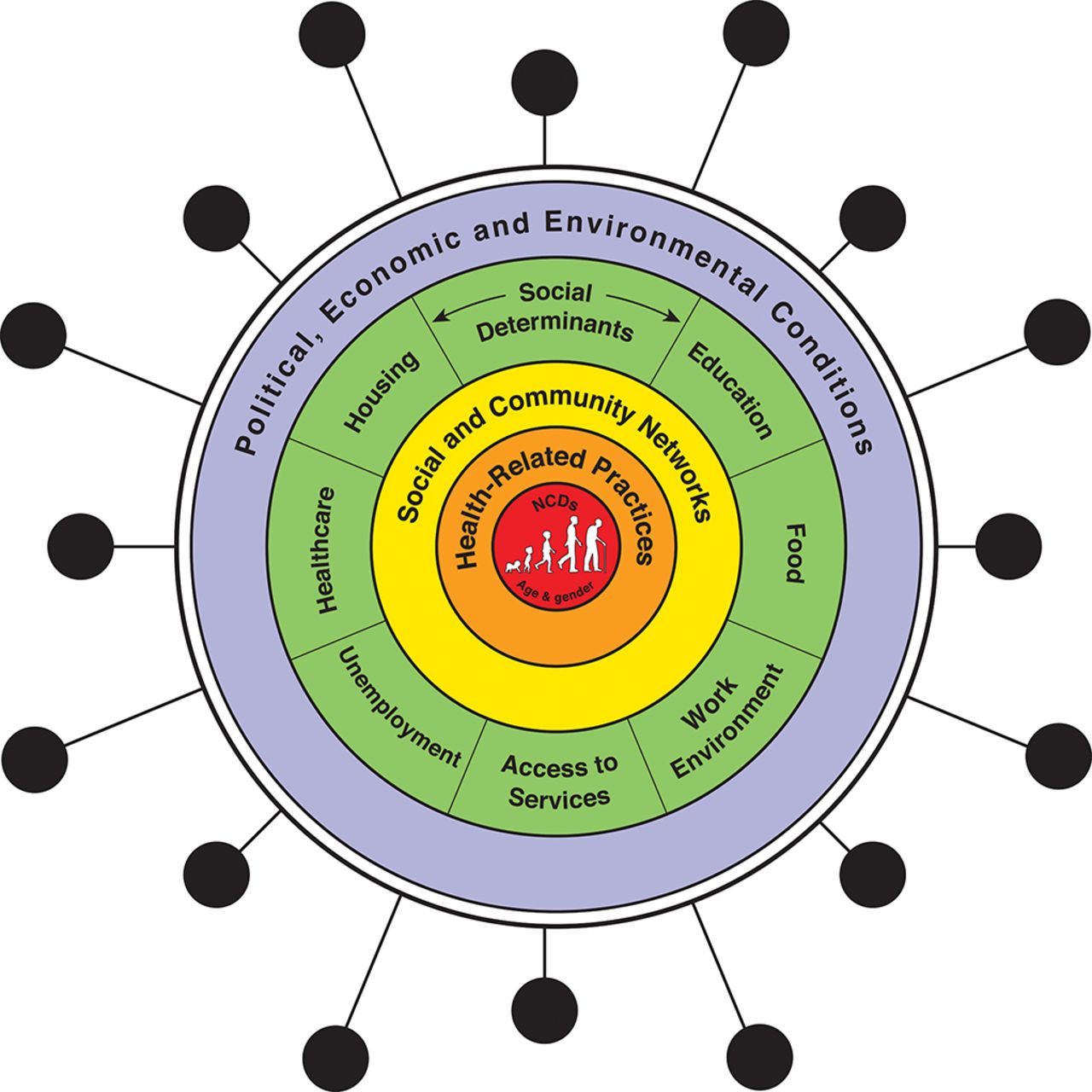
Emerging evidence from a variety of countries suggests that these inequalities are being mirrored today in the Covid-19 pandemic. Both then and now, these inequalities have emerged through the syndemic nature of Covid-19, as it interacts with and exacerbates existing social inequalities in chronic disease and the social determinants of health.

The syndemic of COVID-19, non-communicable diseases (NCDs)
 and the social determinants of health
This is down to a number of factors – not least unequal exposures to the social determinants of health (the conditions in which we are born, grow, live, work and age) leading to higher rates of almost all of the known underlying clinical risk factors that increase the severity and mortality of Covid-19 (e.g. high blood pressure, diabetes, cardiovascular disease).

We may have been living under the same regulations, but across the country, our experiences of ‘lockdown’ were widely different. We knew this. We weren’t ‘all in the same boat’ - we were in the same ocean in the middle of the same storm - but some were on luxury liners and others on rapidly-deflating dinghies.

We saw lower-paid care workers, shop workers, transport workers, factory workers continuing to work face-to-face with the public, while others worked from home on full pay or were furloughed with some semblance of job security.

There were families trying to stay sane in small flats without outdoor space and with empty cupboards, whilst others in more fortunate circumstances trebled their flower delivery order to ensure their homes looked good during Zoom meetings.

The divide in our society is stark on many levels, and as we go forward, who will pay the price of the multi-billion pound interventions that the government has put in place to see us through this period, and bear the brunt of the post-Covid-19 global economic slump? 

Covid-19 has laid bare our longstanding social, economic and political inequalities. Even before the pandemic, life expectancy amongst the poorest groups was already declining in the UK and the USA and health inequalities in some European countries have been increasing over the last decade.

I know that this all makes for grim reading for researchers, practitioners and policymakers concerned with health inequalities. So what can we do?

It is vital that this time, the right public policy responses, such as expanding social protection and public services and pursuing green inclusive growth strategies, are undertaken so that the Covid-19 pandemic does not increase health inequalities for future generations. Public health must ‘win the peace’ as well as the ‘war’. It is our job to make that case.

As we start to shape our ‘new normal’ and as the government unveils its post-Covid-19 recovery plans for the UK, public health policy must be a priority.

We need to act now if we want to avoid deepening the health inequality divide even further for generations to come.

Read the full essay: The Covid-19 pandemic and health inequalities


With thanks to the NIHR Applied Research Collaboration North East & North Cumbria 


Image attribution:
  1. Otis Historical Archives, National Museum of Health and Medicine / Public domain. https://commons.wikimedia.org/wiki/File:Emergency_hospital_during_Influenza_epidemic,_Camp_Funston,_Kansas_-_NCP_1603.jpg
  2. The syndemic of COVID-19, non-communicable diseases (NCDs) and the social determinants of health (adapted from Singer and Dahlgren and Whitehead). With acknowledgement to Chris Orton from the Cartographic Unit, Department of Geography, Durham University, for his assistance with the graphics. https://jech.bmj.com/content/early/2020/06/13/jech-2020-214401.full?ijkey=haFkUOyJurtabHz&keytype=ref#F1
  3. Screenshot taken from the Financial Times website: https://www.ft.com/content/8ea1c992-89f8-11ea-a109-483c62d17528 09/07/2020

Friday, 3 July 2020

Would easy-read documents for all mean a more inclusive healthcare system?

Posted by Kate Byrnes, Graduate Tutor & PhD Student, and Emma Giles, Reader in Public Health Behaviour Change, Teesside University

When you receive letters from the hospital or the doctors, what do they look like? Text heavy, with no pictures, and in a small font size? That is how the letter looked when I received my invitation to cervical screening.

Traditional appointment letter
Now imagine that instead of getting that letter, you received a letter which was written in a large font, used shorter sentences and included pictures. How would you react? Would you feel like the information was simple and clear to understand? Would you feel like you were being patronised and treated like a child? Or, would you even care?

Public Health England, have developed a cancer screening invitation letter in an ‘easy read’ format along with an easy read booklet. Both of which can be provided to support women with learning disabilities to access cervical screening. 
 
PHE cervical screening: easy read invitation letter template
Within an easy read document, the images are left-aligned on the page, with text for each image on the right side. This helps the reader gain an understanding of what the written text says.

However, women with a learning disability, do not receive these easy read versions as standard. Every women invited to screening is given a booklet along with the invite letter which goes some way to explain both what happens during the appointment and the content of the letter. However, would it not be better for everyone to receive an easy-read version in the first instance?

Someone may only receive additional information in an easy read format, if they are identified by their GP surgery as having a learning disability, or because they receive support from healthcare services for people with a learning disability.

What about women who have a mild learning disability and do not receive any support? Or people who struggle to understand written information? It is possible these groups of people will be less likely to attend cancer screening simply because they do not understand the invitation letter.

Four in 10 adults in the UK struggle to understand and use typical medical information designed for the public (NHS, 2020). This is called ‘health literacy’. Having low health literacy has been linked to a range of problems, including poor general health, inappropriate use of health services and reduced life expectancy (NHS, 2020). One mechanism to limit the effects of poor health literacy, is having information in plain English, with simple and short sentences, without jargon.

Therefore, if the NHS is to use standardised letters, should they all be in a simplified, easy read format? This could help services meet the requirements of the Equality Act (2010) which stated that services need to make “reasonable adjustments” to their provision including to the information they provide.

The need for reasonable adjustments within the cervical and breast cancer screening programmes has been highlighted in my PhD research. The research is exploring the attitudes and opinions of women with a learning disability, family carers, and paid care workers towards cervical and breast cancer screening. Within the interviews each participant completes a Q sort (a card sorting task) to identify whether participants agree, disagree, or are neutral towards 28 statements. Each statement is placed on an individual card. The card is then placed onto a grid, to reflect how much they agree or disagree with the statement. Upon completion, it represents a picture of a participant’s range of attitudes and opinions towards cervical and breast cancer screening. The below figure shows a completed Q sort by a women with a learning disability.

Q sort by a women with a learning disability
When designing my PhD research, woman with a learning disability where involved in Patient and Public Involvement (PPI). PPI is defined as “research being carried out ‘with’ or ‘by’ members of the public rather than ‘to’, ‘about’ or ‘for’ them” (INVOLVE, 2020). The Health Research Authority (HRA) has acknowledged that public involvement can positively impact upon the design of research, especially in the design stage (Health Research Authority, 2017). By including Experts-by-Experience it is possible to find out what matters most to the public, especially when the research is controversial or on a sensitive topic. This is the primary reason that I wanted to use PPI during the research. Additionally, there has been very limited research conducted in England on this topic, and involving people with a learning disability in the design of the research.

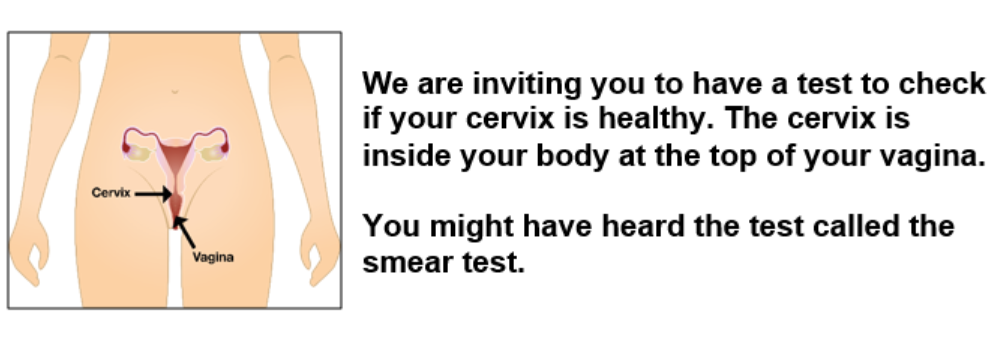
The PPI in my research was split into three consecutive phases; identifying women’s preferences for how they would like written information to be presented to them; checking the easy-read documentation developed for the research, and obtaining the women’s preferences on the design of the Q grid. The importance of removing jargon and medical terms was highlighted in the results of the PPI, when the phrase ‘lady bits’ was used, women with a learning disability understood the location and some of the problems they might face going for screening, but didn’t always understand the word ‘cervix’. This is an important consideration for the invitation letters to cancer screening.

The invitation letters for cancer screening use terminology such as ‘cervical’, ‘cervix’ and ‘Human papillomavirus’ and assume that people will know what these words mean. What impact could using jargon and medical terminology have on the women receiving the letter? One problem is that women could misunderstand the procedure. Whereas, in an easy read document, the anatomically correct terms could be used, alongside an image, or further description. As the below image depicts:
PHE cervical screening: easy read invitation letter template
Ultimately, should there be standard information provided to all, which is written in a way that everyone can understand? Would more people be able to understand the information? Would this have an impact on uptake of services such as screening, and would this result in a more inclusive healthcare system?


Images:

1. Capture taken from the BBC News website, 18 April 2019, HEALTHWATCH/NHS ENGLAND The template for the letters is drawn up by Public Health England (https://www.bbc.co.uk/news/uk-england-tyne-47946395).

Friday, 26 June 2020

If you are going to give up smoking, this is a very good moment to do it

In today’s Fuse blog Rachel McIlvenna, from Public Health South Tees, writes about managing a local specialist stop smoking service during the COVID-19 pandemic.


Casting my mind back to when the news started reporting increasing numbers of confirmed cases of COVID-19 in the UK feels like a lifetime ago. Chief on my mind pre-lockdown, was to re-emphasise the need for adhering to our robust infection control procedures, but also given the new threat to health, ensure we had sufficient stock of disposable gloves for clinic venues where there were no hand washing facilities. Looking back now, those days feel like a different era and my team, I and perhaps most people in the UK were unaware that our world was going to be turned upside down. 

In the weeks that followed things changed at a dizzying pace resulting in me activating our continuity arrangements earlier than anticipated, largely dictated by the shifting landscape that depended in part on what we heard from the Government’s daily press briefings but also from our strategy and plans as a Local Authority.

As the rates of infections started to increase exponentially, many services scurried to shut down for the foreseeable future and rightly so; everyone had to do their part to flatten the curve. We, as a service, didn’t have such a luxury by virtue of the fact that stopping support midway through a treatment pathway was not an option. The chances of a client successfully quitting smoking increase with regular behavioral support and uninterrupted access to treatments, like Nicotine Replacement Therapy (NRT) and Champix tablets.

Being responsible for the care of over 200 clients during a pandemic needs careful consideration. Our contingency plans made provision to stop face-to-face consultations in March with interim arrangements to supply stop smoking treatments during the pandemic. This challenge was further amplified when we received guidance from the National Centre for Smoking Cessation and Training (NCSCT) about ceasing all face-to-face consultations immediately and further news that the local community hubs, where clinics would normally be held, were shutting down completely to the public. So, without a location where clients could come and pick up their prescriptions regardless of social distance measures in place, we had to adapt our plans. Eventually and after several phone calls, we managed to support most of the clients via telephone and put arrangements in place for collection of scripts.

It didn’t end there though, as we then had the concern of how we would support new clients who wished to stop smoking, particularly pregnant women who were referred from maternity. Constant in my mind was safeguarding my staff and the public, so I knew that a long-term solution needed to be sought to minimise risk. After talking to several colleagues on the pros and cons of electronic vouchers and other options, we settled on posting prescriptions directly to clients (1st Class and with trackable labels) as it was the least restrictive option.

The next challenge was to introduce this very new way of working to my team, by explaining and demonstrating why this approach was best in these circumstances. Thankfully, a close colleague had helped me to draft a Standard Operating Procedure (SOP), which was soon amended and rolled out. This new way of dealing with scripts hasn’t been without its drawbacks. Sometimes the prescriptions have been delayed in the post for up to 10 days, which has meant that the staff have had to think 2-3 weeks ahead to ensure clients don’t run out of medication. But it has meant that we have minimised risk and enabled the team to work remotely from home, without the need to come to a central location to arrange for medication or go out to pharmacies, which have seen an increased demand during the pandemic.

The last few weeks have now been spent amplifying the #Quit4Covid message, learning from areas like Hertfordshire, Sheffield and Newcastle, and putting our own spin on these messages to engage smokers. This has included sending proactive text messages to unsuccessful quitters, bespoke postcards to homes of known smokers (who have given consent) and using social media. To date, we have seen promising results with many smokers engaging, and I am hopeful that there will be more dividends in future weeks.

What has been insightful for me has been the opportunity to lead our fantastic team of nurses during this period and observe their reactions to the unprecedented changes in their way of working and providing support for smokers. As a manager, it has been a privilege to help them navigate and accept the new realities that COVID-19 presents to all of us. Don’t get me wrong, it’s not all been smooth sailing, there have been several minor blips with a fair dose of IT challenges, to name just one. In the last few weeks, I have felt a quiet steadying as my nurses have become more confident about the change in work practices that they were long accustomed to as clinical staff. The challenges of remote consultations have been accepted, as has the notion that for some clients our weekly or fortnightly contact is literally a lifesaving form of communication.

The emerging evidence around adverse outcomes for smokers with COVID has reinforced what I have believed for a long time. Supporting people to stop smoking is one of most important public health interventions and not just for a host of non-communicable diseases associated directly or indirectly with smoking, but now with the threat of a communicable disease like COVID-19. To echo the words of England’s Chief Medical Officer Prof Chris Whitty to the Health Select Committee:

“If you are going to give up smoking, this is a very good moment to do it”


Rachel McIlvenna works as an Advanced Public Health Practitioner for Public Health South Tees and leads on tobacco dependency and long term conditions. Her portfolio also includes managing the in-house specialist stop smoking service, which includes a small team of vibrant nurse prescribers.

For information on stopping smoking in Middlesbrough / Redcar & Cleveland, visit: https://www.stopsmokingsouthtees.co.uk


Image attribution
3: "Dominic Raab Covid-19 Presser 06/04" by Number 10 via Flickr.com, copyright © 2020: https://www.flickr.com/photos/number10gov/49742982126/ (CC BY-NC-ND 2.0)

Friday, 29 May 2020

COVID-19 has brought the “digital divide” to the fore

Posted by Gemma Wilson, Health Psychologist & Research Fellow in Applied Health, Northumbria University

With the onset of COVID-19 it seems that we are relying on technology even more than usual. Many of us are using technology as our main source of communication, such as for work meetings via Zoom, family chats on FaceTime, WhatsApp messaging, or sending photos. Online food shopping, ordered and delivered to your door, has become the norm. Internet banking and health services have become more important than ever, and online communication platforms are even allowing us to continue our hobbies and exercise. But not everyone has access to these tools to support their daily living and wellbeing at home. Even people with access to the technology may not have the skills to use platforms, such as Facebook, Skype or Zoom, which still leads to exclusion.

There is an ever-growing number of older adults using the internet and social media, with notable increased use across the UK, USA, and Europe over the last decade. However, older adults still remain less likely than younger people to use the internet and social media. That’s why we decided to do a piece of research that aimed to explore older adults’ experiences of using technology, including social media, to connect with others. Part of this study involved interviewing 20 people who were over 65 years old from across the UK, to understand how they used technology to communicate with others, and to consider what helps and hinders their use of technology. 

All participants in the study regularly used digital devices and social media, however, despite their regular use of technology, they still experienced five barriers to using it as a tool to connect with others:

1. Confidence
Some had low confidence, seeing themselves as novices and not “technology minded”, and some lacked patience with technology.

2. Fear
Some were fearful that they would break the devices, do something “wrong” that they couldn’t fix, or they were worried about privacy and misinformation.

3. Practical issues
Some experienced physical barriers, such as the size of text, or the buttons being too small.

4. Culture and communication
Cultural differences around communication impacted the way some of the participants used social media and their online connections. They worried about how they would come across or didn’t like the way others communicated using social media.

5. Social network
Finally, we also found that existing social groups and relationships were key in the older adults choosing to use technology and in helping to provide ongoing support. Often without this existing social network, they would not have even received a digital device, let alone started using it, or understanding how to maintain it.

The overall message that we took away from this research is that technology - even for those who use it on a regular basis - is still only a tool for social connection, a welcome tool, but only a tool, and it certainly isn’t a replacement for face-to-face communication. However, during COVID-19, technology must be a replacement for face-to-face communication, and is the best available way for us to remain connected with friends and family.

The reliance on technology since the onset of COVID-19 has brought the “digital divide” to the fore in the context of these barriers. Many will continue to rely heavily on technology during this uncertain period, and for as long as we are social distancing. During these measures, it is important that we consider people who do not have access to technology and are unable to rely on it in a way that others can, as well as those that do have access but continue to experience difficulties in its use. Specifically, due to no longer being able to rely on social groups and wider support networks for guidance in using technology. This lack of access significantly heightens inequalities for so many people in all of the ways discussed above.

To find out more about this study, the podcast “Ageing in a Digital World” is available to listen/download on the following platforms:

Dr Gemma Wilson is a Health Psychologist, and a Research Fellow in Applied Health at Northumbria University, Newcastle. Her research interests are in ageing, psychosocial wellbeing, digital inclusion, social participation, digital health. Contact Gemma at gemma.wilson@northumbria.ac.uk, or on Twitter via @drgemmawilson.


Research team: Dr Gemma Wilson, Mrs Jessica Gates, Dr Santosh Vijaykumar, Dr Deborah Morgan.

The research was funded by the British Academy/Leverhulme Trust.

Friday, 22 May 2020

Covid-19 and the legacy of Edward Jenner: a tale of two pathogens

Posted by Lesley Haley, AskFuse Research Associate, Teesside University 

2020 is going to be a momentous year in world history as the year that the Covid-19 pandemic changed all our lives.

Edward Jenner, English physician who discovered the smallpox vaccine
Coincidentally, this year also marks the 40th anniversary of a significant historic milestone for another deadly disease, but in this case, one which maimed, killed and shaped global history for the past three thousand years (Flight 2011). That disease was smallpox.

On the surface, there is nothing in common between a dead disease and a newly emerging one. But there are some aspects of the history of smallpox that resonate with the unfolding story of the Covid-19 pandemic.

Smallpox was still a killer when I was vaccinated against it in 1967 as part of a routine public health intervention, although it was no longer endemic in the UK. For my mother’s generation, the reality of smallpox was very stark. She experienced the panic of an outbreak in her home town of Glasgow during the war when she was only 10, and again when she was 16, when smallpox killed front-line staff treating infected patients at the local hospital.

Although in 1967 outbreaks in the UK of smallpox were getting rarer, the worldwide picture was very different. Smallpox was still endemic in many countries, maiming and killing an estimated 10-15 million people a year (Baxby 1999). This was despite the fact that Edward Jenner had first introduced a prototype inoculation against smallpox in 1798, had translated his theories and ideas into practice, and had a huge impact during his lifetime (the academic dream!).

One aspect of Jenner’s life and work bears closer scrutiny in light of the current Covid-19 pandemic, and particularly on the emerging debate surrounding the development of a new vaccine. During his lifetime, Jenner made his research, his ideas and his smallpox inoculations freely available to everyone, irrespective of who they were (Baxby 1999). Jenner and his contemporaries appreciated the commercial opportunities of his discovery, but he continued to give free inoculations to everyone who approached him at his surgery, despite the detrimental financial impact this had on his personal and professional life (Britannica 2020). He understood exactly what the implications of his discovery meant for the common good.

So if Jenner’s work was freely available, (and although certainly not perfect), why was smallpox still endemic in some countries in the world in 1967? Millward (2019) proposed that one of the main issues had been the lack of global “joined up thinking” in the approach towards smallpox eradication. It took until 1967 for countries where smallpox was not endemic to realise that they would always be at risk of continual and increasing numbers of smallpox outbreaks, if the disease was still endemic in other parts of the world. Wherever in the world there was smallpox outbreaks, it caused mass panic, strained public health systems to the limit, maimed and killed, and even had economic impacts on national and international trade and travel (Millward 2019). It therefore became in every countries' interest to support a systematic, unified and global approach to smallpox eradication. Under the auspices of the World Health Organisation (WHO), the global strategy of surveillance, containment and vaccination free at the point of delivery and irrespective of ability to pay, worked. In 1980, the WHO declared the world free from smallpox (Baxby 1999) and it became the “first disease to be controlled by immunisation, the first to be eradicated” (Baxby 1999).

So what will historians say about the story of Covid-19? What will be the role of the global community in tackling the Covid-19 pandemic? Will Jenner’s altruistic example of free and accessible vaccinations be consigned to the history books in the 2020 global race to develop a lifesaving Covid-19 vaccine?

On the global front, 4 May 2020 saw world leaders, the UN, research institutions and philanthropic organisations pledge resources to find a vaccine for Covid-19 (albeit with the ominous absence of two major world powers) (BBC 2020). And the race for a vaccine has sparked debates on who, where, and how people would access a Covid-19 vaccine, with speculation for example, that pharmaceutical companies may have to change their business practices (Chu 2020). In the history of smallpox in the UK, vaccine stockpiles were held by private businesses, highlighting “that public health resources were not always in public hands” (Millward 2019, p. 64).

Global businesses have also contributed to an “Open Covid Pledge, “to make intellectual property available free of charge for use in ending Covid-19 pandemic and minimising the impact of the disease” (Open Covid Pledge 2020).

When global powers pulled together for the common good, it took just 13 years to rid the world of a disease that had killed millions across the continents of Africa, America, Australia, Asia and Europe in its 3000 year reign of terror. Prior to that, without global unity and treatment free at the point of delivery, it took 169 years. I wonder what Edward Jenner would have thought?

So as our Covid-19 story unfolds in 2020 and beyond, I wonder how future generations will judge the actions and decisions of our current global leaders and businesses?


References:
  1. Flight, C (2011) Smallpox : Eradicating the scourge. BBC History. Last updated 17 Feb 2011. Available: https://www.bbc.co.uk/history/british/empire_seapower/smallpox_01.shtml Accessed: 05 May 2020.
  2. Baxby, D (1999) The End of Smallpox. History Today Vol 49 Issue 3. Available: https://www.historytoday.com/archive/end-smallpox
  3. Britannica (2020) Edward Jenner. Available: https://www.britannica.com/biography/Edward-Jenner Accessed: 6 May 2020. 
  4. Millward G (2019) “Smallpox” Vaccinating Britain: Mass vaccination and the public since the Second World War, Chapter 2. [Internet]. Manchester (UK): Manchester University Press; 2019. Chapter 2. Available: https://www.ncbi.nlm.nih.gov/books/NBK545998/#!po=98.8688 Accessed: 5 May 2020. 
  5. BBC News (2020) Coronavirus: World Leaders pledge billions for vaccine fight. Available: https://www.bbc.co.uk/news/world-europe-52525387 Accessed: 5 May 2020. 
  6. Chu, B(2020) “To find a vaccine for coronavirus, pharmaceutical companies will have to Adamson the race for profit”. The Independent. Available at: https://www.independent.co.uk/voices/coronavirus-vaccine-uk-pharmaceutical-companies-patent-monopoly-a9467381.html Accessed: 16 April 2020. 
  7. The Open Covid Pledge (2020) Available: https://opencovidpledge.org. Accessed: 5 May 2020. 

Acknowledgements:
  • Mrs Patricia Hoyland (pers comm)
  • BBC Today programme. Thought for the day. David Wilkinson 4 May 2020.

Image: 
  1. “Edwar Jenner” by Pan American Health Organization PAHO via Flickr.com, copyright © 2010: https://www.flickr.com/photos/pahowho/9525240640. Attribution-NoDerivs 2.0 Generic (CC BY-ND 2.0)
  2. The logo of Open COVID Pledge project, 27 August 2020. Creative Commons, CC BY-SA 4.0 <https://creativecommons.org/licenses/by-sa/4.0>, via Wikimedia Commons (https://commons.wikimedia.org/wiki/File:Open_Covid_Pledge_Logo.jpg).

Friday, 15 May 2020

Experts by Experience challenge us to create opportunities for them to take the lead in research

Posted by Ang Broadbridge (Research and Evaluation Lead) and Ged Hazlehurst (Expert by Experience) Fulfilling Lives Newcastle Gateshead

Earlier this year Fuse and Fulfilling Lives Newcastle Gateshead co-chaired a Quarterly Research Meeting sharing initial findings from a joint research project that explored the reasons underlying high death rates among people with multiple and complex needs (MCN). There we asked attendees to consider the findings and help shape recommendations.

Now as we write up the findings during the height of the Covid-19 pandemic, we are reminded that drug related deaths and MCN issues have been a public health crisis long before the pandemic, though it has drawn an even sharper focus on health inequalities at this time.

The findings from the study will be available in a forthcoming end of project report but in this blog we wanted to go behind the scenes with Experts by Experience to share our experiences of co-production in public health research.

Some background

So what is Fulfilling Lives Newcastle Gateshead (FLNG), and what are Experts by Experience? FLNG is an eight-year learning programme looking to improve the lives of people with complex needs and build a trauma-informed approach within the services that support people across Newcastle and Gateshead. Experts by Experience are people with lived experience of multiple and complex needs, and have vital things to say that can help shape the future of how systems and services work for their peers.

Co-producing research

Co-production is bringing together the people using services and the people providing those services to share power and work collectively to design, develop or deliver improvements to them. This also involves seeing services and staff as agents for change and seeing people who use services as assets with skills, who in turn, gain from their contributions and move towards positive change. For example, Experts by Experience on the FLNG programme have developed training resources for Department for Work & Pensions staff raising awareness of MCN issues, which were rolled out across JobCentre Plus.

FLNG wants research to be genuinely co-produced and has invested in creating a National Vocational Qualification accredited peer research skills training package and local Peer Research Network. This is to support a shift from involvement led by professionals to an approach in which peers define the remit and research questions, leading on all aspects of the research design, delivery and dissemination.

Experts by Experience defining research problems

The beauty of the Fulfilling Lives programme has been our small team and the small caseloads; with at the most eight frontline practitioners each working full time with just 10-12 people. We work intimately with these people, building strong trusting relationships, getting to know their families, and being by their side through crisis.

Between 2014 and 2020 we worked with 267 people, during which time we experienced 27 deaths on programme. That is around 10% of the client cohort, so you can perhaps imagine the impact of that 10% on a small team who have been deeply involved in the lives of the people they have navigated through services.

We talked to our Experts by Experience Network about this and as the programme research lead I (Ang) was really wary about the sensitive subject matter and its potential for re-traumatising. My thinking was challenged when the Experts Network were really passionate about deaths in their community and told us they were already talking about it, often without much support, so not to shy away. Then they challenged us to think about how our co-production and peer research offer could dig deeper to explore this issue. We asked Experts by Experience to help us explore what it would look like for them to take a peer-led approach to this work. They really helped shape the ethics process, for example they told us to look within their Network for participants, as we could guarantee good support for people to discuss any issues that emerged out of participation. In doing so they, the Experts by Experience, identified the topic for this project.

What was the feedback from our co-produced research event? 

When we met for the Fuse QRM the purpose of the session was to study the initial findings gathered from the series of focus groups we ran exploring MCN deaths. It was interesting then that the feedback we received from the event, asking people’s views on what we found and what was surprising, clustered around co-production in research. This suggests that this research has the potential to challenge beliefs about the involvement of people with lived experience in public health research:
  • People were surprised by the extent to which Experts by Experience were able to take on such a difficult subject, and;
  • People were surprised by the normalisation of death within our Expert by Experience community. 
It is our hope that this acts as a springboard for more and better involvement of people with lived experience of multiple and complex needs in public health research. We have explored a sensitive and challenging subject with Experts by Experience who challenged us to create opportunities for them to take the lead. We hope that as our Peer Research Network grows, other researchers can build on the peer research model we utilised in this study to shape their own research projects.

FLNG is one of twelve programmes linked across England funded by the National Lottery Community Fund, looking to influence the system nationally. A Core Partnership of Changing Lives (lead partner), Mental Health Concern and Oasis Community Housing lead the programme’s activity, for more information visit http://www.fulfillinglives-ng.org.uk/


Images courtesy of http://www.fulfillinglives-ng.org.uk