Tuesday, 24 May 2016

Why England could get knocked out in the quarter finals

Posted by Clare Bambra, Fuse Associate Director & Professor of Public Health Geography, Durham University

If Euro 2016 was based on how healthy each nation is, there would be some surprising results. England would get knocked out in the quarter finals of Euro 2016 if the tournament was based on how healthy each nation is. Based on health statistics, Switzerland would walk away as European Champions for the first time in the competition’s history, narrowly beating Iceland on penalties in the final. 

Click here to see more Country Health Fact Files‌
Our analysis of differences in life expectancy for men in the 24 countries taking part in the forthcoming football tournament shows huge health divides across Europe and highlights the links between where you live and how long you live.

The European Health Championship is an accessible way to shed light on these stark differences. It scores each nation’s football team based on the country’s male life expectancy at birth for 2013. From these scores, the winners and losers of each group are decided as well as the results of the games in the knock out stages.

England, with a male life expectancy of 79 years, would be winners of their group by beating Russia (63 years), Slovakia (72 years) and Wales (78 years). England would then beat Czech Republic (75 years) in the round of 16 knockout stage but would lose to Iceland (81 years) in the quarter-finals. Likewise, Wales and Northern Ireland, with a male life expectancy of 78 years each, would be beaten by Austria and France (79 years each) in the round of 16 knockout stages. Switzerland and Iceland both with male life expectancy of 81 years meet in the final, with Switzerland winning on penalties because female life expectancy there is 85 years compared to 84 years in Iceland.

The European Health Championship also reveals a clear east-west gap with worse health in the countries of Eastern Europe compared to those in the West. For example, in the host country France (the runners-up in group A), baby boys are expected to live up to 79 years old whilst in Ukraine, who finish bottom of group C, it is just 66 and in Russia (bottom of group B) it is a mere 63 years. Spain and Italy also fare well with men expected to live up to 80 in those countries.

But what explains these differences in health across European countries? Why do some countries perform so much better in health terms than others? Geographical research suggests that the answer is twofold: the health of places is determined by the population composition (who lives here) and the environmental context (where you live).


Who lives here? The demographic, health behaviours and socio-economic profile of the people within a place influences its health outcomes. Generally speaking, health deteriorates with age, women live longer than men, and health status also varies by ethnicity. Levels of smoking, alcohol, physical activity, diet, and drugs – all influence the health of populations significantly. Indeed, research has strongly linked Russia’s comparatively low life expectancy amongst men with the high levels of alcohol consumption in the country particularly since the collapse of communism. The socio-economic status – or social class in “old money” – of people living in a country also matters as those with higher occupational status (e.g. professionals such as teachers or lawyers) have better health outcomes than non-professional workers (e.g. manual workers). So differences in the characteristics of people in the countries of Europe will contribute to these country level differences in life expectancy.

However, research also shows that where you live matters. The economic environment of a country, such as poverty rates, unemployment rates, or wage levels can influence health. Countries with lower poverty rates, for example Switzerland or Iceland, do better than countries with higher poverty rates such as England. The social environment, including the services provided within a country to support people in their daily lives such as child care or health care and welfare, can also impact on population level health. The physical environment is also important determinant with research suggesting that proximity to waste facilities and brownfield or contaminated land, as well as levels of air pollution can negatively affect health. So countries with worse economic, social or physical environments will have worse health outcomes.

Infographics
The underlying research to the European Health Championship and these links between health and place are explored further in Professor Bambra’s forthcoming book Health Divides: where you live can kill you. Reducing health inequalities between and within the countries of Europe is also the focus of HiNEWS, an international project led by the Department of Geography at Durham University. It is funded by the New Opportunities for Research Funding Agency Co-operation in Europe (NORFACE) which is a partnership of European research councils including the Economic and Social Research Council (ESRC).

Thursday, 19 May 2016

Dementia: not drowning but waving

Posted by Mark Parkinson, Post Graduate Student at Northumbria University

It's Dementia Awareness Week in England as part of Alzheimer’s Society’s ongoing campaign to raise public awareness of this disease. It also affords us the opportunity to take stock of just how far we have progressed since the dark days of the 1980s. Back then a mood of extreme pessimism surrounded dementia amid stark warnings that this ‘rising tide’ represented an unstoppable tsunami-like force that would engulf the UK. Attempts to avert the coming disaster were seen as futile and hopeless, akin to King Canute holding back the sea. The prevailing mood of despondency was ‘justified’ by nine fallacies of dementia emanating from a general lack of knowledge and understanding about dementia.

The Great Wave off Kanagawa
  • Fallacy No.1: Dementia was commonly perceived to be part of ‘normal ageing’. Dementia is now widely acknowledged as a clinical condition characterised by neurobiological abnormalities that distinguish it from so-called ‘normal’ ageing. The public perception of dementia as a disease that is separate from ‘normal’ ageing is increasing in the UK but campaigns such as Dementia Awareness Week are still necessary.
  • Fallacy No.2: Dementia is unavoidable. Protective factors that help guard against vascular dementia in particular include our lifestyle choices, including smoking cessation, regular exercise, adherence to a healthy diet and avoiding becoming obese. The identification of potential triggers for dementia paves the way for future interventions that might mitigate the onset of dementia entirely, including monitoring for catalysts for dementia such as cardio-vascular disease, obesity, diabetes and depression. Intervention programs targeting at-risk groups have demonstrated success in preventing dementia, e.g. FINGER (a two-year programme that focuses on diet, exercise, cognitive retraining and monitoring and treating vascular risk). Latest research also highlights further candidate triggers for dementia such as interleukin 33 (IL-33) protein deficiency which may be remedied via injections to prevent dementia.
  • Fallacy No.3: Dementia is irreversible. Although this remains the case for now, the development of treatments such as Galantamine have been shown to at least moderate the effects of dementia.
  • Fallacy No.4: Dementia is untreatable. The search for a cure for dementia remains ongoing and we have moved into an era where the potential discovery of better treatments and an eventual cure has never been so high. For now though prevention via identification of key triggers remains the main option in the absence of a cure.
  • Fallacy No.5: Dementia is a diagnosis to mortality within seven years. Dementia related diseases such as Alzheimer’s now have a typical duration of 10 or more years and evidence suggests that, in general, people with dementia are living longer. The challenge continues to be ensuring they live as well as possible.
  • Fallacy No.6: Dementia is too varied and unpredictable to treat. Greater understanding of the different sub-types of dementia, their different causes and symptoms, combined with improved ability to detect them makes treatment for dementia a more viable possibility.
  • Fallacy No.7: Dementia is only detected when it is already too late to act. This remains a key issue; however, improved diagnostic tests and screening have improved early detection of the disease.
  • Fallacy No.8: Dementia is too expensive to treat. Recent interventions such as Cognitive Stimulation Therapy (CST) can be delivered to people living with dementia via just 14 hourly sessions. CST has demonstrated equivalent but more sustained effects compared to relatively expensive drug treatments.
  • Fallacy No.9: The number of those with dementia will increase exponentially in the future. Recent comparisons between CFAS1 (Cognitive Function and Ageing Studies) (1991) and CFAS2 (2015) conducted by Cambridge University reveal that dementia prevalence in the UK has actually declined by 22 per cent over this 24 year period. Those born in the latter part of the 20th century exhibit a lower risk factor for dementia than those born earlier. The tsunami warnings of the 1980s have been proven wrong.
Importantly, all this does not signal a time to relax. The need to raise awareness of dementia and the challenges associated with it remains as urgent as ever. In the 1980s a sense of urgency towards tackling dementia provided a much needed catalyst for change. Today a key difference is that this urgency is no longer fuelled by impotent fear but by renewed hope and optimism that galvanises fresh impetus to all our endeavours to beat the disease.

With acknowledgement to the inspired presentation on 25 April, 2016 at the first Gateshead Dementia Conference by Dr.Daniel Collerton (Clinical Psychologist associated with dementia care at The Queen Elizabeth Hospital, Gateshead).

Thursday, 12 May 2016

The 'Wow' moments

Posted by Rosemary Rushmer, Professor of Knowledge Exchange in Public Health, and Dr Peter van der Graaf, AskFuse Research Manager, Fuse and Teesside University

From the 26-28 April, Fuse hosted the Third International Conference on Knowledge Exchange in Public Health in Newcastle-Gateshead. The conference explored “Evidence to Impact in Public Health" in partnership with Tranzo (Dutch Scientific Center for Care and Welfare) and the World Health Organization (WHO), Regional Office for Europe. More than 160 participants from five continents descended upon the Quayside to discuss the latest research and evidence on knowledge exchange practices through papers, posters, interactive workshops and soapbox sessions – and continued these deliberations during the conference reception and dinner, organised walks and yoga sessions.

How do you sum up a conference like this? We are used to filling in ‘happy sheets’ when we attend conferences, giving our scores on the speakers, the accommodation, and if the food was hot…but what about the ‘Wow!’ moments that participants share with each other in the informal spaces?

Below are a few of those hidden moments:

(Day 1: Keynote speaker Professor Bev Holmes, Vice-President, Research
& Impact at the Michael Smith Foundation for Health Research, Vancouver)


‘Wow, she has a lovely way of asking really difficult questions in such a nice, unthreatening way…’


(Day 2: Keynote speaker Professor Hans Van Oers,
Professor in Public Health, Tranzo, Tilburg University)


‘Wow, how did they manage to carry out that research against all that opposition and yet laugh about it now… you can have a good time, be funny, and serious as well…’


(Day 1: Keynote speaker Professor Kieran Walshe, Professor of
 Health Policy & Management, Manchester Business School)


‘Hmm, we can learn about innovation in public health from the car industry and Amazon…’

‘(Sigh) Is that how much we spend on pharmaceutical research and how little we spend on working together to get evidence used. That needs to change…’
(Day 2: Keynote speaker Claudia Stein, Director of the Division of Information,
 Evidence, Research & Innovation, World Health Organisation (WHO))


‘Wow’ it’s that last presentation of the conference and the room is still full.’
(Day 2: Professor Peter Kelly, Director of Public Health
& Adult Social Services, Stockton Borough Council)


‘Goodness! Your Directors of Public Health (DsPH) have taken time out to chair sessions and present…’ (When I fed this back to one DsPH, to show the planning committee’s appreciation of their participation, he was surprised at the delegates surprise… ‘What on earth happens elsewhere…?’ he said.


Maybe we, in Fuse, do have a ‘special relationship’ with our policy and practice partner that makes Knowledge Exchange in public health easier in the North East of England. We, the organising committee, were wowed by the enthusiasm and engagement of all participants during the conference. Discussions were lively with active and positive contributions from not only researchers but in particular public health practitioners and policy makers. Their engagement in the conference is the real evidence of how far we have come with knowledge exchange in the North East and the impact we are having together on public health and local wellbeing, and this is being noticed internationally.

Here's to the next conference!

Visit the Fuse website to find out more about the conference: www.fuse.ac.uk

Thursday, 5 May 2016

You are now reading the award winning Fuse blog

Posted by Mark Welford and Emma Dorée, Fuse Communications team, Teesside University

You may recall that in January we used this platform to make a shameless plea inviting readers to vote for the Fuse blog in the UK Blog Awards and a month later you may have heard the news that we had been shortlisted in the categories of Education, and Health and Social Care.

Well… (drum roll) …. We only went and won!  That’s right, you are now reading an award winning blog – fancy contributing?!


Last Friday (29 April), we took the Fuse blog monster on a road trip to the big smoke, that there London, where the streets are paved with, well… paving stones to attend the awards ceremony, in eager anticipation.

The awards ceremony was held at the swanky Park Plaza Hotel in Westminster, London and it is safe to say that it more than exceeded our expectations.  The invitation advised that we ‘dress to impress’ but some of the attire on show would have made Lady Gaga and James Bond feel underdressed.

We were welcomed to the event, themed on Roald Dahl’s The BFG with free drinks and canapes (not to mention all the frogsquinkers, buzzwangles, and bugwhiffles we could handle), while we networked with other bloggers and even the Big Friendly Giant himself. The most exciting part however was still to come: the awards ceremony itself.

Tech Reporter Kate Russell (you might know her from BBC show Click) hosted the evening and provided a great commentary, making every blogger there feel very welcome.  Her quirky comments worked to relax the atmosphere and ease frayed nerves.

Each category had two blogs that were highly commended by the judges, followed by an overall winner.  As the Education category came up on screen, we watched in anticipation - the Fuse Blog wasn't announced as Highly Commended - oh well there was still the other category - but then to our surprise as the overall winner of the category!

Having let out a little scream of excitement (and possibly the odd expletive), we went up onto the stage to collect our trophy – a rather lethal looking glass affair - and have our photograph taken with Kate and the judges. It was a surreal moment and very much unexpected with a dash of relief as there were no speeches.

Obligatory award selfie
Once the presentations were over, we were invited to have our photograph taken with the other winners. After which it was time to celebrate properly with more free prosecco (consumed in moderation), posh food and of course a little bit of disco dancing.

This was a great event to be a part of and the venue made it feel even more special and exciting. As the night drew to a close and we collected our certificate and goody bags (with complementary BFG themed dream jars), the fact that we had actually come away as winners had not yet sunk in - it still hasn't now to be honest!

Dream jars - also good for storing ginger biscuits
  
 This is a fantastic achievement for Fuse, as more than two thousands blogs were submitted. There were more than seventy eight thousand votes in total and it is great to think that the Fuse Blog has such a loyal following and a lot of support.

A special thank you must go to Jean Adams who founded the blog in 2011 and to everyone who has contributed over the years.  The posts have sparked great discussion and helped our readers learn what it is really like to work in public health.  Our many writers make the Fuse blog what it is.

We really hope that you will continue to enjoy reading our posts and don’t forget, if you would like to contribute to the Fuse Blog then please do not hesitate to get in touch.

If you would like to discuss a potential blog post or have something already written then please get in touch with Emma Dorée (E.Doree@tees.ac.uk).

Thursday, 28 April 2016

An overseas institutional visit to Australia: expectations and initial experiences (part 1 of 3)

Guest post by Stephanie Morris, PhD Candidate at Durham University

Yesterday I sat in Perth’s Botanical Gardens in the Kings Park looking out over the city scape. As I sat and enjoyed the shade of a Eucalyptus tree I noticed a trio of children playing with a Frisbee barefoot on the grass in the sunshine. They stepped to throw and leapt to catch the Frisbee all within view of their parents who sat further up the incline. At one point one of the girls threw the Frisbee high in the air; it landed in the branches of another Eucalyptus tree (thankfully). The tallest boy then reached up to rescue it from where it was lodged so they could continue playing their game. At that point I began thinking about how different these children’s lives seemed to be in comparison to some of the boys I worked with in the North East of England during my ethnographic PhD fieldwork on daily physical activity. I remember images of some of the boys kicking a football down a back alley between terraced houses avoiding wheelie bins, broken glass and rubbish at the sides. Sometimes a ball would get kicked into a yard so one of them would climb over the wall or gate to fetch it. There were no bare feet on grass. There were no eucalyptus trees. But there were young people engaging in unstructured physical activity. I start to wonder about differences and similarities in contexts within and between Australia and the UK, and what exciting insights I will gain from others whilst I am here on the other side of the world.

This is my second full-day in Perth at the start of my seven-week Overseas Institutional Visit (OIV) to Australia. As part of this scheme I am writing a three-part Fuse blog to share my experiences, insights learnt and reflections on my visit ‘down under’. The OIV scheme is funded by the North East Doctoral Training Centre (NEDTC) and Economic and Social Research Council (ESRC), giving me the opportunity to visit the University of Western Australia, the University of Wollongong and the University of Queensland. These institutions are home to researchers who are at the forefront of applied and critical research on young people’s physical activity; I am going to be meeting some of the key academics I am citing (often time and time again) in my PhD thesis. Pretty big deal.

So what am I going to be doing during this visit? Firstly, I will be giving presentations about my PhD research to different groups of researchers at the three Universities all with an interest in health and physical activity. From these presentations I hope to gain feedback and discuss key ideas that are forming the discussion chapters of my thesis. Secondly, I am having meetings with various researchers and experts in my field; I hope to learn more about new and innovative current research projects, get new ideas for my own future research and uncover many pearls of wisdom about publishing and how to succeed in academia post-PhD. Thirdly, I’m going to shadow my hosts at certain points, attend events and get involved in any ongoing research projects they are involved with. I want to find out what it is like to work in these institutions, their research groups, and their small and large scale research projects.

I clearly have high hopes about the several weeks to come as well as, I must admit, a few fears. This is my first time in Australia, my first time giving presentations to people who are the experts in my field, and my first experience in any University other than Durham(!). So far my host Hayley at the School of Population Health here in Perth has given me an incredibly warm welcome; my first week has an exciting line up, including attending a launch event where the Department for Sport and Recreation are announcing the future strategic directions in Western Australian Sport and Recreation Industry. Until next time, all the best from ‘Down Under’.

Thursday, 21 April 2016

Successfully reuniting planning and health

Posted by Tim Townshend, Fuse Associate and Acting Head of School, Director of Planning and Urban Design at Newcastle University

On Thursday 7 April I chaired an event that was jointly a Fuse Quarterly Research Meeting (QRM) and the fourth in the ESRC funded seminar series entitled ‘Reuniting Planning and Health’. It was the culmination of quite a few months of preparation and though it’s not the first such event I’ve organised it’s always a bit nerve-racking on the day – will all the speakers arrive? Will the participants enjoy themselves? Will lunch be any good?! As it was I needn’t have worried about a thing.

The day kicked off with a great overarching review of the need for planners and health professionals to work more closely together from Laurence Carmichael, Head of WHO Collaborating Centre for Health Environments – showing that while there is a lot of momentum behind the initiative there is much work still to be done. We then went north of the border with a presentation from Etive Currie, Glasgow City Council, who has been working on healthy planning initiatives for many a year – Etive’s presentation was full of amusing anecdotes about how local communities are not always initially receptive to such ideas! However there were also lots of really good news stories about individual lives that had been turned around. This was followed by Lee Parry-Williams, Public Health Wales, who gave a very informative overview of progress with Health Impact Assessment (HIA) in Wales – and also some insights into how political rivalries can stand in the way of real progress!

After a short coffee break, we had three further keynotes, Prof Ashley Cooper, University of Bristol – gave an excellent presentation setting out the complexity of linking children’s activity patterns to the built environment – it clearly demonstrated that for planning to deliver environments that are more supportive to healthy lifestyles, the research behind interventions needs to be extremely robust. Lesley Palmer – Chief Architect, Stirling University’s Dementia Services Development Centre, gave a really thought provoking presentation on how to design with dementia in mind – highlighting sufferers’ altered sense of reality – while showing elegant design solutions that could be incorporated into any environment that seeks to be age-friendly. The final presentation came from Gary Young, Director at Farrells, exploring the NHS Healthy Towns Initiative – including some of the initial housing at Bicester – a great talk to end with as it brought together so many key strands.

In the afternoon there were four interactive workshops – ‘The Casino’ a theatre based workshop run by local group Cap-a-Pie, explored how a proposed regeneration project for a run down seaside resort might impact a local community by actually asking participants to step into the shoes of the community themselves – an experimental methodology – it seemed extremely well received by those who took part. Jane Riley, Joanna Saunders and Carol Weir a team based at Leeds Beckett University gave a great workshop on the ‘total systems approach’ to obesity prevention – with participants asked to think about how they could make a real difference in their own work – quite a challenge! Douglas White of the Carnegie Trust did an excellent presentation on the Trust’s ‘Place Standard’ tool – which I’m sure participants will be using in future projects. Finally Pete Wright’s team undertook a kind of speed dating event so that participants could become familiar with various aspects of the MyPlace project based at Newcastle University’s OpenLab.

I observed all for at least a short time and was really impressed as to how participants became quickly absorbed – all the workshops were clearly thoughtfully prepared – the feedback overwhelmingly positive – so my huge thanks to all the organisers.

All round it was a fantastic day and all ran very smoothly – thanks very much to Terry, Ann and Peter the Fuse support team for all their help! And to The Core – it’s an excellent venue.

Thursday, 14 April 2016

'Inappropriate' A&E attendance: One out of four ain't bad

Guest post by Dr Simon Howard, Associate Lecturer in Public Health, Northumbria University

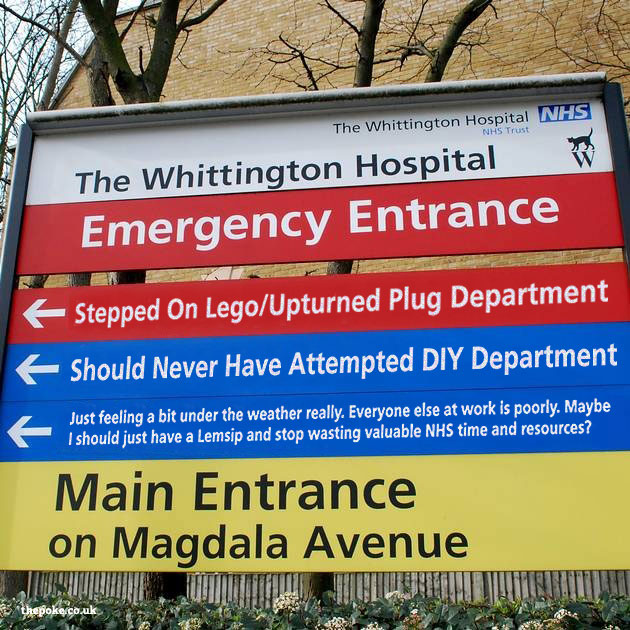
Last week on the blog, Emma Dorée wrote about a statement from South Tees NHS Foundation Trust urging people not to attend Accident and Emergency departments for stomach aches caused by excessive consumption of Easter Eggs. Emma explained that one in four A&E attendances is considered inappropriate, and highlighted the NHS Choose Well campaign which helps people to select the right place to take their symptoms.

Photo attribution: www.thepoke.co.uk
This made me wonder… is one in four A&E attendances being ‘inappropriate’ really so bad?

Clearly, the NHS is stretched at the moment, and nowhere more so than A&E, where only 83% of patients are seen and sent on their way within four hours, as compared with a target of 95%. It is natural for us to want to see performance improve, and waiting times are doubtless inflated by ‘inappropriate’ attendees.

Of course, we should wonder what is meant by ‘inappropriate’ in this context. There are many possible classifications. Of course, attending A&E seeking treatment for a sick dog is undoubtedly inappropriate. But is it inappropriate to attend for ‘hangover help’? What if the symptoms of your hangover are difficult to distinguish from the symptoms of meningitis? The final diagnosis and healthcare provider’s perspective is not necessarily the best viewpoint from which to determine ‘appropriateness’.

Even if we assume that one in four attendances truly is inappropriate, it’s reasonable to question whether that is so bad. Considering the problem in terms of sensitivity and specificity, it is vastly preferable that the self-triaging process is sensitive (i.e. all people who really need A&E attend A&E), even if that’s at the expense of a degree of specificity (i.e. some of the people who don’t need A&E still attend A&E). As a doctor, I want everyone who has a life-threatening emergency to attend A&E, not for one or two to go to their local pharmacy, and I’m willing to accept that making that happen might mean that some less urgent cases also slip through the net.

People presenting to services inappropriately is anything but a new problem. Writing in The Lancet in 1849, Joseph Hodgson - the founder of what is now known as the Birmingham Midland Eye Centre - complained of the “growing evil” of “the indiscriminate admission of out-patients to charitable institutions”. His problem was, perhaps, a little different: people referring themselves to charitable hospitals even though “one half of the patients can afford to pay the surgeon his fee”. In order to avoid detection, many of his patients chose to “dress shabbily, and even borrow their servants’ bonnets and shawls”.

To my mind, the root of the modern problem is that we expect people, most of whom rarely use the health service, to self-triage between six (or more) levels of care. This is not sensible. Campaigns admonishing people for making obviously incorrect choices don't help this core problem, and may even counteract campaigns like Be Clear on Cancer, which encourage people to consult health services with symptoms which they may not recognise as ‘red flags’.

One solution to this problem is to introduce professional triage. Back in 1849, Hodgson suggested that “each applicant be compelled to bring a note of recommendations from the clergyman”; perhaps not quite such a useful recommendation for the 21st century. NHS Direct, and its successor NHS 111, were perhaps intended to provide the modern equivalent of the clergyman’s note, but do not enjoy a high degree of public or professional confidence. This is probably because triage over the phone is very difficult, even if it has been shown in research to reduce A&E demand. Perhaps options such as embedding GPs within A&E, as proposed by South Tees CCG, will provide an answer.

For now, here’s the bottom line: even as someone working in the system, I couldn't tell you where I'm supposed to take myself if I develop an unclear symptom. Telling me how inappropriate other people’s attendances are don’t help signpost me to the right place if I have, for example, sudden hearing loss or eye pain. Like very many other people, in situations of uncertainty, I am likely to err on the side of accessing a higher level of care, as I would not want to delay urgent treatment. Though I probably wouldn’t turn up wearing my servant’s bonnet.

Thursday, 7 April 2016

It's April: happy stress awareness month everyone!

Guest post by Dr Emily Henderson, Lecturer in Knowledge Exchange in Public Health and Research Fellow in Complex Systems at Durham University

April is stress awareness month. Why, you may ask? Maybe because it’s tax season. Or because parents have to look after their children during the Easter holidays. Or perhaps it’s to help recover from all the April Fools’ Day jokes, like the poor guy in Canada this year who reportedly collapsed from heart palpitations after his work colleagues convinced him he had to cut his holiday short to meet a deadline that had been moved forward.

 
Whatever the reason, it is happening this month. The Health Resource Network has deemed it so. And we at Fuse think it is a good opportunity to raise awareness about stress.

But I am already aware that I’m stressed
, I can virtually hear you reply. Fair enough. Nearly half of UK adults report feeling stressed every day or every few days, according to the Mental Health Foundation. With budget cuts, job insecurity and global crises, just to begin with, we all are stressed.
  
So what am I to do about it? We all have our coping strategies, which are biologically understood responses that humans and animals alike have evolved. Chimpanzees are known to groom each other to cope with threats and re-establish bonds. Stress and suffering are human universals. We can measure stress via stress hormones like cortisol, and there are physiological and some behavioural responses we can predict, like the ‘fight or flight’ response. But some behaviours are not predictable, and do not always make (immediate) sense. For example, Hilary Graham’s ethnographies of low-income single mothers showed us that, paradoxically, smoking was used to cope with suffering and thus improve wellbeing.

You, dear reader, have asked so many good questions up to this point, I have one for you: Considering the ‘causes of the causes’ of ill health, is the actual problem that these women smoked or is it the disadvantage they experienced? We have no choice but to cope in our own ways with stress. After trial and error, I know better now what I need to get perspective and find stillness inside. I am addicted to the oxygen highs I get through practicing yoga, and require connection with nature and people. But as a native to San Francisco, I am under cultural obligations to indulge in wine. Nobody is perfect. And nor should we ever aspire to this elusive ideal. Indeed, evidence for the health benefits of practicing compassion - either compassion for ourselves or for others - is growing. Beyond changing our behaviours, we must change the structures and systems that generate stress.

Spring is actually not about chocolate bunnies, but about renewal. So this April, in addition to trying new ways to cope with stress (see the Huffington Posts compilation of articles for Stress Awareness month, or NHS Choices mindfulness article), maybe get involved in a cause that seeks to alleviate suffering.

Please check out the Stress, Health and Wellbeing special interest group that I run through the Wolfson Research Institute for Health and Wellbeing at Durham University.

Photo credits
1. http://slstpaso.com/wp-content/uploads/2015/03/April-for-email.png
2. http://missinghumanmanual.com/wp-content/uploads/2011/05/grooming-chimps.jpg
3. https://thimesblog.files.wordpress.com/2014/02/keep-calm-make-your-voice-heard.png?w=600

Thursday, 31 March 2016

An egg-cellent reason to go to A & E?

Posted by Emma Dorée, Fuse Communications Assistant, Teesside University

Easter is a time that many people look forward to, not only because we get a couple of extra days off work but because it is an excuse to over indulge in copious amounts of chocolate.

This year however, it seems that Easter has become a problem for many people, especially the NHS. South Tees Foundation Trust NHS have this weekend released an urgent statement on their social media sites, urging people who have given themselves stomach ache from eating too many Easter eggs not to attend Accident and Emergency.

Data for NHS England in January showed that 88.7% of patients attending Accident and Emergency were dealt with in four hours – the worst monthly performance since the target of 95% began in 2004. These figures show that Doctors are under a lot of time pressure but what they don’t show is why.

I did a piece of investigative journalism to unearth the most comical reasons why people attend A&E departments in the UK and need your help in deciding which reason is the most outrageous one.

Below are 10 reasons, most of which featured in the The Choose Well campaign developed by NHS North West in 2011 to urge people to go to the right place for NHS treatment after new figures revealed that one in four A&E patients could care for themselves or get treatment elsewhere. The campaign includes a number of short films depicting "inappropriate" A&E scenarios being played out by actors, which are very entertaining and might help you to make an informed choice.

We added stomach ache from eating too many Easter eggs as the ninth reason to keep the list up to date. Which one will get your vote?

Make sure to keep an eye on our Twitter page to find out the results!

Create your own user feedback survey

Thursday, 24 March 2016

Supporting vulnerable communities in Australia and the UK: linking data through knowledge exchange

Posted by Theodora Machaira, PhD student at Teesside University

On the 8th of March we were pleased to welcome Jen Lorains, researcher from Australia, in Fuse. Jen was successful in winning a Winston Churchill fellowship and decided to visit Fuse as her main research interest is knowledge exchange and translational research.

As part of her visit, Jen delivered a Knowledge Exchange Seminar on ‘Early Childhood Data with Communities in Australia’. Her presentation focused on the Australian Early Development Census (AEDC) which is a national census which measures physical health, social skills, communication and general knowledge, language skills and emotions of 5 years old children. The AECD data is publically available and although it is not primarily used for knowledge exchange, it certainly facilitates it by enabling key stakeholders in early years to work with the data in order to improve child development outcomes.

Theodora (left) with Jen Lorains
Jen’s presentation was interesting on a number of levels but from a PhD researcher’s point of view, two things were most striking. First of all, thinking about child development assessments in diverse populations, I felt that Australia and the UK are not as different as I thought. In Australia, diversity exists mainly between indigenous and non-indigenous populations. Indigenous Australians have their own language, rituals and beliefs, which in early years and education settings can be challenging to deal with. Although, diversity in the UK is different and not as clear cut with many different cultures calling the country their home, diversity is also an issue over here and is now perhaps more prominent than ever. With that in mind, I was wondering, how fair (or accurate for that matter), is it to collect data on child development from all 5 years old children in English? Isn’t it possible that an indigenous child has good communication skills but in a different language? Of course, this cannot necessarily be taken into consideration in a national census. But surely that begs the question, are we classing children as having delayed development when perhaps we shouldn’t?

The second thing that got my attention was the issues with knowledge exchange in Australia that Jen discussed. She talked about how different professionals use the data and how challenging it is to have everyone on board when trying to develop common approaches to help children in areas where vulnerable children are identified as different professionals identify different solutions for highlighted problems. As my PhD focuses on systems change and developing a common approach between early years’ professionals, I again, thought about the similarities between Australia and the UK. Perhaps foolishly (I am only a year into my PhD!) I thought that these issues are a UK phenomenon, however, I quickly realised during Jen’s presentation that they are not.

Intrigued by these observations, I started talking to Jen after the seminar (and because Jen had an hour and a half to kill before her train) we decided to go for a drink after her seminar. Although some people might disagree, I thought that the pub was a great setting for knowledge exchange! We discussed my and her thoughts having travelled to the UK, USA, Canada and Peru, and realised that using research data with different communities in these counties requires researchers to be skilled in knowledge exchange. This will enable researchers to include these communities in interpreting the data and developing useful interventions with these communities. This might sometimes feel like fighting a lost battle but is essential to support vulnerable children identified through collected census data.

Thursday, 17 March 2016

Obesity: many perspectives, no magic solution

Lorraine McSweeney, Research Associate, Newcastle University

To coincide with Nutrition and Hydration week Lorraine reports back from the Westminster Food and Nutrition Forum.

On the 9 March I attended a Westminster Food and Nutrition Forum titled: ‘Next Steps on Policy for Obesity - Prevention, Sugar Consumption and Priorities for Children’s Health’. The original purpose of the forum was to discuss the Government’s childhood obesity strategy. However, as publicised in the Guardian on the 26 February, this has been delayed; with the Department of Health calling it a ‘complicated issue’ that they want to ensure is a ‘game changing moment’. Despite the strategy delay the forum went ahead to allow ‘experts’ in the field to share ideas and possible approaches for the strategy.

Speakers and panel members were a diverse group ranging from Public Health England (PHE); School Food Plan; Southampton Health and Wellbeing Board; Children’s Food Trust; ukactive kids; Family Lives; primary care; Advertising Standard’s Authority; British Retail Consortium; Kantar World Panel; Food and Drink Federation; and London Food Board… the list goes on...

The McLympics - advertising and sponsorship
PHE stated that the average diet in the UK is poor with too much saturated fat and sugar and too little fibre, fruit and vegetables. This is having a knock-on effect on our children, with one in five primary school kids overweight or obese, by the time children leave primary school, this figure rises to one in three. Contrary to popular belief, this is not just an issue of poverty; obesity is happening in both the most and least affluent areas. We are bombarded with opportunities to eat 24 hours a day and there are many drivers to buy and eat. Advertising and sponsorship, which some people don’t associate with advertising, can have a negative impact on child health.

The Chief Executive Officer from the Children’s Food Trust argued that good food should be a part of a child’s life from day one, right through their life. Food should not be tailored to be ‘child-friendly’. Children should be encouraged to eat smaller portions of adult food and should not be targeted by the food industries. Parents need to be listened to and families should be helped to cook more.

The need to get children moving more was discussed and included comments about modern life not encouraging children to be active; and schools too scared to work with parents and tell them how to keep their children active. It was stated that only a third of children enjoy sports and other solutions need to be encouraged. The primary care representative felt that too many patients are being treated with the consequences of obesity. She believes that primary care professionals are missing opportunities to discuss weight with parents; however, GPs reported not wanting to cause offence and felt they did not have the time to deal with the issues.

An overarching theme from the ‘health’ representatives was that prevention is key and that the food industry was part of the problem and should be involved in solving the problem. We were informed that in an average supermarket consumers have 30,000 products to choose from and consumer change is very hard to drive.

The impact of volume of sales of products such as sugar and bread, which have no immediate substitute, are shown not to be affected by price rise. The introduction of a sugar tax was highly debated; some felt it would not change consumer behaviour, whilst others argued it would offer one solution. However, following the success of the reformulation of products to reduce salt and saturated fat, it was agreed that the reformulation of products containing sugar could be a way forward. However, representatives from the food and drink industries stated that sugars would be more difficult as it has a structural function in food.

In addition, if a product was made ‘healthier’ consumers may be inclined to eat more of the product but it was agreed that alongside reformulation, portion size control could be beneficial. There was much discussion of whether legislation should be enforced on food and drink companies – the representatives believed that due to diversity of companies, a voluntary approach was better. However, it was argued that ‘if consumers continued to make incorrect choices – legislation was all that was left’.

As you can see from this very brief summary, obesity continues to be a very complex issue; it was thought-provoking to hear the different perspectives from health, policy, practice and industry. However, the discussions emphasised the point that there is no magic solution; the publication of the Government’s childhood obesity strategy is eagerly awaited.

Photo attribution: flickr.com, Santo Chino, "McLympics": https://www.flickr.com/photos/santochino/2797034750

Thursday, 10 March 2016

Social enterprises in health: can you make profit for the greater well-being of all?

Posted by Peter van der Graaf, AskFuse Research Manager, Teesside University

Is it ok to make money in public health? This was one of the key questions that that came out of the Quarterly Research Meeting on social enterprise and health last month, which was jointly organised by Fuse and the Institute of Local Governance (ILG), in association with the North East Social Enterprise Network (NESEP). Social enterprises are often involved in pioneering and transformational work that may help reduce pressure on public health providers within local authorities. But are we taking enough notice of their potential and is there an evidence base for such interventions? The event aimed to explore this theme, highlight best practice and identify barriers and opportunities for future work and research in this area.

The key note speakers first engaged in a bit of myth-busting: a social enterprise is not a legal form and does not mean the same as not-for-profit. They are not replacing the NHS or public health, are not promoting budget cuts and are not a form of corporate social responsibility. So what are they then? Professor Cam Donaldson from Glasgow Caledonian University offered the following definition: “organisations that trade for the common good (e.g. addressing social vulnerability) and where the profits of that trade are used for social and community benefit”.

Making profit for a good cause sounds like a good idea, particularly for cash-strapped health and voluntary and community sectors, but the discussions at the event made clear that this comes with a number of strings attached, which can have far reaching and often unintended consequences for organisations. For instance, bidding for contracts can shift organisational focus from addressing local needs. Organisations also have to be size and investment ready, with plenty of larger competitors out there going for the same contracts. And this can be a big ask, particularly for small community organisations that have no interest in developing a business strategy.
 
There is also an ethical dimension to this decision: moving health provision from the public sector to social enterprises means one less link in democratic accountability. Who governs the governors of social enterprises? Cam Donaldson referred to this as “the shadow state”. Is the market also the right model for public health and wellbeing delivery or does it cause further distortion of social priorities? One participant put it as follows: “Although commissioners understand the importance of well-being, they are unlikely to pay for it unless you can demonstrate that it will save them money”. If everything is all of a sudden an asset, where does that leave an ideology of free access to health and social care for all?

In summary, social enterprises in health leave a lot of questions unanswered but can make quite a difference, be it for better or for worse. Unsurprisingly, there was an urgent plea from participants to academics to develop more research in this area. Studies looking at social enterprises in health are rare and particularly their impact on health and the wider determinants of health is unknown.

Interestingly, participants argued for a move away from “REF impact research” and government favoured approaches, such as Social Return On Investment (SROI) analysis. They argued that economic models were less suited for capturing the wider range of health and social outcomes that social enterprises aim to deliver. Outcomes of social enterprises are often produced in co-production between commissioners, providers and service users and, therefore, needed to be measured as such. Therefore, participants advocated a more anthropological approach to impact research for social enterprises that allowed researchers to leave outcomes and their measurement more open from the start of the research to accommodate new meaning of impact along the way.

Would that perhaps be the greatest asset of social enterprises in health: turning co-production of evidence into a profitable approach?

A summary report of this QRM can now be found here.

Picture attribution: www.flickr.com, Tom Simpson, "I've always been able to turn mistakes into big profits!", https://goo.gl/ku0VRG 

Thursday, 3 March 2016

Practice what you preach

Guest post by Robin Ireland, Chief Executive, Health Equalities Group and Director, Food Active

I am invited to review the morning papers on a regular basis for BBC Radio Merseyside. I mainly pick health subjects to discuss and went for air pollution last week. A recent report suggests that 40,000 premature deaths annually in the UK are attributable to outdoor air pollution. The biggest contributor is diesel engines and we obviously need national policy in place to support people to make the switch; ideally to walking, cycling and public transport but - at a stretch - to engines not kicking out toxic fumes.

I had cycled to the studio that morning, as I usually do, but mentioned I own a car as well. The DJ focused on me and said, “I bet it’s a diesel …..”

Which got me thinking about practising what we preach. Instead of constantly haranguing people to eat better, exercise more, not smoke etc., are we putting our own house in order?  Yes, this can be important on an individual level, but it is critical at a population level.

We look to Government for legislation to support our healthier lifestyles and I was disappointed to hear about the latest delay in the publication of the Childhood Obesity Strategy. Yes, I would like to see a tax on sugary drinks and yes, I would like to see more controls on the marketing of junk food and drinks to young people.

But I would also like to see more powers to local authorities in their efforts to promote healthy weight. This is in fact what the Health Select Committee on Obesity recommended back in November: “Greater powers for local authorities to tackle the environment leading to obesity”

Blackpool Council sign the Local Authority Declaration on Healthy Weight
Back in August 2014, the North West’s Healthy Weight campaign, Food Active, invited Action on Smoking and Health (ASH) to give a presentation in Manchester on their Local Authority Declaration on Tobacco Control. Could this approach also work for overweight and obesity? Essentially, can local authorities look in-house at their own polices to see how they impact on healthy weight?

Healthy Weight has proved to be a lot more complicated than Tobacco Control – I am not in any way suggesting that the latter is straightforward either – as of course we don’t have a product that is toxic in every way!

What has now become the Food Active Local Authority Declaration on Healthy Weight, has gone through many iterations and discussions. Our governance team, which includes myself and local public health practitioners and academics, considered a number of options. Should a Declaration be focused purely on sugar for example? Food Active decided not, as local authority policies on healthy weight would be much the same and could be positive (around encouraging active transport for example) as well as negative.

Of course Sugar Smart Cities, launched at the end of last year in Brighton, is an alternative equally valid approach where, given the evidence base around the amount of sugar in our diet, it has been singled out as a target.

On 20 January 2016, Blackpool Council became the first local authority in the country to pass the Local Authority Declaration on Healthy Weight. It was signed in front of cameras in February by the local Director of Public Health and the Cabinet Member for Reducing Health Inequalities.

The Declaration commits an authority to take measures (there are 12 listed) where possible to, for example: “protect residents from the commercial pressures and vested interests of the food and drink industry ….” and “consider how strategies, plans and infrastructures for regeneration and town planning positively impact on physical activity”. For the full list please visit www.foodactive.org.uk.

So Blackpool Council are practising what they preach and they are doing their best to take on a complex and challenging task. As the declaration states: “We recognise that we need to exercise our responsibility in developing and implementing policies which promote healthy weight”. It won’t be a piece of paper that lies on a shelf …..

And, no, I don’t have a diesel engine in my car.

Thursday, 25 February 2016

Does size really matter for our health?

Posted by Peter van der Graaf, AskFuse Research Manager, Teesside University

A friend of mine recently posted on Facebook a story from a so-called “professional fatty”. In her story published in the New York Times, Sarai Walker took issue with what she called ‘obesity bias’: obese people being portrayed as the baddies. Or as Sarai herself puts it: "Even the most open minded critical thinkers become outraged if fat is spoken about in any positive way: a person can never be simply fat, a fat body always needs to be fixed”.

Instead she argues that the most significant problem for fat people isn't their bodies but the hatred and abuse they receive from society. And she is not alone in this thinking: protest movements have captured the attention of the media by rallying against what they describe as the narrowly focused weight based approach to health. An example is the Health at Every Size (HAES) movement. HAES proponents believe that health is a result of behaviour that is independent of body weight. This is a pretty bold statement that can easily be disputed with research evidence but that is not the point here. The point is that these protest voices chime with a lot of resentment at evidence-based public health messages. Sure enough, another friend joined the debate quickly on Facebook proclaiming her anger on the occasion that her daughter came home from school with a book saying sugar is bad. Public health’s head was once again on the block as the kill joy of everything good and fun and therefore worthy of disputing.

Picture courtesy of  Anna Deflorian/The New York Times
But if we keep getting the message wrong what do we achieve in the end with our evidence-based message? And what is the right message? Should we go along with the ‘Health at Every Size’ claim and focus instead on how to make life more enjoyable at every size? After some highly scientific browsing on Google I came across an article from David Katz, Director of the Yale University’s Yale-Griffin Prevention Research Center, in the Huffington post, which from its catchy title: “Why I can't quite be ok with 'okay at any size' appeared to promise an answer. David Katz also opposes obesity bias; he rejects the notion that widespread obesity among children and adults is somehow due to “an inexplicable global outbreak of personal responsibility deficiency syndrome”. Where he does not agree with HAES is the complete decoupling of weight and health: he is ok with any size if it includes a proviso: as long as health is not adversely affected. Flab is not always fab, he argues, and as a society we should not want to normalise ill health or the factors that impose it.

When I pointed this out to my friend on Facebook, her response was that these were two separate but related issues: one is that obesity carries health risk, which was a matter for the individual and perhaps their doctor. The other was the issue of stigma of obesity under the guise of concern for one's health which is a society problem. But is this really true? Should we define obesity as a private matter that is none of society’s concern and focus instead on developing a culture where people of all sizes feel accepted no matter the risk to their health?

The arguments and evidence presented by both proponents and opponents of the Health at Every Size seem to suggest to me that weight is as much a society/cultural issue as an individual behavioural choice. Hence the emphasis in Public Health on Whole Systems Approaches to Obesity and the impressive Obesity System Influence Diagram, developed in 2007 by the Foresight Project researchers. And perhaps therein lies the problem: if obesity is a complex issue at both individual and societal level (and not just complicated) we cannot simply choose one over the other (accepting fat as an individual’s prerogative for happiness or obesity as societies overriding health responsibility). We also cannot ignore the individual health risk of overweight and obesity but cannot accept the stigma we attach to individuals for failing to be thin. Instead, we might need to find new public health messages that frame individual choices in a cultural framework, for example: “You can be fat and fit but few of us are so why not try together to be a bit fitter?” Maybe it’s not the size but the message that matters more for our health.

Thursday, 18 February 2016

From school dinners to sugar tax: Jamie Oliver to the rescue!

Guest post by Dr Victora J. McGowan, Research Associate, Teesside University

I have to say thanks to Jamie Oliver, the media attention from his School Dinners programme led to research questions which went on to form my PhD project (the effect of school meal legislation on child malnourishment). After completing my PhD I thought that would be the end to my connection with the celebrity chef, little did I know that our paths would cross again a few years later. I began work at Teesside University in October 2014 charged with conducting a systematic review into the effects of fiscal strategies on sugar consumption in collaboration with Public Health England (PHE). PHE had recently published 'Sugar reduction: responding to the challenge' which outlined the work they would undertake to assess the evidence base and identify potential areas that would be effective in reducing sugar consumption.

While we were busy searching through over seven thousand research papers the media were just as diligent in searching for almost anyone (including me) to provide information on whether the government would introduce a sugar tax. As we inched closer to the final number of relevant studies which we’d include in our review, Jamie Oliver waded into the debate. I admire the way he uses his celebrity status to push a healthy food agenda, however, I’m often left thinking whether his involvement does more damage than good. In terms of school food, I interviewed school cooks who said his School Dinners series resulted in an almost immediate decline in children taking a school meal. Some might say this was a good thing if the food was as bad as Jamie portrayed it. Well, it wasn’t that bad everywhere and this reduction in school meal uptake had a detrimental effect on the cooks as their salary was based on the number of children taking a school lunch. So when he entered the debate on a sugar tax it made me nervous. Jamie was branded a "patronising bully" by Alex Deane Executive Board Member of the People Against Sugar Tax campaign and tory MP Andrew Percy said Jamie’s suggestion of a sugar tax was "a classic nanny state reaction and it won’t work". I truly believe Jamie means well but his celebrity status often clouds the evidence and can result in detrimental consequences.


As we were in the process of finalising our review of the evidence, a total of 11 published studies, Jamie’s sugar tax campaign was gathering momentum with an online petition to have the issue debated in parliament and a new series being aired, Sugar Rush. Jamie wasn’t alone in his campaign, groups such as Action on Sugar and the Children’s Food Campaign, had been pushing for a tax long before Jamie came along, however, the addition of one more cook had the potential to spoil the broth. The authors of the School Food Plan, John Vincent and Henry Dimbleby have also advocated the introduction of a sugar tax and already introduced a 10p levy on sugar sweetened drinks in their LEON restaurants. However, with great celebrity status comes great responsibility. A recent article by Sian Griffiths discussed how the proceeds from these unofficial sugar taxes could be used to pay for drinking fountains in public parks with the view that it may help children access free drinking water rather than purchase sugary drinks. A novel idea but would it work? I asked John Vincent on Twitter whether kids would use these drinking fountains, he hasn't responded.

Before the ink had dried on our final copy reviewing the scientific evidence, Jamie Oliver et al had already decided that a sugar tax would reduce consumption and the government must take action. When PHE published Sugar reduction: evidence to action (see annexe 2 for our fiscal review) in October 2015 it almost seemed like closing the barn door after the horse had bolted. The media furore around the topic was so great that articles were too busy calling Jamie names and telling readers it was nanny state gone mad to pay any attention to the evidence. Our review of the evidence, although based on a small number of studies, suggested that consumers are responsive to changes in food and drink prices and this supports the evidence from modelling studies which indicate a tax of 10-20% would have a significant impact on purchases. Moreover, recent evidence from Mexico has shown that purchases of sugar sweetened drinks declined by up to 12% after the introduction of a sugar tax.

The evidence collated by PHE indicates that a sugar tax could have an impact on population health if implemented alongside a range of other strategies such as reducing marketing exposure and price promotions on high sugar products (we also reviewed the marketing evidence see annexe 3). However, this seems to have been diluted by the media whose attention has been focused on taxation. There are benefits to celebrity chefs wading into the public health arena as they can help bring some attention to important issues. However, I think they need to be mindful that their high media profile could have negative consequences. Parents, children, and school meal staff did not take too kindly to Jamie “transforming” school lunches and the skewed media attention on a sugar tax has the potential to undermine the evidence base before any attempts are made to implement a potentially beneficial health policy.

Thursday, 11 February 2016

Animation designers... a day in the life of a researcher (part 2)

Guest post by Dr Victoria McGowan, Research Associate, Alcohol and Public Health, Teesside University, @teamalphatees

Team Alpha recently spent a few days with Arcus Animation Studios and we were joined again by our two young people, Megan and Glen, from local schools who have been helping us develop the animation which introduces our SIPS JR HIGH study to participants. Arcus designed and produced our 2D cartoon animation and kindly let us into their studios for a behind the scenes peek at how they work. Here are some reflections on how it went:

The team at Arcus were so welcoming and introduced us all into their creative world. Megan and Glen were shown how animations are developed and given tutorials on using various different graphic design software and tools, such as the graphic tablet. Team Alpha spent time admiring their work environment (an Aladdin’s cave of toys, games consoles and a miniature Star Wars AT-AT Walker) and were eager to join in the weekly Street Fighter competition held in their fantastic common room.
The animation team at Arcus
While Team Alpha were reliving their youth, Megan (centre above) and Glen were hard at work developing animation characters and storyboards. On day two Megan was interviewed by Arcus and described how her passion for graphic design influenced her decision to assist us in the development of our SIPS JR HIGH animation.

She said: “I have been helping Teesside University in terms of creativity and research for the animation. The reason for this is because I am interested in graphic design myself and would love to get involved in some experience and voluntary work with animation and design companies”

The experiences of Megan highlights the benefits of participant involvement in the development of research, not only to the study, but also to the individuals. Megan and Glen were able to gain experience of working in an animation studio and see first-hand what a career in this area would be like.

“I like how the job will include drawing, animation and creativity. It also inspires me to be myself and not to follow instructions of what to do as part of designing something. I also like how you can design your office to what you like and enjoy, I think that it’s good for people to express their likes of designing and working with people that have the same interests as you”

Megan was very grateful for the opportunity to spend time with Arcus, this gave her insight into the life of an animation designer and gave her confidence to continue pursuing this career.

“I think Arcus has been very useful and they have given me ideas for further experiences and other work that I will be doing. They have given me a warm welcome into their company and also took me through tutorials of how their programs work and what they do to build up an animation. I have enjoyed my time at Arcus and the people here are very nice and outgoing! They each have their own personality which I like and they all have a story behind how they have achieved what they have done to become an animation designer.

Thank you Arcus!”