Tuesday, 8 July 2014

Social policy and public finance: Are possibilities for health equity shrinking?

Posted by Ted Schrecker, Professor of Global Health Policy, Durham University


With the publication of Thomas Piketty’s massive book Capital in the Twenty-First Century, the acceleration of economic inequality has belatedly begun to receive the attention it deserves. His is, in fact, just one of several indispensable recent treatments of the topic. Another, which has received less publicity, is Hard Times: The Divisive Toll of the Economic Slump, by Guardian editorial writer Tom Clark and sociologist Anthony Heath – a meticulously researched treatment of how the recession has affected the United States and the United Kingdom. Readers too impatient to read Capital’s elegantly written 655 pages can find a highly condensed summary of much of Piketty’s work in the 23 May 2014 issue of Science. The summary is especially valuable for a conclusion that comes through more emphatically than it does in the book: ‘Inequality does not follow a deterministic process. …. There are powerful forces pushing alternately in the direction of rising or shrinking inequality. Which one dominates depends on the institutions and policies that societies choose to adopt’.
This is not new to those of us concerned with the social determinants of health; consider the WHO Commission on the topic and its focus on ‘the inequitable distribution of power, money, and resources’. Against this background, what are we to think of a new report on The Condition of Britain from the Institute for Public Policy Research? Since it was released in the same week as initial findings from the Project on Social Exclusion indicating that the proportion of British households living with multiple forms of material deprivation has doubled in the past three decades, one might have expected recommendations for a frontal assault on the elements of economic inequality that are most destructive of health to be the centrepiece of the IPPR report.
Not so. Instead, we get prescriptions for a ‘richer version of equality [that] is more complex than one focused purely on the distribution of material resources’ (p. 16) and the priceless statement that: ‘Like many other countries, Britain has experienced an unwinding of the postwar compression of market inequalities, and its tax and benefit system has had to work increasingly hard to reduce disparities in wealth and income. Fiscal constraints will limit the scope for post-tax redistribution in the years ahead, while tendencies towards greater wealth inequality may intensify (Piketty, 2014)’. This goes on for almost three hundred pages.

Crisis, what crisis?
In a jurisdiction that taxes huge incomes and accumulations of wealth as lightly as the United Kingdom, talk of fiscal constraints and the limited scope for post-tax redistribution is, to put it politely, nonsense. I prefer a stronger term, but Fuse probably doesn’t. The imperative of eliminating the deficit cannot be ignored, but as George Monbiot recently pointed out, on the revenue side the options include financial transactions taxes, wealth taxes and ‘a progressively banded council tax’. The most straightforward option is a return to much higher marginal tax rates on the personal incomes of the ultra-wealthy, which were the norm in many countries until quite recently. Thomas Piketty and his long-time collaborator Emmanuel Saez have themselves suggested this. (All these observations are also relevant to the proliferation of nonsense about the crisis of financial sustainability supposedly facing the NHS, now being regurgitated even by people who should know better.) On the expenditure side, massive welfare programmes for the propertied and the arms traders like HS2 and Trident replacement could be rethought.  

None of this would matter much – the IPPR report could be dismissed as an uninformed and unfortunate reprise of the discredited Third Way – except that the report apparently will shape much of the Labour Party’s agenda for 2015, and if elected thereafter. In other words, it represents the current limit of permissible official discourse, what one might call the frontier of political possibility for reducing inequality, and the message is clear: too bad, it can’t be done.

A week is a long time in politics, and the location of the frontier could change – not least in response to spirited advocacy for considering public finance and its equity implications as a public health issue. In the absence of such change, Johan Mackenbach’s gloomy 2010 conclusion that ‘reducing health inequalities is currently beyond our means’ will turn out to have been spot-on. We must be very clear, in private and in public, about the implications: the best that can be hoped for is a reduction in the pace at which health inequalities are growing, and even that is uncertain. Harsh words, but the times demand them. To quote Bob Dylan, ‘let us not talk falsely now, because the hour is getting late’.

All views expressed are exclusively those of the author.

Thursday, 3 July 2014

52 weeks in public health research, part 26

Posted by Lynne Forrest and Jean Adams

So, week 26. That's half way. We haven't missed a week and there's been a full complement of four pictures each and every week. People, we are doing great. Only 26 weeks to go!

From Lynne Forrest: this is my family Saturday food shopping. I think it demonstrates the current confusion around healthy eating perfectly. The trolley contains fruit and muesli (good), fruit juice (used to be good but now the sugar is a concern), butter and cheese (used to be bad but fat is now potentially rehabilitated), as well as crisps, biscuits and pizza (definitely bad, and I'm clearly letting the public health side down here, but as they're from Marks and Spencer it's good quality bad food – does that make it any better?!)

From Jean Adams: My great uncle died recently. Although I'd never met him, I found myself tasked with finding his birth certificate in order to register his death. After looking absolutely everywhere else in his flat for it, I final flung open the kitchen cupboards in despair thinking maybe there was a secret stash of important documents under the bread. This is what greeted me: Morrison's saver's tinned soup, mushy peas, custard and fruit. I wasn't quite sure whether to laugh or cry. I finally found the birth certificate in a shared cupboard in the hallway of his apartment building.

From Jean Adams: Yeah, I didn't really find this funny. Yeah, I get that it's hilarious that 'pushy health types' like me don't even have a sense of humour. Yeah, I enjoyed a bag of crisps on the train with a cup of tea - what of it?

From Jean Adams: this supermarket convenience store isn't near a school. But this is some pretty heavy store-front alcohol marketing I'd say.

-------------------

Just to remind you:

Each Thursday of 2014 we’ll try and post around four pictures on the Fuse blog that capture our weeks in public health research, from the awe-inspiring to the everyday and mundane. Given that more of the latter than the former exists in my life, I foresee problems compiling 208 images worth posting on my own. So this is going to have to be a group project. Send me an image (or images) with a sentence or two describing what aspect of your week in public health research they sum up and I’ll post them as soon as I can. You don’t have to send four together – we can mix and match images from different people in the same week.

Normal rules apply: images you made yourself are best; if you use someone else’s image please check you’re allowed to first; if anyone’s identifiable in an image, make sure they’re happy for it to be posted; nothing rude; nothing that breaks research confidentiality etc.

Tuesday, 1 July 2014

Alcohol marketing at the school gates?

Posted by Mark McGivern, Specialty Registrar in Public Health, Balance

[Editor's note: this post describes a piece of work conducted by Mark and Balance. Just for the avoidance of doubt, we thought we should point out it hasn't been formally peer reviewed.]

I’m a reluctant supermarket shopper at the best of times. If possible we try and do most of our shopping online or using local shops or the market (at least, that’s my excuse for not having noticed the scale of alcohol displays in our supermarkets).

However, in the first week of working at Balance, the North East Alcohol Office, a colleague came back from a lunchtime visit to a supermarket, somewhat vexed at the labyrinth of alcohol displays they had walked through in the store.

This sparked an idea for a piece of work studying the promotion and provision of alcohol by our supermarkets, which we hope to publish in the near future.

The Government’s public health responsibility deal (PHRD) is a partnership between government, industry, academic and voluntary sector experts aimed at developing voluntary agreements to address specific public health objectives.

Within the PHRD, the five largest supermarkets (‘Top 5’- Tesco, Asda, Sainsbury’s, Morrisons. Co-Op) have made a series of pledges regarding alcohol, which including the following:

A6. We commit to further action on advertising and marketing, namely…. not putting alcohol adverts on outdoor poster sites within 100m of schools…..
There could obviously be some debate as to whether a self-imposed exclusion zone of 100m constitutes a responsible attitude towards alcohol promotion by supermarkets. In theory, I suppose it shows intent at the very least, but does it go far enough? If you take the guidance on planning applications for takeaways which recommends an exclusion zone from schools of 400m, then the alcohol advertising exclusion zone pales into insignificance by comparison.

Making this pledge is all very well, but there was also no mention of whether the Top 5 applied the same standards to their own store-front advertising as part of the pledge. I wanted to see whether it would be possible to demonstrate compliance with this pledge by visiting stores throughout the North East to look at the extent to which the Top 5 stuck to their pledging guns.

To look into this 100m exclusion zone further, I visited a number of stores across the region and, as part of the wider study, assessed the Top 5’s compliance with this pledge.

The 378 postcodes of the stores of the 5 major supermarket retailers were entered into a GIS system and mapped against all primary and secondary schools to identify those that were within 100m of a school. Initially, 18 primary schools and two secondary schools were identified as potentially being within 100m of a supermarket. This was narrowed down to 10, once inaccuracies in the postcode address file were accounted for.

So, ten stores were identified as being within 100m of schools. After visiting these, it became clear that a number appeared to be contravening the alcohol pledge. Three had on-site, outdoor alcohol advertisements. Another had an alcohol advert in a window that was intended to be visible outside.


Examples of storefront alcohol advertising within 100m of a school premises in the North East of England
Clearly, as with all advertising, there is a seasonal aspect to take into consideration. At the time of carrying out the research, it was close to Mother’s Day. Whilst most of the adverts related to non-alcohol related gifts & seasonal products, there were also a number of adverts promoting wine. For those with good eyesight, I should stress that I am not suggesting fabric softener is an appropriate mother’s day gift!

Perhaps, if the same stores were revisited now, during the World Cup, the likelihood of there being more adverts associated with alcohol consumption would be much higher too.

This research has highlighted that there may still be some way for the Top 5 (and retailers and manufacturers more broadly) to go when it comes to taking the Public Health Responsibility Deal seriously. After all, a pledge means nothing if it isn’t seen through. And if it isn’t seen through, then people lose confidence in it.

There have also been a number of other examples of alcohol advertising in the North East that wouldn’t meet with the responsibility deal pledges, like advertising alcohol at school bus stops for example.

Examples of alcohol advertising within 100m of a school premises in the North East of England
There is a body of evidence that suggests exposure of children and young people to alcohol advertising increases initiation of drinking and also encourages heavier drinking among existing drinkers. 

Advertising in such close proximity to schools is something that most major producers and retailers have committed not to do, but this limited investigation has shown otherwise.

These are unlikely to be isolated examples and we’d like to try and compile some more examples from across the North East, and beyond. We know elsewhere in the country there have been successful objections to such practises. Next time you take your kids to school, if you see any alcohol advertising at the school gates, please send us a picture with details of the location to: info@balancenortheast.co.uk or tweet it to @BalanceNE.

The debate about appropriate restrictions & guidelines on alcohol advertising will continue. However, if we don’t highlight the apparent lack of compliance by the retail and manufacturing sector with their current pledges, it may be assumed that the current controls are not only being observed, but are enough. By demonstrating that this isn’t the case and taking a stand on alcohol advertising, we can take a small, but significant step in the right direction.

Thursday, 26 June 2014

52 weeks in public health research, part 25

Posted by Becki Langford, Micky Wilmott and Jean Adams

From Becki Langford and Micky Wilmott: There's been a lot of debate recently in the news about the potential benefits and harms e-cigarettes. While they may be able to help people give up smoking, do they renormalise smoking? Here are two photos we snapped in Cardiff and Derbyshire of shops marketing e-cigarettes

From Jean Adams: I went on a little jaunt to Manchester a few weeks ago for a meeting of the Executive Committee of the UK Society of Behavioural Medicine (I'm secretary). A series of unfortunate events meant I missed my train and so spent longer than anticipated standing on the platform hoping the next train might somehow be early. In case you've ever wondered, this is the New Castle in Newcastle. The trains go 'round it, not through it - although through would be pretty cool.

From Jean Adams: Newcastle-Manchester, via York for coffee and toilet stop. This is the window on the ceiling of the Ladies at York station. It's a photo of the stunning York Minister. But why in a window frame, on the ceiling?

From Jean Adams: and this is the reason I was late for my train in the first place. No, not taking this picture (took it on the way home). The bike racks at Newcastle Station have been moved a few times over the last few years. Their final resting place seems to be here - right at the furthest reaches of one of the non-east coast mainline platforms, miles from anywhere. Every single time I have to traipse down there I want to scream at someone about how important bikes are and how we need to make them welcome, not hide them in the furthest corner we can find. Obviously I know this is where the bike racks are and how long it takes to get to and from them. I just have a mental block on taking this into account in my journey planning

Tuesday, 24 June 2014

Weird Science

Posted by Joel Halligan

Recently I was chatting with a friend who researches bacterial proteins. My friend was somewhat taken aback by the research methods used in the study I’m working on (questionnaires, food diaries and the like) and, compared to his research, the effort required to collect data. This amused me somewhat: “How else would we do it?” I asked him. He um’d and ah’d but didn’t have an answer. In his mind our research seemed ‘messy’ because our research subjects didn’t behave in as predictable a fashion as his bacteria. Our subjects, being human, are subject to whims and fancies and emotions and, well, real-life; his research subjects don’t require a recruitment strategy with ten phases, they fit snugly on the head of a pin and they don’t eat at McDonalds. I suppose I had to agree with him that, by comparison, our research was indeed ‘messy’, but that in my opinion that’s what makes the research I’m working on much more interesting and enjoyable than his lab-based research.


I reflected on the data collection that I’ve been involved in for the past 8 months and how alien it may seem to somebody like him, with the very same job title as me but working in a very different field of research. My participants have IDs but they also have names. When I visit them or talk to them on the phone to ask them about what they had to eat the day before (part of the research!) they chat to me and, as I’m human, I will chat to them too. This means I don’t just have to remember the protocol and what I need to ask them to make sure I collect the right data, but I also need to remember that they’ve just bred a litter of German Shepherd pups (and how are they all doing?), or that they’ve been somewhere nice on holiday (did you have a nice time?), or that last time I spoke to them their oven broke (and has it now been fixed?). When I arrange to meet them I have to text them to remind them and be prepared to be stood up or rearranged because, surprisingly, the research they’re involved in is less important to them than it is to me. When I visit people at home I have to contend with hairy and excitable Japanese Akitas and ringing phones and doorbells and kids that want to constantly interrupt. I also end up drinking a lot of tea. My friend has none of these issues in his research, the lucky devil, although being plied with tea isn’t so bad.

My friend also seemed discomfited by the ‘lack of control’ he perceived that we had over the many variables that could potentially influence our outcome of interest - in this case whether a cooking skills intervention can influence diet. Again, I playfully asked for his proposed solution. Lock them all in a darkened room with a knife block, portable hob, organic veg box and a series of Jamie’s 15-minute meals on DVD? I don’t think that’d get past the ethics committee, I said. I explained that we do our best to control for this multitude of other variables by randomising participants to one of two study arms. Do you blind them to their allocation, he asked? Er, no, I replied, would we send them on a cooking skills course but tell them they were going on a knitting course and hope that they didn’t realise? He also argued that by telling people we’re recruiting them to take part in a cooking skills course we might generate effects before we’ve even started, regardless of which arm they’re recruited to. I agreed with him to some extent, but explained that it’s difficult enough to recruit participants even when they have the full information beforehand, so imagine how difficult it would be to recruit people to a ‘mystery intervention’, not to mention that darned ethics committee that would no doubt throw a spanner in the works.

After our chat, my friend concluded that he was glad that he didn’t work with humans in his research because he wanted to do scientific experiments, not quasi-scientific experiments (his words). I concluded that I would prefer the latter any day. In my opinion, people are much more fun than single-celled organisms.

Thursday, 19 June 2014

52 weeks in public health research, part 24

Posted by Catt Turney

This week I was tweeter-in-residence for two events - a symposium on health promotion in schools (#SchlHealth) and the launch of the School Health Research Network (#SHRN14). I was busy being proud of myself for keeping to the right account and hashtag, when I noticed that I'd tweeted this photo of our Co-Director upside-down. I deleted, rotated it and tweeted again - still upside-down. Moral of the story: Twitter is four-dimensional, or this photo just really wants to be upside-down. It seemed a shame to deny it that chance, so here it is.

The school health symposium meant I got to have a day of working at home at my grandma's in London. Cue amazing vintage healthy-eating books - full of mostly quite sensible advice, interspersed with the odd bit of quackery and some amazingly 70s recipes.

DECIPHer's Clerical Officer, Natalie, preparing for the SHRN launch whilst modelling a new innovative storage solution that we're trialling here in Cardiff - the cupboard-desk.

I've been enjoying Jenni Remnant's animal photos on the Fuse blog over the last few weeks, so wanted to try and contribute something appropriately cute from my walk home. Unfortunately all I could find were these two scraggy seagulls trying to eat each other.

-------------------

Just to remind you:

Each Thursday of 2014 we’ll try and post around four pictures on the Fuse blog that capture our weeks in public health research, from the awe-inspiring to the everyday and mundane. Given that more of the latter than the former exists in my life, I foresee problems compiling 208 images worth posting on my own. So this is going to have to be a group project. Send me an image (or images) with a sentence or two describing what aspect of your week in public health research they sum up and I’ll post them as soon as I can. You don’t have to send four together – we can mix and match images from different people in the same week.

Normal rules apply: images you made yourself are best; if you use someone else’s image please check you’re allowed to first; if anyone’s identifiable in an image, make sure they’re happy for it to be posted; nothing rude; nothing that breaks research confidentiality etc.

Tuesday, 17 June 2014

The C word V: cooking

Posted by Jenni Remnant and Libby Morrison

We all know that two key elements of public health are what we put in our bodies (food, alcohol, cigarette smoke) and the environment that surrounds us.

When you’re a carer, to a point, you can often find yourself responsible for what someone else consumes, and the effect the environment has on them. Quite a responsibility.

And the way, as carers, we respond to this responsibility is incredibly varied.

Service users in care can be fed unhealthy and highly calorific meals through a desire to ‘mother’ and ‘feed up’. Many mental health service users I’ve worked with live on ready meals (my inspiration for the topic of my Msc dissertation last year) which have been found not to fulfil dietary requirements suggested by the Food Standards Agency.

Though I hate using the word, and emphasising that this is only in my experience, there are a number of carers out there, both informal and paid, that can be quite ‘mumsy’. Meals are often very traditional, and full Sunday roasts with all the trimmings are sometimes enforced, even in single occupancy services.

I have worked with a number of service users with high staff ratios due to ‘challenging behaviour’, and they have been quite similar: the service users are often overweight. This is problematic in terms of the health of the service user and the carer – the regular violence that is often an acknowledged part of a service user’s communication can lead to a carer having to deal with 20+ stone of angry person.

  
In one circumstance, a plan was formed based on improved health outcomes - for the service user and staff involved. All the full-timers at this service were given a specific responsibility, and mine was ‘food and exercise’. I downloaded a copy of the Bristol stool chart (a carers best friend), booked our service user an appointment with a nutritionist and started to write weekly shopping lists and menus. We identified, and were supported by the nutritionist in our assertions, that our service user was heavily constipated, and this was causing them some distress and was likely to be contributing toward some, if not all, of their violent behaviours.

Putting together a healthy living plan was interesting. One of my colleagues was a supremely talented cook, and made unbelievably delicious food, but had a very different idea of what ‘healthy’ was to me. Something I’ve heard a lot at work, and which my brother now believes as gospel, is that pasta is healthy - in any dish and any context. Divine though my colleague’s macaroni cheese looked – it had three cheeses in, butter and sometimes even cream – I’m not sure it ticked all the nutritional boxes one might hope in a meal, and might also go above recommendations in terms of fat. And the portions! Portions so mammoth you’d wince to look at them.

So, very slowly, we started introducing more fibre into the menu, and green things; while also limiting, but not removing, gluten and sugar. There was a rule that every meal must have a minimum of three natural colours in, not including white, beige or brown. I should note here, that this service user, as with most of the challenging service users I have worked with, was non-verbal – and only provided very limited feedback.

There was a lot of criticism. The most common one was that the service user was being made to follow a vegetarian diet without consent. Which I’m afraid I mostly rebutted with ‘so at what point was their consent gained to eat meat?’. Though actually the new diet did contain meat, just far less than before.

Some of the team thought it was wrong – that this person had a life with such few pleasures in it, bar eating, that it was border line cruel to take that away. I found this difficult, because I used a lot of recipes and meals that I ate myself, and felt that any criticism of the food served was a criticism of my personal lifestyle. But it also contained so much assumption – how would we know what this person preferred? We tried very hard to see if there was any difference in the gusto with which a piece of carrot was eaten or a piece of chocolate – and could find none. The only discernible preference, as I’ve often found in services with adults with sensory impairments, was for something with a bit of crunch.

This service user often stared at sweet treats in shop cafes or by tills on the way out of shops (why is it ALWAYS huge mounds of cake? Or chocolate?). Often this would happen and someone on the staff team would say ‘they’ve seen it now; we’ll have to get it’. This service user very soon came to realise that this was an efficient way to get food – because of this we couldn’t go through the checkout with them, without some kind of calorific edible having to be bought and consumed every time. The combination of ‘guilty checkouts’ and staff anxiety ‘created’ this negative pattern of behaviour, which in turn impacted on the healthy eating regime that other staff were trying to implement. This resulted in the loss of the daily interaction of buying groceries.

Eventually, when the team pulled together, with compromises made on ‘both’ sides, the service user lost 3st 4lb in a year, episodes of challenging behaviour went down from 4-8 per week to 1-3, and bowel movements were frequent and far less explosive than they had been. Happiness is a non-explosive bowel movement. The social interaction aspect of grocery shopping for this service user was hugely limited – and at times the staff team totally and utterly divided.

There is no right and wrong in this anecdote. I can say hand-on-heart that I know for sure that the staff team all wanted what was best for our service user; we all just had very different ideas about what ‘best’ was.

Policy within care is full of personal outcomes that centre on choice and independence, which can make public health interventions less accessible. Especially in the example given above, where the service user was written out by our models of ‘best interest’ decision making. I certainly don’t have a substitute model. A significant public health issue is how to engage with carers. Carers can sometimes have absolute control over another human being, no matter how we dress it up to suggest otherwise. How do we make sure that clear public health messages are being communicated and instigated by carers without further surveillance and pressure being placed on an already incredibly pressured role?

Thursday, 12 June 2014

52 weeks in public health research, part 23

Posted by Jenni Remnant, Mark Welford, Mark Tully and Jean Adams

From Jenni Remnant: initial contact and consent forms ready to send to potential participants, fingers crossed for a decent response rate!

From Mark Welford (Fuse Communications Officer): Spotted this brand daylight robbery at a generic department store (rhymes with M&M’s) in Newcastle. Not only the Fuse name but also the font! There go our plans to diversify through a Fuse fashion label.

From Mark Tully: spent the morning working on an ethics application at my walking desk. By lunchtime, protocol and 9000 steps were done.

From Jean Adams: Fuse director Martin White enjoying a healthy snack on the patio outside our office. Also marketing his favourite outdoor shop.

-------------------

Just to remind you:

Each Thursday of 2014 we’ll try and post around four pictures on the Fuse blog that capture our weeks in public health research, from the awe-inspiring to the everyday and mundane. Given that more of the latter than the former exists in my life, I foresee problems compiling 208 images worth posting on my own. So this is going to have to be a group project. Send me an image (or images) with a sentence or two describing what aspect of your week in public health research they sum up and I’ll post them as soon as I can. You don’t have to send four together – we can mix and match images from different people in the same week.

Normal rules apply: images you made yourself are best; if you use someone else’s image please check you’re allowed to first; if anyone’s identifiable in an image, make sure they’re happy for it to be posted; nothing rude; nothing that breaks research confidentiality etc.

Also, this doesn’t mean we wont also be posting words. You word-based posts are, as always, much appreciated.

Tuesday, 10 June 2014

Not necessarily useful, and unapologetic: Speaking out on health equity

Posted by Ted Schrecker

We should now be familiar with some hard facts about health equity. In the United Kingdom, despite rhetorical commitments by the previous government to reduce health disparities between rich and poor, by 2007 such disparities were on many measures greater than at any point since the 1930s. This was before the economic crisis and subsequent austerity measures, which have disproportionately affected the UK’s poorest regions, including of course the North-East.

North end of Stockton high street
Yet in discussions of how to reduce health disparities, a frequent refrain is that the evidence is not strong enough to serve as the basis for new policies that change the conditions in which people live and work. Tobacco control initiatives and encouraging people to eat a healthy diet are fine, but not so challenges to ‘the inequality machine [that] is reshaping the whole planet,’ in the words of the editor of Le Monde Diplomatique. Since (for example) the Canadian experience shows that a healthy diet is often unaffordable for benefit recipients or the working poor, and more than 46 million people in the United States are relying on the government vouchers known as food stamps, that would seem to be a major omission.

Debates about the strength of evidence are hardly new: think about tobacco, or climate change, or any number of environmental and workplace exposures the lethality of which is now widely acknowledged. The ethical and political nature of choices about standards of proof (how much evidence is enough) in these debates is often neglected. I began a recent article on this point with an analogy to the case of former professional athlete O.J. Simpson. Acquitted of the murder of his estranged wife and her friend in a criminal trial, he was nevertheless found liable for damages in a civil proceeding initiated by the survivors of his alleged victims. The difference simply reflects the much higher standard of proof that must be met, in common law countries, in criminal proceedings.

My points were that (a) the concept of a standard of proof is crucial for public health policy; (b) the choice of a standard of proof with respect to social determinants of health, as for environmental exposures, is a matter of public health ethics with respect to which scientists qua scientists have no special competence; and (c) unreflective insistence on a definition of scientific quality organised around avoiding false positives, or Type I errors, can be highly destructive of health, and in particular health equity, under conditions of uncertainty. Waiting for more evidence is itself a decision about risks and benefits. This point has been made in the literature for decades, yet it continues to be either ignored or willfully misunderstood.

A case in point: in The Body Economic, David Stuckler and Sanjay Basu assemble abundant evidence of the destructive consequences of austerity for population health, although much of it is not derived from experimental or quasi-experimental studies. Stuckler and Basu correctly observe that ‘in countries where austerity is ascendant, we’re undergoing a massive and untested experiment on human health, and left to count the dead.’ In ten or 20 years, that experiment may indeed provide answers to some of the questions epidemiologists would like to ask about social determinants of health, although there will always uncertainty because in the real world many things go on in people’s lives at the same time. Whether or not the experiment is justifiable is a matter of public health ethics, although it is seldom recognised as such.

Indifference to the role of competing values in making policy based on scientific evidence, and to the politics of such choices, is a generic problem. It is exemplified by the frequency with which speakers at a recent conference on urban health in Paris talked about the need for research to be useful to decision-makers. Similarly, an article on the relation between health research and public policy exhorts social epidemiologists to concentrate on narrowly defined questions amenable to experimental or quasi-experimental study designs that will generate ‘the kind of evidence wanted by policymakers.’

Anyone familiar with contemporary politics and public policy will realise that the quality of evidence demanded by policymakers – and that term is itself curiously decontextualised – depends entirely on what those in power have at stake. Often, no evidence or fabricated evidence is sufficient; think about the weapons of mass destruction that Iraq was declared to possess, or the nonexistent jobs into which George Osborne wants to herd impoverished under-25s. And in the population health context, what if policymakers have decided that some segments of the population are disposable, even though they cannot state this for public consumption?

I would argue that this is true of many national governments, as demonstrated by the policies they adopt. But even those who disagree should recognise the need for critical (and explicitly normative) perspectives on the relations between researchers and those in official positions outside the academic world. Local-level public health practitioners and organisations trying to reduce health disparities in a hostile environment deserve all the support we can give them. At the same time, progressive health researchers must choose our allies and audiences, and I for one have little interest in whether my findings are ‘wanted’ by David Cameron, Eric Pickles, or Iain Duncan Smith. The most appropriate guidance for health researchers of conscience as they interact with governments is sometimes the three R’s: Resist, Ridicule, and Replace.

All views expressed are exclusively those of the author. 

Thursday, 5 June 2014

52 weeks in public health research, part 22

Posted by Jenni Remnant and Jean Adams

From Jenni Remnant: urine neutraliser. Carehome worker's best friend. And it smells like bubblegum.

From Jenni Remnant: that health and safety sign that everyone knows, but no-one's read.

From Jean Adams: I have been working on this paper (on time spent cooking in the UK) in spare half days here and there for about the last six months. The analysis and reading are all done and I've written up the methods and results, but I've been really struggling to get the introduction into any sort of presentable shape. Writing detailed notes long hand eventually sorted me out. NB don't anyone think of nicking this paper idea - the manuscript is now submitted and you can't gazump me! 

From Jean Adams: it's on oldie, but a goodie. Well, only a few months old. I have a growing library of photos featuring Coca-cola branding. This one was taken this winter in the Alps - where Coke marketing is rife. Coke deckchairs strike me as particularly ironic given Coke's recent attempt to change the obesity conversation with the message that chairs are the 'real' cause of obesity.

-------------------

Just to remind you:

Each Thursday of 2014 we’ll try and post around four pictures on the Fuse blog that capture our weeks in public health research, from the awe-inspiring to the everyday and mundane. Given that more of the latter than the former exists in my life, I foresee problems compiling 208 images worth posting on my own. So this is going to have to be a group project. Send me an image (or images) with a sentence or two describing what aspect of your week in public health research they sum up and I’ll post them as soon as I can. You don’t have to send four together – we can mix and match images from different people in the same week.

Normal rules apply: images you made yourself are best; if you use someone else’s image please check you’re allowed to first; if anyone’s identifiable in an image, make sure they’re happy for it to be posted; nothing rude; nothing that breaks research confidentiality etc.

Also, this doesn’t mean we wont also be posting words. You word-based posts are, as always, much appreciated.

Tuesday, 3 June 2014

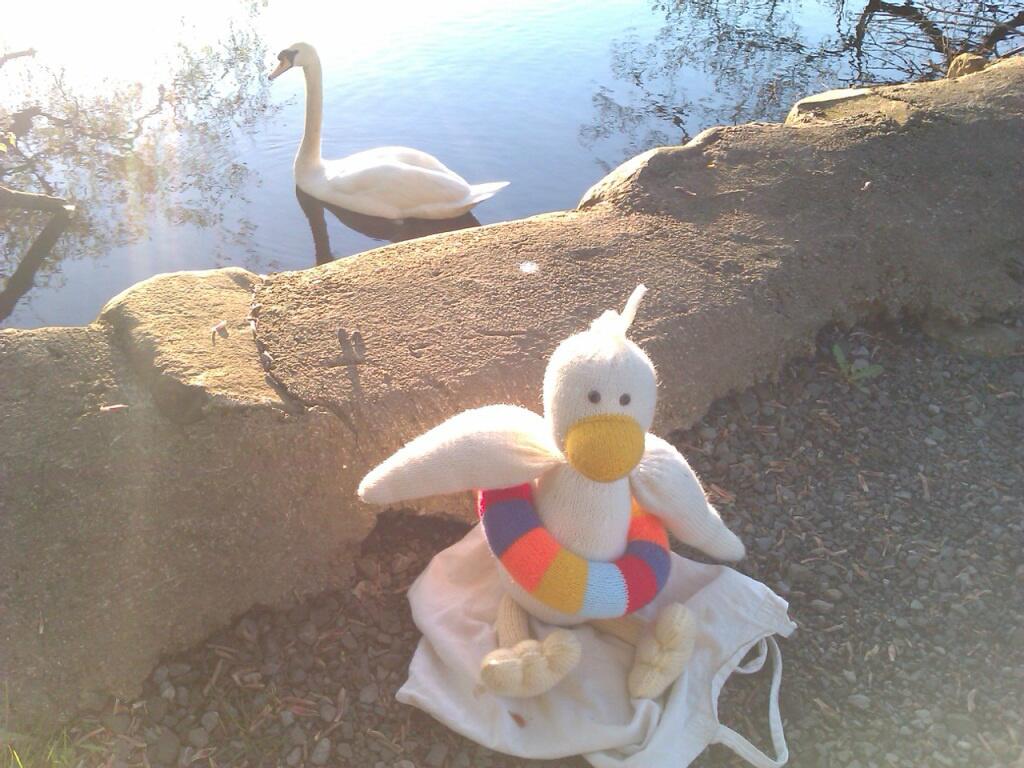
The day Fuse duck came to town

Posted by Jean Adams

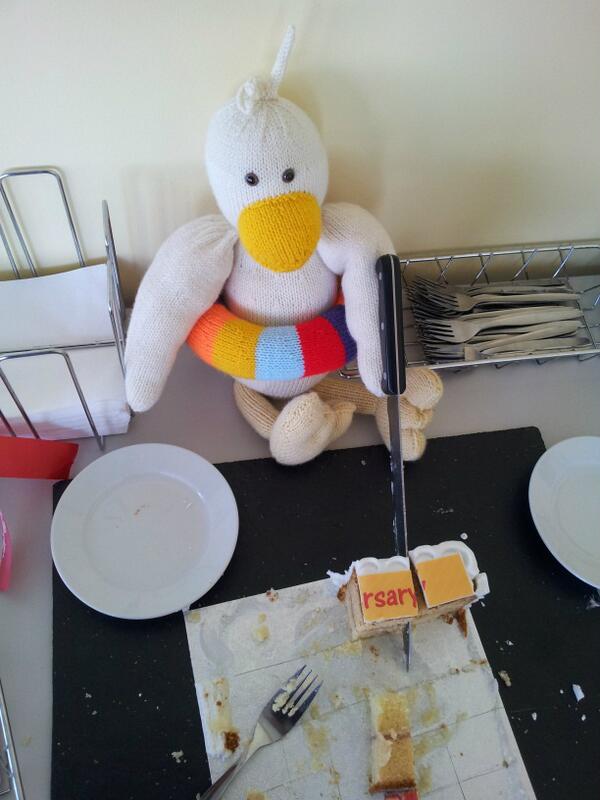
So you might remember that Fuse duck is going on a road trip around the North East region trying to find out what it is that Fuse researchers do all day. He is not, as some might have you believe, the new ‘marketing intern’ at Fuse. And he is certainly not an unpaid intern. No, you can rest assured that Fuse duck is very well recompensed for his labour. Mostly in cake, only rarely in stale bread.


It was right at the start of May that Fuse duck came to Newcastle to visit the Institute of Health & Society. I looked after him. I quite enjoyed having him. He dragged me around the place desperate to meet everyone and I ended up saying hi to a bunch of people I hadn’t met, or had only half met, before.

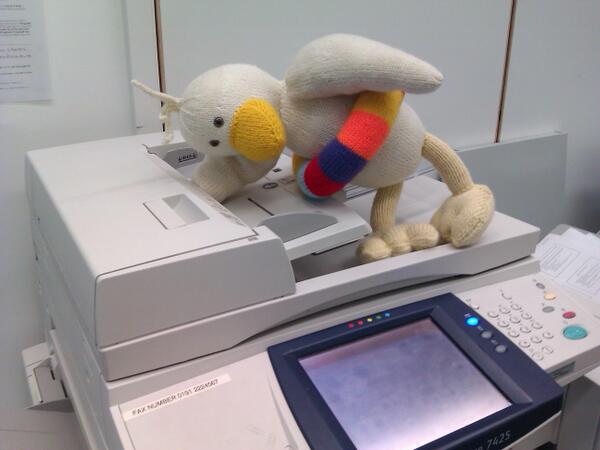
After a brief argument with the photocopier preparing for the ‘big meeting’ later in the day, we started out with a brainstorming/planning meeting for the 2015 CREATE workshop that I’ve been asked to co-ordinate. I have got myself a reputation for teaching writing skills. I’m not sure this is in any way justified. Sure, I’ve done a lot of writing and sure, bad writing sometimes annoys me. That doesn’t mean I’m any good at teaching people how to do it well. See Twitter during any football match/episode of Question Time/Strictly for more on this. But, when you’re offered a trip to Cyprus, the 2.5 days of workshop you need to prepare and deliver in exchange sometimes doesn’t feel too much of a drag. It’s more than a year away. It’ll be fine. In the course of an hour my co-facilitators and I worked through three or four different ideas for the workshop, before settling on an outline programme that we hope will be acceptable to the organising committee. We’ll find out in June. 


Next up was a project meeting for the YouCook project. This is a pilot evaluation of Jamie Oliver’s Ministry of Food cooking classes. Very exciting in principle, but harder than it looks in practice. Mostly, surprise, surprise, because recruitment is not that easy. And before you ask, Fuse duck didn’t get to meet Jamie on this occasion. But the main researcher on the project has done. 


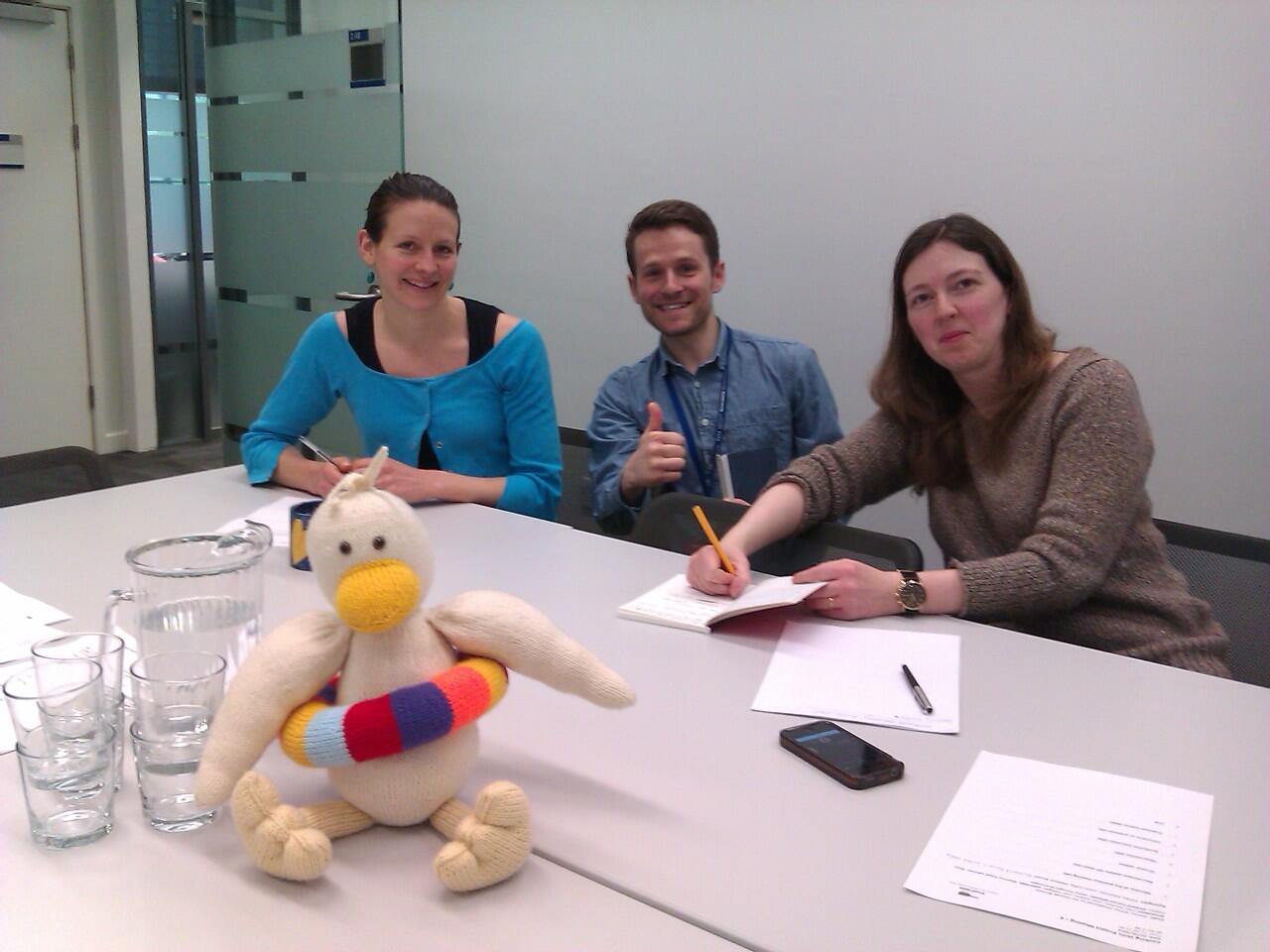
Ten minutes to nip to the toilet and swap one pile of papers for another, and before we knew it the ‘big meeting’ was upon us. This was the second of three meetings of the steering group for our project on using parental incentives to encourage uptake of pre-school immunisations. Which astute readers might remember is where this whole blog thing began. The meeting was ‘big’ in that there were at least 10 people around the table. But also ‘big’ in that it involved people from London, Glasgow and Aberdeen - both in person, and on the phone - and clinicians as well as academics and researchers. One of those meetings where you are very aware how much of an effort people have made to come and take part, and how much you’d better make sure that you don’t waste their time.

The ‘big meeting’ went well. The project is going well and generating interesting findings. The discussion was engaging and lively. There were some good suggestions made for future directions. But chairing a two and a half hour meeting that you have been subconsciously worrying about for the last week is exhausting. So after that was done, Fuse duck and I went up to our coffee room and just hung out for half an hour to get stuff back in perspective. But somehow the conversation drifted into food porn and how naïve I was to think that food porn=Nigella Lawson and it felt time to leave.


The last meeting of the afternoon was a one-to-one with a researcher to chat R, data, and Foodscape. Although we do have lots of meeting rooms in IHS, we also have three ‘informal’ tables where both planned and impromptu meetings take place. Contrary to expectations, an informal table is not a post-modern representation of a table that only very loosely resembles the typical structure of a formal table. No, the informal tables are distinctively table-like, with grey rectangular tops and at least four sturdy legs. Their informality comes from the fact that there are not bookable, and not restricted within their own rooms. In fact they are placed in what is essentially an aneurytic corridor - a place that is as important for getting from A to B as it is for housing meeting spaces.

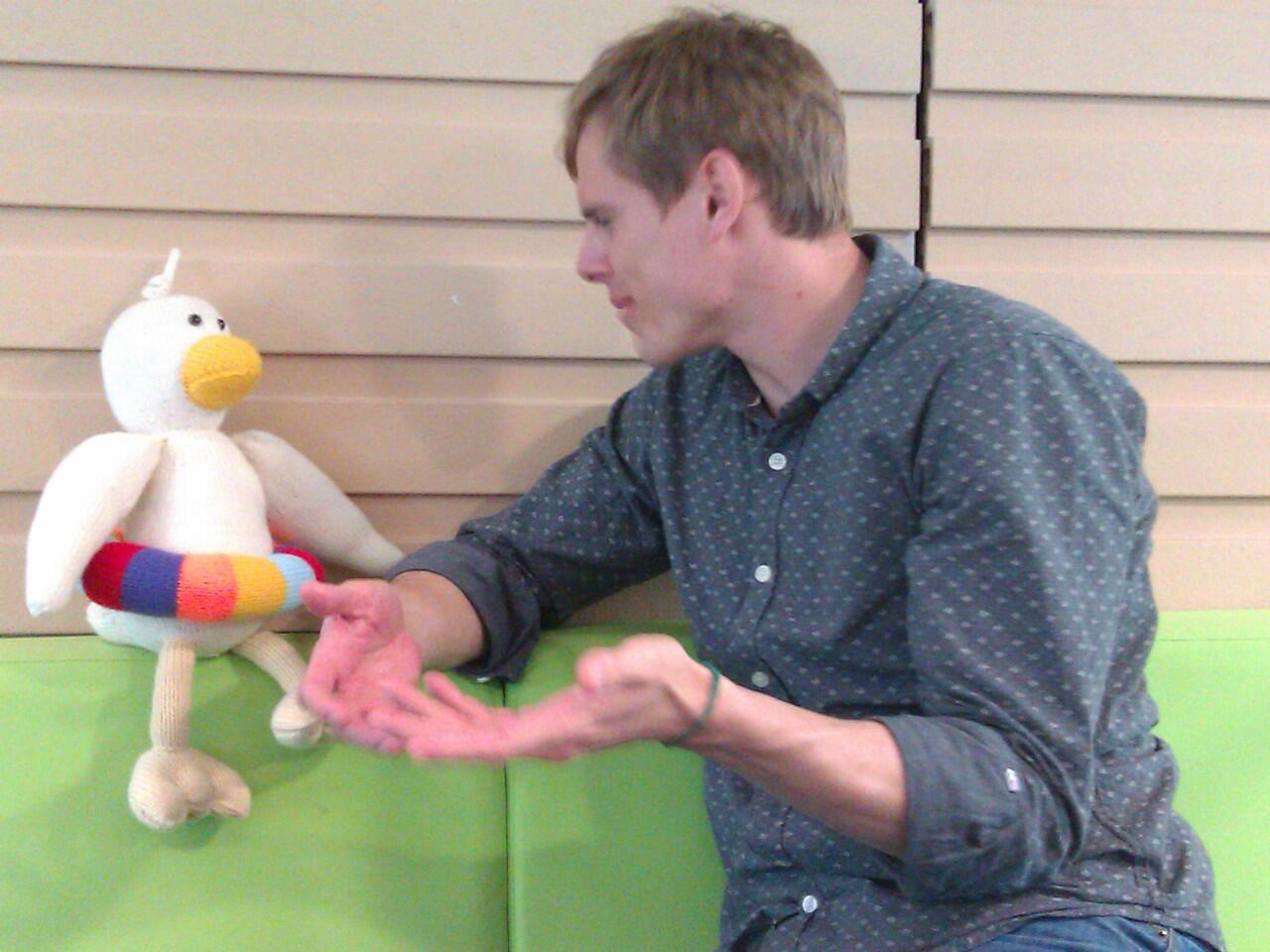
As it turns out, holding a meeting attended by a stuffed duck at the informal tables attracts a little more attention than some other meetings. Before we knew it, students, researchers and even the institute director were chatting to Fuse duck and not about Foodscape work package 4. So we called it a day, packed up and headed for home.

That was the end of the work day, but not the end of the whole day. We still had our 30 minutes of moderate to vigorous physical activity to get in. Fuse duck is sadly lacking in bones, ligaments, tendons and muscles, making his running style fairly floppy. I didn’t mind carrying him and we went for a little plod around the park, stopping to see if there were any ducks around to say hello to in the pond. But all we could find was a prissy swan who just hissed at us and swam off. 


Thursday, 29 May 2014

52 weeks in public health research, part 21

Posted by Jenni Remnant and Jean Adams

From Jenni Remnant: Durham Cathedral taken on the walk back to the station after an excellent panel discussion on 'Communicating and Understanding pain'.

From Jenni Remnant: Just in case there is an unexpected outbreak of hygiene.

From Jenni Remnant: a reasonably healthy summer lunch all  ready to go.

From Jean Adams: outdoor office all set up. Luckily it's pretty easy to dismantle when the electrical storms arrive. That pink elephant bean bag was made on commission for my littlest step-girl when she was about 10. Now she's wrapping up a foundation course in textiles herself.


-------------------

Just to remind you:

Each Thursday of 2014 we’ll try and post around four pictures on the Fuse blog that capture our weeks in public health research, from the awe-inspiring to the everyday and mundane. Given that more of the latter than the former exists in my life, I foresee problems compiling 208 images worth posting on my own. So this is going to have to be a group project. Send me an image (or images) with a sentence or two describing what aspect of your week in public health research they sum up and I’ll post them as soon as I can. You don’t have to send four together – we can mix and match images from different people in the same week.

Normal rules apply: images you made yourself are best; if you use someone else’s image please check you’re allowed to first; if anyone’s identifiable in an image, make sure they’re happy for it to be posted; nothing rude; nothing that breaks research confidentiality etc.

Also, this doesn’t mean we wont also be posting words. You word-based posts are, as always, much appreciated.

Tuesday, 27 May 2014

Life is pain

Posted by Jenni Remnant

To avoid only writing (read complaining) about the difficulties of care, and in contradiction to the misleading title, I thought I’d write something uplifting-ish about a couple of events I’ve attended over the last couple of weeks.

The first was ‘Communicating and understanding pain; a multidisciplinary approach’ and the other was ‘Applied qualitative research in health; where now?’.

Both, I’m glad to say, were great.

I’m a bit of a pessimist about these events, not because I think they’ll be naff, but because I don’t have a lot of faith in my ability to maintain my mojo and absorb/impart any quality information over an entire day, especially post-lunch. I also get pre-event guilt about having inconvenient dietary requirements, and pre-event nerves that I will have to make small talk. I’m even worse at small talk than I am at big talk.

And....sometimes I worry that events will be as boring as hell and exercises in back patting, navel gazing and academic out-rankery.

Fortunately these two were totally great. The one on pain was split across two days; first an evening event at Durham University with three speakers Clare Roques, Suzannah Biernoff and Rachael Gooberman-Hill, and then panel discussion. The three talks were totally different, but all really engaging – totally outside of my area of study, but at the same time useful and relevant in terms of ordering thoughts, and seeing the wider picture. It was followed with a day of discussion, discussion and more discussion, with a free lunch lobbed in the middle (thumbs up to a free lunch). The basic premise of the day was to find an ‘answer’ (or at least more questions) in response to the ‘problem’ that in the north east the prescription of analgesics is 5x that of the national average.

I was sat in a room discussing this with neuro-scientists, clinicians, pharmacists, students, social scientists and an art historian. How fantastic is that? I don’t know if it was a lucky collection of people, or whether my expectations had been unfairly low, but the collaborative aim of the process was totally achieved; the discussions were varied, as were the ontologies of the attendees – but somehow it worked.

One group discussion I was in did travel further into philosophical thinking than my brain usually lets me travel; whether representation is representation, or whether representation is reality...etc, but mostly we kept on task and kept it real – we talked about GP consultation, hospital treatment, where pain came from and what relationship un/employment has with pain.

We talked about the dehumanisation of patients, and then over lunch with a pharmacist and clinician, about the potential necessity of that practice sometimes to avoid dehumanising clinicians; for example, if someone witnesses a lot of pain and death in their line of work, there may be utility in being a ‘body mechanic’, rather than engaging in the reality of all that sadness.

By the end of the day I got the impression we all felt energised rather thant comatose, and had truly given our brains some exercise, while also beginning to contend with a pressing public health issue.

The second of the two events was the British Sociological Association applied qualitative research in health symposium. Back on home turf in the Research Beehive in Newcastle, which was a good start.

This one was predominantly presentations, but included break out groups in the afternoon and a key note talk by Carl May. Also, to my delight, tweeting was encouraged with the hashtag; #AQHR.

The presentations were fantastic, a moving presentation was delivered using videos of patient narratives, one on the use of qualitative research to support randomised controlled trials, in addition to fascinating presentations on linked-up interviews, researching sensitive and distressing topics and various ways in which applied qualitative research in health has filled in the gaps left by more traditional health research styles.

The day was also, at times, very funny, certainly the quotes from research conducted in Glasgow around sexually transmitted infections in middle-aged adults had most of the room smiling.

The hashtag was well used – and the keynote speech was fantastic. Though I lost track a couple of times, on winding, but ultimately entertaining tangents, it was a pleasantly natural and informal talk from Carl.

In the break out groups I joined a group that focused on PhD student specific issues and was reminded of all the challenging parts of completing a PhD, though our group was fairly pragmatic – we identified that things that we thought were huge and bowled us over (criticism from supervisors…etc) were likely to be forgotten instantly by busy academics who probably have to rush off to another meeting or to teach…etc. We also highlighted the excellent use of a managerial tool used in academia and no doubt more widely in public health; ‘the sh*t sandwich’, whereby your criticism is sandwiched by positives, only we decided that it was more akin to a ‘sh*t pitta’, in that the bread is very thin, and the filling fairly substantial.


Rather typically – having spent both events listening and scribbling down notes as I’d realised they were going to overflow my brain’s capacity – on beginning to type them up, I gestured slightly too emphatically when describing what a great week I’d had and sent my full cup of coffee cascading across said notes rendering them illegible (see image above).

So can we do them again please? ;)

Thursday, 22 May 2014

52 weeks in public health research, part 20

Posted by Jean Adams, Martin White and Jenni Remnant

From Jean Adams: some days I look up from desk and am startled to find the whole office (of about 40 desks) suddenly empty. Can you guess which desk is mine? Hint: it's the one with the crochet bunting ;)

From Martin White: askFuse, our responsive research facility, is now almost 1 year old. We celebrated at a recent Fuse members' meeting with this cake featuring a still from the animation we commissioned to launch the service last year.

From Martin White: This stunning portrait of Charles Darwin is in the National Portrait Gallery in London. Sometimes when you've done three hours of work on the train down (starting at 7am), delivered two hours of teaching, and know you'll do another three hours of work on the train home it's okay to spend an hour in a gallery.

From Jenni Remnant: this hedgehog followed me home the other day. Again: not particularly public health-y, but still damn cute.

-------------------

Just to remind you:

Each Thursday of 2014 we’ll try and post around four pictures on the Fuse blog that capture our weeks in public health research, from the awe-inspiring to the everyday and mundane. Given that more of the latter than the former exists in my life, I foresee problems compiling 208 images worth posting on my own. So this is going to have to be a group project. Send me an image (or images) with a sentence or two describing what aspect of your week in public health research they sum up and I’ll post them as soon as I can. You don’t have to send four together – we can mix and match images from different people in the same week.

Normal rules apply: images you made yourself are best; if you use someone else’s image please check you’re allowed to first; if anyone’s identifiable in an image, make sure they’re happy for it to be posted; nothing rude; nothing that breaks research confidentiality etc.

Also, this doesn’t mean we wont also be posting words. You word-based posts are, as always, much appreciated.

Tuesday, 20 May 2014

Using social media for building an academic & professional network

Posted by Lynne Forrest

As part of a general session within our Institute on using social media for research, I was recently asked to talk about using social media for building a professional network. It was a good chance to reflect on why I think Twitter is such a good tool for doing this, particularly for those at the start of their academic career, who are lacking in publications, a wide academic network and an established reputation.

I first joined Twitter at the beginning of the second year of my PhD and, initially, I really couldn’t quite see the point. It wasn’t until I wrote a couple of posts for the Fuseblog and starting picking up some followers that I began to realise what a useful tool it could be. Now, over two years later, post-PhD I have a twitter network of around 600 people (large enough, but not too big as to be unmanageable), am on 23 Twitter lists ranging from Women in Science to Academics at Newcastle and Tweeting Epidemiologists, contribute regularly to the Fuseblog, and am a total social media convert.


Twitter has been a brilliant medium for connecting with other PhD students (and now early career researchers) in order to ask questions, get advice and generally provide moral support during what can be quite an isolating experience. It’s also been of practical support in highlighting interesting epidemiological and public health research I might never have found myself (the fabulous @SCPHRP is great for this), advertising jobs and conferences, sharing resources (a list of viva questions has done the rounds of my twitter network), raising my profile, and connecting me with a wide network of like-minded people in public health and beyond.

As someone who can come across as quite reserved in real life (despite the fact I am actually fairly stroppy and opinionated), I do find the whole networking thing quite stressful. I realise it’s a necessary part of academia and I need to get better at speaking up more, but in the early stages of academia it’s easy to think you’ve got nothing useful to contribute, as well as the worry of saying the wrong thing and looking stupid. But Twitter has again been an excellent tool for this sort of thing. Blogging has given me an academic voice and Twitter has allowed me to interact with senior academics that I’d be far too terrified to approach blind at a conference. As a recent member of my Twitter network said ‘Twitter is networking for people who hate networking’ (thanks @PhDGeek for allowing me to pinch this for my talk!).

So, if you do plan to use twitter to build an academic network what should you do? I’d advise keeping your personal and professional identities mostly separate. I do tweet non-work related stuff but decided fairly early on to stop following David Tennant, various members of Duran Duran and the cast of Merlin (no-one needs to know about my love for dodgy 80s bands and kids’ tv programmes). Use your profile to detail your research interests and help others find you. And use a sensible twitter name. I initially just planned to lurk so chose a daft name that I’ve now changed. Also, if you’re using other academic resources such as Researchgate and google scholar citations it seems sensible to have a consistent professional online identity.

The best way to build up a twitter presence is to start interacting and not just re-tweeting. If you are going to re-tweet then occasionally add some comment or opinion. Tweet from a conference or seminar. If your Institute or department has a blog then contribute to this. There’s only so much you can say in 140 characters and a blog post allows you to talk about your research or other aspects of the research process in a lot more detail. Reply to interesting tweets, start conversations and, most importantly, engage. There’s a great network of academics out there, you just need to find them.

Thursday, 15 May 2014

52 weeks in public health research, part 19

Posted by Dominika Kwasnicka, Jenni Remnant and Jean Adams

From Dominika Kwasnicka: Respect. No litter please.

From Dominika Kwasnicka: This 'smokefree' bin and its cigarette butts are outside the antenatal care and delivery suite at our local hospital.

From Jean Adams: Fuse duck and I went on a little road trip over the bank holiday weekend. Here he is enjoying all the many healthy (not) options at the MandS at Weatherby Services. Is there a word that describes massive heaps of unhealthy stuff at the entrance to shops?

From Jenni Remnant: on the way to and from uni there are currently baby geeses (aka goslings). Not particularly public health-y, but damn cute.

-------------------
Just to remind you:

Each Thursday of 2014 we’ll try and post around four pictures on the Fuse blog that capture our weeks in public health research, from the awe-inspiring to the everyday and mundane. Given that more of the latter than the former exists in my life, I foresee problems compiling 208 images worth posting on my own. So this is going to have to be a group project. Send me an image (or images) with a sentence or two describing what aspect of your week in public health research they sum up and I’ll post them as soon as I can. You don’t have to send four together – we can mix and match images from different people in the same week.

Normal rules apply: images you made yourself are best; if you use someone else’s image please check you’re allowed to first; if anyone’s identifiable in an image, make sure they’re happy for it to be posted; nothing rude; nothing that breaks research confidentiality etc.

Also, this doesn’t mean we wont also be posting words. You word-based posts are, as always, much appreciated.

Tuesday, 13 May 2014

The ‘C’ Word IV: Challenging (behaviour)

Posted by Jenni Remnant and Libby Morrison

So, the word ‘challenging’ is used primarily to describe aggression in learning disability and mental health settings. It keeps the focus on the service user, as is standard (see ‘Person centred planning'). But I would like to consider ‘challenging behaviour’ in terms of being a carer, and in terms of public health and public health research.

Though ‘challenging behaviour’ tends to describe a certain type of behaviour, personally I find a lot of behaviours challenging as a carer – and I expect that others sometimes find my behaviour challenging.

In 9 years of caring for people I have had excrement thrown at me (once an absolute money shot got me square in the face), I have had my hair pulled with such force my scalp ripped, my car has been attacked with a plastic tennis racket, I have been threatened with a kettle of boiling water and a hammer, in addition to being spat at, chased and verbally abused. In many of these roles I was paid a higher hourly rate (one motivation for working in these services) of up to a couple of pounds over national minimum wage. Peanuts to cashews if you will.

This of course is challenging, but I knew exactly what I was signing up to, and if I’m honest, I like it. I imagine this is wrong on a number of levels, but I liked it when people were angry, because a lot of the time I felt they were justified in it. What an oppressive system they live in and are forced to submit to. Admittedly, I like it less when the anger is directed at me, but personally, I find it easier to feel genuine respect for those who fight.

There are two levels to what I personally find challenging. One is a collection of behaviours from service users. The other challenge comes from being angry at myself and feeling guilty that though I can understand and rationalise on a theoretical level that I shouldn’t judge or feel negatively towards people, I can’t feel it. I get so frustrated when I’ve suggested someone goes to the toilet and they say that they have when they haven’t, defecate instead on their bedroom floor and laugh while you clean it up. I feel humiliated when someone starts to masturbate when I try to give them support cleaning their bedroom, go to the supermarket or cook their breakfast. I feel disgusted when someone accesses porn that simulates rape. I feel scared when I’m lone working and a service user follows me around a service. I feel angry when I get a service absolutely spotless and someone tips instant coffee all over the side and doesn’t wipe it up and it goes into those horrible rock hard little lumps on the side… the list, I’m sorry to say is endless.

I worry that it is obvious when I am getting frustrated. A service user once announced to me “I have rights” when I asked, for the fifth or sixth time that day, to use the toilet as he hadn’t been for over 8 hours. He spent around 30-45 minutes in the loo each time, but didn’t use the toilet, with me outside the toilet issuing instructions. I agreed with him – I told him about Maslow’s hierarchy of need, and took from my pocket a summary of the universal declaration of human rights (I always have it on me at work), and in that tired, frustrated, trying-to-maintain-the-appearance-of-calm way, that absolutely patronised him and highlighted that in this situation I ultimately held the balance of power – went through them and explained how trying to support him in hygiene was not relieving him of his rights. I was angry at him, I was angry at myself.

The other challenge is where to go with the above information; who wants to hear that carers are human and get challenged? Which local authority wants to hear that a *free* informal carer finds it challenging to look after a husband who no longer recognises them? What manager wants to hear that you were woken up 6-7 times through the night on your sleep in shift and so feel too tired and drained to work through the following day? Your mental health as a carer is under strain. I currently do less than one shift a week and still sometimes struggle.

Then there’s your physical health – despite meticulously clean staff teams where I have worked, I have often worked with people that for whatever reason do not wash. People that I have worked with have often not washed their hands, don’t shower, and don’t do their dishes. Sometimes when they do their dishes, they don’t do an amazing job. It is patronising and disempowering to re-wash people’s dishes for them. I take in my own cutlery and crockery – and have been pulled up on it a number of times because it’s insulting and stigmatising.

There is a huge amount of surveillance around caring, in addition to judgement. Sometimes it feels so hopelessly fruitless – permanently rolling a stone up a hill for it to roll back down again a la Sisyphus.


What does this mean for public health and public health research? To me it means a necessary interrogation of the homogenising of service users, and the black and white dichotomy between informal and paid carers. An interrogation of the system that removes power and control from a huge number of people – and that’s not even starting on the lack of decent union representation and zero hour contracts – but how?

What are the right questions? I don’t know what the desired outcome is other than that beautiful idea of health equality and social equality for service users and carers – or how as public health researchers we would approach this messy and difficult area and do it justice – but we probably should.

I was very excited to see that Fuse has been advertising a PhD studentship that focuses on carers, and will be fascinated to see what is learnt from that.